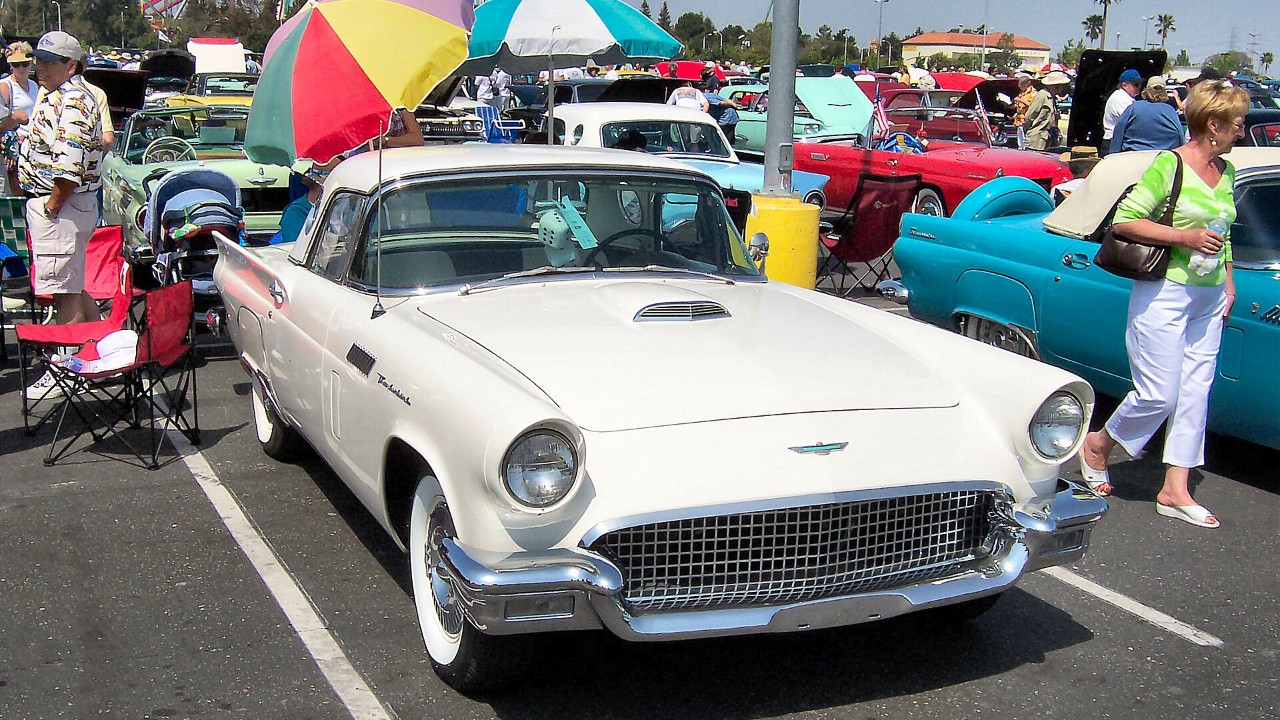
The 1957 Thunderbird E-Code put two four-barrel carburetors on a Ford V8 at a time when most buyers thought of a fast car as a big car. In fact, the whole jet age worked that way. Tailfins grew, chrome spread, and engineers in Detroit, Florida and England raced to put more power under longer hoods.
Some of those cars remain famous. However, plenty of the quickest ones slipped out of the spotlight. They came from small makers, short production runs or model years that history skipped over. A few of them won races. Others simply made rival showrooms look slow for a season or two.
These seven are our picks, and the verdict is our own opinion: cars from the 1950s that we think outran their competition when new, and that too few people remember today. The years, engines and figures come from the records, so you can judge the case yourself.
1. 1957 Ford Thunderbird E-Code
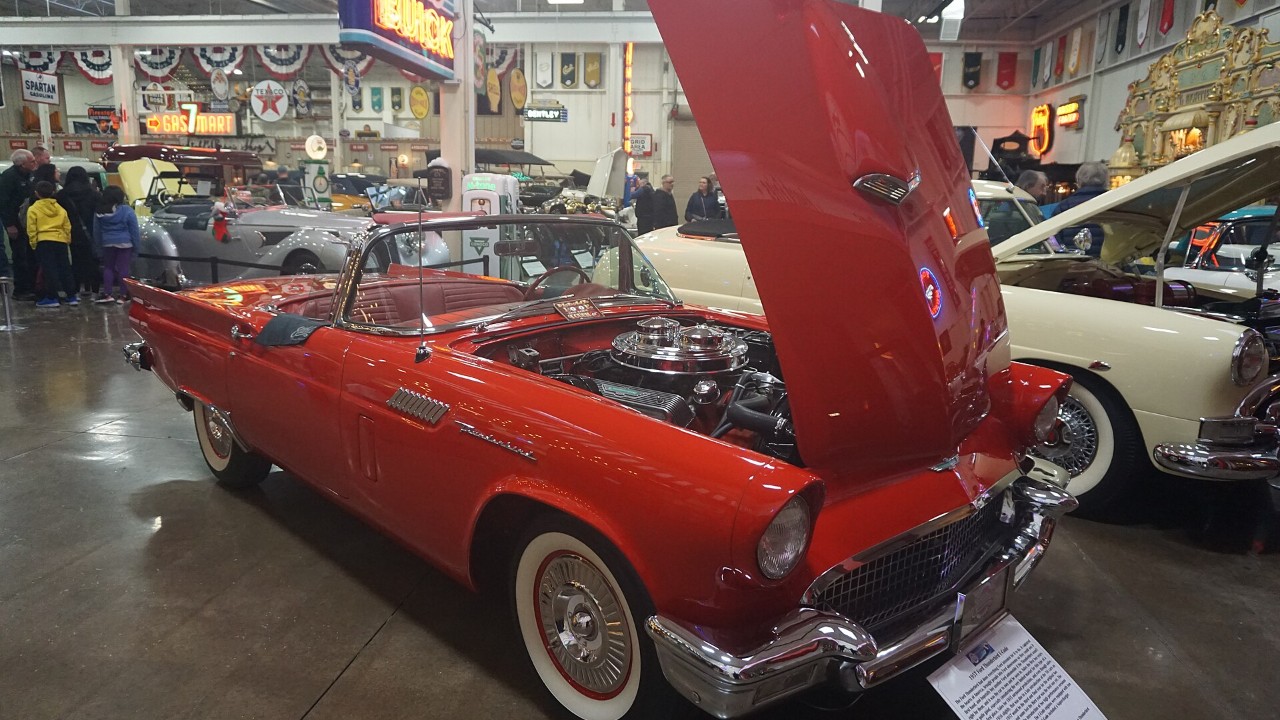
Ford pitched the first Thunderbird as a personal luxury car, but the 1957 E-Code had other ideas. Its 312-cubic-inch V8 breathed through dual four-barrel Holley carburetors and made 270 horsepower, according to RM Sotheby’s. The auction house says Ford built only 1,449 E-Code cars for 1957.
That is a small slice of a big year. Ford built 21,380 Thunderbirds for 1957, a total stretched by three extra months because the 1958 model ran late. Meanwhile, the car gained a larger grille, bigger fins and a trunk that finally held the spare upright inside. Ford even offered two supercharged versions of the 312, rated at 300 and 340 horsepower.
The rivalry with Chevrolet was already settled on the sales chart. Back in 1955, Ford sold 16,155 Thunderbirds against 674 Corvettes. So the E-Code was the moment the T-Bird proved it could run as well as it sold. In our view, the 1957 Thunderbird E-Code is the sweet spot of the early birds. It brings real speed without the long hunt for a supercharged car. If you want more of the family, our look at nine Thunderbirds that showed what Ford could build covers the later cars.
2. 1958 Chrysler 300D hardtop
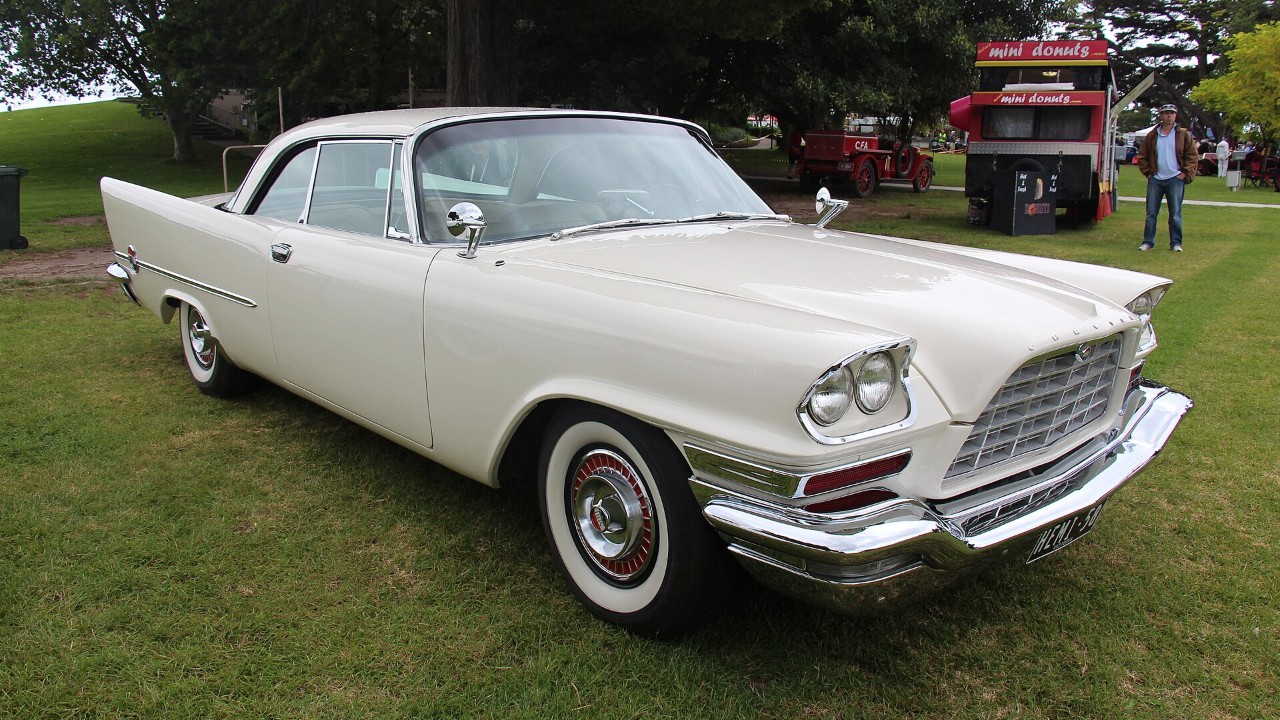
The 300D closed a chapter. It was the last of Chrysler’s letter cars to use the FirePower Hemi, and Chrysler gave it a send-off worth remembering. The 392-cubic-inch V8 made 380 horsepower as standard.
Chrysler also tried something daring. Buyers could order Bendix Electrojector fuel injection, rated at 390 horsepower. Only 35 cars got it, though. The system proved unreliable, so Chrysler recalled those cars and fitted dual four-barrel carburetors instead.
Even without the injection, the 300D was fast in a straight line. One reached 156.387 mph at the Bonneville Salt Flats. Chrysler built just 618 hardtops and 191 convertibles that year, so this was never a common sight on the road.
Our take: the 300D is the most overlooked letter car because it sits between the famous early Hemi cars and the wedge-engine 300s that followed. That gap is exactly why we like it. You get the last Hemi of the first era, wrapped in some of the sharpest fins Chrysler ever drew. Our list of Chrysler 300 letter cars tells the rest of the story.
3. 1952 Chrysler Saratoga 2-door
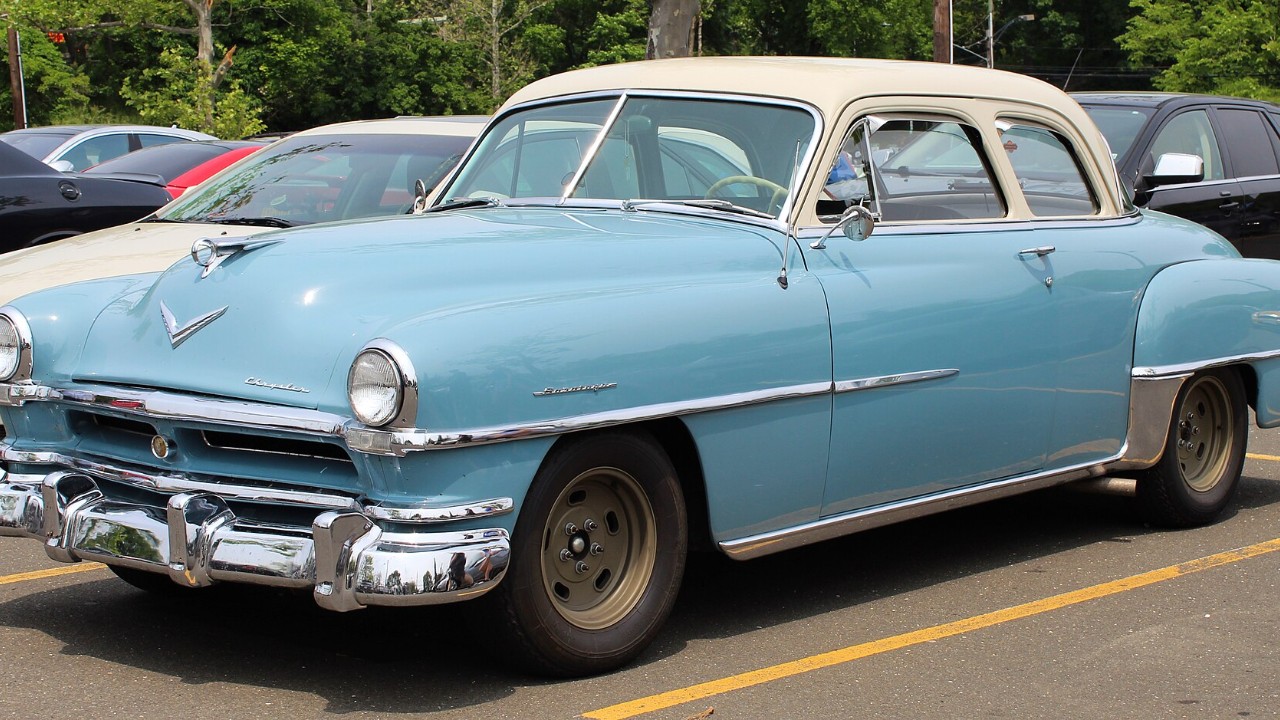
Before the 300 existed, Chrysler had already found a way to make a quick family car. The trick was simple. It dropped the new 331-cubic-inch FirePower Hemi, which debuted in the Saratoga for 1951, into a body that rode on the shorter 125.5-inch Windsor wheelbase. The lightest club coupes carried 180 horsepower.
That combination worked on the road and on the track. The Hemi Saratoga took on Oldsmobile’s Rocket 88, and racers soon noticed it. For example, Bill Sterling drove one to third place in the Carrera Panamericana, finishing behind only two Ferraris. Carl Kiekhaefer’s Mercury Marine also entered a pair of Saratogas in the Mexican road race in 1951 and 1952.
Chrysler built 17,401 Saratogas for the U.S. market in 1952, plus about 1,300 in Canada. Most buyers never raced, of course. Still, the two-door version is the one we would want. In our opinion, it is the first true Chrysler muscle car, years before anyone used the term. It looks like a banker’s coupe, yet it had the engine that went on to power a generation of Chrysler performance cars.
4. 1953 Cunningham C-3 cabriolet
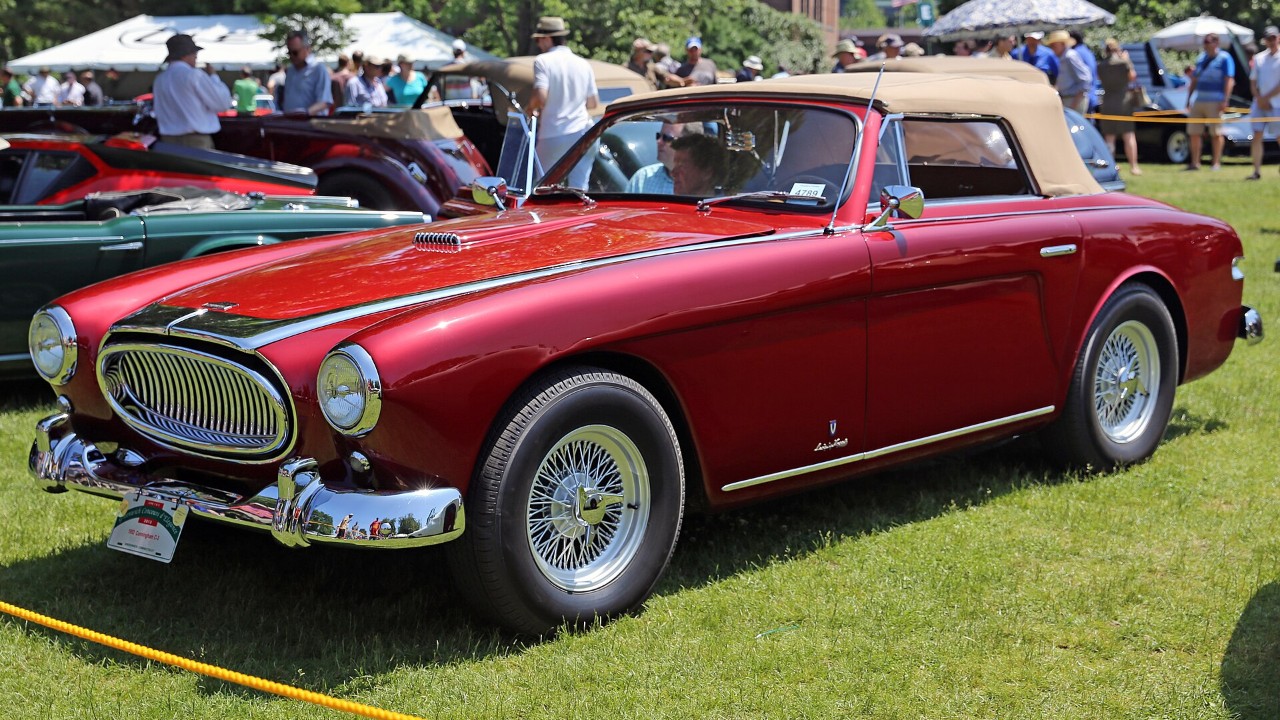
Briggs Cunningham wanted an American car to win Le Mans. To help qualify his race cars for homologation, he also built road cars, according to RM Sotheby’s. The result was the C-3, and only 27 were built.
The recipe crossed an ocean. Cunningham’s shop in West Palm Beach, Florida, built each chassis. Then the chassis went to Vignale in Turin for bodywork, styled by Giovanni Michelotti. Up front sat a 331 Chrysler FirePower V8. Cunningham raised its output from 180 to 220 horsepower with a new intake, four Zenith carburetors and dual exhaust.
Most C-3s were coupes, which makes the open cabriolet even harder to find. Sources disagree on the exact split between body styles, so we will not guess. However, the price of a C-3 today leaves no doubt about its standing. RM Sotheby’s sold a 1954 coupe for $940,000 at Monterey in 2023.
We think the C-3 is the most complete answer to the European grand tourer that any American company built in the 1950s. It combined Italian lines, Detroit torque and a chassis shaped by racing. Sadly, it was also far too expensive to last.
5. 1954 Lincoln Capri
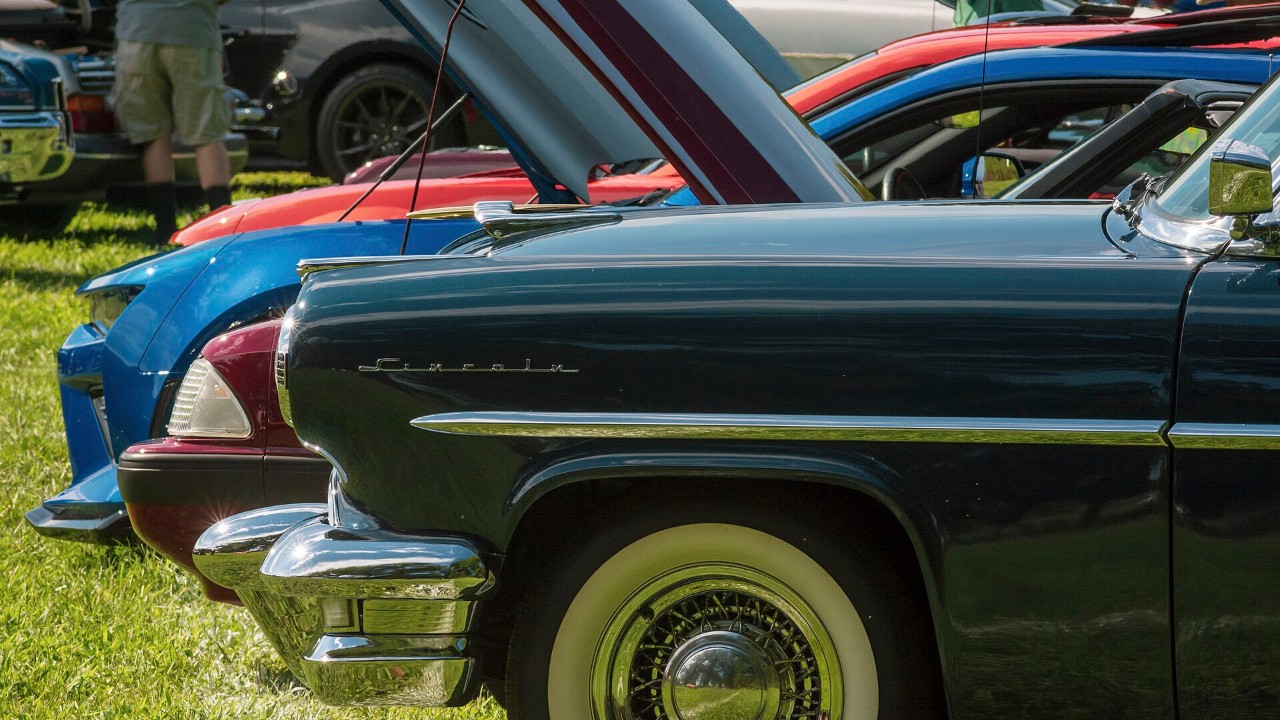
A big Lincoln sedan sounds like the last car you would send into a 1,900-mile road race. Yet that is exactly where the 1954 Capri earned its reputation. In the 1954 Carrera Panamericana, Lincolns finished first and second in the Big Stock Car class, Old Cars Weekly reports.
Ray Crawford won in car 149, a private entry. Walt Faulkner took second in team car 103. In fact, the winner covered 1,908 miles at an average of 92.22 mph, Old Cars Weekly says, and Lincolns had already finished in the top four places in 1952 and 1953. Only 13 of the 26 starters in the big stock class reached the finish in 1954.
Under the hood sat a 317.4-cubic-inch overhead-valve V8. A four-barrel Holley carburetor arrived for 1953 and lifted output to 205 horsepower, according to Conceptcarz. Lincoln built 14,003 Capri hardtops for 1954.
Our verdict: the Capri is the luxury car that beat the sports cars at their own game, at least in Mexico. The only known surviving Road Race Lincoln belongs to the National Automobile Museum’s Harrah Collection.
6. 1955 Studebaker President Speedster
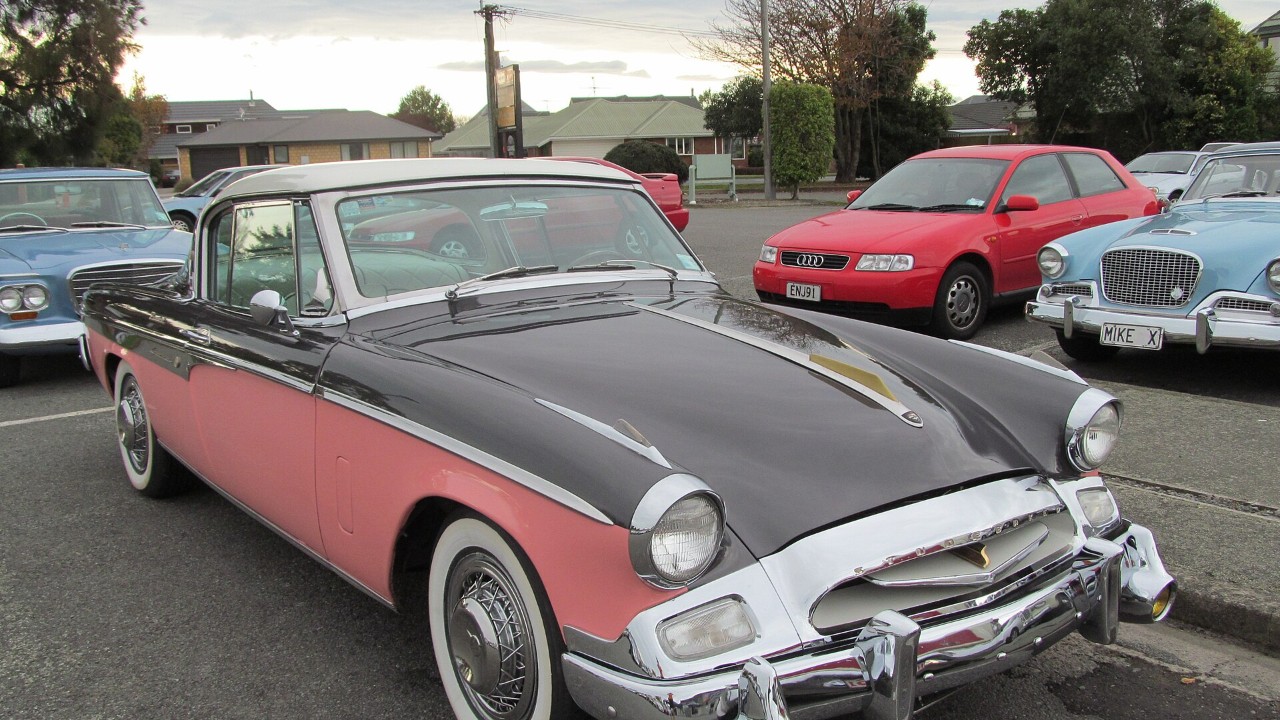
Studebaker sold the Speedster for one model year only, and it treated the car like a showpiece. The 1955 President Speedster carried a 259-cubic-inch V8 with 185 horsepower. Its list price started at $3,346, about $800 above a base President State hardtop. Studebaker built 2,215 of them.
Inside, the Speedster felt closer to a European tourer than a South Bend sedan. The seats wore diamond-quilted top-grain leather. Meanwhile, the machine-turned dash held a Stewart-Warner speedometer and an 8,000-rpm tachometer. Buyers could pick two- or three-tone paint, and the best-known scheme paired Hialeah Green with Sun Valley Yellow. Fans call it “lemon/lime.”
The Speedster also opened the door for what came next. Studebaker replaced it with the Hawk series, and the Golden Hawk turned the same idea into a regular model. So, in our view, the Speedster is the prototype for every Hawk that followed, even if it rarely gets the credit. It also beat the Hawks to a simple idea: an independent carmaker could sell style and speed in one package. If South Bend’s oddities appeal to you, our list of rare Studebakers collectors are rediscovering has plenty more.
7. 1950 Nash-Healey Le Mans
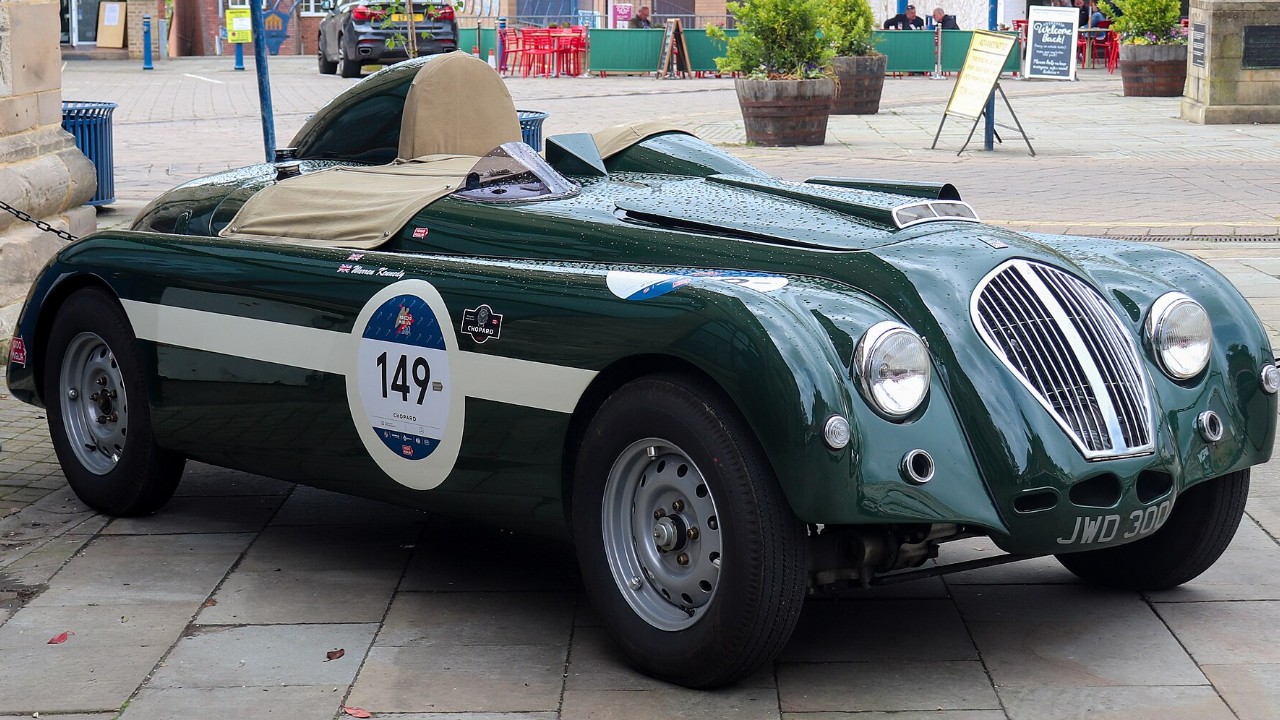
Nash was a maker of sensible sedans, so a Nash at Le Mans sounded like a joke in 1950. Then Donald Healey’s prototype finished fourth in its debut there, with Tony Rolt and Duncan Hamilton driving. It was the start of a four-year run that few people outside the Nash-Healey crowd remember.
The team kept coming back. Rolt and Hamilton finished sixth overall in 1951. Then, in 1952, Leslie Johnson and Tommy Wisdom brought a Nash-Healey home third overall and first in class. Only two factory Mercedes-Benz 300 SLs beat them. Nash later named its 1953 coupe the “Le Mans” to mark the result.
Road cars followed the race car, but sales never matched the results. For 1952, Pinin Farina restyled the body with inboard headlights, a curved windshield and small tailfins, and built the steel bodies in Turin. Nash built 506 Nash-Healeys from 1951 to 1954. By 1953, the sticker price was $5,908, against about $3,513 for a Chevrolet Corvette. That gap, we think, is the only race the Nash-Healey ever lost. Its best day stands in the record books: third overall at Le Mans in 1952, behind only two works Mercedes-Benz 300 SLs.
More from Fast Lane Only