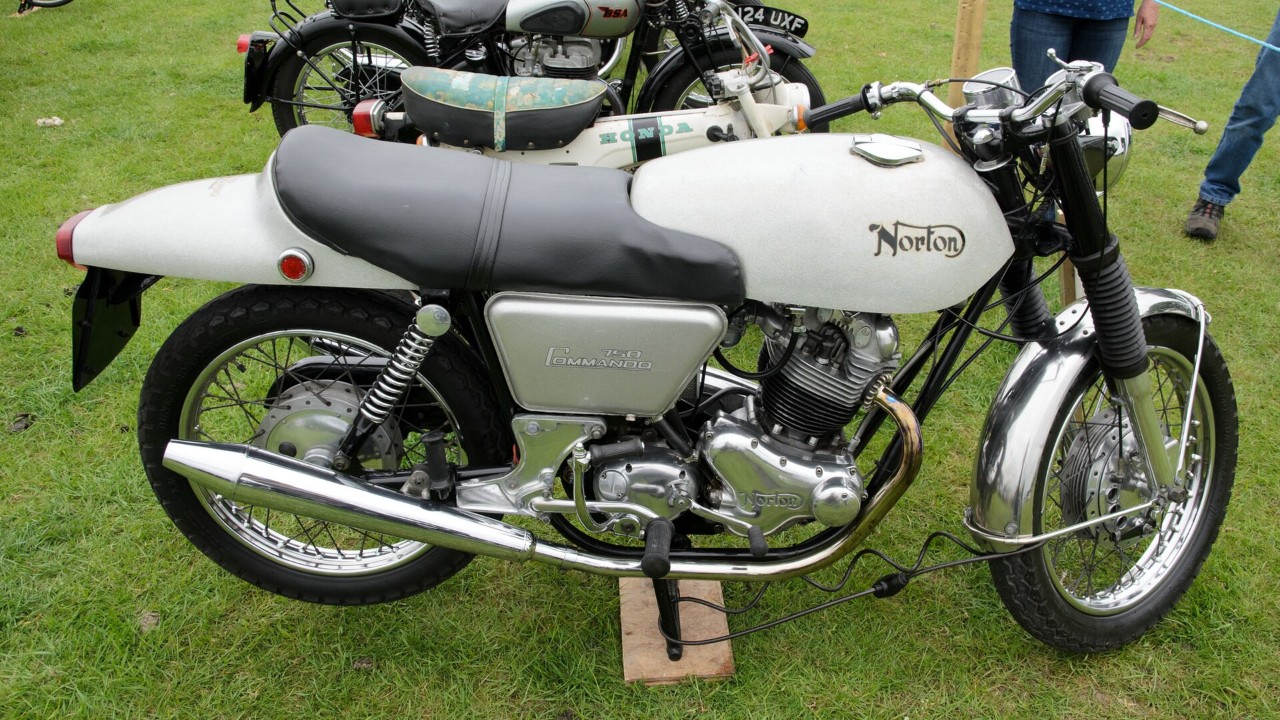
The Norton Commando Fastback helped Norton win Motor Cycle News’ Machine of the Year award five years running, from 1968 to 1972. By the time production ended in 1977, Norton had built around 60,000 Commandos. That is a big number for a small British maker. In our view, it also explains why so many riders can find one today.
Norton’s history is longer and stranger than the Commando, though. For example, the company built side-valve singles that pulled sidecars and desert racers for American buyers. Later, it even built rotary-engined bikes in the 1980s and 1990s. Some of those machines are hard to live with. Others make great sense for a rider who wants something different.
These are our picks for 10 Nortons we’d recommend today. Some suit a weekend rider, while others suit a collector who rides on special occasions. The recommendations are our opinion. However, the years, engines and figures come from road tests, magazine histories and model references.
1. 1969 Norton Commando Fastback
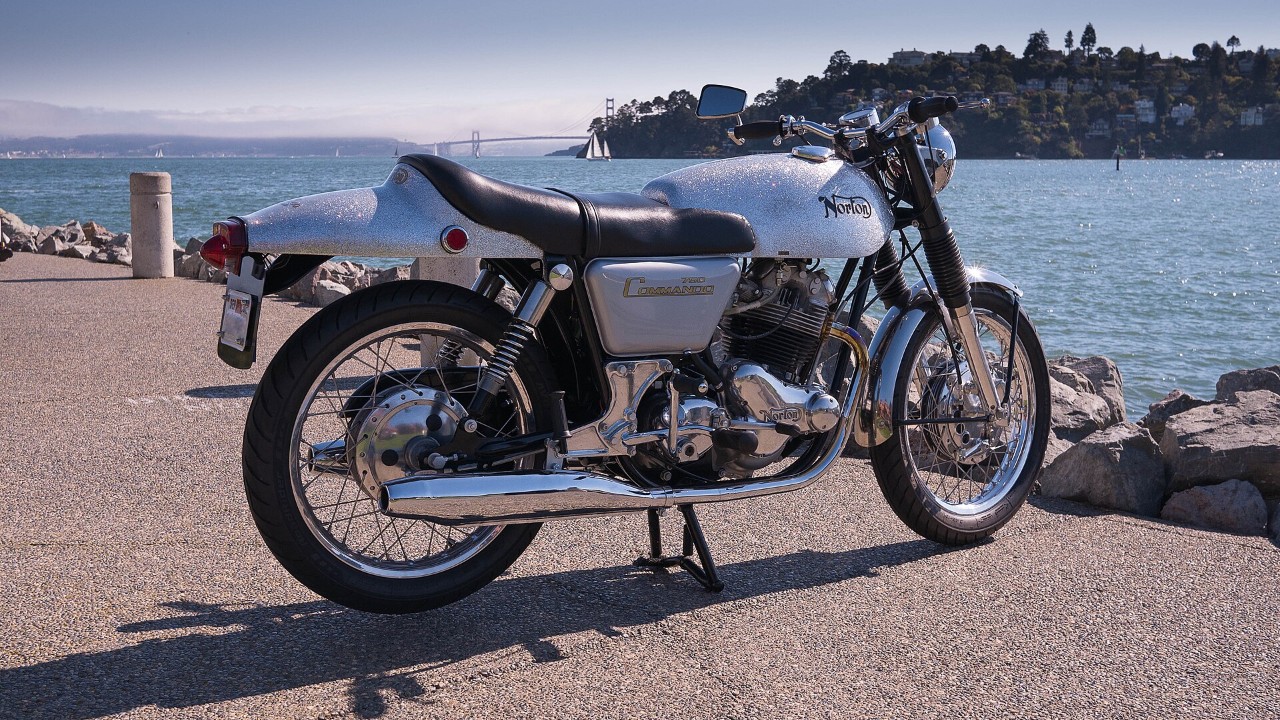
The Commando’s big idea was simple. Norton rubber-mounted the engine so its vibration stayed away from the rider. The company called the system Isolastic, and the frame came from the team of Bauer, Hooper and Trigg. Power came from a 745 cc parallel twin, sold as a 750.
The Fastback name arrived in March 1969. At that point, Norton needed a way to tell the original model apart from its new S and R versions. As a result, the first Commando shape became the Fastback.
So why recommend one now? In our view, the Norton Commando Fastback is the purest version of the bike that won those five awards. It looks like nothing else from the period, and it rides like a British twin that has learned some manners. For more bikes from this era, see our list of British motorcycles that were years ahead of their time. If you buy a Norton Commando Fastback, make sure the Isolastic mounts are in good order, because the bike’s character depends on them.
2. 1975 Norton Commando 850 Roadster
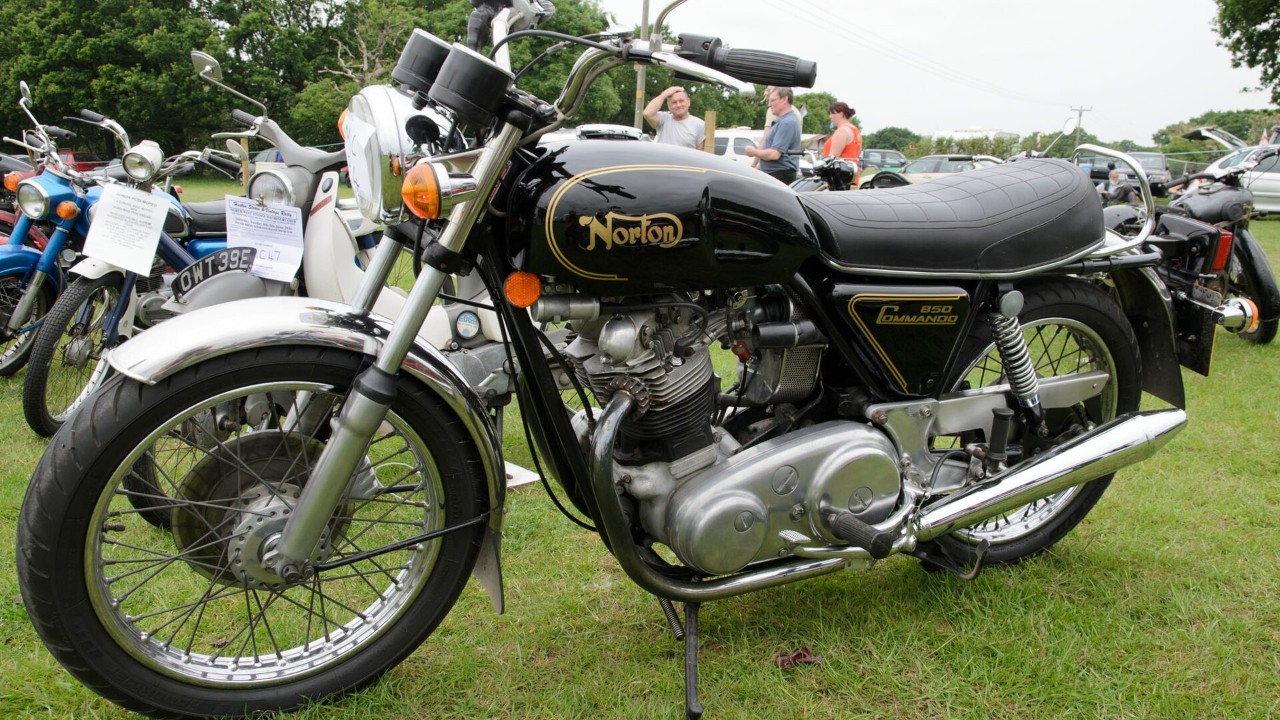
Norton grew the Commando to 850 form in 1973, with an actual displacement of 828 cc. The Roadster body had arrived earlier, in March 1970, and it became the most popular Commando of all. Then the 1975 Mark III brought a big set of updates.
According to Motorcycle Classics, the Mark III had disc brakes front and rear. It also moved the shift lever to the left side to meet U.S. rules. In addition, it got vernier-adjustable Isolastics, which turned an evening of fiddling into a 15-minute job. Norton claimed 60 horsepower at 5,900 rpm, and the bike weighed 460 pounds dry. New, it cost $2,495.
There is one weak spot. The electric starter was a two-brush unit that owners nicknamed a “starter assist.” Our take: the Mark III is the easiest Commando to own, with modern brakes and a familiar shift pattern. Before you buy, have a mechanic check the main bearing and the Amal carburetors. Parts are easy to find, and Andover Norton makes many of them.
3. 1971 Norton Commando 750 Production Racer
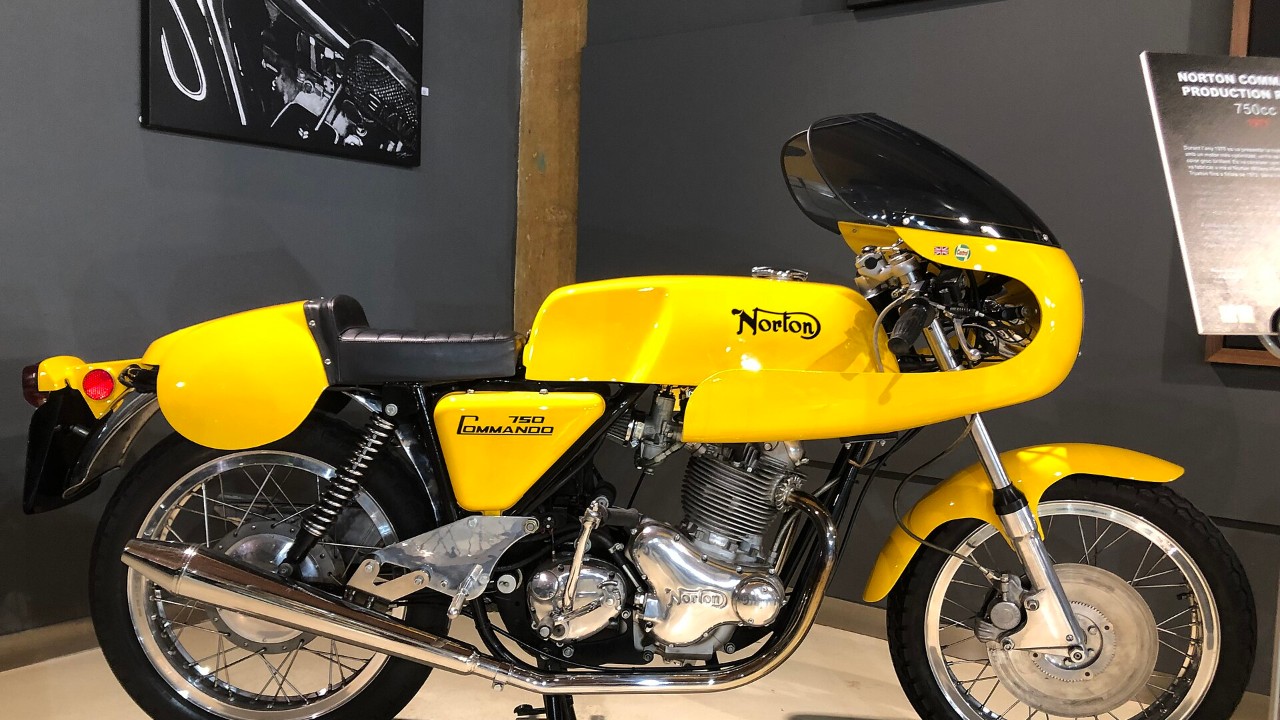
Norton built the Production Racer to win races for bikes that riders could buy from a showroom. Its bright yellow paint earned it the nickname “Yellow Peril.” Norton hand-built the bikes at the Thruxton circuit until 1972.
According to Motorcycle Classics, the racer got higher-compression pistons and the factory 3S racing camshaft. It also had a reworked head, bigger valves and carefully matched parts. A good one made about 70 horsepower. Its first major win came at the 1970 Thruxton 500, with Peter Williams and Charlie Sanby riding. Then, in 1971, Williams set a lap record above 101 mph in the Isle of Man’s 750 Production race. However, he retired before the finish.
Fewer than 200 left the factory, and it cost roughly $1,900 new. Our take: this is the Commando to own if you love racing history. It is not a commuter. Even so, few British bikes of the period carry a better story. It also rewards a rider who takes it to vintage track days.
4. Norton Commando 961 Sport
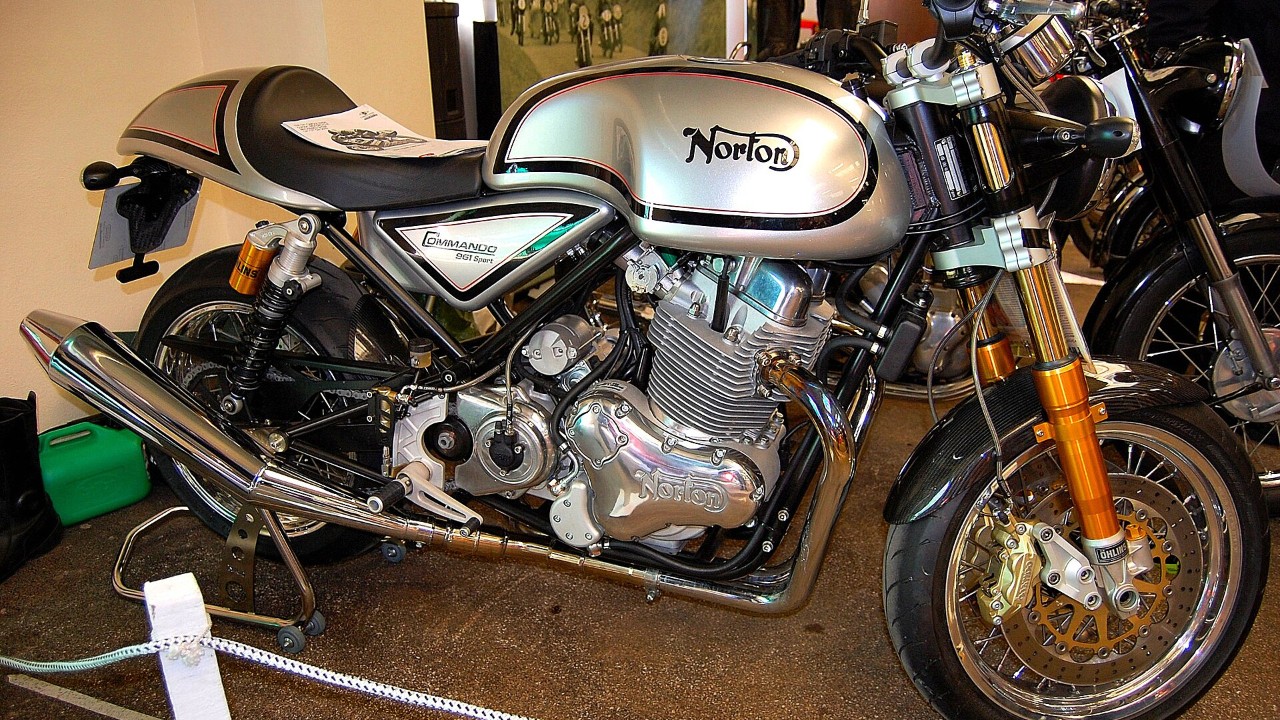
The Commando name came back in the 21st century. In 2008, Stuart Garner bought the design rights. Then, in March 2010, the first new machine rolled off the line at Donington Park. The 961 Sport kept the classic look but added modern suspension and brakes.
According to the spec sheet at Motorcycle Specs, the 961 Sport used a 961 cc air-cooled parallel twin. Like the original, it had pushrod valves, but it added a balancer shaft. It made 80 horsepower at 6,500 rpm and 65 lb-ft of torque at 5,200 rpm. Meanwhile, Öhlins suspension sat at both ends. The bike weighed 414 pounds dry.
The company behind it had a rough road. Norton’s factory closed in 2020, and the name passed to TVS Motor Company, which released an upgraded 961 in 2023. Our take: if you want the Commando feel with modern brakes and suspension, the 961 Sport is the one. Check its service history carefully, because support has changed hands since the bike was new.
5. 1960 Norton Model 50 350
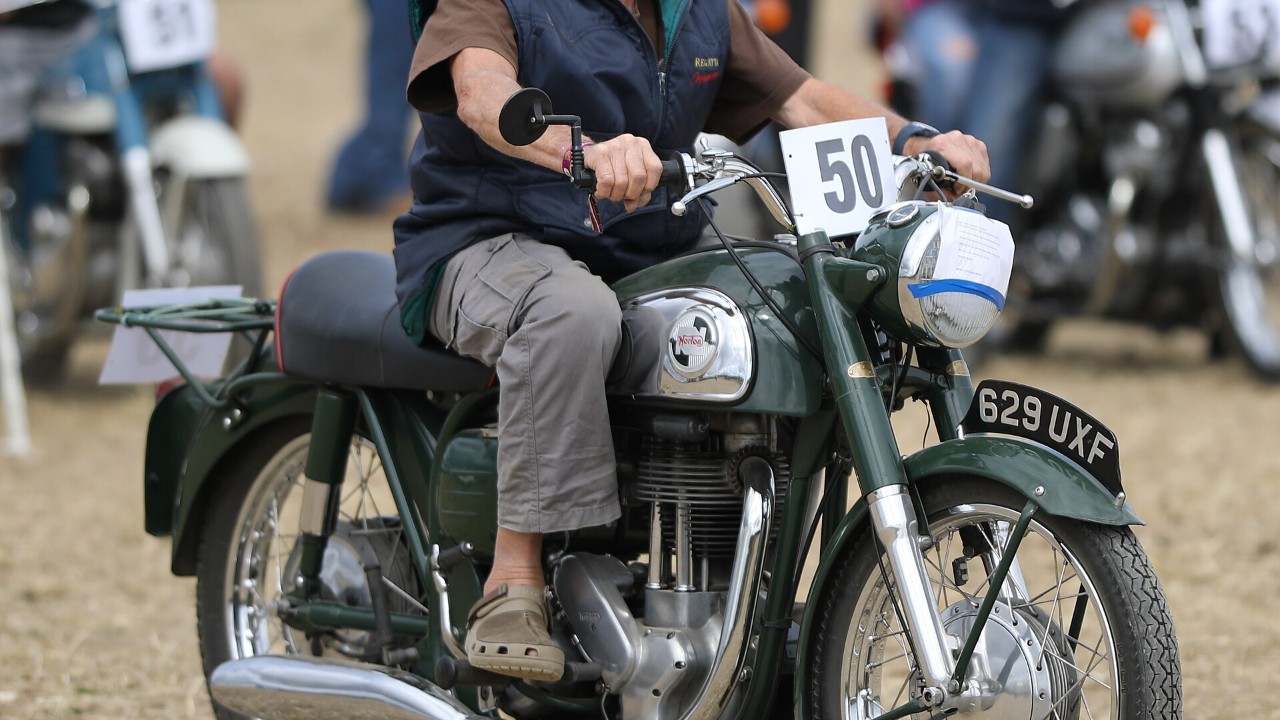
The Model 50 was Norton’s small touring single. Edgar Franks designed it in 1933, basing it closely on the Model 18. It used a 348 cc overhead-valve single with pushrods, and it stayed in the catalog until 1963. Production did pause, though, because World War II interrupted the run.
The 1960 bike is a sweet spot. In 1959, Norton moved the Model 50 into its famous featherbed frame and added a crank-mounted alternator and coil ignition. In other words, a modest 350 got Norton’s best-known frame.
That is why we would recommend one to a newer vintage rider. A 350 single is light, simple and cheap to run. Meanwhile, the featherbed frame gives it handling that makes back roads fun at modest speeds. Our take: this is the Norton for riders who care more about the ride than the horsepower figure. Look for a complete bike with its original electrics, because the 1959 changes are the reason to choose this year.
6. Norton F1 Sport rotary
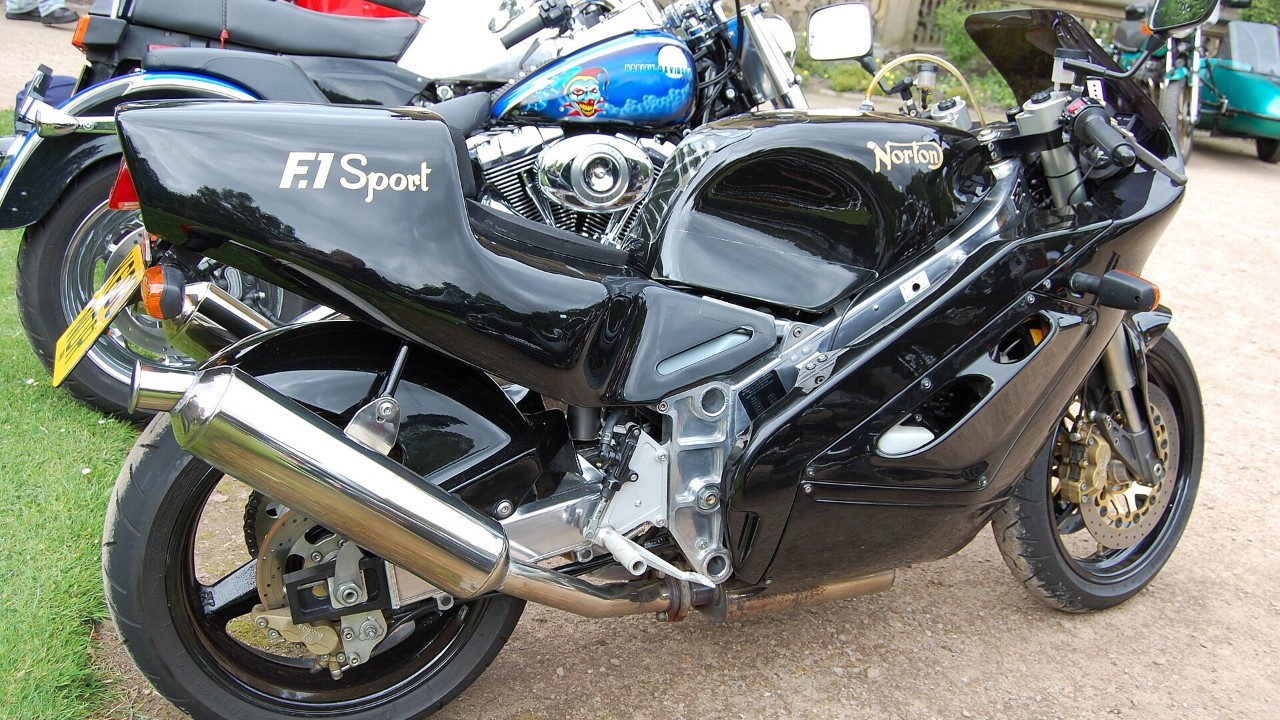
Norton’s rotary racer won in 1989, and the company turned that success into road bikes. According to Bennetts BikeSocial, the RCW588 racer won the Formula One class in 1989. That same year, Norton launched the F1 as a street-legal version.
The F1 used a 588 cc liquid-cooled twin-rotor Wankel engine, rated at 94 bhp at 9,500 rpm. Its frame was an aluminum twin-spar design built by Spondon. Norton built about 140 F1s from 1990 to 1992, and they cost £12,700 in 1990. Later, the F1 Sport followed, and around 70 of those left the factory before production ended in 1994.
Our take: the F1 Sport is a recommendation with a warning label. It is rare and technically fascinating, but a rotary engine needs a specialist. Find one with records and a mechanic who knows rotaries. Then you will own one of the most unusual sport bikes Britain ever built. Values for the F1 now start above £20,000, according to the same review.
7. 1940 Norton Big Four
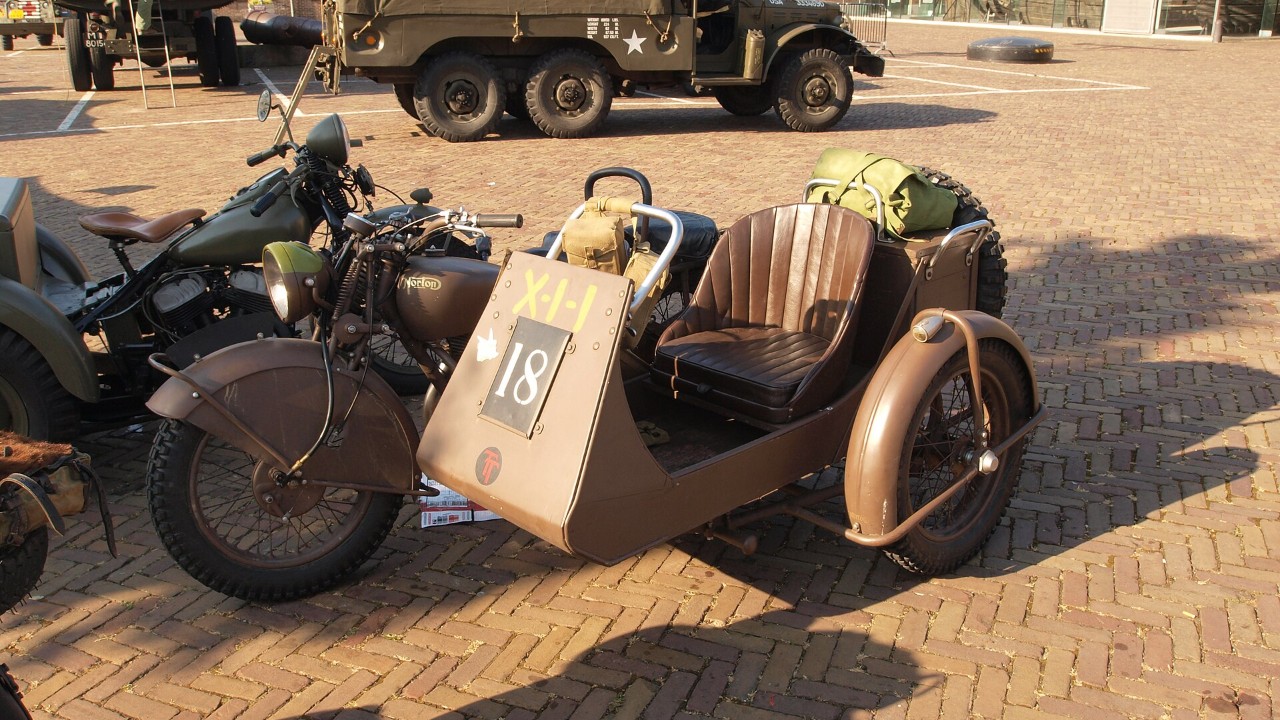
The Big Four, also called the Model 1, ran from 1907 to 1954. Its name came from its rating of 4 tax horsepower. Later, for 1948, Norton cut the stroke, which brought displacement down to 596 cc. Underneath sat a 633 cc side-valve single with a long 120 mm stroke. It made 14 bhp and reached a top speed of 68 mph.
Those numbers look small, but the Big Four was not about speed. Riders used it mostly to pull sidecars, because its engine made strong pulling power low in the rev range. During World War II, about 4,700 of the nearly 100,000 military bikes Norton built were Big Four sidecar outfits. The military version even drove the sidecar wheel from the rear wheel. As a result, the outfits could handle reconnaissance and carry ammunition to front-line troops.
A 1940 Big Four ties directly to that wartime story. Our take: this is a recommendation for patient riders. It is slow, heavy at 305 pounds dry and old-fashioned, yet few bikes offer more history per mile. A Big Four with a period sidecar makes a great slow Sunday ride.
8. Norton Commander rotary
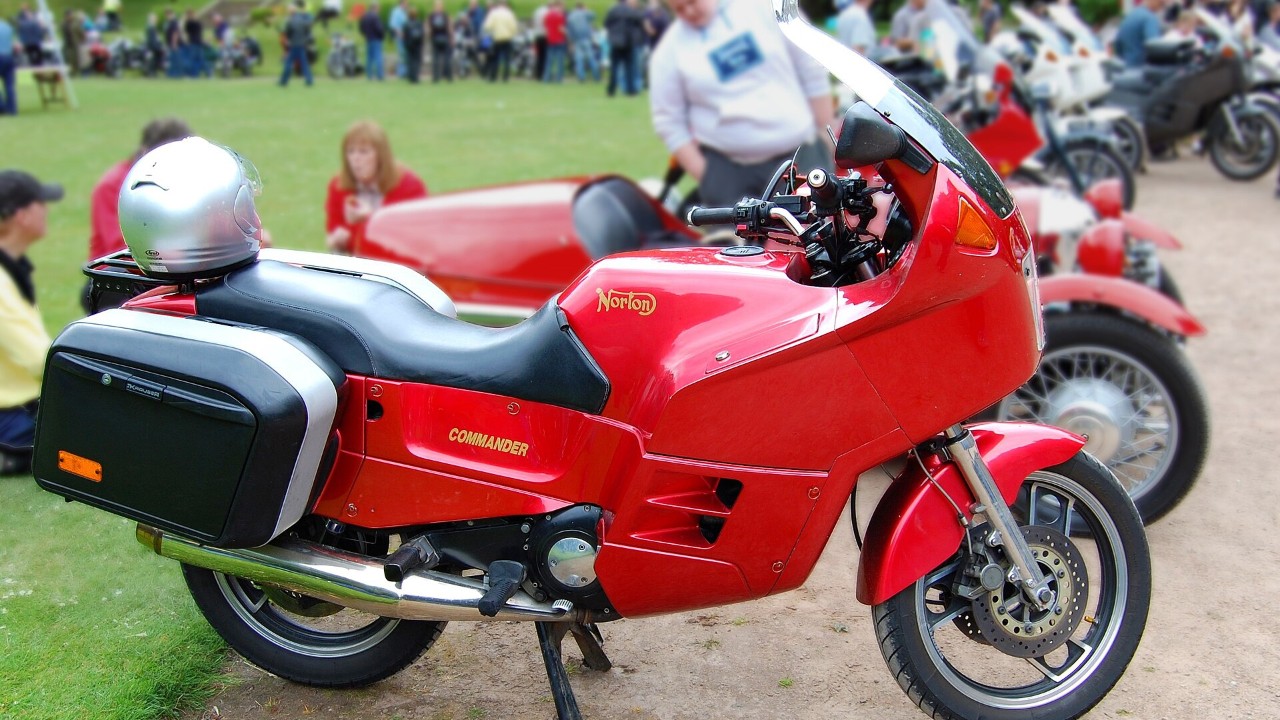
The Commander took Norton’s rotary engine in a different direction, toward touring. It was the civilian version of the P52 Interpol, a police-oriented bike. According to Motorcycle Classics, the Commander went on sale in 1988 with a 588 cc twin-rotor engine.
Liquid cooling cut mechanical noise and allowed a higher compression ratio. As a result, Norton claimed 85 horsepower at 9,000 rpm. Also, Norton designed the fixed luggage to be no wider than the fairing. At launch, the Commander cost £7,500, or about $13,300.
Fewer than 300 Commanders were built, and production ended by 1992. Our take: this is the most practical way into Norton’s rotary story. In our view, it is smooth, comfortable and built for distance. The same magazine estimates values at $5,000 to $10,000, which looks like good money for something this unusual.
9. Norton-Matchless P11
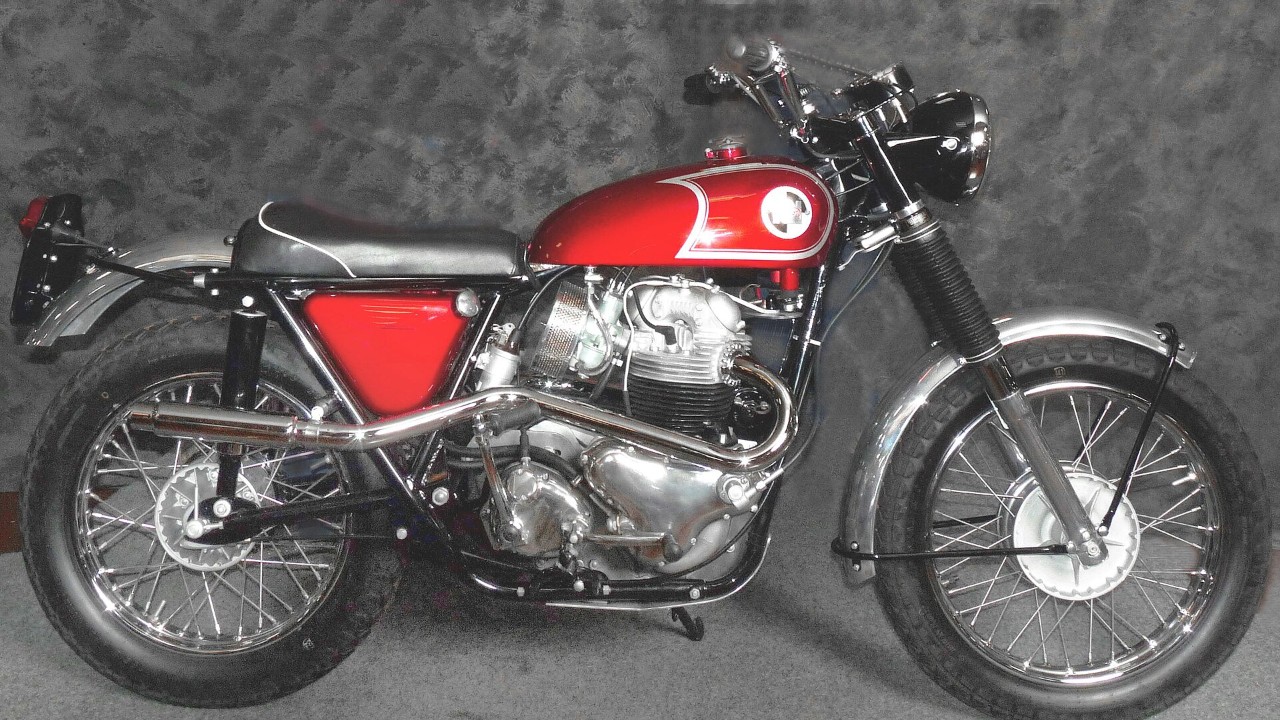
The P11 came from an American request. Norton-Villiers built it from 1967 to 1969 as an export model for desert racing in the United States. Joseph Berliner of the Berliner Motor Corporation, the U.S. importer, had a major influence. When the bike launched there, the slogan was “Dynamite on wheels.”
The recipe mixed two brands. First, Norton took its Atlas twin, a 745 cc overhead-valve engine. Then it dropped that engine into a Matchless G85CS frame made from lightweight Reynolds 531 tubing. Workers built the bikes at the former Associated Motor Cycles factory in Woolwich, London, largely from spare parts. Even so, demand outstripped supply.
For 1968, Norton revised the bike as the P11A and sold it as the Ranger. That version was road legal, with a more comfortable seat and a low-level exhaust. Eventually, the last model in the line was the Ranger 750. Our take: the P11 is the Norton for riders who like dirt roads and odd history. For more British bikes riders hold onto, see our list of British motorcycles owners refuse to part with.
10. 1969 Norton Mercury
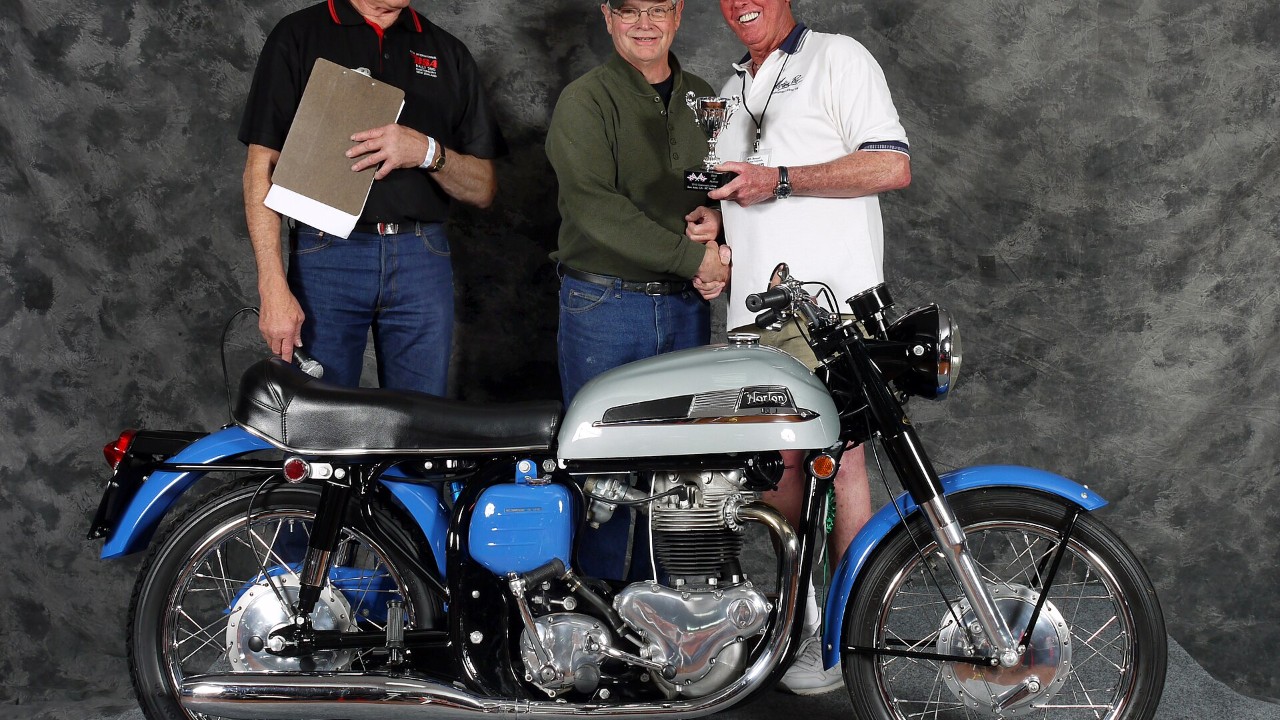
The Mercury marked the end of an era. Norton introduced it in October 1968 and built it until 1970. It used a 646 cc overhead-valve vertical twin fed by a single Amal Concentric carburetor.
That engine came from the 650SS. In turn, the 650SS developed Bert Hopwood’s 500 cc twin of 1948, first used in the Model 7 Dominator. In our view, that single carburetor suits a relaxed rider. After all, this was a road bike rather than a racer.
The Mercury also holds a special place in Norton history. It was the last Norton model to use the featherbed frame. Our take: this is a lovely, usable classic for a rider who wants featherbed handling without race-tuned fuss. Norton built only about 750 Mercurys, and most of them went to the United States.
More from Fast Lane Only