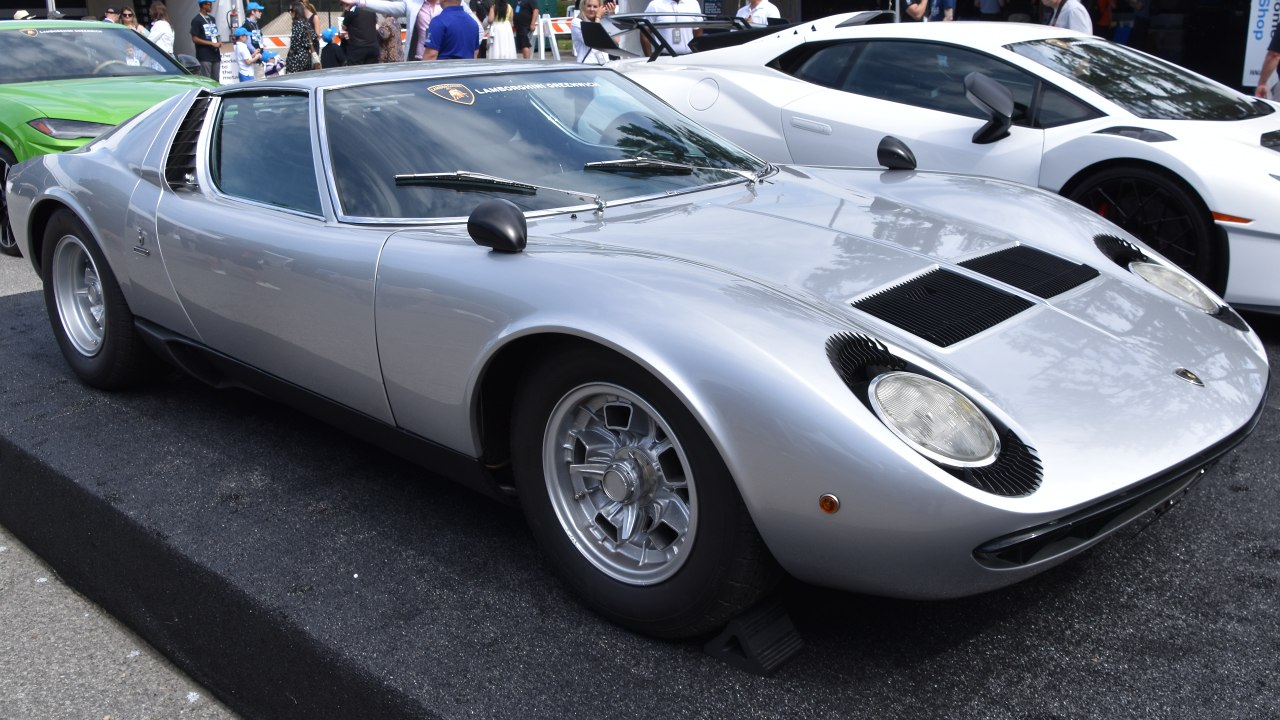
The 1966 Lamborghini Miura did more than go fast. It rewrote the basic layout of a performance car, putting a racing style engine behind the driver in a body that looked like rolling sculpture, and in the process created the template that modern supercars still follow. Nearly six decades later, its proportions, engineering choices, and aura of excess remain the reference point for how a road car can feel like a race car without losing its sense of theater.
When I look at the Miura today, I see the moment when exotic cars stopped being tuned grand tourers and became something more focused, more radical, and more unapologetically impractical. The Lamborghini Miura did not just introduce a new configuration, it proved that a mid engine layout, a shrieking V12, and a dramatic silhouette could work as a standard production car meant for the road, not just the track.
The leap to a mid‑engine V12 for the road
Before the Lamborghini Miura, serious performance cars tended to put their engines in front, even when racing technology was already moving midship. The Miura broke that pattern by mounting its V12 transversely behind the cockpit, a configuration that had been the preserve of prototypes and single seaters. According to factory history, Lamborghini placed the V12 in the P400 Miura in 1966, creating what it describes as the first standard production supercar and making it the fastest standard production car in the world at the time, a shift that turned race car architecture into something a customer could buy and drive on public roads.
The engineering decision was not just about spectacle. Positioning the engine behind the driver centralized mass and improved weight distribution, which sharpened handling and stability at speed. Contemporary analysis notes that the transverse mounted V12 behind the seat was revolutionary because it concentrated the heaviest components near the center of the car, a layout that would become the default for later exotics. One detailed overview of the Lamborghini Miura highlights that this mid mounted engine was a game changer for road going supercars, transforming how manufacturers thought about balancing outright speed with control and predictability.
Defining the “supercar” idea
When enthusiasts argue about the first true supercar, the Lamborghini Miura usually ends the debate. One authoritative survey of the model states plainly that one thing most experts agree on is that the Lamborghini Miura was the world’s first supercar, and it frames that status around a combination of performance, design, and rarity rather than any single number. The car’s top speed, quoted at nearly 170 m (273 km), placed it among the very fastest machines of its era, but what mattered more was how it delivered that speed in a package that looked and felt like nothing else on the road.
The Miura also reset expectations about what a road car could be used for. A detailed history of early exotics notes that the Lamborghini Miura, built between 1966 and 1973, proved that a mid engine layout could work in a car that was not a pure racing machine, and that it appealed to buyers who viewed money as no object. Another retrospective on the Miura’s impact argues that very few cars managed to change the automobile world in the same way, and credits the Lamborghini Miura with redefining the concept of a super car by combining extreme performance with a dramatic, low slung body that looked as fast standing still as it did at full speed.
Design that turned engineering into art

The Miura’s mechanical layout would not have had the same impact without a body that made people stop and stare. Credit for the design of the iconic Miura goes to Marcello Gandini at Carrozzeria Bertone, who was only in his twenties when he shaped its impossibly low nose, flowing flanks, and signature “eyelash” headlamp surrounds. A sales and history profile of the Lamborghini Miura emphasizes Gandini’s role in giving Lamborghini a radical new sports car shape, one that sat barely above the ground yet remained surprisingly clean and uncluttered compared with later exotics.
That purity of line has aged remarkably well. A number of modern commentaries describe Its low, flowing body and dramatic curves as making the Lamborghini Miura one of the most beautiful cars ever built, and they point out how the car’s proportions, with the cabin pushed forward and the engine bay forming a muscular tail, became a visual shorthand for mid engine performance. Another deep dive into the Miura’s legacy notes that the car’s sleek and low slung body captivated audiences and influenced generations of automotive design, to the point that later tributes like the Miura Concept were able to evoke the original instantly simply by echoing its stance and key details.
From radical prototype to production benchmark
What makes the Miura especially significant is that it was not a one off experiment but a full production model that customers could order and drive. The Lamborghini Miura was produced by Italian automaker Lamborghini between 1966 and 1973, with a total of 764 units built across its P400, P400 S, and P400 SV variants. Company history describes 1966 as a crucial year for Lamborghini, because mounting the V12 on the Miura turned the brand from a maker of fast grand tourers into a manufacturer of what it calls the first standard production supercar, a car that could be driven to dinner yet was only a few steps removed from a racing prototype in layout.
That production commitment mattered because it forced Lamborghini to solve practical problems that pure race teams could ignore. Packaging a transversely mounted V12, gearbox, and differential behind the seats in a compact wheelbase required creative engineering, and the resulting chassis became a reference point for other manufacturers considering similar layouts. A comprehensive research hub on the Miura notes that Lamborghini has produced its share of automotive icons, but few hold the legendary status of the Miura, and it credits the model’s release in the late 1960s with setting a new benchmark for how a high performance road car could be engineered and assembled at scale.
The Miura’s long shadow over modern supercars
Even as technology has moved on to carbon fiber tubs and hybrid drivetrains, the Miura’s basic formula still underpins how most people picture a supercar. A recent analysis of how the Lamborghini Miura became the blueprint for modern supercars argues that today’s mid engine exotics, from later Lamborghinis to rivals from other brands, still follow the template set by the Miura: a powerful engine mounted behind the cockpit, dramatic proportions, and a focus on pushing the boundaries of what is possible. That same piece notes that Lamborghini’s V12 set new performance standards for road cars, and that pristine Lamborghini Miura examples now command values that reflect both their rarity and their foundational role in the segment.
The cultural afterlife of the Miura reinforces that influence. A detailed history of the Lamborghini Miura describes it as a supercar that redefined automotive design and pure Italian audacity, and points to the way its mix of performance and style continues to inspire collectors and designers. Another retrospective on early supercars highlights the Lamborghini Miura as a key model that redefined what it meant to be super, emphasizing how its transverse mounted V12 behind the driver’s seat became a pattern that later cars would follow rather than challenge. When I look at the current crop of mid engine flagships, I still see the outline of the Miura in their stance and priorities, proof that a bold idea from 1966 continues to shape the fastest cars on the road.