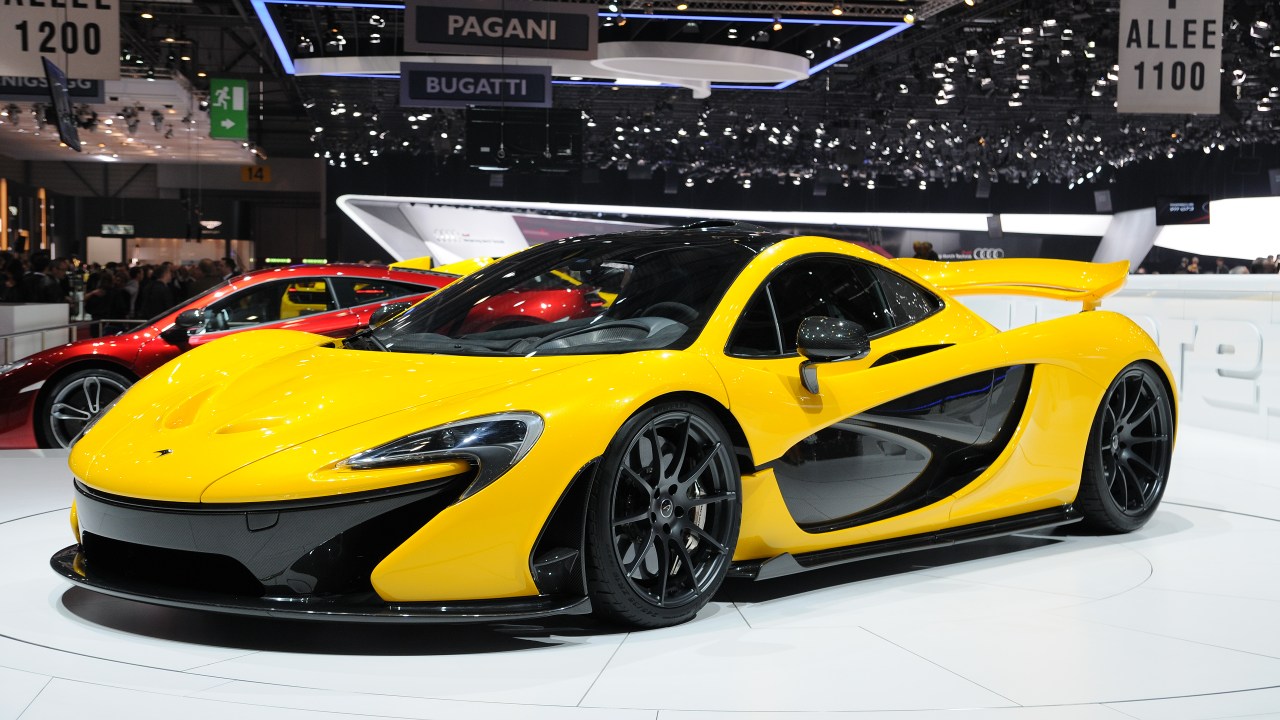
The 2013 McLaren P1 arrived as a statement of intent, using hybrid power not to save fuel but to chase lap times that bordered on racing-car territory. It was conceived as a successor to the McLaren F1, yet it redefined the hypercar template by pairing electric torque with a compact twin-turbo V8 and obsessive aerodynamics. A decade on, it still reads like a blueprint for how to build a road car that thinks like a track weapon.
Rather than chasing top-speed bragging rights alone, McLaren engineered the P1 around the stopwatch, from its Nürburgring ambitions to its limited production run that kept it rare and focused. The result was a machine that blended headline numbers with a singular purpose: to be the best driver’s car on both road and circuit.
From F1 successor to “Holy Grail” hybrid
McLaren did not give the P1 an easy brief. In internal documents, the project is framed as inheriting the mantle of the McLaren F1, which meant creating what the company describes in its own OVERVIEW as the best drivers’ car in the world. The car was unveiled at the Paris Motor Show as a hybrid supercar that would sit at the top of the brand’s range, and later coverage has repeatedly referred to it as the “Holy Grail of Hybrid Hypercars,” underlining how quickly it became a reference point for the segment. That positioning was not marketing excess so much as a reflection of how aggressively McLaren targeted circuit performance while still building a road-legal machine.
The production run was kept intentionally small to preserve that halo status and to keep development tightly focused. Reporting on the model notes that the P1 was built between 2013 and 2015, with just 375 m units produced, each priced around the seven-figure mark. That limited volume, confirmed in detailed breakdowns of the car and its derivatives, helped ensure that engineering decisions could prioritize performance over mass-market compromise. It also set the stage for even more extreme evolutions like the track-only GTR, of which only 50 m examples were made, reinforcing how central exclusivity and circuit focus were to the P1 program.
Hybrid powertrain built for instant lap-time response
At the heart of the P1 is a hybrid system that treats electricity as a performance enhancer rather than a fuel-saving device. The car combines a 3.8 liter twin-turbocharged V8 with an electric motor, a layout detailed in technical summaries of the model that identify the engine as part of the McLaren M838TQ family. Official specifications list total system output at 903 bhp and 664 lb-ft of torque, figures McLaren presents under its own FACTS and FIGURES section, with the labels “Power” and “Torque” attached to those exact numbers. That blend of combustion and electric thrust gives the P1 the kind of immediate response out of corners that conventional turbocharged engines often struggle to deliver.
The performance metrics underline how effectively that hybrid strategy was executed. McLaren’s own PERFORMANCE data cites a top speed of 217 m and quotes a 0 to 100 km/h (62 mph) sprint in 2.8 seconds, a figure echoed in anniversary material celebrating ten years of the car. Other performance-focused coverage translates that into a 0 to 60 m time of around the low two-second range, reinforcing the sense that the P1 accelerates with race-car urgency. What matters for lap times, though, is not just the straight-line numbers but the way the electric motor fills in torque gaps and allows the V8 to stay in its sweet spot, something owners and testers have repeatedly highlighted when describing how the car slingshots out of slow bends.
Aerodynamics and chassis tuned around the stopwatch
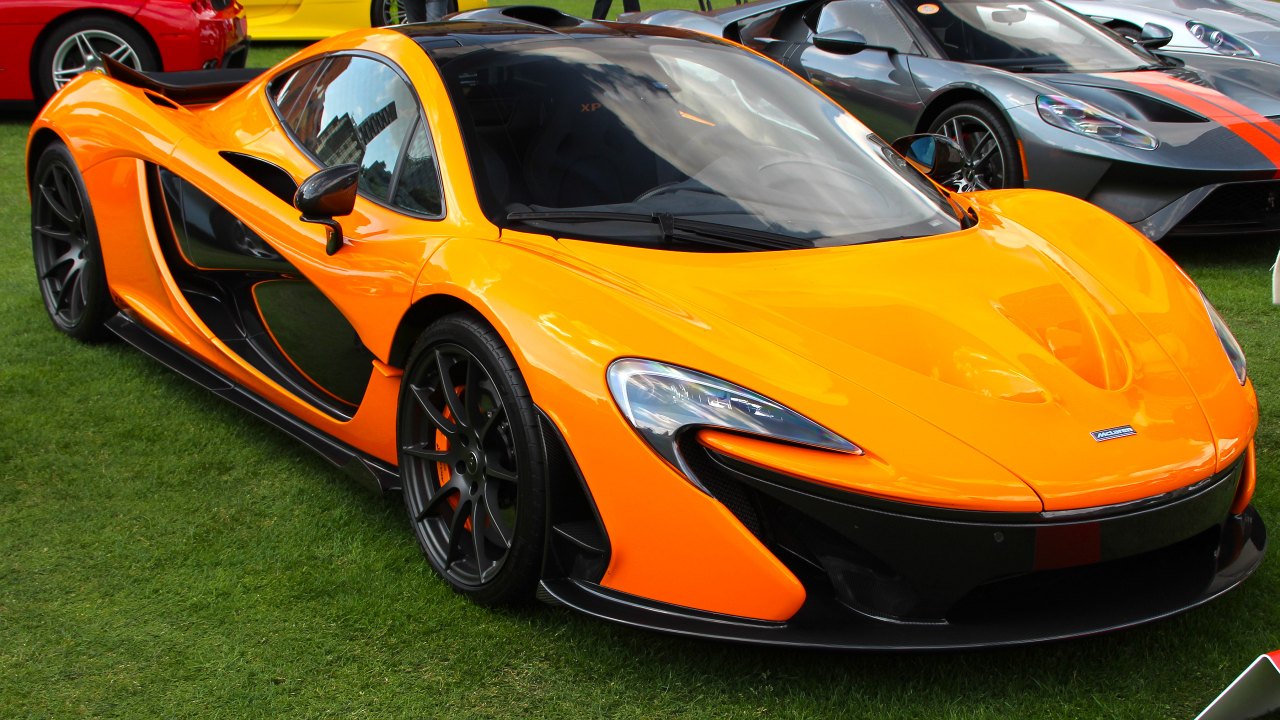
McLaren’s own description of the P1 makes clear that the chassis and bodywork were developed with track performance as the primary goal. The company notes in its OVERVIEW that no ordinary car could inherit the F1’s mantle, and that engineers set themselves one of the toughest challenges in the industry: to build the best drivers’ car on both road and track. That ambition drove an aggressive approach to active aerodynamics, with a large rear wing and complex body surfaces designed to generate significant downforce at speed while still allowing the car to function on public roads. The result is a machine that, visually and dynamically, feels closer to a prototype racer than a traditional supercar.
Weight and packaging were treated with similar seriousness. McLaren’s technical material lists a kerb weight of 1,490 kg (3,285 lbs), a figure also cited in its ten-year retrospective as part of the explanation for the car’s explosive acceleration and agility. The carbon-fiber tub, compact powertrain layout, and integrated battery system all contribute to keeping mass under control, which in turn helps the suspension and aerodynamics do their work more effectively. When combined with the hybrid system’s instant torque, the chassis tuning gives the P1 a reputation for being both brutally fast and surprisingly precise, a balance that is essential for a car built around lap-time performance rather than straight-line theatrics alone.
Nürburgring obsession and the P1 LM’s record run
Few places test a car’s all-round capability like the Nürburgring Nordschleife, and the P1 program was closely tied to that circuit from early on. Enthusiast discussions from the period reference the car lapping the Nordschleife in 6m47s, with one widely shared post noting that an official announcement was expected and asking, pointedly, “Will the LaFerrari beat it?” That kind of speculation captured how the P1, Ferrari’s LaFerrari, and Porsche’s 918 Spyder were locked in an unofficial arms race around the German track, using lap times as the ultimate proof of concept for their hybrid systems and chassis philosophies.
The most definitive Nürburgring statement, however, came from a derivative rather than the standard road car. In June, the McLaren P1 LM was launched at the Goodwood Festival of Speed as a road-converted version of the track-only GTR, and it quickly set its sights on the Nordschleife. Coverage of the program reports that the P1 LM later set a 6MIN 43SEC Nurburgring Lap Time, a figure that placed it among the fastest road-legal cars ever to lap the circuit. Further reporting notes that, after setting a record run at Goodwood, the P1 LM returned to Germany, where, with Kenny Br at the wheel, it recorded that 6:43 benchmark. The car used for the attempt had its air-jack system removed and other minor changes to optimize performance, but it remained fundamentally a P1-based machine, underscoring how the original design’s priorities translated into record-breaking pace.
Legacy, values, and the P1’s place in the market
More than a decade after its debut, the P1’s market position reflects both its technical significance and its scarcity. Contemporary buyer guides describe it as a “piece of automotive history” and emphasize that, when it first went on sale, it carried a price tag around the one million dollar mark. Those same analyses now treat the car as an appreciating asset, noting that the combination of 375 m units, its status as one of the first true hybrid hypercars, and its direct lineage from the McLaren F1 have made it a cornerstone of serious collections. The P1 GTR and P1 LM derivatives, with only 50 m and a handful of conversions respectively, sit even higher on the value ladder, but they all trade on the credibility established by the original 2013 road car.
From a performance perspective, the P1’s numbers still stand up in an era of ever more powerful electric and hybrid machines. The official 903 bhp and 664 lb-ft figures, the 217 m top speed, and the 2.8 second sprint to 100 km/h continue to look competitive against newer rivals, particularly when framed by the car’s relatively low weight and its focus on driver engagement. Anniversary material from McLaren describes the P1’s acceleration and handling as “astonishing” and notes that those traits “indeed remain” so, a rare case where corporate pride aligns with independent assessments. For me, that enduring relevance is the clearest sign that the P1 was not just the first hybrid hypercar built for lap times, but a benchmark that still shapes how manufacturers think about blending electric power with the art of going quickly around a circuit.