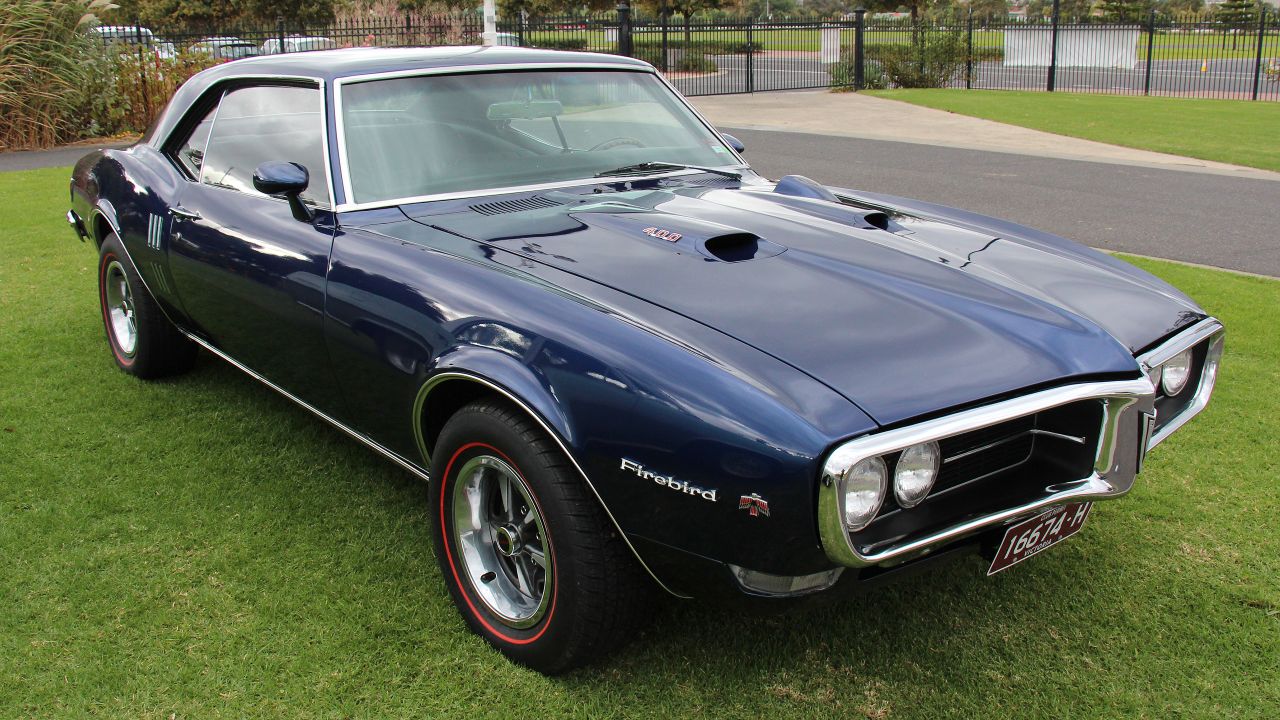
The 1968 Ram Air II option turned the Pontiac Firebird from a stylish pony car into a focused induction test bed, where airflow and cylinder head design mattered as much as cubic inches. By tightening the relationship between the hood scoop, intake path, and radically revised heads, Pontiac used the Firebird to push its Ram Air concept from marketing phrase to meaningful engineering.
I see the 1968 Ram Air II Firebird as the moment Pontiac’s performance division stopped treating cold air as an accessory and started treating it as a system, one that tied together block, heads, manifolds, gearing, and even dealer-installed hardware. The result was a short‑run package that not only made the Firebird brutally quick for its time but also advanced the brand’s entire approach to induction.
From brochure buzzword to serious airflow strategy
Pontiac did not invent the idea of feeding cooler, denser air to a performance engine, but it did formalize it under a single banner. The term Ram Air first appeared in Pontiac sales brochures in 1968 as the top engine option for GTOs, signaling that the company now saw cold-air induction as a distinct performance tier rather than a minor add‑on. That same philosophy quickly migrated to the Firebird, where the 400 cubic inch V8 and functional hood scoops created a natural canvas for a more aggressive intake package.
By the time Pontiac rolled out the 1968½ Ram Air II for the GTO, the company had already decided that Ram Air would be more than a scoop and decal. The running change that spring for the 400 Ram Air engine, renamed Ram Air II, brought deeper internal revisions that would also define the Firebird version. In other words, Pontiac used the Ram Air label as a gateway to introduce a new generation of airflow‑centric hardware, and the Firebird became one of the sharpest expressions of that shift.
New cylinder heads that redefined Pontiac induction
The real leap in the Ram Air II Firebird was not the hood scoop but what sat beneath the valve covers. The most important feature of the Ram Air II engine was a set of new cylinder heads that Pontiac described as “re‑designed to” improve breathing and accommodate round exhaust ports. That change alone signaled a break from earlier D‑port thinking, with the round ports aimed at reducing turbulence and aligning the exhaust flow with less restrictive manifolds and potential header use.
By reshaping the ports and revisiting the combustion path, Pontiac effectively turned the Ram Air II heads into the centerpiece of its induction strategy. The heads worked in concert with the functional cold‑air system, allowing the engine to take full advantage of the denser charge arriving from the hood inlets. Rather than treating the scoop as a standalone feature, Pontiac built a package where the intake path, port geometry, and exhaust outlet were all tuned to move more air through the 400 cubic inch V8, a philosophy that would influence later high‑flow Pontiac designs.
Firebird packaging: rare hardware, integrated system
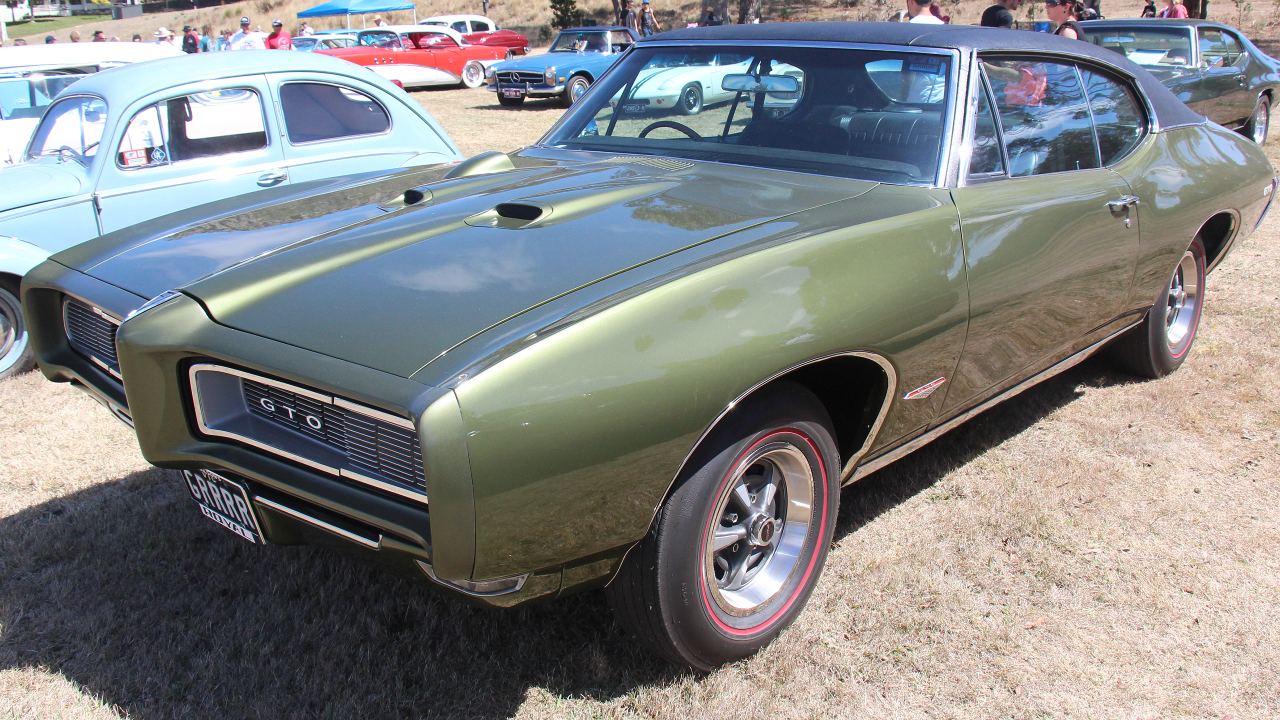
The Firebird application of Ram Air II was both technically ambitious and extremely limited in volume, which helped preserve its reputation as a purist’s package. Reporting on the first Ram Air II Firebird notes an ultra rare convertible shown at MCACN in November, described as one of only 8 produced and 4 known to exist. That scarcity underscores how experimental the combination was, with Pontiac effectively using a small batch of Firebirds to showcase its most advanced induction hardware.
Contemporary descriptions of a 1968 Pontiac Firebird 400 Ram Air II list a 400 cubic inch V8 rated at 335 to 340 horsepower, with 0 to 60 mph in 5.5 seconds and a quarter mile in 12.87 seconds at 109.48 mph. Those figures show how effectively the induction and head package translated into real‑world acceleration, especially for a street‑legal pony car of the era.
Shared DNA with the Ram Air GTOs
To understand how far the Firebird’s induction system had come, it helps to look at its GTO sibling. A report on a 1968 Pontiac GTO Ram Air II notes that a 360 horsepower Ram Air GTO with a four‑speed and 4.33 gears was a mid‑14‑second car in the quarter mile. That performance came from the same basic Ram Air II architecture, including the revised heads and less restrictive exhaust manifolds that complemented the improved intake flow.
When Pontiac made the running change for the 400 Ram Air engine and renamed it Ram Air II, it effectively created a shared performance core for both GTO and Firebird. The Firebird’s slightly lower published horsepower rating compared with the GTO’s 360 horsepower figure did not change the underlying induction philosophy. In both cars, Pontiac used the Ram Air II label to signal a package where the cold‑air intake, high‑flow heads, and freer‑breathing exhaust worked together, giving the Firebird access to big‑car airflow technology in a lighter, more agile chassis.
Midyear evolution and dealer‑focused hardware
The Ram Air II did not arrive as a clean‑sheet 1968 model year option, it came in as a midyear escalation. Coverage of Pontiac’s performance program notes that in 1968 a second iteration of the Ram Air setup returned in force as a midyear update, designated as a more aggressive package that built on the earlier system. That mid‑cycle timing allowed Pontiac engineers to respond quickly to racing feedback and to integrate the new heads and induction tweaks without waiting for a full redesign.
Alongside the factory hardware, Pontiac also leaned on dealer‑installed components to complete the induction story. Reporting on the first Ram Air II Firebird notes that certain parts were supplied for dealer installation after delivery, a reminder that the cold‑air and exhaust systems were sometimes finished at the retail level. That approach gave Pontiac flexibility to keep the core engine and head package consistent while allowing dealers and racers to tailor the final induction and exhaust configuration to local rules and customer preferences.
Legacy and modern recognition of the Ram Air II Firebird
More than five decades later, the 1968 Ram Air II Firebird still resonates because of how thoroughly it integrated induction into the performance equation. A social media post from Jul 14, 2021 highlights a Pontiac Firebird 400 Ram Air II with its 400 cubic inch V8 and 335 to 340 horsepower figures, underlining how enthusiasts still frame the car around its engine and acceleration numbers. That focus on airflow and output, rather than styling alone, is a direct legacy of the Ram Air II program.
The car’s influence also shows up in how faithfully it is recreated and celebrated today. A Jun 16, 2024 announcement of a 1968 Weidner Pontiac Drag 1:18th model describes a Pontiac Firebird First Ram Air II by ACME, explicitly calling out the 1968 1/2 Ram Air II as a late production car. When scale‑model builders and collectors emphasize the induction variant in the product name, it shows how central that system has become to the Firebird’s identity. The 1968 Ram Air II package did more than add horsepower, it advanced Pontiac’s entire understanding of how to move air through an engine, and the Firebird remains the clearest, rarest proof of that shift.
More from Fast Lane Only