The 1969 Dodge Charger Daytona was built to do one thing better than any muscle car of its era: slice through the air. Its radical nose, towering rear wing, and reshaped bodywork turned a familiar street machine into a rolling wind-tunnel experiment that still shapes how engineers think about high-speed stability today. I want to look inside that transformation, from the race-track problem it was meant to solve to the specific aerodynamic tricks that continue to echo in modern performance cars.
Rather than treating the Daytona as a museum piece, I see it as a case study in how racing pressure forces design to evolve. The car’s pointed front, reworked roofline, and dramatic rear aero were not styling flourishes, they were data-driven responses to lift, drag, and stability issues that plagued the standard Charger at NASCAR speeds. Understanding those choices helps explain why this “winged warrior” still feels relevant in an era of CFD simulations and active aero.
From brick to bullet: why Dodge had to rethink the Charger
The standard Dodge Charger was a sales success and a pop-culture icon, but at racing speeds it behaved more like a brick than a bullet. On long ovals, the big fastback body generated lift and drag that limited top speed and made the car nervous in traffic. The Dodge Charger Daytona was conceived as a direct response to that problem, with the main target being NASCAR competition where long tracks and wide turns punished any aerodynamic inefficiency.
Reports on the period racing program describe how engineers focused on cutting air resistance as much as possible while also taming front-end lift. The Daytona was not a clean-sheet design, it was an evolution of the earlier Charger 500, a car that already tried to smooth the nose and flush the grille to help it slip through the air. As one history of the program notes, Preparing for Takeoff meant starting with the Charger 500 and then pushing the aero work much further, turning a marginally improved race car into something that looked more like a prototype than a showroom coupe.
The nose cone and front-end lift problem
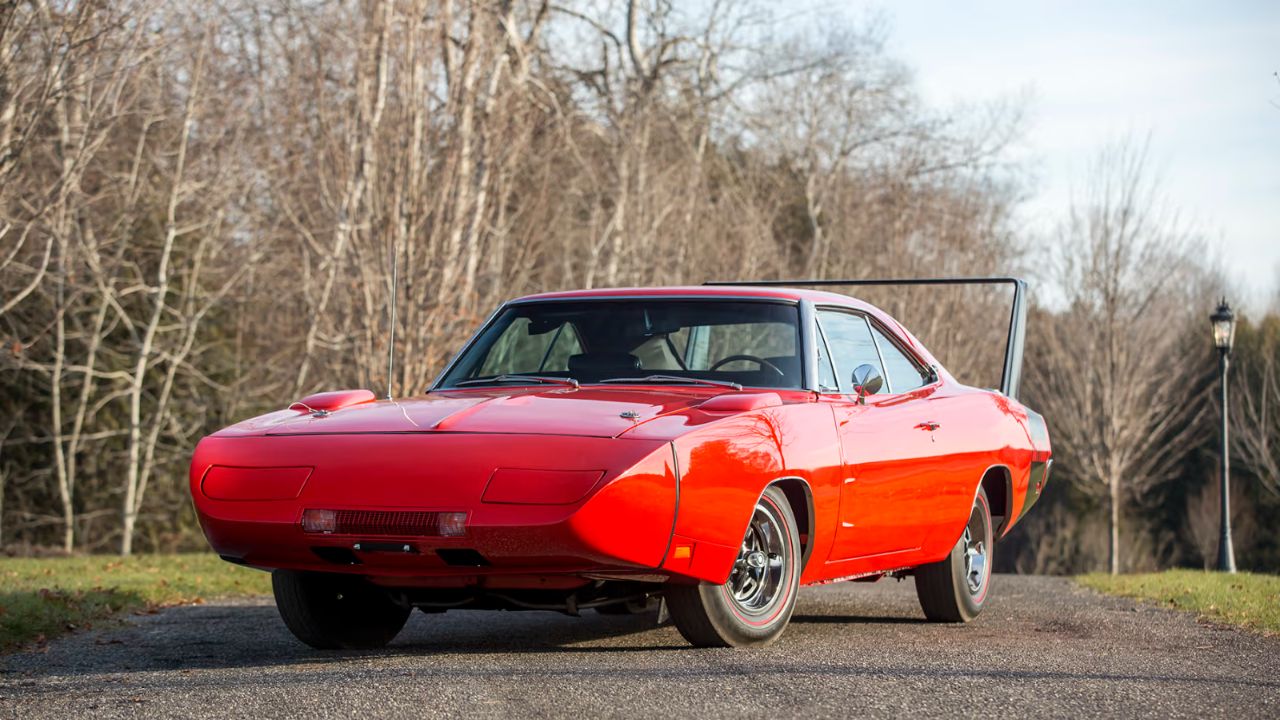
The most obvious change from a regular Charger to a Daytona is the long, pointed nose cone that replaces the upright grille. Unlike a standard 1969 Charger, the Daytona wore a sleek, extended front section that cleaned up airflow and reduced the blunt frontal area that had acted like a parachute at speed. Contemporary descriptions of the car emphasize that this radical front treatment was the key visual difference, and later coverage has repeated that the Daytona’s nose was designed specifically to cut drag and reduce front-end lift compared with the base Charger.
Wind-tunnel and track comparisons have since confirmed what the designers were chasing. Analyses of the Daytona’s aerodynamics explain that the car has less drag, less front-end lift, and more downforce than the regular Charger, which struggled with air piling up at the nose and lifting the front axle at very high speeds. One technical breakdown notes that the Daytona’s reshaped front allowed it to achieve similar downforce results to a modern performance sedan, even though the newer car relies on more subtle spoilers and underbody work. In that comparison, the Daytona stands out as a surprisingly efficient shape for something conceived with slide rules and wind tunnels rather than computer simulations.
The towering rear wing and high-speed stability

If the nose cone solved the problem of air hitting the front of the car, the Daytona’s towering rear wing addressed what happened as that air flowed over the roof and down the tail. The huge rear wing was added to provide high-speed stability, and period specifications describe it as measuring some 58 inches across and sitting 23.5 inches above the decklid. That height was not a styling stunt. Engineers raised the wing so it could sit in cleaner air above the turbulent wake behind the roof, which allowed it to generate more consistent downforce on the rear axle.
Later technical explainers have dug into why the 1969 Dodge Charger Daytona’s spoiler is so tall, and they point to the same basic physics. At NASCAR speeds, a low-mounted spoiler would sit in dirty air and lose effectiveness, while a high wing can reach undisturbed flow and act like a proper airfoil. Coverage of the program notes that the 1969 Dodge Daytona, and its corporate sibling the 1970 Plymouth Superbird, were among the first American stock cars to include such unprecedented aerodynamic features. Analyses of why the Spoiler is So Tall emphasize that the goal was not just rear grip but overall balance, pairing the downforce from the wing with the reduced lift from the nose cone so the car would feel planted from bumper to bumper.
Wind-tunnel lessons: from Charger 500 to Daytona
The Daytona’s shape did not appear overnight. Engineers first tried to fix the Charger’s aero issues with the Charger 500, which featured a more flush grille and a reworked rear window to reduce turbulence. That car was a step forward, but wind-tunnel work and race results showed it was not enough to dominate on the superspeedways. The Dodge Charger Daytona was an evolution of that effort, taking the lessons from the Charger 500 and pushing them further with the full nose cone, the tall wing, and additional tweaks like fender-mounted aero elements to mitigate lift.
Historical accounts of the development program describe a methodical process of testing, revising, and testing again. Engineers used wind tunnels to measure drag and lift, then translated those numbers into real-world performance on the track. Once on the track, the Daytona’s combination of reduced drag and increased downforce allowed it to run higher speeds with more stability than standard Chargers of the era. One retrospective on the “winged warrior” era notes that the Daytona’s package of changes, from the nose to the wing to the subtle body revisions, was so effective that it forced rivals and sanctioning bodies to rethink what a stock car should look like. The winged warrior nickname was not just about appearance, it reflected a car that had been shaped by data and competition.
How the Daytona still shapes modern aero thinking
More than half a century later, the Daytona’s influence is still visible in how engineers and fans talk about aerodynamics. Modern performance sedans and coupes rarely wear nose cones or sky-high wings, but the underlying principles are the same: reduce drag, control lift, and balance downforce front to rear. Technical comparisons between the Daytona and newer models highlight that the older car, despite its dramatic add-ons, achieved drag and downforce figures that are surprisingly competitive with modern designs. One analysis of how the Daytona compares to a contemporary Charger Hellcat notes that the classic car’s combination of less drag, less front-end lift, and more downforce still holds up when measured against a vehicle designed with far more advanced tools.
That legacy extends beyond raw numbers. The Daytona helped cement the idea that racing success could justify radical departures from showroom styling, as long as the changes were grounded in measurable aerodynamic gains. Its pointed nose and towering wing made the trade-off between aesthetics and performance impossible to ignore, and they set a template for later homologation specials that brought race-bred aero to the street. When I look at modern track-focused models with aggressive splitters, diffusers, and wings, I see a direct line back to the moment when the Dodge Charger Daytona turned a familiar muscle car into a rolling wind-tunnel experiment, proving that the air around a car can be engineered just as deliberately as the engine under its hood.
More from Fast Lane Only