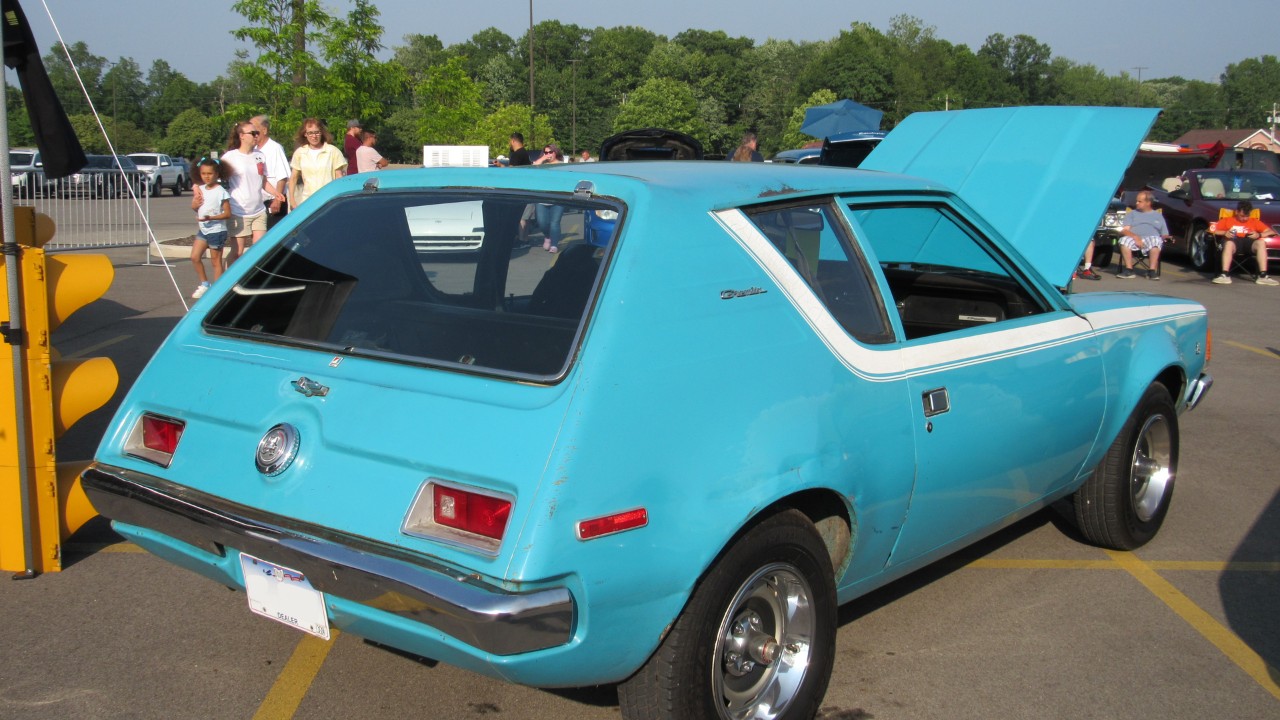
AMC introduced the 1970 AMC Gremlin on April 1, 1970, and the date fits the car’s cheeky looks. Still, there was nothing silly about what came next. The chopped little car opened a decade that changed what Americans drove, from small imports to downsized family sedans.
The 1970s get a rough reputation, and some of it is earned. Emissions rules choked big engines, and fuel prices sent buyers running to smaller cars. Yet the same decade gave us a Japanese sports car for regular people, the first Golf, a wedge-shaped supercar and the brochure that coined a term we use every day.
These are our 12 picks, the cars we think best sum up what driving in the 1970s felt like. Calling them generation-defining is our opinion, so feel free to argue. The years, engines and figures behind each pick come from model histories, period coverage and auction-market writers.
1. 1970 AMC Gremlin
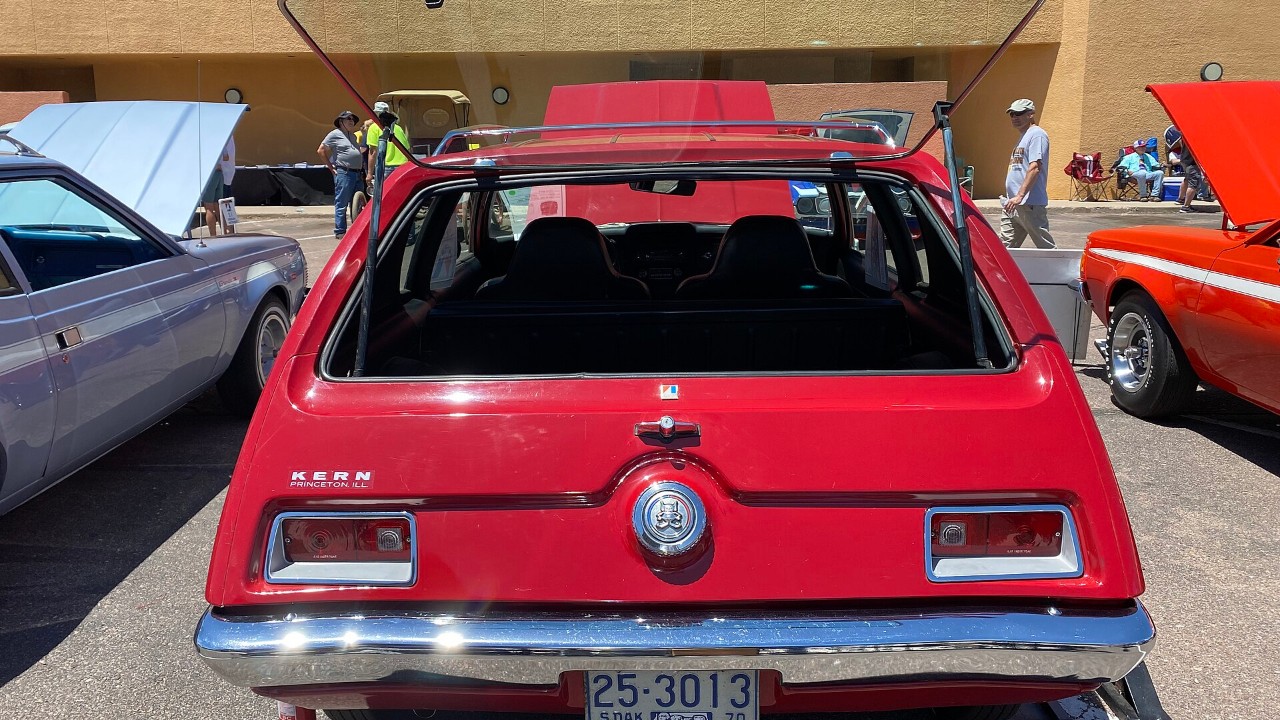
AMC built the Gremlin on a shortened version of its Hornet platform. That left a blunt, kammback-style tail that nobody could mistake for anything else. Design chief Dick Teague gets credit for shaping and naming the car, while Bob Nixon drew the first formal sketches.
The price was the real hook. A base two-passenger Gremlin had a suggested retail price of $1,879. Even so, it came with a 199-cubic-inch six rated at 128 horsepower. For more pull, buyers could order a 232-cubic-inch six.
Sales for the short first model year reached 25,300. By the end of the run in 1978, AMC had built 671,475 Gremlins. The Gremlin went up against Chevrolet’s Vega and Ford’s Pinto, both introduced that same year. In our view, no car says “early 1970s America” faster than a 1970 AMC Gremlin, because it was cheap, odd and proudly homegrown.
2. 1973 Datsun 240Z
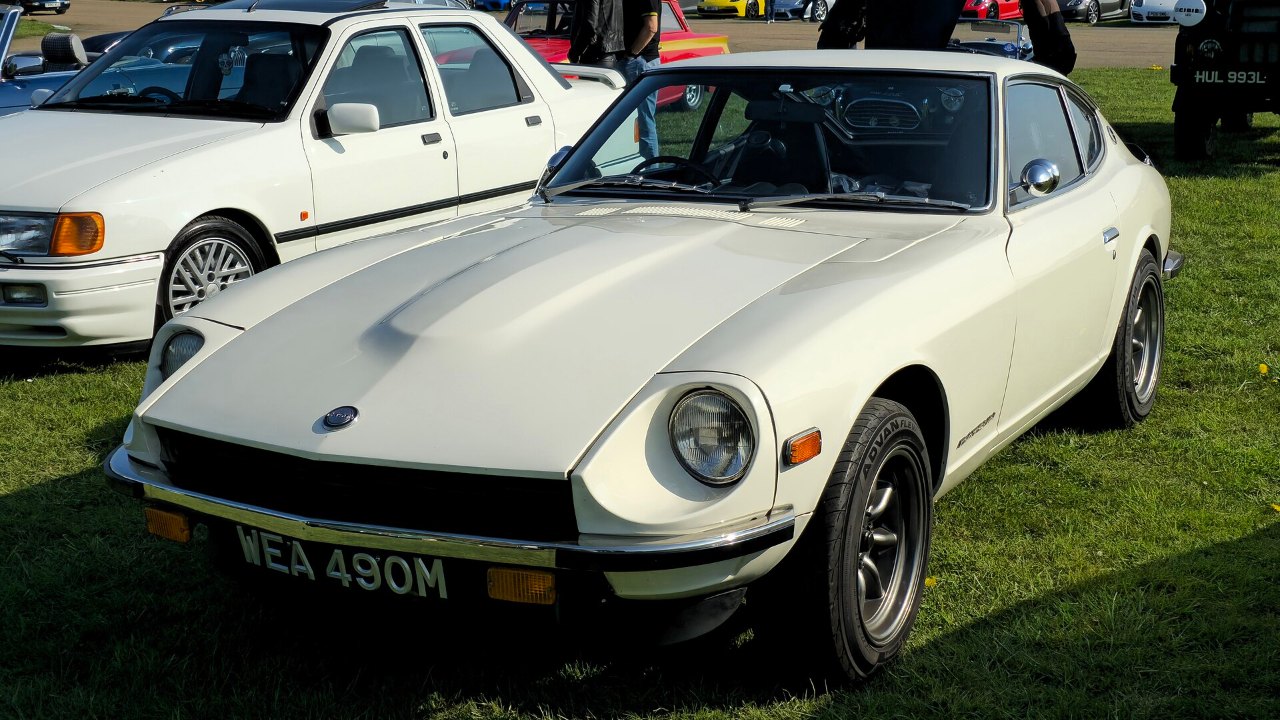
The 240Z started with one man in America. Yutaka Katayama, known as “Mister K,” conceived the car while he was president of Nissan’s U.S. arm, and he introduced it to American buyers. Meanwhile, Yoshihiko Matsuo led the styling team in Nissan’s sports car studio back in Japan.
The recipe was simple and it worked. A 2.4-liter L24 straight-six sat under the long hood, rated at 151 horsepower at 5,600 rpm in SAE gross terms. That gave buyers real performance for regular-car money. In our view, it was the first Japanese car many Americans wanted rather than settled for.
A 1973 car is one of the last of its line. For 1974, export models switched to the larger 2.6-liter 260Z. Our take: the 240Z changed how a whole generation saw Japanese cars, and the late cars are a sweet spot for anyone who wants the original name on the hatch.
3. 1972 Ford Pinto
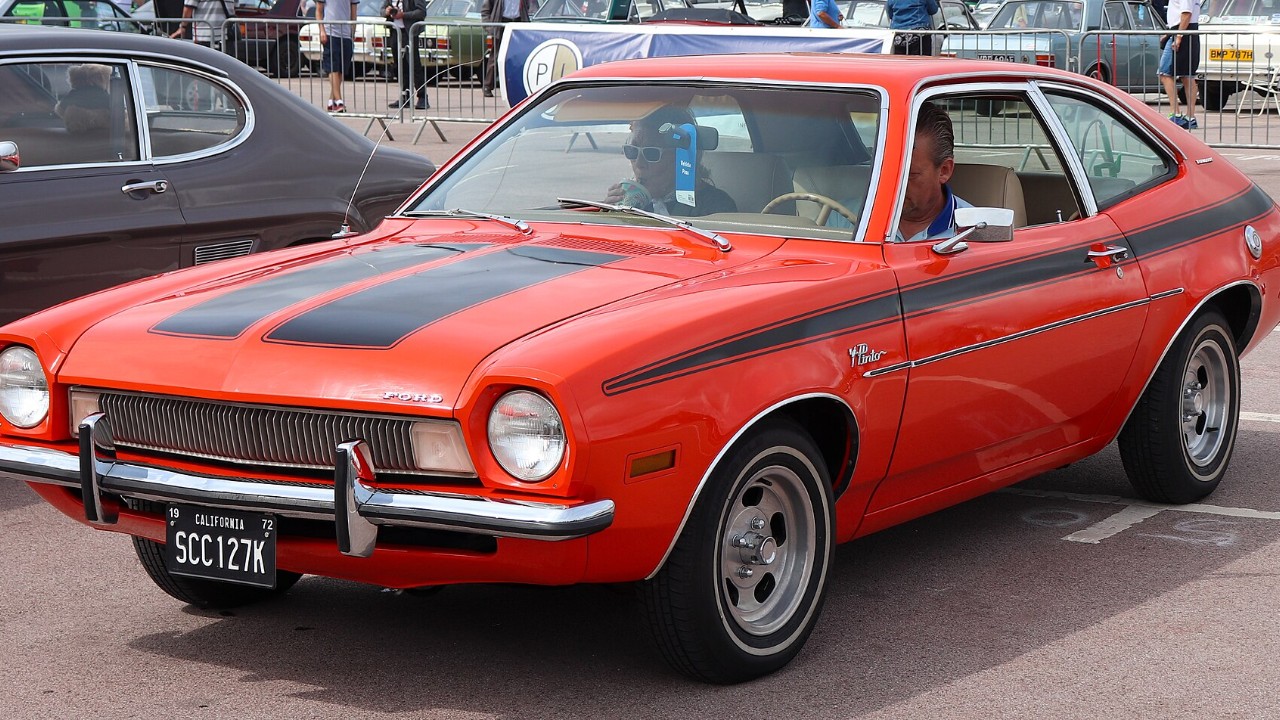
Ford introduced the Pinto on September 11, 1970. Lee Iacocca set the targets himself. He wanted the car to weigh under 2,000 pounds and cost less than $2,000. When it arrived, entry-level sedans started at $1,850.
The engines came from Ford’s European operations. Buyers could choose an English 1.6-liter four or a German 2.0-liter four. Over the decade, Ford built more than three million Pintos, so the car really was everywhere.
However, the Pinto is also remembered for its fuel tank, which sat behind the rear axle. NHTSA later found the fuel system defective. On June 9, 1978, Ford recalled 1.5 million Pintos and Mercury Bobcats, then the largest automotive recall. In our view, the Pinto belongs here for both reasons, because it showed what the decade wanted and what cutting corners could cost.
4. 1974 Pontiac Trans Am Super Duty 455
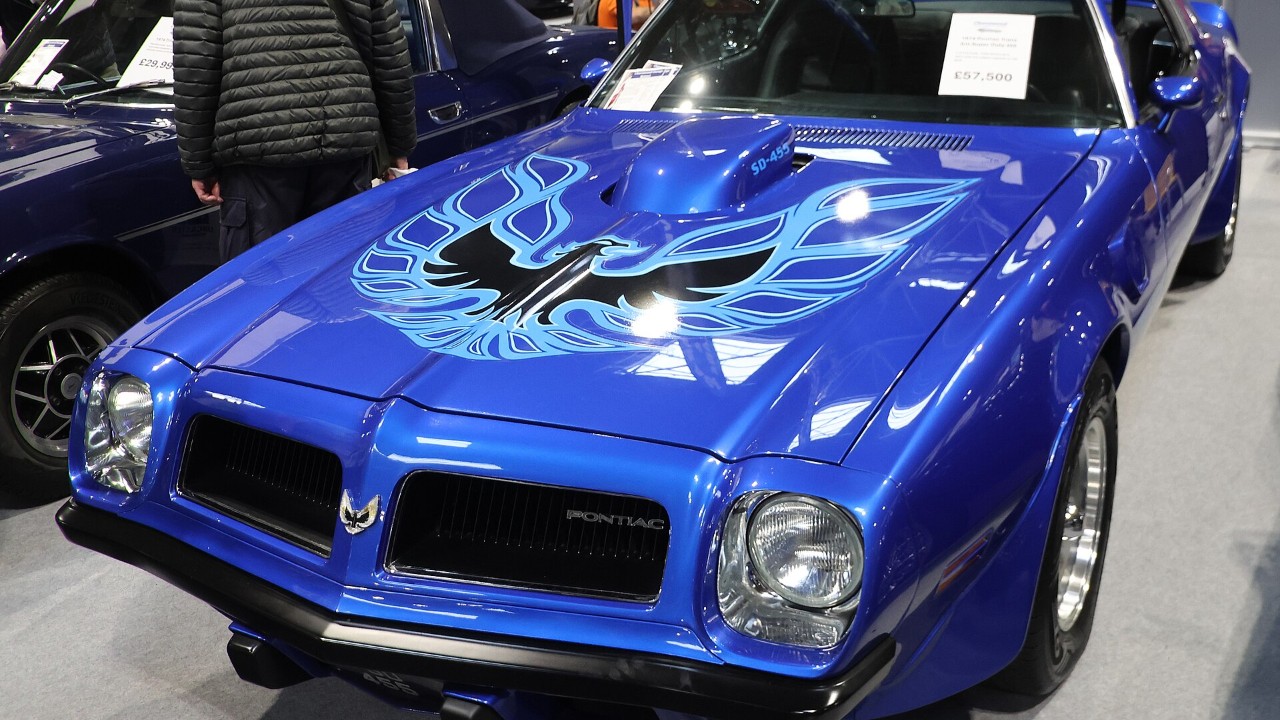
Hagerty calls this car one of the last true over-the-top muscle cars of the 1970s. Pontiac got there by going the other way from its rivals. Its Super Duty 455 was a hand-assembled V8 with a new block, heavier connecting rods and thicker internal bracing. It also got four-bolt main bearing caps and an 80-psi oil pump.
The power rating depends on when you ask. Hagerty notes the engine was publicized at 310 horsepower and 395 lb-ft. Meanwhile, Pontiac later dropped the rating to 290 net horsepower after internal changes, mainly to the camshaft. Either figure was huge for 1974.
The option cost $522, and Pontiac offered it only for 1973 and 1974 in the Trans Am and Formula. Just 943 Firebirds got the SD-455 for the 1974 model year, according to Hagerty. For more cars with real presence from the decade, see our list of 10 cars that proved style mattered in the 1970s. Our take: this was the last great gasp of the original muscle era.
5. 1975 Volkswagen Golf Mk1
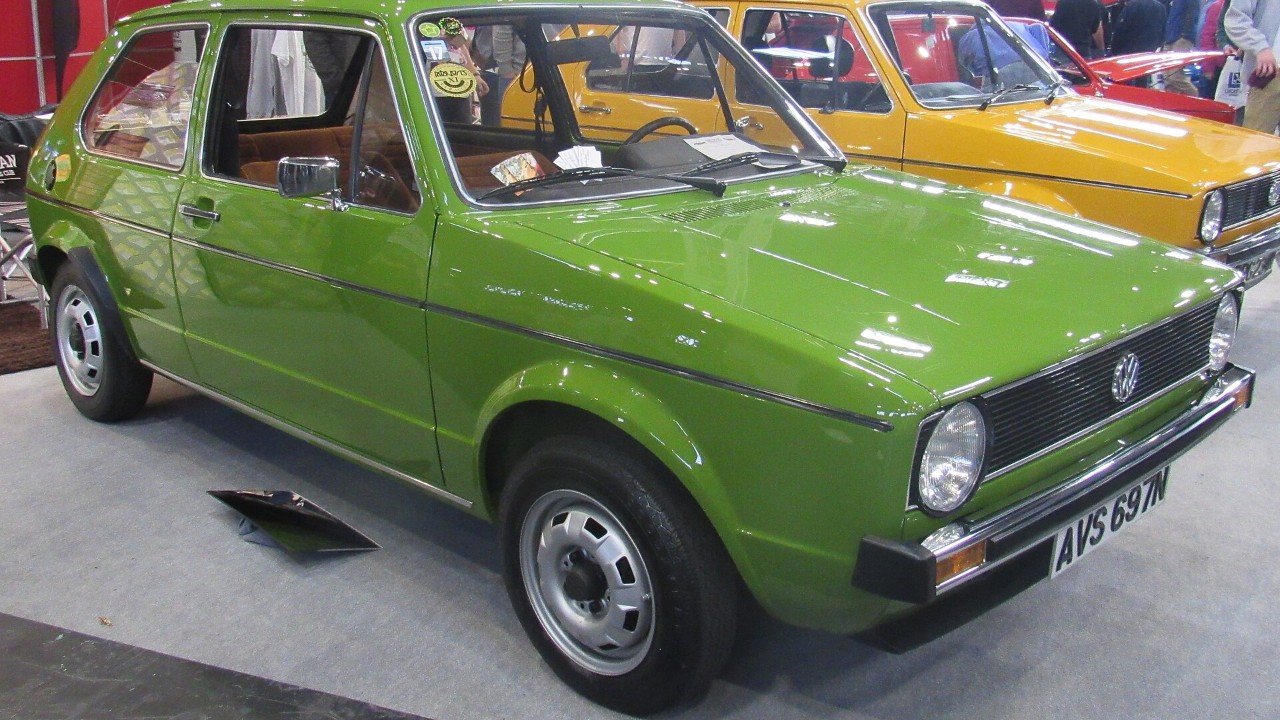
The Beetle had carried Volkswagen for decades, and the Golf had to replace it. Giorgetto Giugiaro at Italdesign drew the boxy hatchback. Then Volkswagen made the leap from rear-mounted, air-cooled engines to front-mounted, water-cooled engines driving the front wheels.
Volkswagen started building the car in March 1974, two months before its European launch. North American buyers knew it by another name, because VW sold it there as the Rabbit from that December. For 1975, European buyers could choose engines from a 1.1-liter rated at 50 PS to a 1.5-liter rated at 70 PS.
That layout soon spread far beyond Volkswagen. In fact, the hot version that followed, the GTI, sold 462,000 copies in Mk1 form alone. In our view, the Golf is the most important car on this list, because almost every small hatchback since has followed its basic shape and layout.
6. Honda Civic CVCC
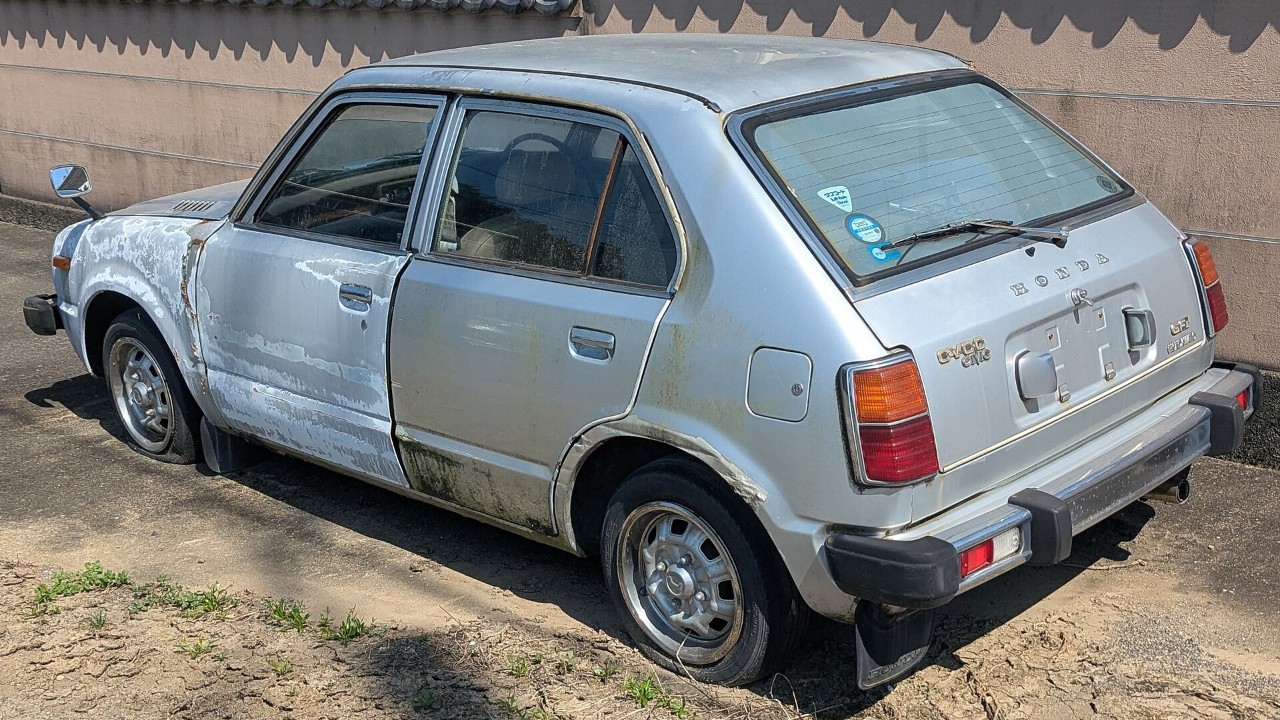
Honda’s Civic was already a small, thrifty hatchback when the CVCC engine arrived in 1975. CVCC stood for Compound Vortex Controlled Combustion. The idea was to burn fuel more cleanly inside the engine, instead of cleaning up the exhaust afterward.
It worked well enough that the CVCC design needed no catalytic converter and no unleaded fuel to meet the emissions rules of the time. In addition, its emissions equipment was not hurt by leaded gas. Because of California’s stricter standards, only the CVCC-powered Civic went on sale in that state.
The optional CVCC engine displaced 1,488 cc and made 53 horsepower at launch. That is a tiny number today. However, Honda had found a way to meet the rules without a catalytic converter. Our take: the CVCC is the moment Honda showed Detroit it could out-engineer the giants.
7. 1975 Lamborghini Countach LP400 Periscopio
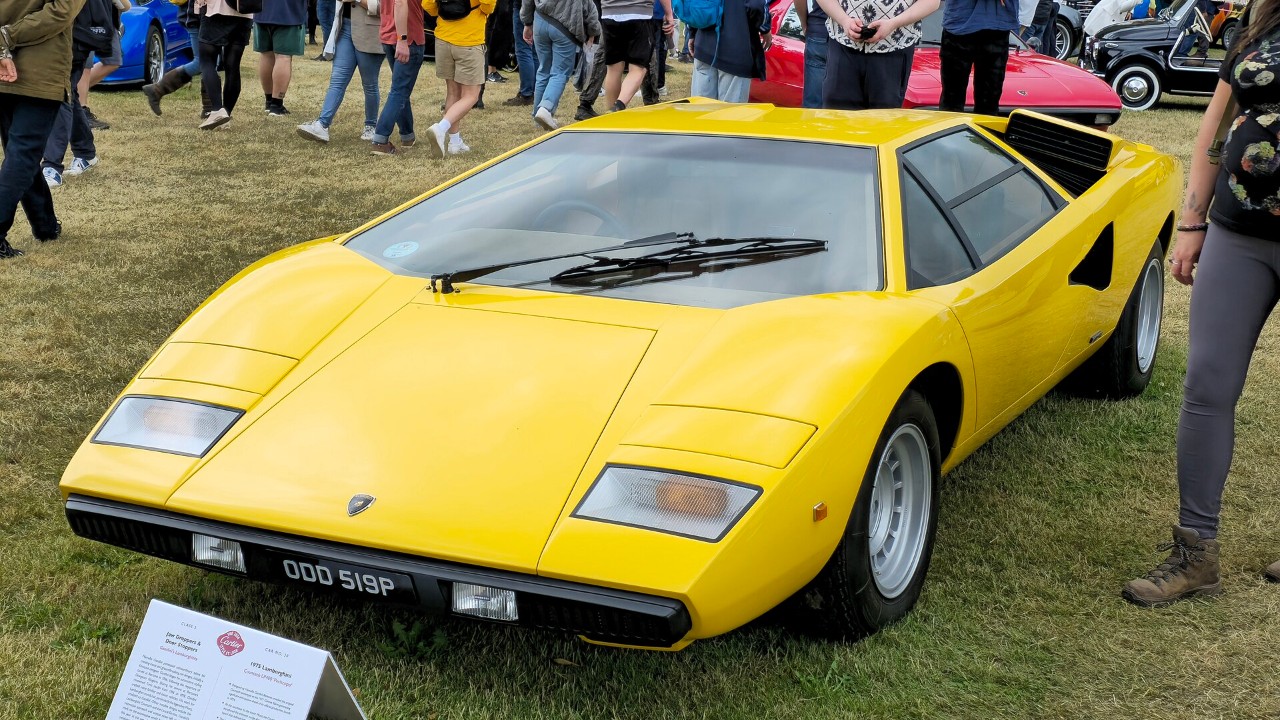
Every 1970s kid with a bedroom wall knows this shape. Marcello Gandini of Bertone drew the Countach as a sharp wedge with doors that lifted up and tilted forward. The production LP400 went on sale at the 1974 Geneva show, three years after the LP500 prototype.
The early cars had a quirk that gave them their nickname. Rear vision was poor, so Lamborghini built a periscope into the roof, using a system from Donnelly Mirrors. Later models dropped it for conventional mirrors. Behind the seats, a 3,929-cc V12 made 375 PS, or 370 horsepower, at 8,000 rpm.
Lamborghini built the LP400 from 1974 until 1978 and made just 157 of them. In our view, the Periscopio is the purest Countach, because it stays closest to Gandini’s original shape.
8. 1977 Chevrolet Caprice Classic
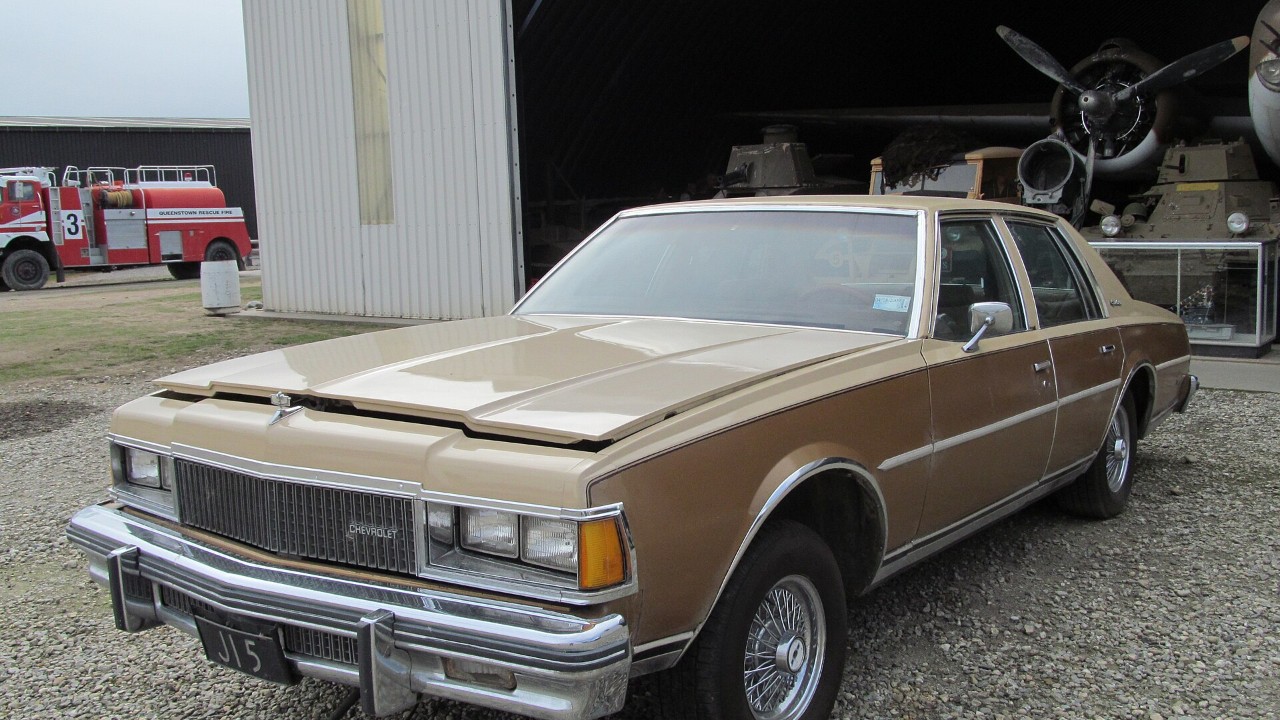
Chevrolet spent the mid-1970s planning a smaller full-size car, and the 1977 Caprice was the result. It came out of GM’s four-year Project 77, which reportedly cost $600 million. The new car was a full 700 pounds lighter than the 1976 model.
It was also nearly a foot shorter, on a 116-inch wheelbase, the same as the Chevelle. Even so, it kept the familiar six-cylinder and V8 choices. The top engine was a 350 small-block rated at 170 horsepower.
Buyers loved it. According to Mac’s Motor City Garage, Chevrolet’s full-size sales rose 38 percent over the year before. Motor Trend also named the Caprice Classic its Car of the Year. For more 1970s cars that get overlooked, see our list of eight 1970s cars that deserved more attention. Our take: the 1977 Caprice proved that smaller could also mean better.
9. 1978 Chevrolet Corvette Silver Anniversary
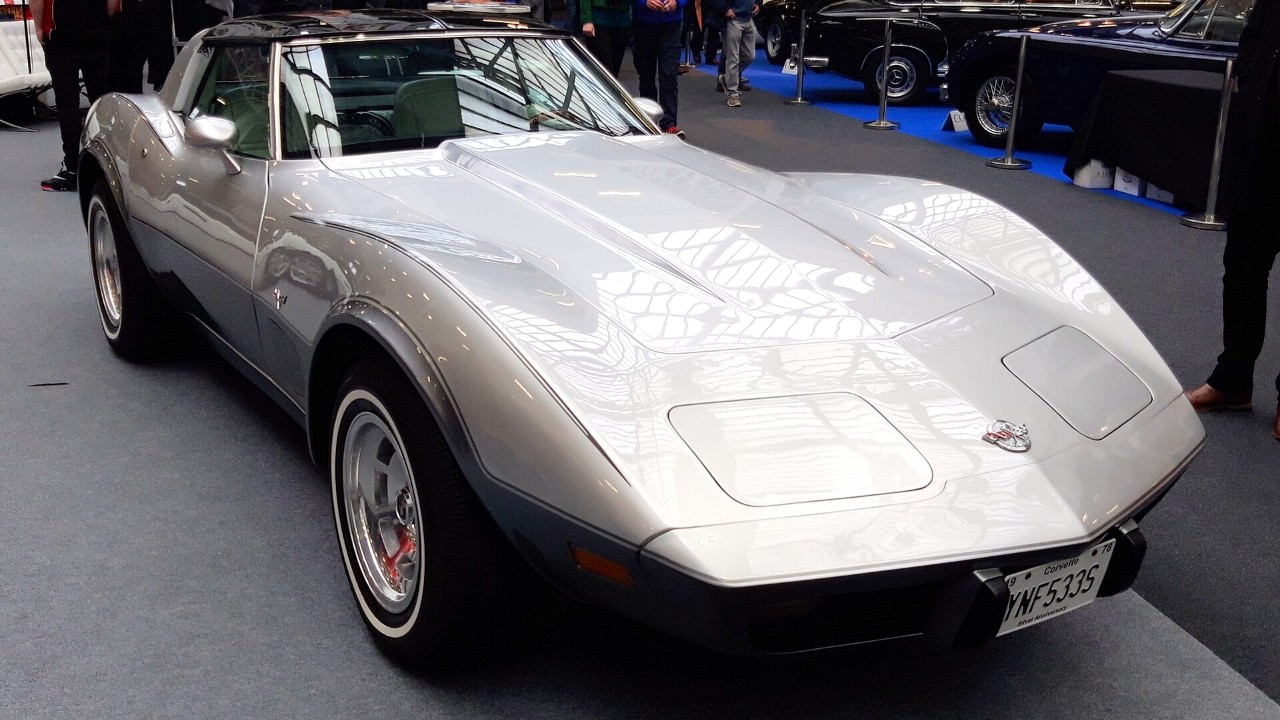
The Corvette turned 25 in 1978, and every car that year wore silver anniversary emblems on the nose and fuel door. Chevrolet also gave the C3 a new fastback rear window. That glass was the biggest styling change of the year, and it added cargo room.
The Silver Anniversary paint package, option B2Z, cost $399. It put silver over a gray lower body with a pinstripe, and it was the first two-tone paint option since 1961. However, it also required aluminum wheels and sport mirrors, which added $380.
Under the hood, the base L48 350 made 185 horsepower, and the optional L82 made 220 horsepower. Chevrolet built 46,776 Corvettes for 1978, including 6,502 Indy Pace Car replicas. Our take: the Silver Anniversary car is the smarter way to own a 1978, because Pace Car replicas get most of the attention.
10. 1974 Jeep Cherokee S
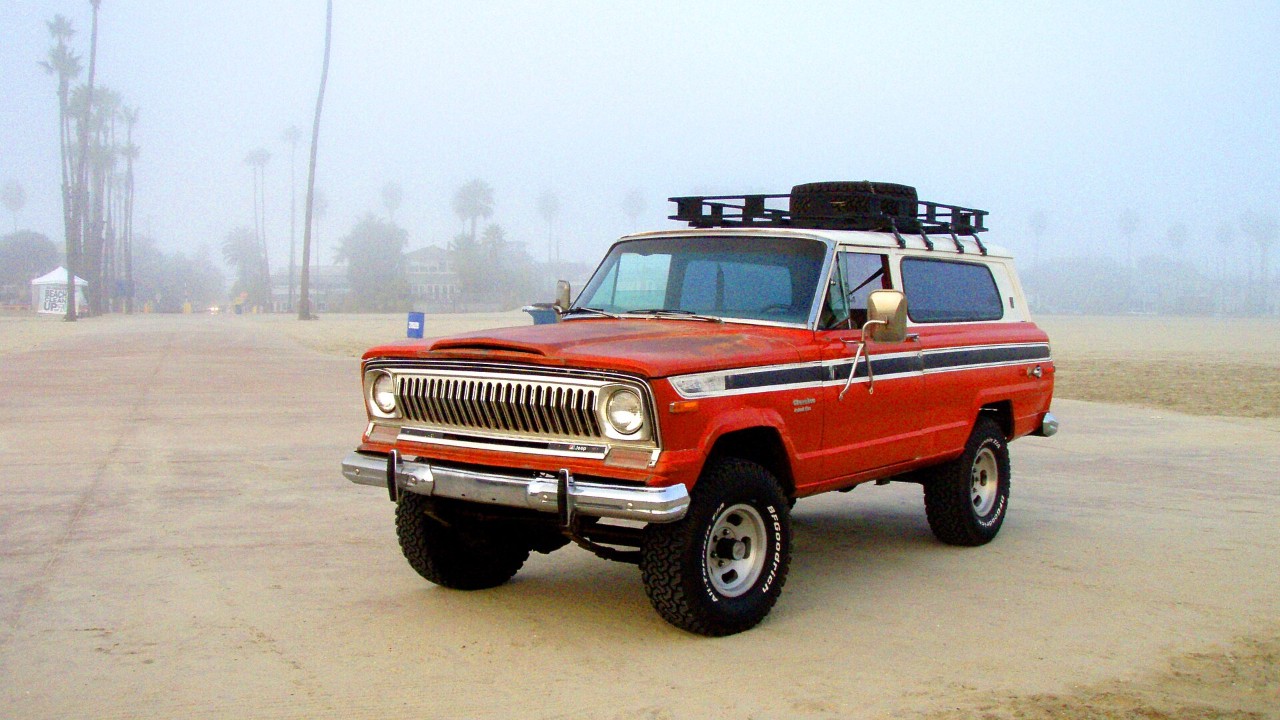
Jeep launched the SJ Cherokee for 1974 as a sporty two-door version of its Wagoneer. The chassis, engines, gearboxes and much of the body from the A-pillar forward came from that wagon. Brooks Stevens had originally designed the Wagoneer back in 1963.
The S was the top trim for 1974, sold as the Model 17. Jeep aimed the Cherokee at younger four-wheel-drive buyers. Under the hood, the choices ran up to a 401-cubic-inch V8, which Jeep offered only from 1974 to 1978.
Here is the part that earns its place on this list. As Silodrome notes in its Cherokee history, the phrase “sport utility vehicle” first appeared in a 1974 Jeep Cherokee brochure. Today that term is everywhere. In our view, that makes this two-door Jeep one of the most influential vehicles of the decade.
11. 1973 Chevrolet Cheyenne Super 10
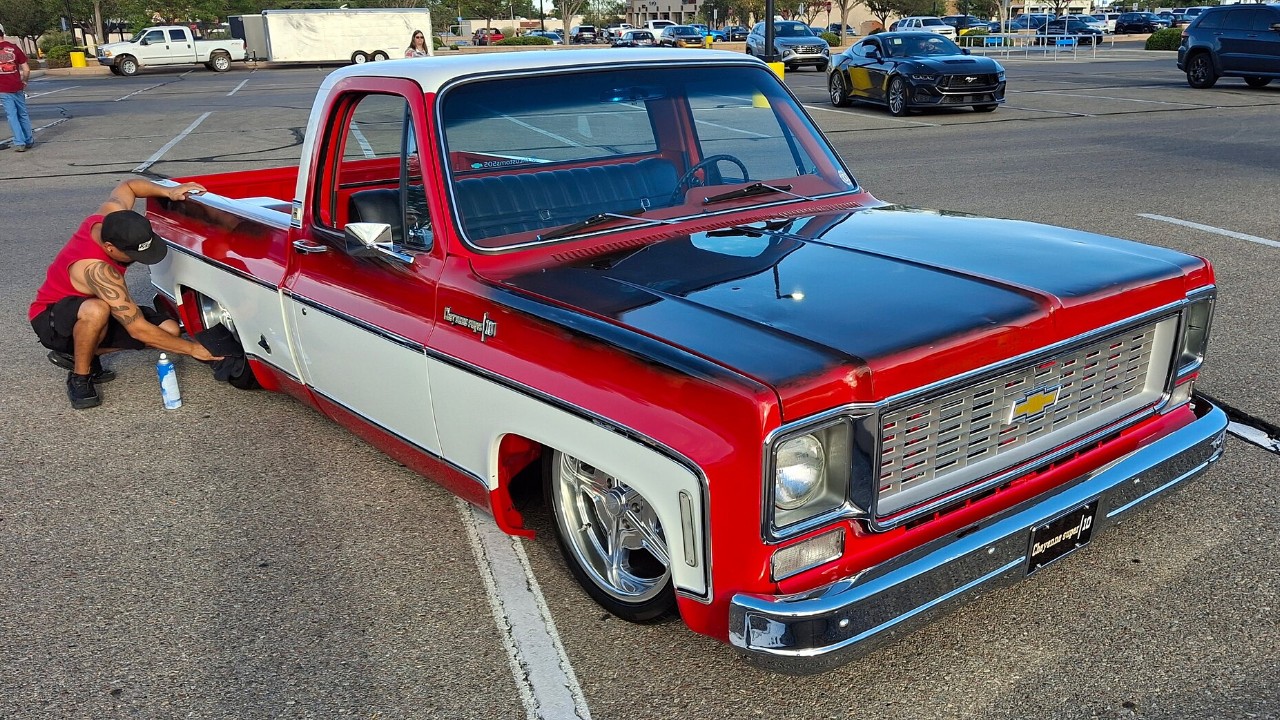
Chevrolet’s new pickups for 1973 wore GM’s “Rounded Line” styling, though most people call them square-bodies. The hood blended into the front fenders, and the windshield curved wider than before. The radio antenna even hid inside the glass.
Chevrolet sold four trims that first year: Custom, Custom Deluxe, Cheyenne and Cheyenne Super. The Cheyenne and Cheyenne Super added carpeting, a headliner and extra sound insulation. In our view, that was a big step toward the comfortable pickup.
The Cheyenne Super did not last long at the top. For 1975, Chevrolet added the Silverado as its new flagship trim, and it replaced the Cheyenne Super. Meanwhile, the Rounded Line itself ran all the way through the 1991 model year. Our take: a 1973 Cheyenne Super 10 is a first-year square-body with a trim name that vanished fast, which makes it a fun find.
12. 1977 Ford Granada Ghia
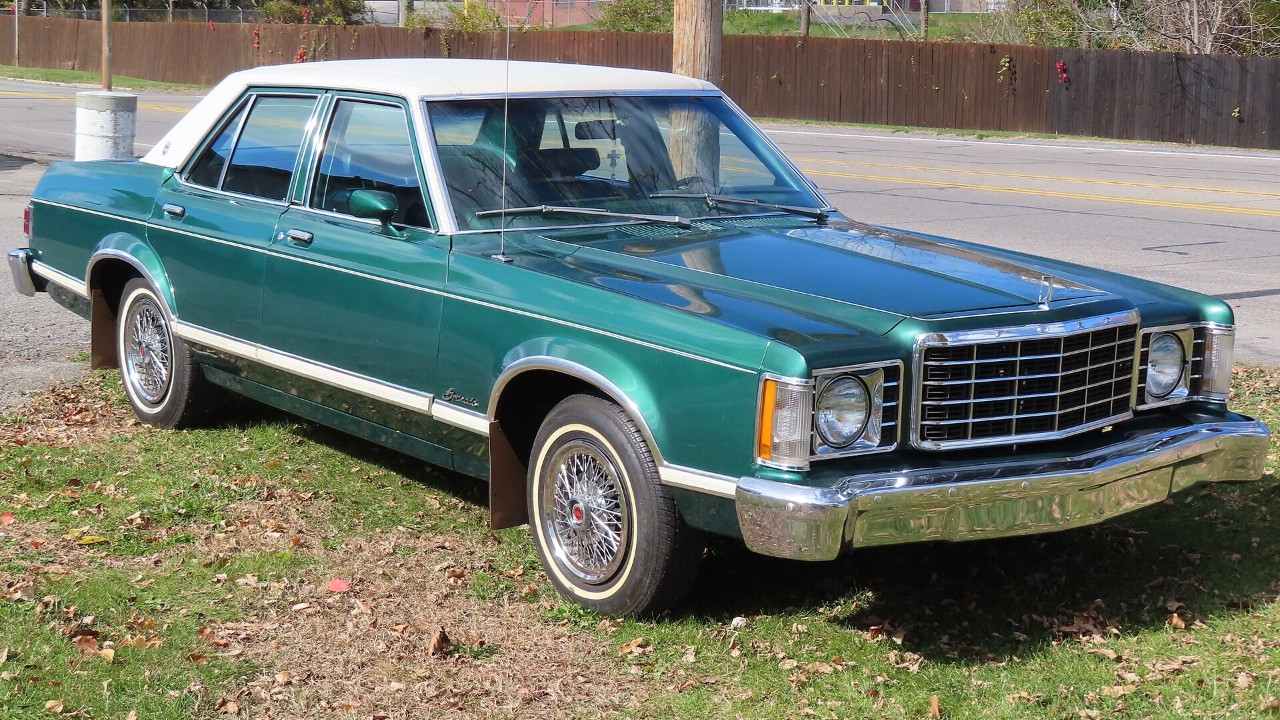
Ford launched the Granada for 1975, slotting it between the Maverick and the Torino. Ford pitched it as a luxury compact. The four-door’s roofline, grille and taillamp proportions drew heavily on Mercedes-Benz, and Ford used the Mercedes 280 as a benchmark.
The Ghia was the top trim. Outside, a vinyl roof set it apart. Inside, it had an upgraded interior with a wood-trimmed dashboard, plus cloth or leather seats as options. Engines ran from a 200-cubic-inch six up to the 351 Windsor V8, an engine Ford offered only in the Granada, not the Maverick.
The formula clicked with buyers. In its best year, 1976, Ford built 548,784 Granadas, with 340,380 sedans and 208,404 coupes. In our view, the Granada Ghia captures the late 1970s better than any sports car, because it sold Americans a little Mercedes style at a Ford price.
More from Fast Lane Only