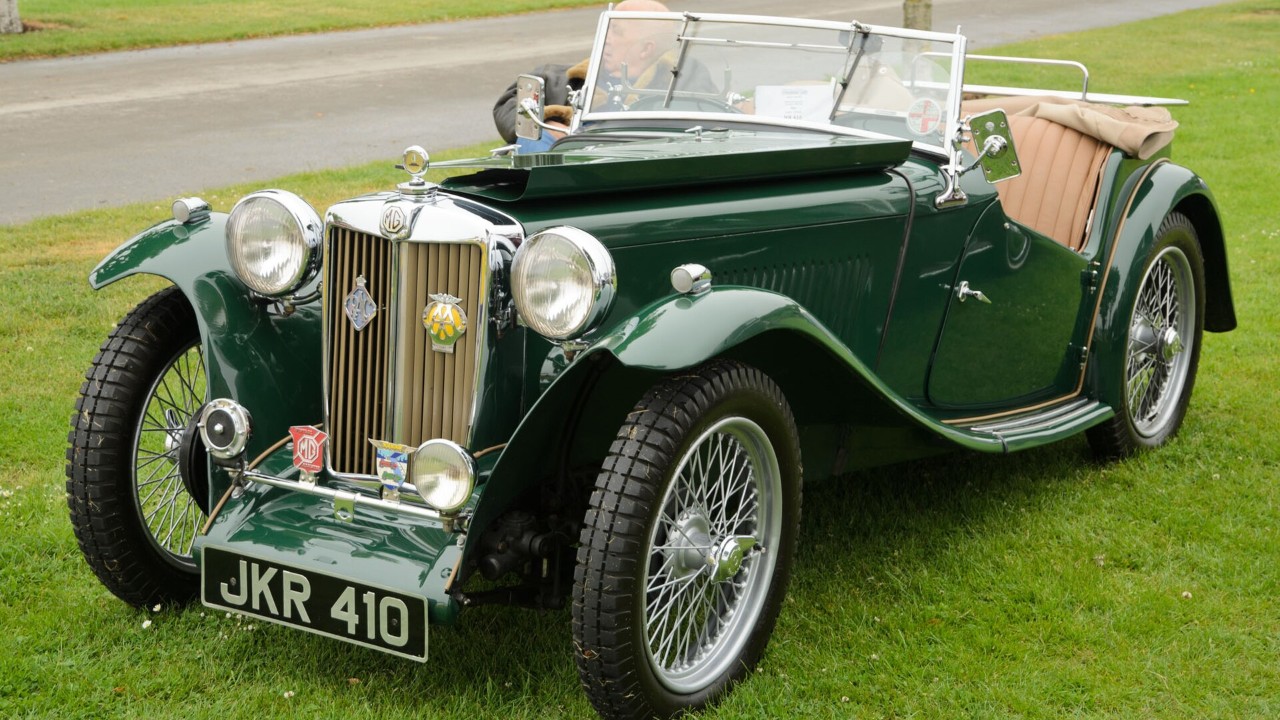
MG built its TC Midget only in right-hand drive, yet the little roadster crossed the Atlantic anyway. Plenty of other British two-seaters, from Austin-Healey to Triumph and Jaguar, made the same trip. For a few decades, nobody built open cars quite like the British did.
The famous names sold by the tens of thousands. But the story was never only about the big firms. Small firms built race-ready specials, and a Blackpool company kept the idea going with a V8 in the 1990s. Some of those cars are well known today, while others have slipped out of the conversation.
So these are our picks for 12 British roadsters worth remembering, from the 1940s to the late 1990s. The choices and the verdicts are our opinion. However, the years, engines, outputs and production figures come from period road tests, club histories and model records we read for this list.
1. 1947 MG TC
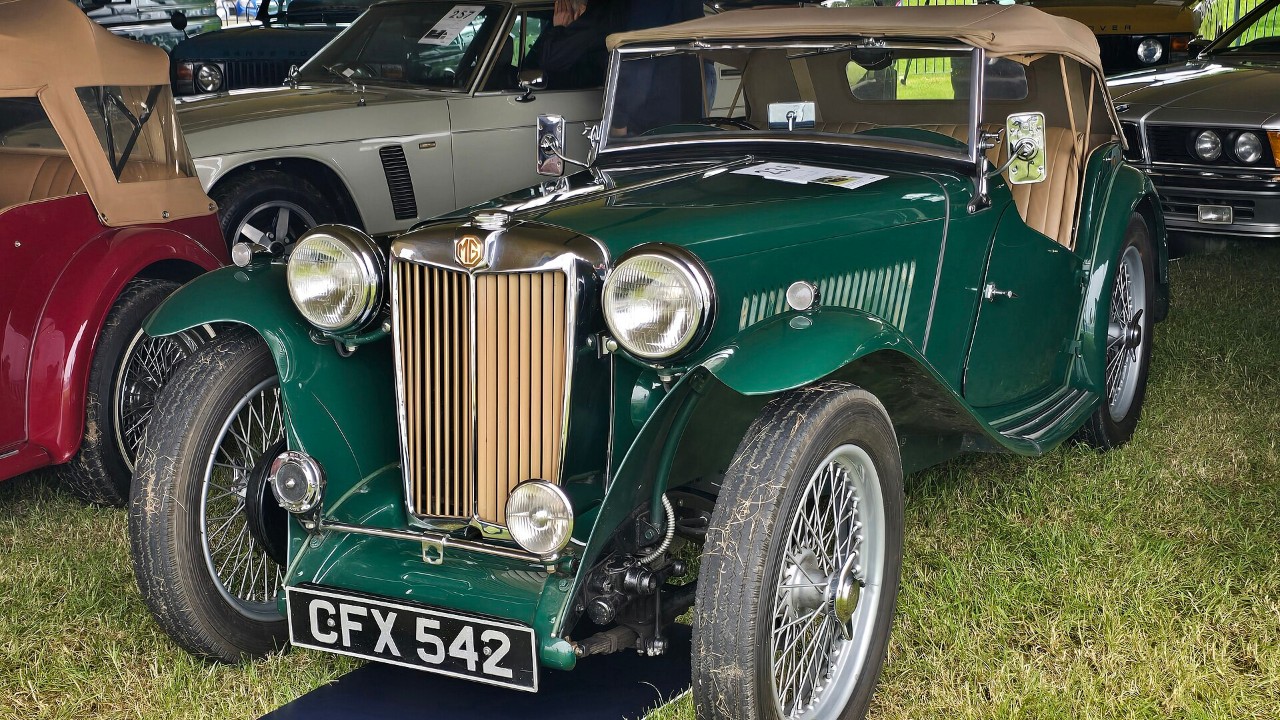
The TC went into production in September 1945. MG kept building it until November 1949, by which time 10,001 had left the line.
Power came from the 1,250 cc XPAG four, an overhead-valve engine making 54.5 bhp at 5,200 rpm. That was not a lot, even then. In fact, the TC needed 22.7 seconds to reach 60 mph. Nobody bought one for the numbers, though. They bought it for the cutaway doors, the big wire wheels and the upright grille.
MG also sent the TC to the United States, even though every car had right-hand drive. American-market cars got 7-inch sealed-beam headlights, twin tail lights, turn signals and chrome bumpers with overriders. We think that detail tells the whole story: buyers wanted the car badly enough to sit on the “wrong” side. For more on what came next, see how the 1953 MG TD charmed export markets. Our take: the TC is the place to start if you want to understand why British roadsters caught on. It is slow, simple and charming, and it makes no apology for any of it.
2. 1957 Austin-Healey 100-6
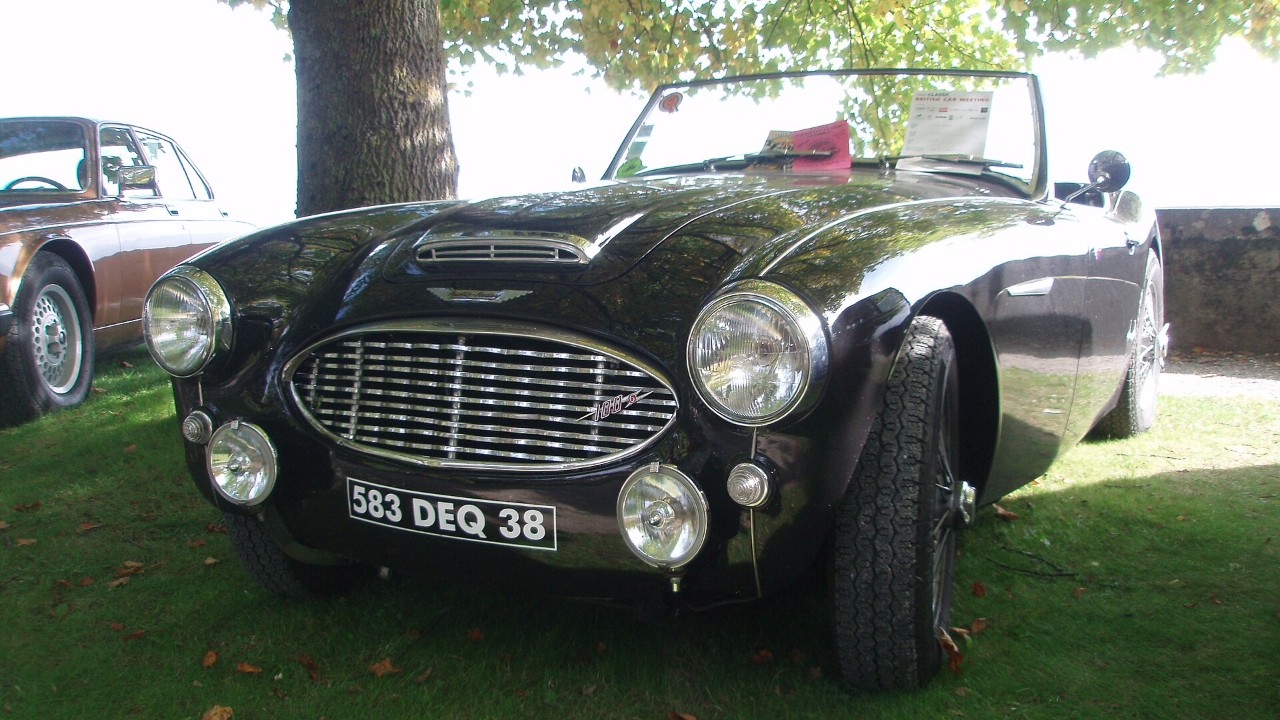
The 100-6 replaced the original Austin-Healey 100 with a six-cylinder car. Announced in late September 1956, it used BMC’s 2,639 cc C-Series inline-six. At first it made 102 bhp. Then, in 1957, a revised manifold and cylinder head raised that to 117 bhp.
The car also grew. Its wheelbase stretched to 92 inches, two inches longer than the 100’s, and the first cars were 2+2 BN4s. Later, in 1958 and 1959, a two-seat BN6 joined it. Production moved too. Austin-Healey cars began life at Longbridge, but in late 1957 the work shifted to the MG plant at Abingdon.
How quick was it? In 1959, The Motor tested a 117 bhp BN6 and recorded 103.9 mph, with 0 to 60 mph in 10.7 seconds. Austin-Healey built 14,436 of the 100-6 in all. In our view, it gets overlooked because it sits between the raw 100 and the famous 3000. That is a mistake. If you want the big Healey look with a smoother engine, the 117 bhp cars are the ones we would hunt for. We also looked back at the 1956 Austin-Healey 100M, the car that came just before.
3. 1950 Frazer Nash Le Mans Replica
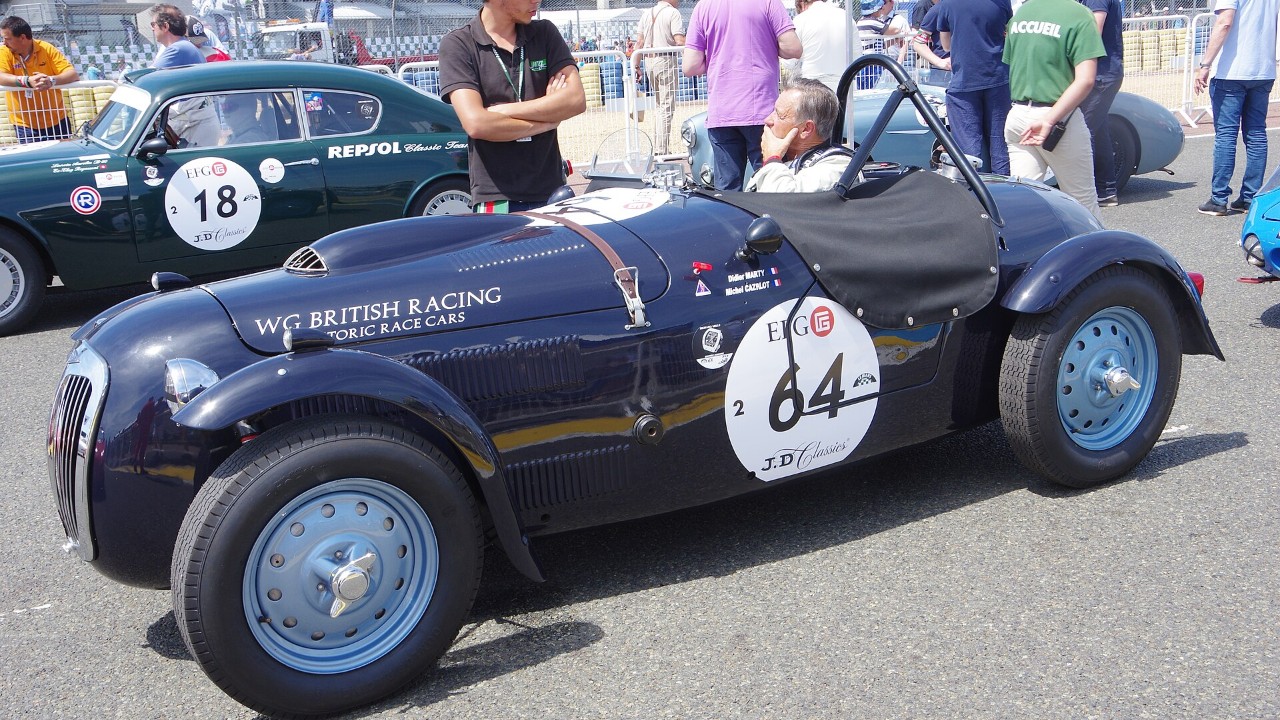
Few cars earned their name as honestly as this one. In 1949, a Frazer Nash with a Bristol-based six finished third at Le Mans. So the company named its new competition two-seater the Le Mans Replica and sold it to customers who wanted to race.
According to a Motor Sport history of the Le Mans Replica, the engine was a six-cylinder Bristol unit derived from the 1939 BMW 328. The chassis used heavy main tubes with lighter tubing above, and the suspension stayed fairly simple. Motor Sport reported speeds of over 120 mph and a 16-second standing quarter-mile. That BMW link also gives the car an interesting Anglo-German back story.
Frazer Nash built only about fifty of them across roughly four years. Owners took them to everything from the Targa Florio to a Goodwood club meeting, because the cars left the works ready to race. Our take: this is the most serious machine on the list. It was a race car you could, in theory, drive home. And because Frazer Nash built so few, seeing one at a vintage meeting is a real treat.
4. 1951 Allard J2
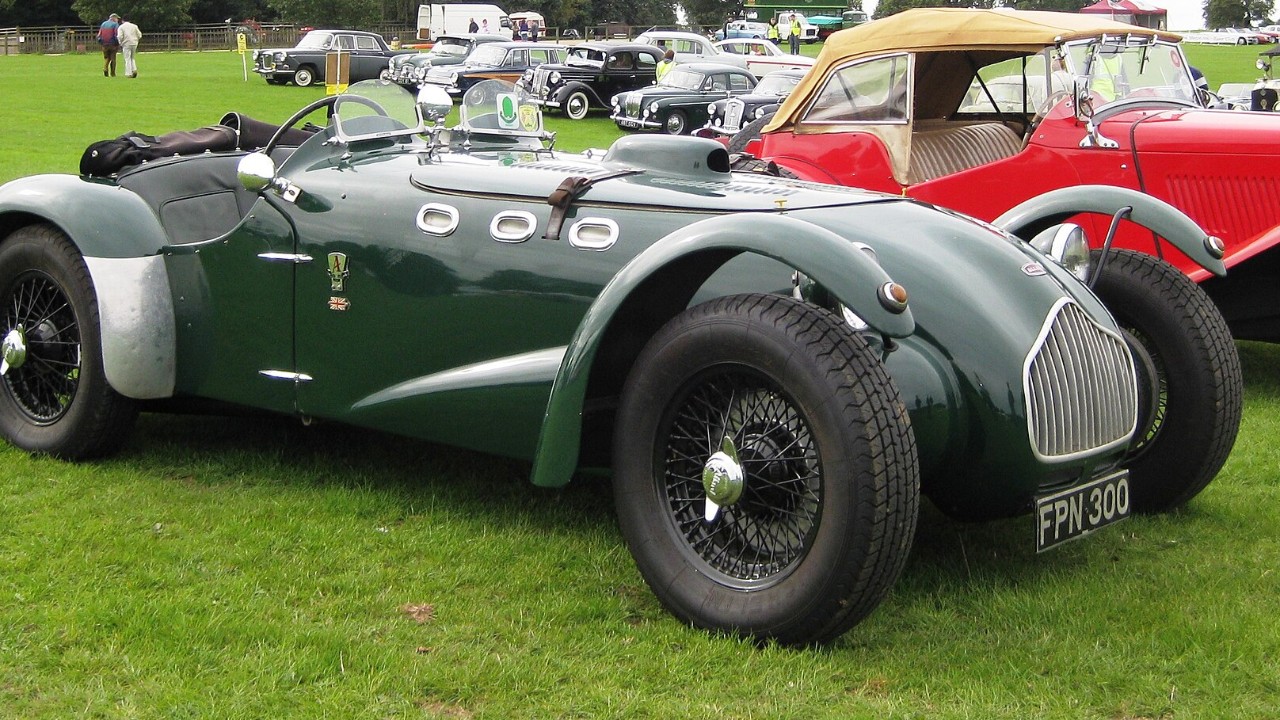
Sydney Allard built the J2 with America in mind. The cars often crossed the ocean without engines, and owners there fitted their own V8s, such as Cadillac, Oldsmobile or Chrysler units. In Britain, by comparison, the standard engine was a 3.6-liter Ford flathead V8 making 85 hp, with a 4.4-liter Mercury V8 of 110 hp on the options list.
The chassis was more advanced than the looks suggest. At the rear, a de Dion tube with coil springs carried inboard brakes and a quick-change differential. The front used a swing axle, also on coil springs. Meanwhile, the whole car weighed about 940 kg, or 2,072 pounds.
The J2 also had a fine moment at Le Mans. In 1950, Sydney Allard and Tom Cole drove a Cadillac-engined J2 to third place overall. Allard built 90 J2s between 1949 and 1951, then 83 of the later J2X. We think the J2 is one of the purest examples of the Anglo-American hot rod idea. It is a light British chassis with a big American heart. Better yet, it shows how far a small British firm could go with a borrowed engine and a clever chassis.
5. 1951 Singer Nine Roadster
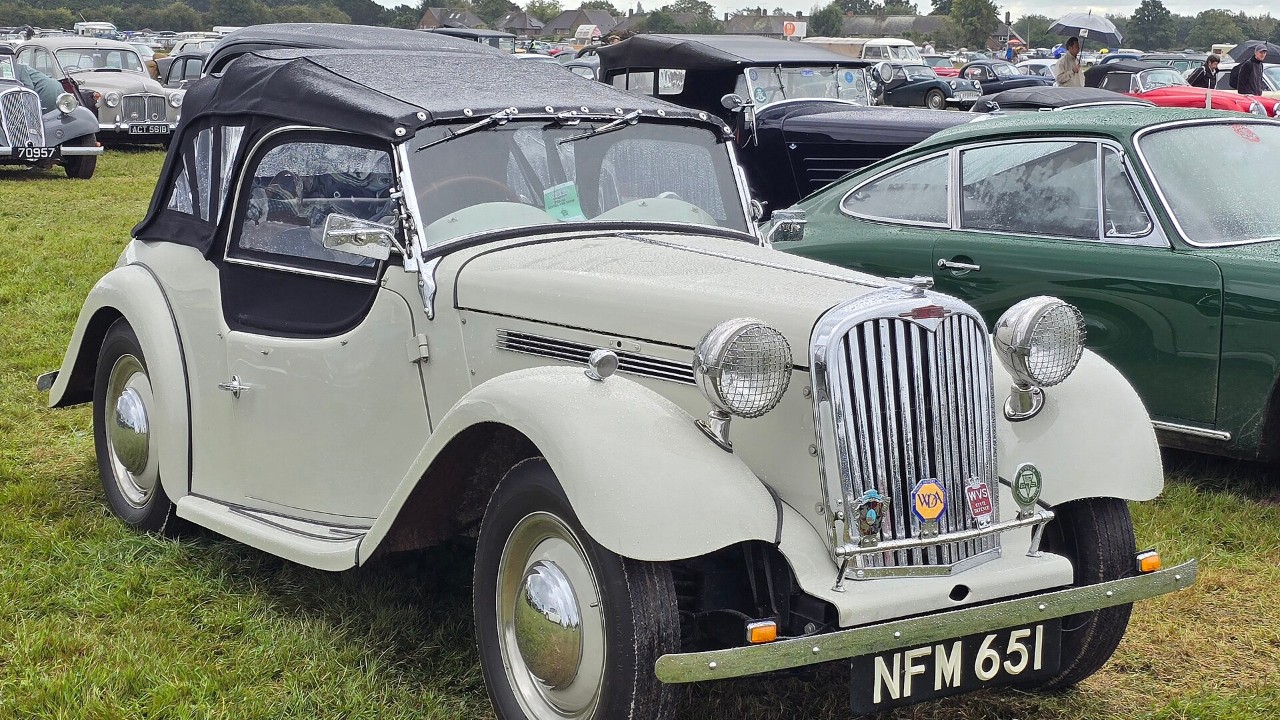
Singer launched the Nine Roadster in March 1939, just months before war stopped production. When building resumed in 1946, nearly all the cars went overseas. The engine was a 1,074 cc overhead-cam four, rated at 36 hp at 5,000 rpm. Singer claimed 70 mph, although about 65 mph was more realistic.
The car kept improving. In September 1949, the 4A update brought a four-speed gearbox from the Singer Hunter, and Singer built 4,122 of those. Then, from October 1950, the 4AB added independent coil-spring front suspension and Girling hydro-mechanical brakes. Singer made about 1,000 4ABs before production ended in January 1953.
The Singer had tough rivals. According to Curbside Classic, it went up against the MG TD, the Austin A40 Sports, the Sunbeam Alpine and the Triumph TR2. In our view, that is exactly why it deserves a second look. It is an open four-seater with an overhead-cam engine, and that is an unusual mix for a small car of its day. Overall, Singer built about 12,700 Roadsters between 1939 and 1955.
6. 1958 Jaguar XK150 Roadster
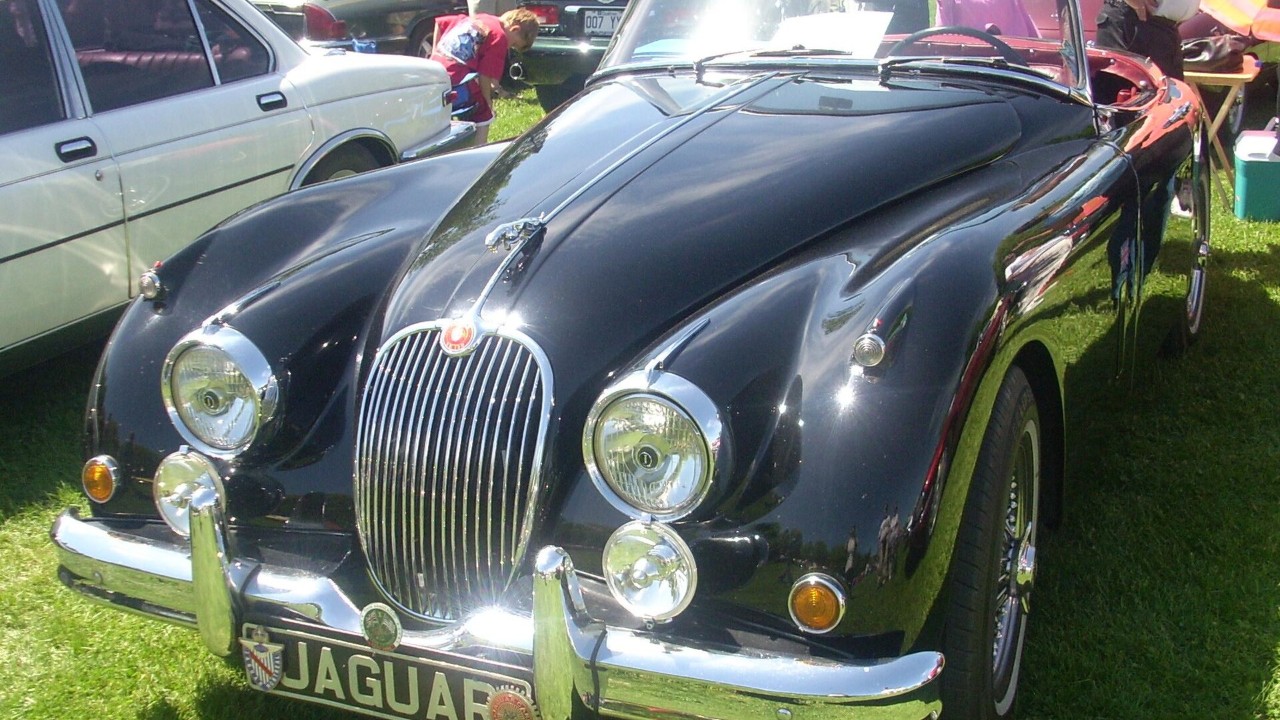
Jaguar launched the XK150 in 1957 as a coupe and drophead, then added the open two-seater roadster in 1958. That last body style was also the rarest of the three. Jaguar built 2,265 roadsters, compared with 4,445 fixed-head coupes and 2,672 dropheads, for a total of 9,382 XK150s.
The engine choices make this car interesting. The base 3.4-liter six made 190 bhp on twin SU carburetors. However, the 3.4 S, with three SUs, raised that to 250 bhp from 1958. Later, the 3.8 S reached 265 bhp. When The Motor tested a 250 bhp 3.4 S coupe, it reached 132 mph.
The earlier XK120 and XK140 tend to get more of the spotlight. We see it differently. In our view, the roadster is the XK150 to have, because it is both the open car and the scarcest body. If you want one, a 3.4 S is the version we would look for. It combines the open body with the triple-carburetor engine, and that pairing is hard to beat. Later, a tuned 3.8 S reached 135 mph.
7. 1952 HRG 1500
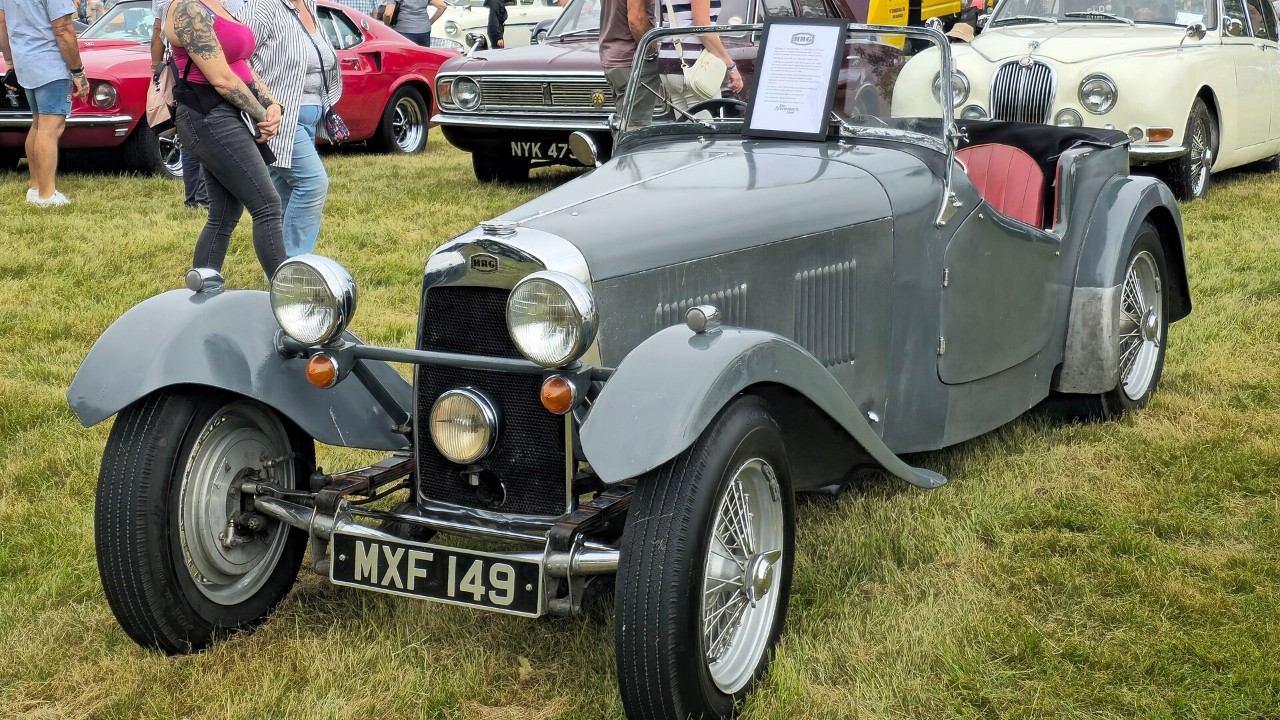
HRG took its name from the initials of its three founders: Major Edward Halford, Guy Robins and Henry Ronald Godfrey. The company started in 1936, first in Norbiton and later in Tolworth, Surrey. Its cars looked old-fashioned even when new, yet they won races.
The 1500 used a 1,496 cc Singer engine in a simple two-seater chassis. HRG built 111 of them. Its biggest result came at Le Mans in 1949, when Eric Thompson and Jack Fairman won the 1.5-liter class. That was HRG’s second class win at the race, after 1939.
The company never built cars in large numbers. In fact, the records show 241 HRGs in total, and about 225 of them survive. Car production stopped in 1956, although HRG carried on as an engineering firm until 1966. Our take: the HRG 1500 is a lovely example of the small British maker that punched above its weight. It also shows how much a small car with a modest engine could do. If you ever see one at a vintage event, take a close look at the simple chassis. Then remember that it won its class at Le Mans.
8. 1998 TVR Chimaera 500
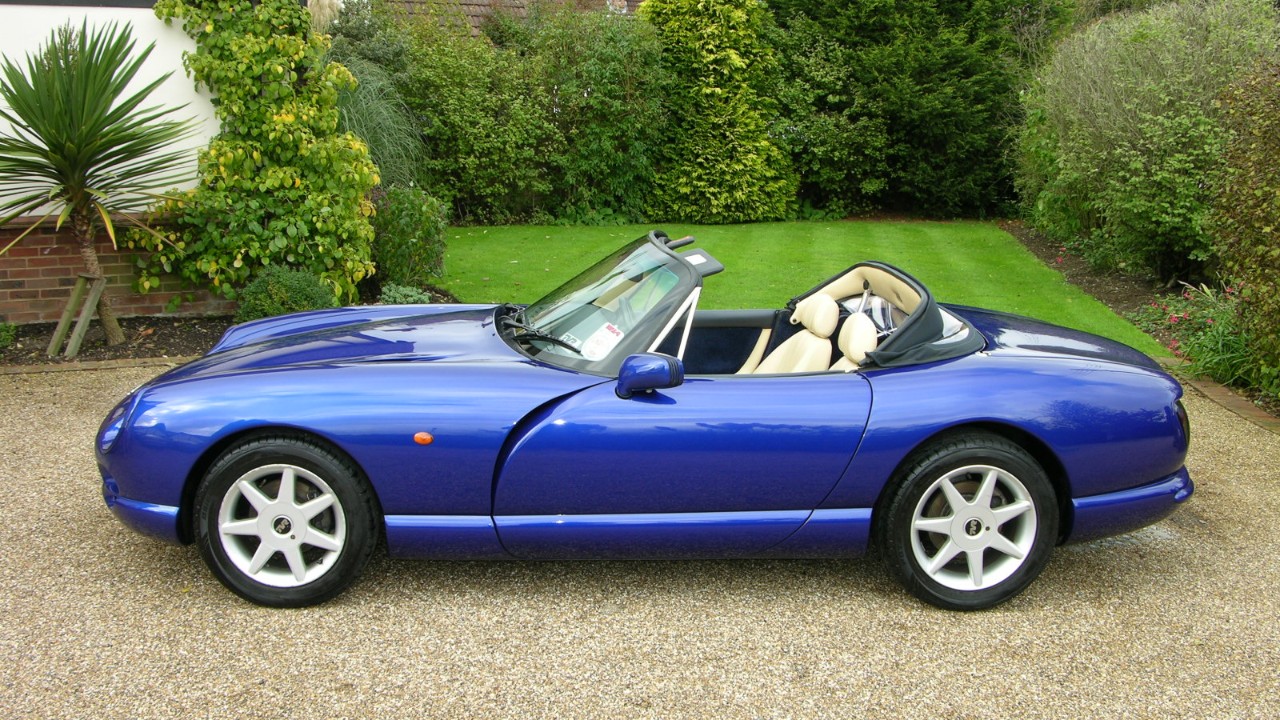
Jumping ahead several decades, TVR showed the Chimaera at the 1992 Earl’s Court Motor Show. It kept the old British roadster recipe alive with a backbone chassis and a big V8. The company built it in Blackpool, and later in Port Klang, Malaysia, until 2003.
The Chimaera shared its chassis and Rover-based V8s with the Griffith. TVR set it up as the softer, roomier long-distance tourer of the pair. At first, the Chimaera was meant to replace the Griffith, but demand for both kept the two cars in the range. Then, in 1994, the 500 version arrived. Its 4,988 cc V8 produced 340 hp and 320 lb-ft of torque. That was enough for 0 to 60 mph in 4.1 seconds and a top speed of 175 mph.
TVR built 5,256 Chimaeras before the Tamora took over. We think this is the best-value way into a traditional British V8 roadster. It is loud, quick and unmistakably TVR. That said, you should budget for proper upkeep. A car this fast deserves a careful inspection by a specialist before you buy. Our view is simple: find a well-kept 500 and enjoy every mile.
9. 1965 MG Midget Mk II
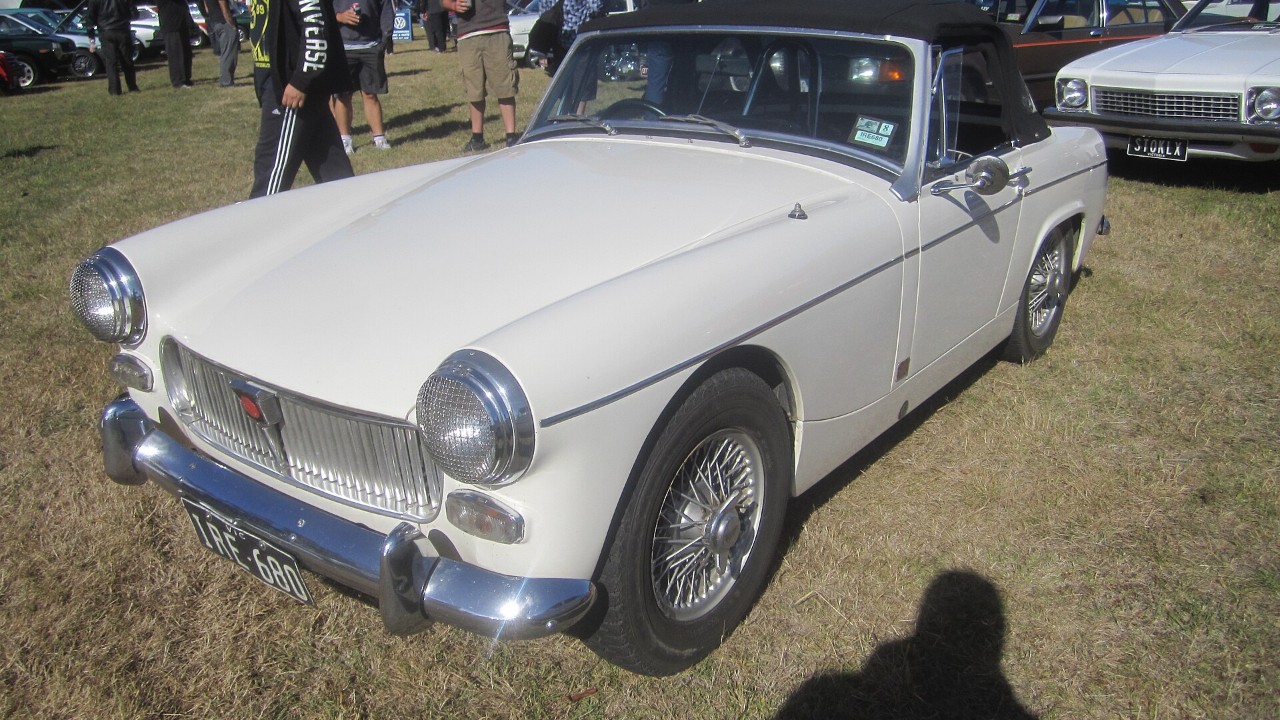
The Midget was MG’s version of the Austin-Healey Sprite. Underneath, the two cars were mechanically identical. They differed mainly in the grille, badges, trim and instruments, which is why fans often lump them together.
The update behind this version made the Midget much easier to live with. The doors gained wind-up windows, swiveling quarter lights, external handles and locks, in place of the old sliding side-screens. At the rear, conventional semi-elliptic springs replaced the earlier quarter-elliptic setup, which gave a better ride. Power came from a strengthened 1,098 cc A-Series four rated at 59 hp at 5,750 rpm. By comparison, the earlier 1,098 cc cars made 56 hp, and MG built 9,601 of those.
MG built 26,601 of this revised version. Our take: this is the sweet spot for a first British roadster, because it adds comfort without losing the go-kart feel. If you are weighing the two badges, we compared the 1965 Austin-Healey Sprite and 1965 MG Midget side by side. The Midget itself ran from 1961 until the last car left the line on December 7, 1979.
10. 1967 Triumph TR4A
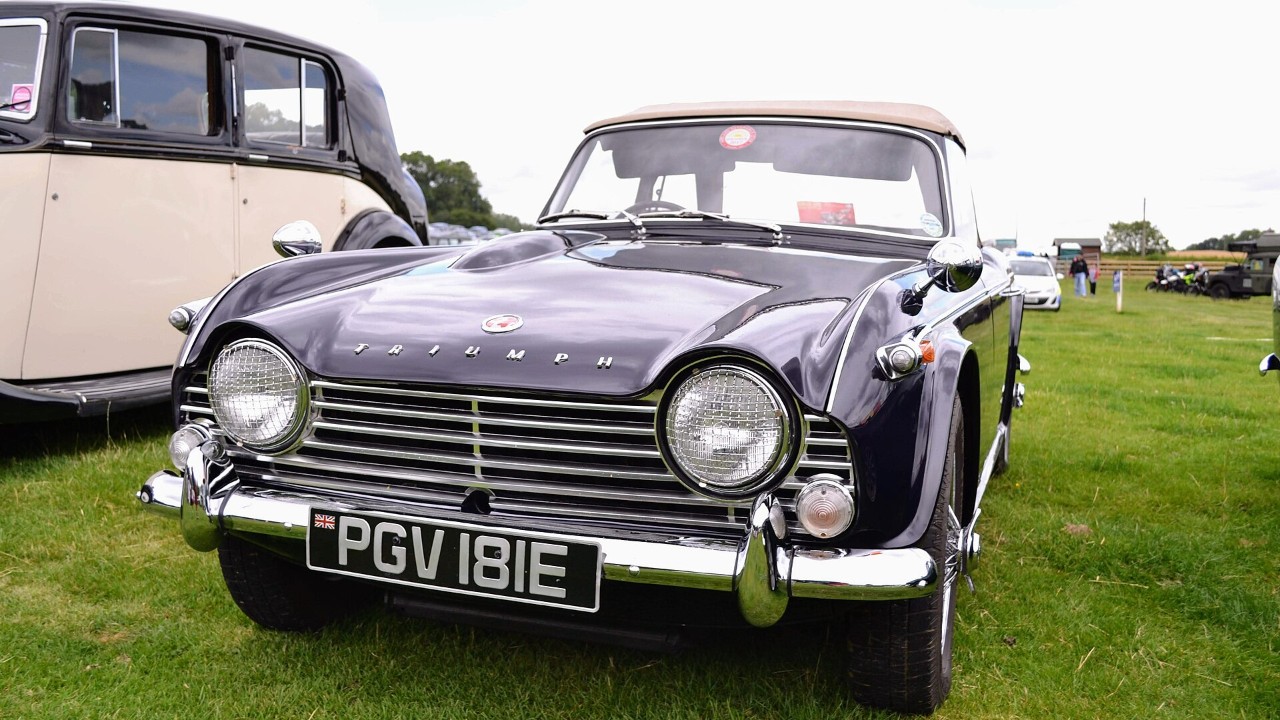
The TR4A took the Michelotti-styled TR4 and gave it a new rear end, at least underneath. In most markets, it came with independent rear suspension, using semi-trailing arms and coil springs. Triumph even put an “IRS” badge on the back so everyone knew.
America was different. US distributors asked for a live rear axle, so Triumph also built that version for them, with IRS as an extra-cost option. As a result, you can tell the two apart by the commission number. Live-axle cars start with “CT,” while IRS cars start with “CTC.” In the US, the price was just under $2,500.
Power came from a 2,138 cc four rated at 104 bhp at 4,700 rpm, good for 109 mph. Buyers could also order the clever Surrey top, which combined a rigid rear window, a removable roof panel and a soft fabric section. In our view, the IRS cars are the ones to own, and the badge on the tail makes them easy to spot. By comparison with the TR4, it was also 22 mm wider and 50 kg heavier. Triumph built the TR4A in Coventry from 1965 to 1967.
11. Austin-Healey 3000 Mk III BJ8
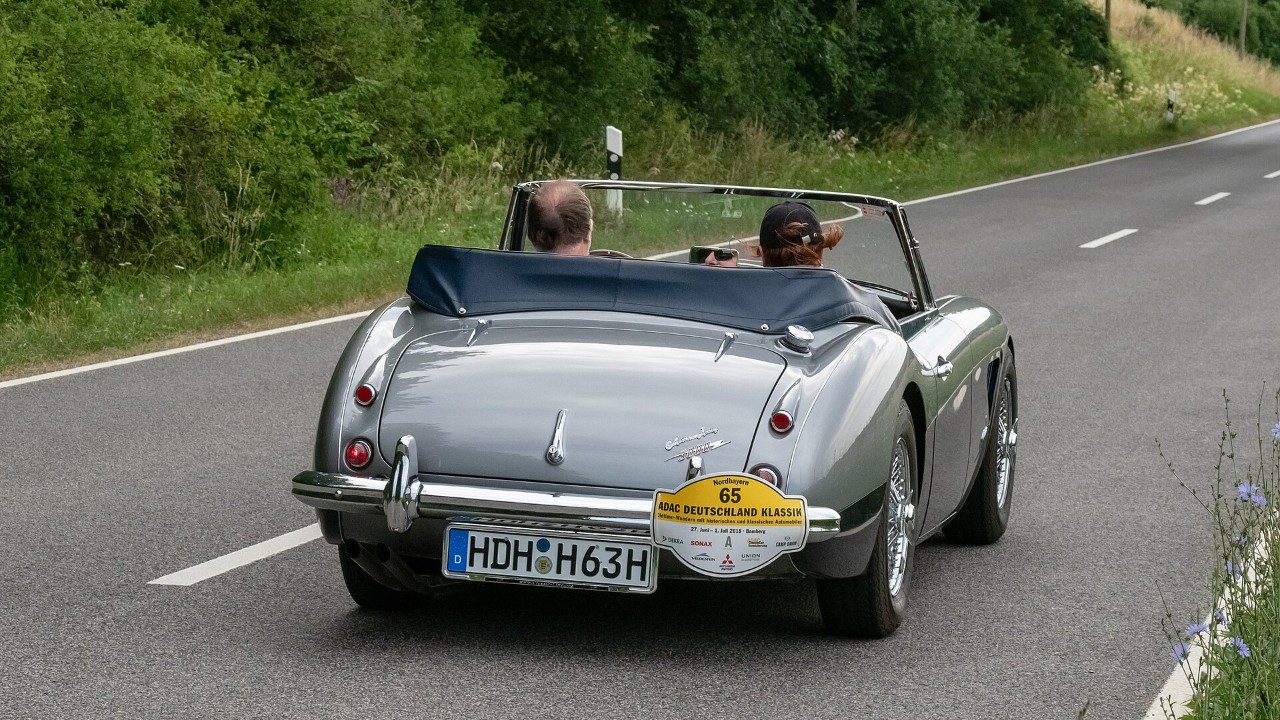
The BJ8 was the final form of the big Austin-Healey. BMC announced the Mk III in February 1964, then released the Phase II version in May 1964. Jensen Motors made the bodies, and BMC assembled the cars at the MG Works in Abingdon.
A higher-lift camshaft raised the 2,912 cc C-Series six from 136 bhp to 150 bhp. Inside, the speedometer and tachometer moved directly in front of the driver. As a result, the last 3000 felt more like a grand tourer than the earlier cars, though it kept the low, wide stance.
The 3000 already had a strong competition record. For example, a works car registered 727 URX finished first in the Liège–Rome–Liège Rally. In total, Austin-Healey built 17,712 Mark IIIs before production of the 3000 ended in late 1967. Our take: of every big Austin-Healey, the BJ8 is the one to drive, with the most power and the best cabin. It is also the last of the line, which adds to its appeal for collectors. If you shop for an Austin-Healey 3000, we would focus on condition and history over small trim details.
12. 1957 Morgan 4/4 Series II
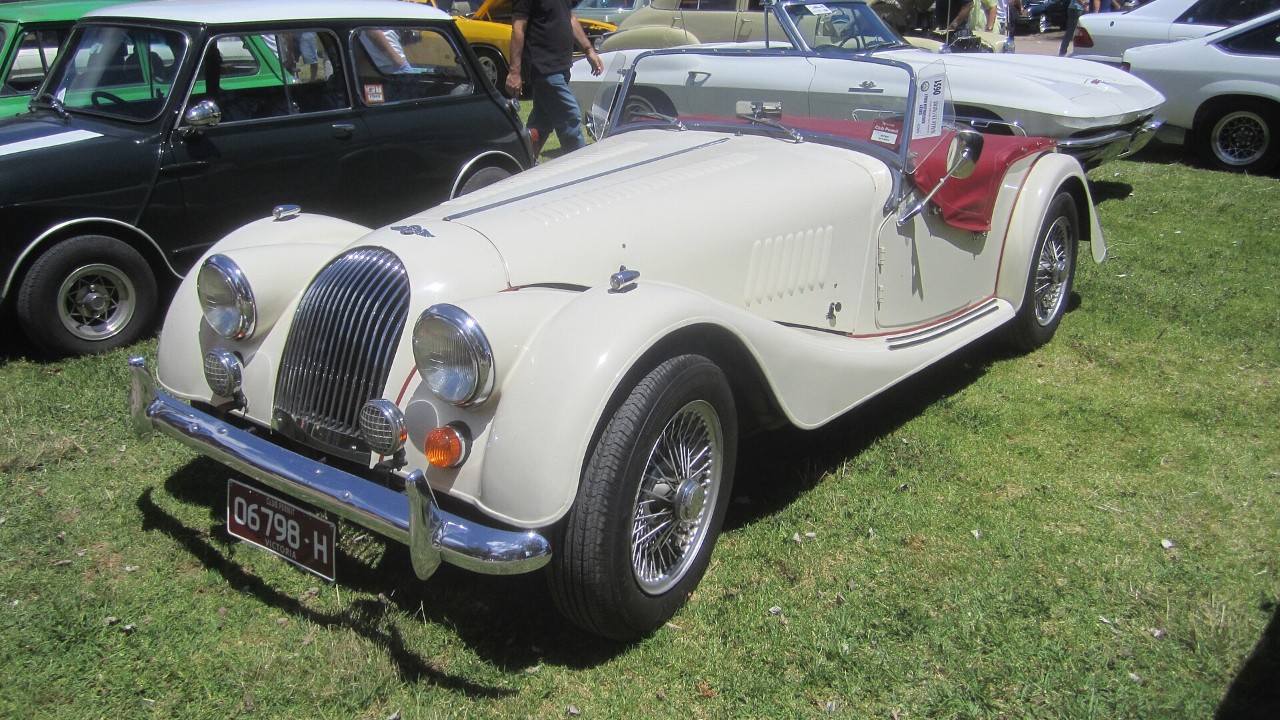
Morgan first built the 4/4 in 1936, then paused production during the war and again from March 1951. When the car returned in 1955 as the Series II, it used a side-valve Ford 100E engine of 1,172 cc. That four made just 36 bhp, though a 40 bhp Competition version was also available for owners who wanted a little more pace.
Power went through a Ford three-speed gearbox. At the front, Morgan used its traditional sliding-pillar independent suspension with coil springs. At the back sat a rigid axle on semi-elliptic leaf springs. In other words, the Series II changed very little of what made a Morgan a Morgan.
The factory in Malvern, Worcestershire, built just 386 Series II cars by October 1960. We think that makes it one of the more charming entry points to the Morgan story. It is slow, light and honest, and it wears the classic Morgan shape. Morgan kept building the 4/4 until 2018, a span of 73 years that ranks among the longest production runs of any car.
More from Fast Lane Only