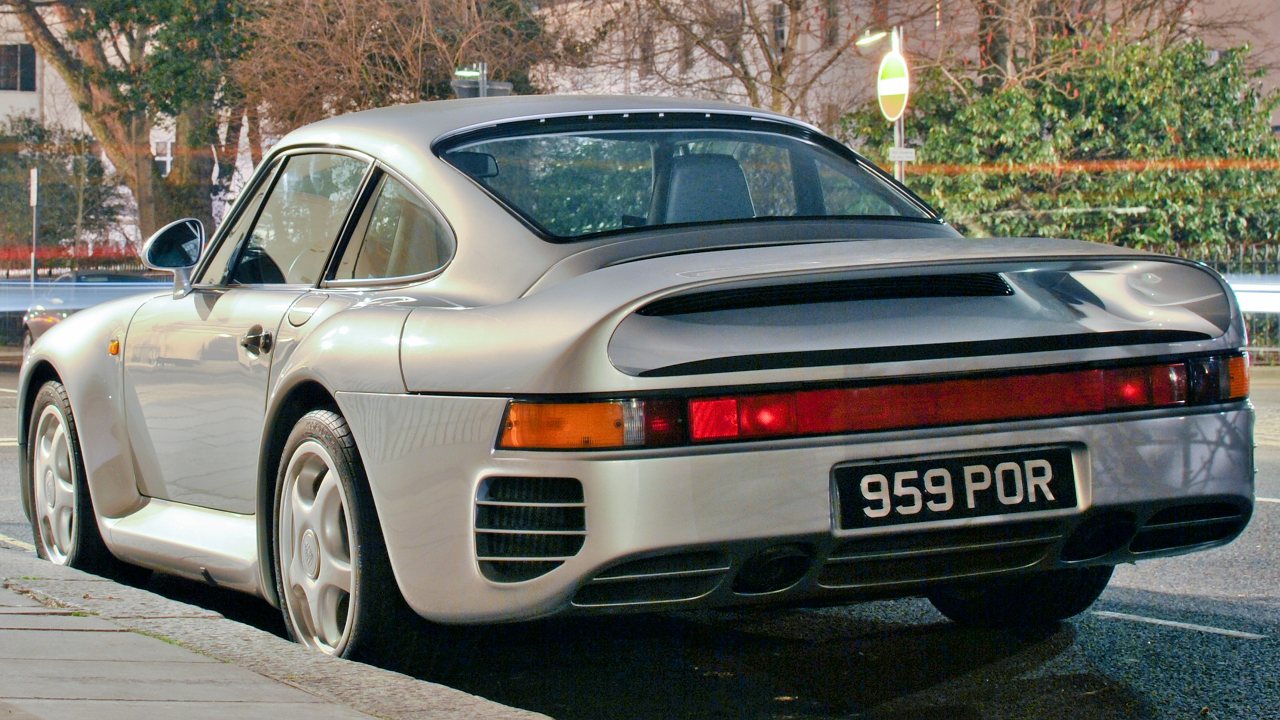
The 1986 Porsche 959 arrived looking less like an evolution of the 911 and more like a prototype that had slipped out of a secret skunkworks. It did not just add all wheel drive to a supercar, it made that technology feel like the only sensible way to harness the power and speed that were suddenly possible on the road. I see the 959 as the moment when all wheel drive stopped being a rally party trick and started to look like the future of fast cars.
From Group B fantasy to road going laboratory
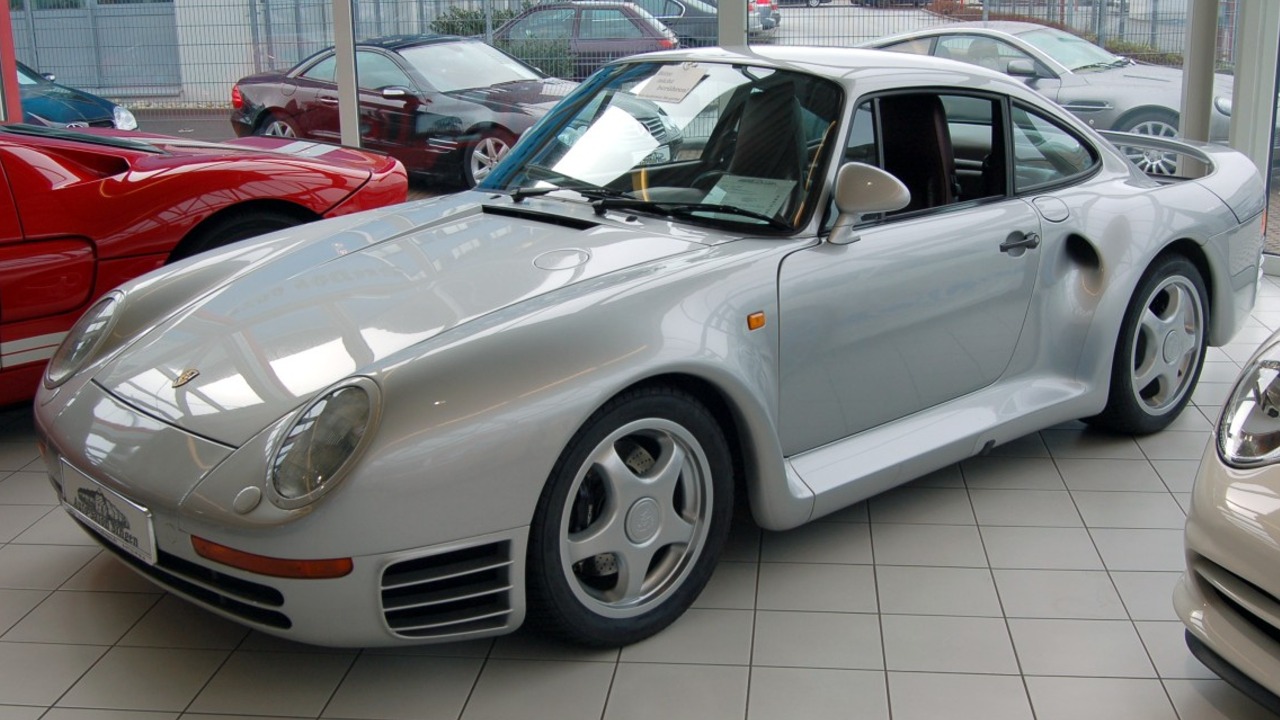
The Porsche 959 began as a competition project, conceived to push the 911 platform into the wild world of Group B and then translated into a road car that could justify the engineering. The Porsche built it from 1986 to 1993 as a limited production sports car, and even in that company it felt like a technology demonstrator rather than a simple homologation special. The bodywork echoed the familiar 911 silhouette but wrapped it in composite panels, integrated aero and a stance that made contemporary rivals look crude by comparison, a point that is clear when you look at how the factory itself later framed the car as a futuristic leap in the mid 1980s.
Underneath, the 959 was even more radical. The engine was a twin turbo flat six derived from racing, the suspension used height and damping adjustment, and the electronics tied everything together in a way that was unheard of in a road going supercar at the time. Engineers such as Bott had the full backing of Ferry Porsche to pursue solutions that were, in period, almost absurdly advanced, and that freedom produced a car that felt like a rolling test bed for what the brand thought performance should become. When I look at the 959 in that context, the all wheel drive system is not a bolt on feature, it is the organizing principle that allowed all the other innovations to work in the real world.
PSK: the all wheel drive system that rewrote the rules
The core of that organizing principle was Porsche Steuerelektronik Kupplung, usually shortened to PSK, the electronically controlled all wheel drive system that sat at the heart of the 959. Rather than a fixed torque split, PSK constantly varied power between the front and rear axles, using sensors and control logic to decide where grip was available and how much the chassis could handle. Contemporary analysis has described PSK as so advanced that even decades later modern systems still echo its basic ideas, which gives a sense of how far ahead of the curve The Porsche really was with this drivetrain.
What made PSK transformative was not just its complexity, but the way it made extreme performance feel calm and predictable. One of the most impressive aspects of the 959 is its advanced all wheel drive system, which was revolutionary for its time and kept the car stable even at high speeds, and that stability is what allowed drivers to explore the outer edges of its performance envelope without feeling like they were constantly on the verge of disaster. When I compare that to the rear drive supercars of the era, the 959 comes across less like a brute force machine and more like a precision instrument that uses all wheel drive as a safety net and a performance enhancer at the same time.
Usability versus drama: 959 against its rear drive rivals
The 1980s supercar landscape was dominated by rear wheel drive exotics that treated everyday usability as an afterthought, and the Ferrari F40 is the obvious reference point. That car was essentially a race car with license plates, thrilling but unforgiving, and it demanded constant attention from the driver to keep its power in check. By contrast, the 959 delivered similar headline performance while remaining remarkably civil, a difference that owners and testers have repeatedly traced back to the way its all wheel drive system and chassis electronics worked together to smooth out the rough edges.
That civility did not mean the 959 was dull. Period accounts describe it as a civilized missile, a car that could cover ground at warp speed while still feeling composed, and that duality is exactly what made its approach to traction feel necessary rather than optional. Where a rear drive rival might spin its rear tires and squirm under full throttle, the 959 simply hooked up and went, letting the driver focus on the road rather than on managing wheelspin. In my view, that contrast is the clearest evidence that the car did more than add technology for its own sake, it redefined what a supercar could be in daily use.
How the 959 made all wheel drive feel inevitable
When I look at the trajectory of high performance cars after the 959, it is hard not to see its fingerprints on the shift toward all wheel drive in the upper reaches of the market. The Porsche showed that you could combine extreme power, turbocharging and real world usability if you were willing to let electronics and variable torque distribution take a central role. Later generations of fast road cars, from other Porsche models to competitors that had once sworn by rear drive purity, increasingly adopted similar layouts, and the logic behind that move is the same one the 959 proved on the Autobahn and on rough rally stages.
The key insight is that traction is performance, not just safety. By using PSK to put power down cleanly and to keep the chassis balanced, the 959 turned all wheel drive into a performance multiplier that drivers could feel every time they accelerated out of a corner or crossed a wet crest at speed. Modern commentary on the car often highlights how analog it feels in other respects, yet how seamlessly it integrates turbocharging, all wheel drive and electronic control, and that combination is exactly what later supercars would chase. In that sense, the 959 did not just make all wheel drive acceptable in a supercar, it made it seem like the rational choice for anyone who wanted to use that performance in the real world.
Legacy of a quietly radical supercar
Today, the 959 sits in museums and private collections as a classic, but its technology still reads like a blueprint for the modern performance car. The Porsche itself has framed the model as a brilliant classic that arrived from the future, and that is not marketing hyperbole when you consider how many of its ideas, from adaptive suspension to sophisticated all wheel drive, have become standard expectations in high end sports cars. Even buyer guides written decades later still single out the 959 all wheel drive system as one of its defining features, a reminder that the car’s most important contribution was not its top speed but the way it delivered that speed with composure.
For me, that composure is what justifies calling the 959 the first supercar to make all wheel drive feel necessary. It did not treat traction as a crutch for inexperienced drivers, it treated it as the foundation for a new kind of performance, one that valued repeatable, confidence inspiring speed over fragile theatrics. In an era when many of the fastest cars on sale now rely on complex all wheel drive systems to manage hybrid powertrains and enormous torque, the 959 looks less like an outlier and more like the starting point of a long, deliberate shift. Its legacy is not just that it was fast, but that it showed the world a better way to be fast.
More from Fast Lane Only: