

The 1987 Buick GNX was the last hurrah for Buick’s rear-drive Regal, and Buick rated it at just 276 horsepower. The real number was higher. That gap between the brochure and the stopwatch shows up again and again when a model reaches its final year.
A final-year car is often the most sorted version of a design, and a maker usually wants a strong send-off. Even so, the official numbers sometimes stayed modest, and in one case a national rating ceiling kept them that way. In other cases, the cars simply felt quicker on the road than their ratings suggested.
These eight are our picks for final-year models that were faster than anyone admitted at the time. Two of them have documented output above their official ratings. For the rest, the verdict is our opinion, backed by the numbers each maker did publish.
1. 1987 Buick GNX

The GNX was built with McLaren Performance Technologies as a send-off for the turbocharged Regal. Buick made only 547 of them, and the 1987 model year ended production of the rear-drive G-body Regal. The sticker price was $29,900. According to Hagerty, it was the fastest and most powerful Grand National ever produced.
Buick rated the turbo V6 at 276 horsepower and 360 lb-ft. However, its actual output was closer to 300 horsepower and 420 lb-ft. Hagerty calls the 276-horsepower figure “underrated” and lists a 0-60 mph time of 4.7 seconds. That was serious speed for any American car in 1987. To put it in context, Buick’s 1984 turbo Regal had been listed at 15.9 seconds in the quarter-mile at stock boost. The GNX shows how far the turbo V6 had come in just three years.
Our take: the GNX is the clearest case on this list of a maker downplaying its own car. For more on its impact, read how the 1987 Buick GNX changed expectations for American performance. If you shop for one, insist on paperwork that ties the car to the 547 that Buick built.
2. 1996 Chevrolet Corvette Grand Sport

The Grand Sport was Chevrolet’s farewell to the C4 Corvette. The last C4 rolled off the line on June 20, 1996. Chevrolet built 1,000 Grand Sports, with 810 coupes and 190 convertibles, according to Corvette Action Center.
Every one wore Admiral Blue paint with a white center stripe and two red hash marks on the left front fender. More importantly, each one got the LT4 V8, rated at 330 horsepower at 5,800 rpm and 340 lb-ft at 4,500 rpm. The LT4 came only with the six-speed manual. Car and Driver measured 0-60 mph in 5.1 seconds. Every Grand Sport also rode on black five-spoke wheels. Meanwhile, the Grand Sport option cost $3,250 on a coupe and $2,880 on a convertible.
Our take: the LT4 arrived in the C4’s final season, so few people ever had the chance to judge it. In our view, it made the final C4 much quicker than its reputation suggests. To learn more about the tribute, read why the 1996 Corvette Grand Sport honored racing heritage. A buyer should confirm the Z16 option code before paying a Grand Sport price.
3. 2002 Mazda RX-7 Spirit R Type A
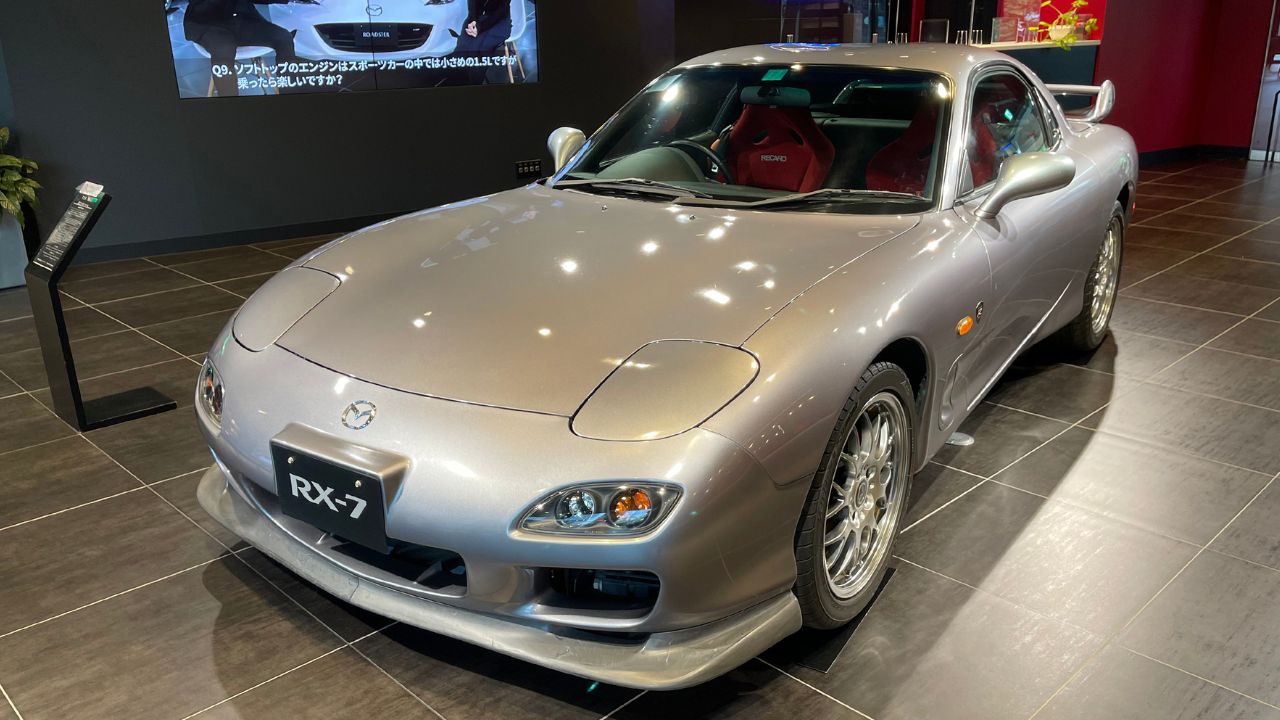
Mazda announced the RX-7 Spirit R on March 25, 2002, as the final limited series of the car. It planned 1,500 units for Japan only and expected third-generation production to end in August 2002, according to Mazda’s announcement. In the end, 1,504 were made, and 1,044 of them were Type A two-seaters.
The Type A used the twin-turbo 13B-REW rotary, rated at 280 PS, with a five-speed manual. It added Recaro lightweight bucket seats that cut about 10 kg, plus Bilstein dampers, larger drilled brake discs and 17-inch BBS wheels. Mazda priced it at ¥3,998,000. Mazda also offered a four-seat Type B and a Type C with an automatic, which carried a lower 255 PS rating.
That 280 PS figure was the maximum rating Japanese makers used in that period. In our view, that ceiling made the official number a formality rather than a measurement. Collectors have noticed the car since then. RM Sotheby’s sold a Type A in Innocent Blue Mica for £105,800 at its 2022 London sale. Buy only with full service history, since a rotary rebuild is costly.
4. 2006 Acura RSX Type-S

Acura built the RSX from July 2001 to August 2006, so the 2006 car was the end of the line. In the U.S., buyers could choose the base RSX or the Type-S. For 2006, the Type-S used a 2.0-liter DOHC four rated at 201 horsepower at 7,800 rpm and 140 lb-ft at 7,000 rpm. That means the torque peak arrived only 800 rpm below the power peak.
That rating carried a note. Acura’s 2006 powertrain release lists both figures as “SAE net (Rev 8/04).” The Type-S came only with a short-throw, close-ratio six-speed manual. By contrast, the base RSX also offered a five-speed automatic.
Our take: a high-revving engine that peaks near 7,800 rpm always feels livelier than its torque figure suggests. Because the gear ratios are close, the engine stays near that peak when you drive hard. In our view, the final RSX Type-S was a sharper car than its modest rating implied, and it rewarded drivers who kept it on the boil. If you want one, look for an unmodified example. Check the clutch and the gearbox synchros on a test drive.
5. 2001 Honda Prelude SE

Honda ended Prelude production in October 2001, and the fourth-generation Integra took its place. In North America, that new Integra sold as the Acura RSX, the car in the previous item. The last Prelude generation sold 58,118 units in the U.S. from 1997 to 2001. In all, the 2001 car closed a run that began in November 1978.
The 2001 SE was a Canadian trim that replaced the Type SH for the final year. It was mechanically identical to the base car, so it skipped the Type SH’s ATTS torque-splitting system. Instead, it added heated, perforated leather seats, Type SH wheels and the Type SH spoiler. Every North American fifth-generation Prelude used a 2.2-liter DOHC VTEC four, rated at 195 horsepower at first and 200 later.
Our take: the Prelude often gets remembered as a comfortable coupe. We think its VTEC engine made it quicker in real driving than that image suggests. Better still, the SE paired that engine with a nicer cabin. If you buy a Prelude from this era, ask for proof of timing-belt service and check the automatic, if fitted, with care.
6. 2003–2005 Dodge SRT-4

The SRT-4 put a turbocharged 2.4-liter four, shared with the Chrysler PT Cruiser, into the compact Neon. Dodge rated the 2003 car at 215 horsepower and 245 lb-ft. Then, for 2004, it raised the rating to 230 horsepower and 250 lb-ft, Drivingline reports. The 2005 model was the last, after which the Neon’s platform was retired.
Testing told a different story. Independent dyno runs on production cars recorded 230 to 238 horsepower at the wheels. That points to an estimated 255 to 265 horsepower at the crank, which is well above the official rating. In our view, that gap is the clearest test result on this list after the GNX. Drivingline puts the 0-60 mph time at roughly five and a half seconds. Altogether, Dodge built more than 25,000 SRT-4s from 2003 to 2005.
Our take: the SRT-4 is the second car on this list with test numbers that clearly beat its rating. For a sub-$20,000 compact, that was a remarkable result. The final-year lineup included the 2005 ACR, and Dodge built 1,175 of them for the public. If you shop for one, avoid heavily modified cars and look for a stock turbo setup.
7. 2002–2004 Ford SVT Focus

Ford’s SVT team gave the Focus a 2.0-liter Zetec-R four rated at 170 horsepower and 145 lb-ft. The car also used a Getrag six-speed manual that it shared with the Mini Cooper S. In our view, that was an unusual gearbox for an American compact at the time. Regular Focus sales had begun in North America for the 2000 model year, so the SVT version arrived two years into the run.
Ford sold the SVT Focus in North America for three model years. Production ran to 4,788 cars in 2002, 6,158 in 2003 and 3,057 in 2004. That adds up to 14,003 in all. The 2004 model was the final year. For comparison, the Focus ST that followed used a 2.3-liter engine rated at 151 horsepower.
Our take: 170 horsepower does not sound like much today, yet the SVT Focus felt eager because of its gearing and chassis tuning. In our view, it was a faster car on a twisty road than its rating implied. In our view, the 2004 car is the one to find, since Ford built only 3,057 of them. If you find one, check the six-speed gearbox and clutch carefully on a test drive.
8. 1991–1995 Toyota MR2 Turbo
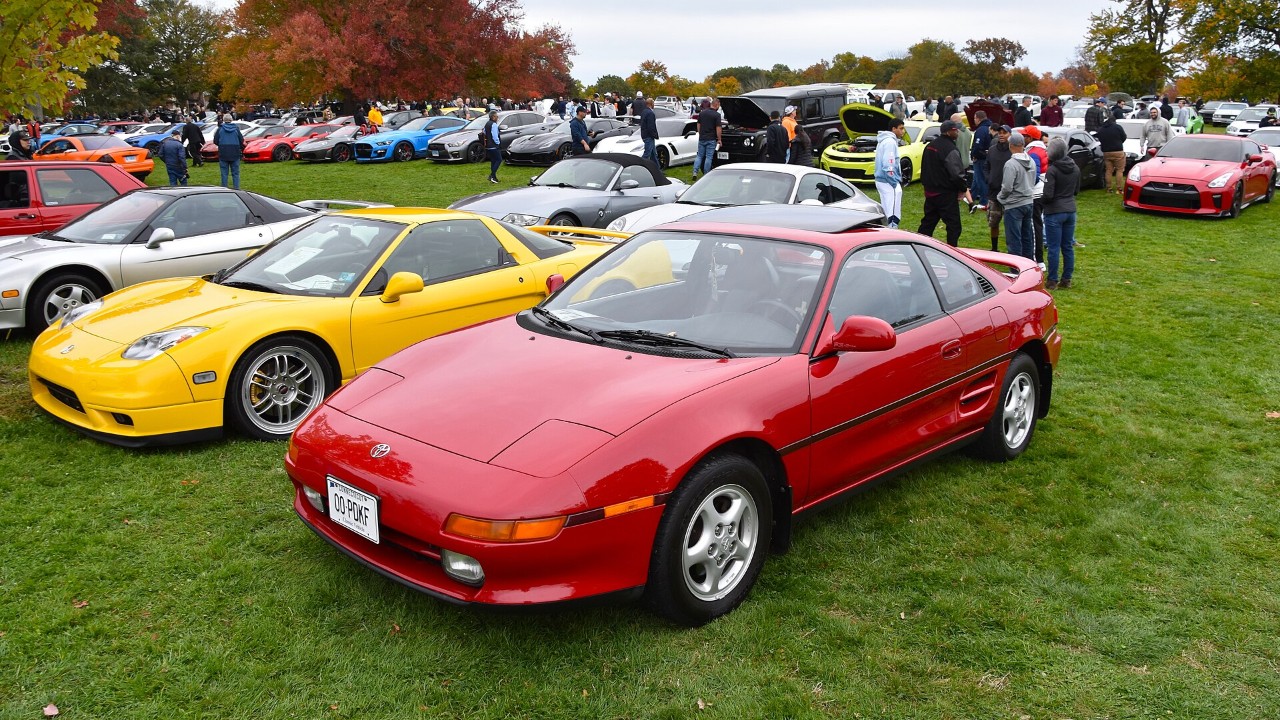
The second-generation MR2 Turbo used a turbocharged 2.0-liter 3S-GTE four in the middle of the car. In the U.S., Toyota rated it at 200 horsepower at 6,000 rpm and 200 lb-ft at 3,200 rpm. That was enough for a 0-60 mph time of 6.1 seconds. Also, the full 200 lb-ft arrived at just 3,200 rpm, which, in our view, gave the car strong pull out of corners.
American sales of this generation ended in 1995. In fact, buyers in California-emission states could not get the turbo after 1994. That makes the 1995 car the final U.S. year for the MR2 Turbo in this form. However, Toyota kept building the second-generation MR2 until 1999, so American buyers lost it four years before production ended.
Our take: a mid-engine car with 200 lb-ft always felt faster than its numbers suggested. For more on the model’s roots, read how the 1985 Toyota MR2 proved balance mattered. If you shop for one, look for a car that still has its factory turbo plumbing. Toyota stopped selling this MR2 in America after the 1995 model year.
More from Fast Lane Only


