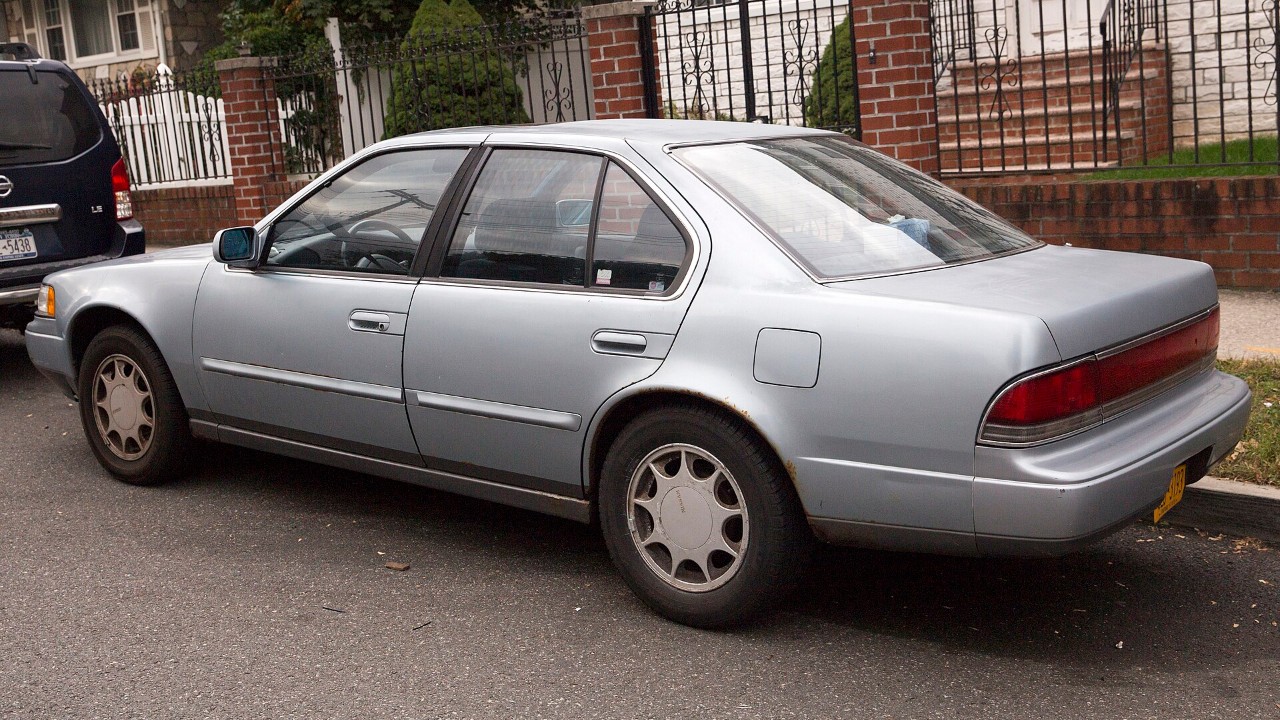
Nissan stuck a small “4DSC” decal on the rear window of the 1989 Nissan Maxima in North America. The letters stood for “four-door sports car,” and the ads made the same promise. It was a bold thing to say about a sensible family sedan, but Nissan had built the car to back it up.
Plenty of other makers tried the same trick. They took a car meant for school runs and grocery trips, then added a stronger engine, firmer suspension and bigger wheels. Most of those sedans sold well enough, but once they wore out, few people kept them. Today, many have simply vanished from the roads.
These are our picks for the forgotten family sedans that were the most fun from behind the wheel. The verdict is our opinion. However, the engines, outputs and test figures come from road tests, maker releases and reference sources we checked for this story.
1. 1989 Nissan Maxima
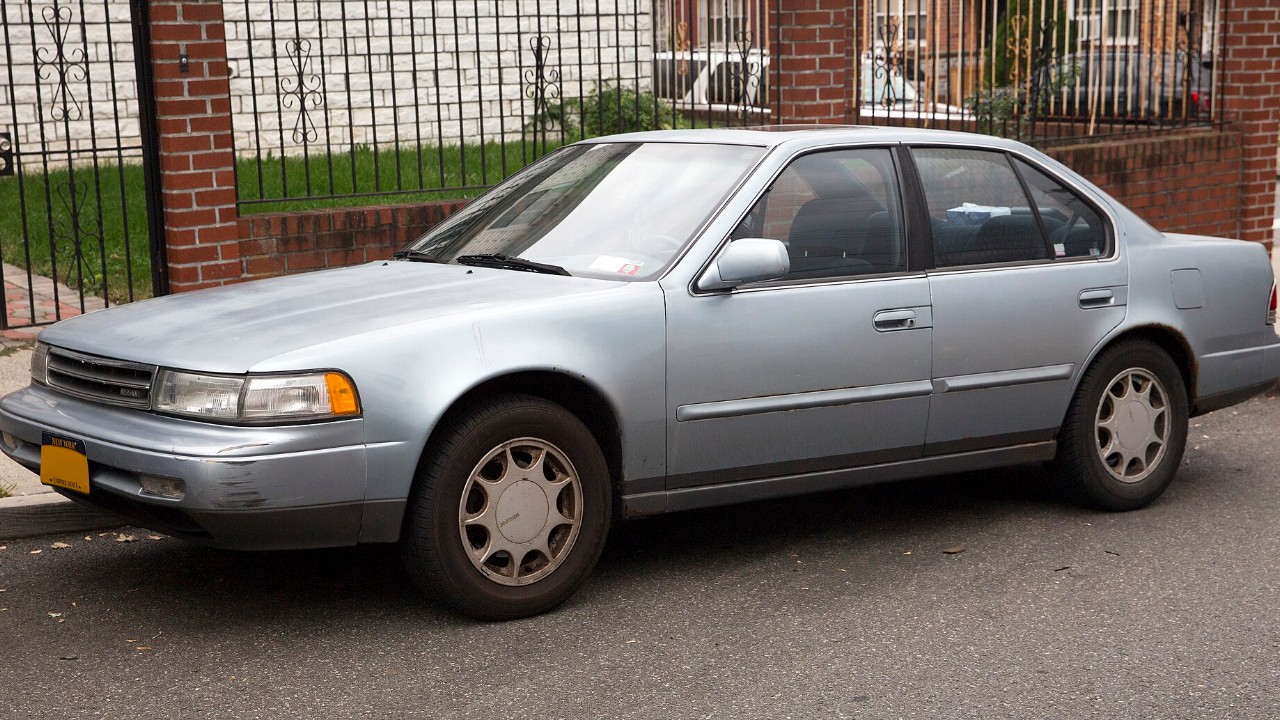
Nissan revealed the third-generation Maxima on October 24, 1988, as a 1989 model. Inside the company it was the J30. Outside, it was among the first Japanese sedans sold in North America that counted as mid-size, so it took on Detroit’s family cars directly.
The base engine was a 3.0-liter V6 rated at 160 horsepower. That doesn’t sound like much now. Still, the Maxima had an independent rear suspension, and some versions had a sonar-based adaptive setup that Nissan called Super Sonic Suspension. From 1989 to 1992, buyers could even order a head-up speed display, which was rare in a family car at the time. Later, an August 1991 refresh added a driver’s airbag for 1992, and the SE gained a 190-horsepower twin-cam V6.
The sporty SE trim landed on Car and Driver’s Ten Best list for 1990. In our view, that says it all. The J30 felt light on its feet, and its smooth V6 loved to rev. Clean examples have become hard to find. So if you spot a 1989 Nissan Maxima with its 4DSC decal intact, you’re looking at a small piece of sedan history.
2. Chevrolet Lumina Euro 3.4 sedan
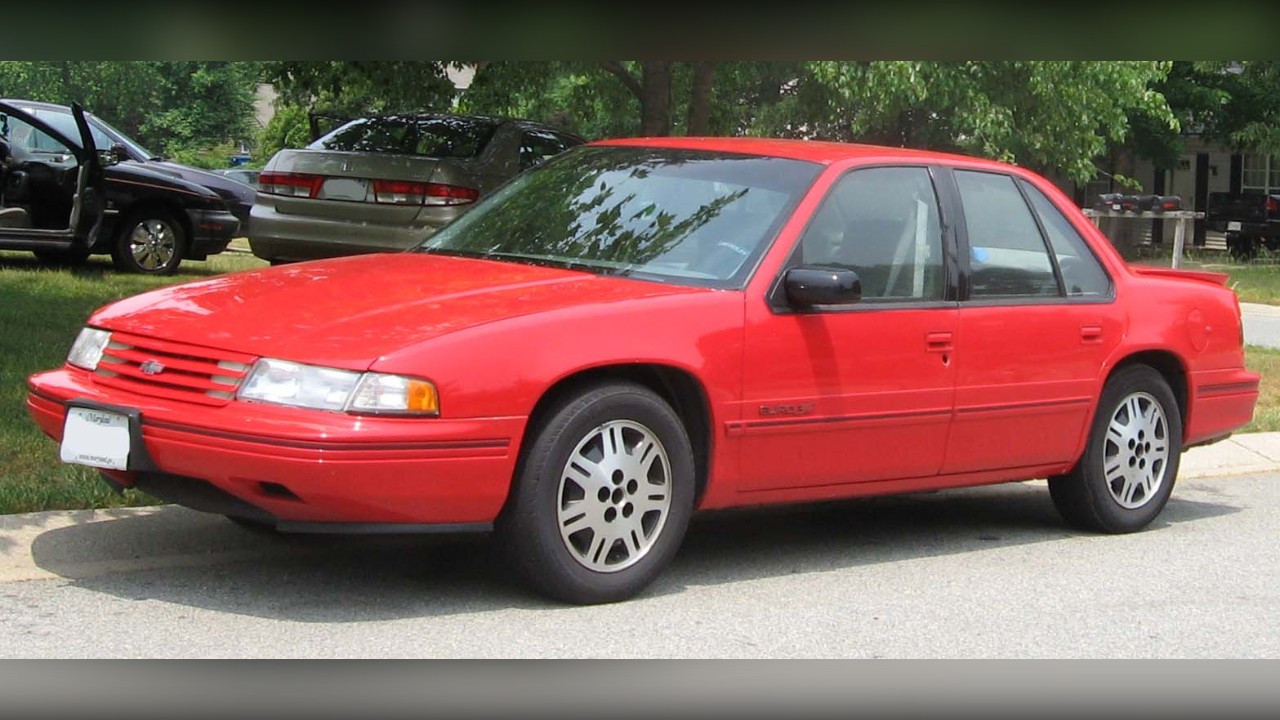
The first-generation Lumina ran from the 1990 to 1994 model years, and Chevy sold a lot of them. Reference figures put first-generation output at roughly 901,245 sedans. Most were plain rental-lot cars. Some, though, wore the Euro badge, which took over from the old Celebrity Eurosport as Chevy’s sporty family trim.
The one to know is the Euro 3.4 sedan. It used the LQ1, a 3.4-liter V6 with dual overhead camshafts. That was the same engine Chevrolet fitted to the Lumina Z34 coupe, where it was rated at 210 horsepower with the five-speed manual. In other words, a four-door with child seats in the back shared its heart with Chevy’s sportiest midsize coupe. That’s a fun secret to keep.
The Lumina name also carried weight at the track. The NASCAR Lumina coupe debuted at Talladega in May 1989 and went on to win 61 races. We think the Euro 3.4 sedan deserves more credit than it gets. It looked ordinary, so few people noticed the twin-cam engine under the hood. That makes it a true sleeper, and a tidy survivor takes some hunting today.
3. 2002 Dodge Intrepid R/T
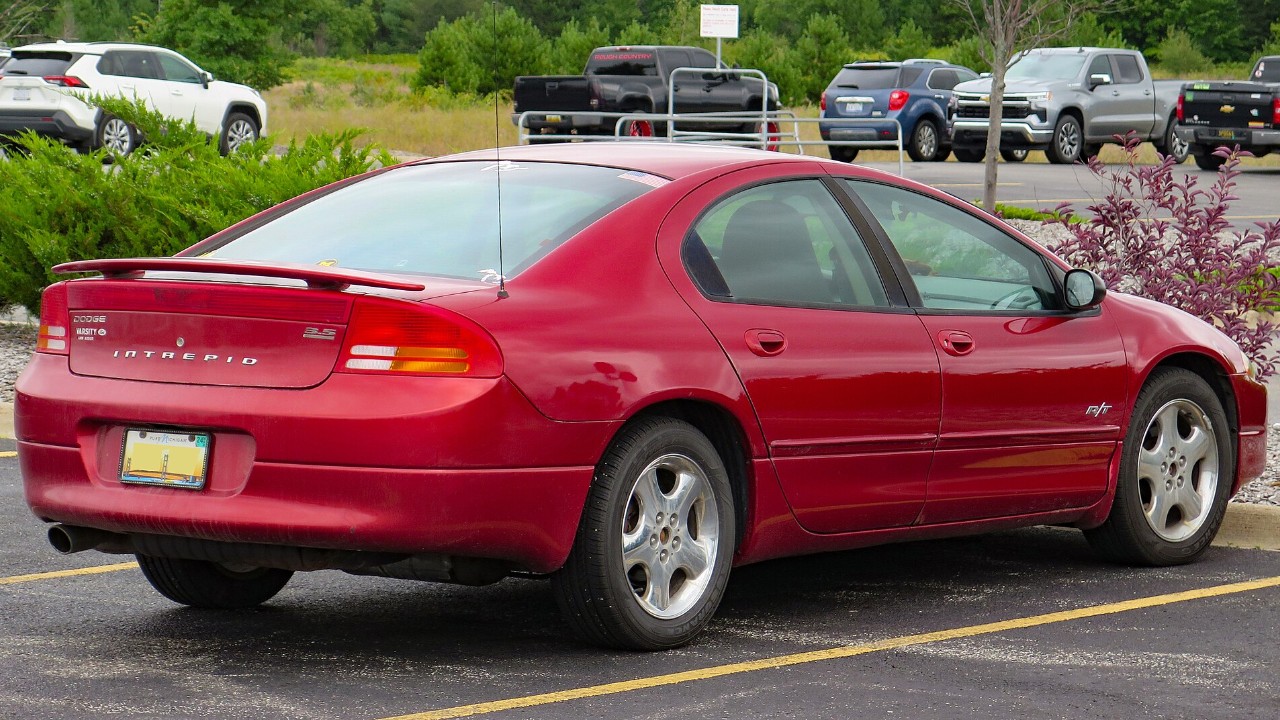
Chrysler’s cab-forward design pushed the wheels out to the corners and stretched the windshield far forward. As a result, the Intrepid had a huge cabin for its size. The second generation came from Chrysler’s plant in Brampton, Ontario. Then, for 1999, Dodge added the R/T as the top model.
The R/T got a redesigned 3.5-liter V6. It made 242 horsepower from 1999 to 2001, while the ES kept a smaller V6 for most of that time. For 2002, new engine programming lifted output to 244 horsepower on mid-grade fuel. That doesn’t sound dramatic now, but it gave a big front-drive sedan real urgency on the highway.
Dodge replaced the R/T with the SXT for 2003, and the Intrepid itself ended after 2004. Afterward, the rear-drive Charger and Magnum took over. Meanwhile, cost cutting from 2002 had stripped some features and hurt sales. In our view, the R/T was the Intrepid at its best: roomy, quick and good-looking. A clean 2002 car in Inferno Red, like the one pictured, is a fun reminder of how bold Chrysler’s designs got. On top of that, the huge back seat meant the family never had to suffer for the driver’s fun.
4. 2005–2006 Nissan Altima SE-R
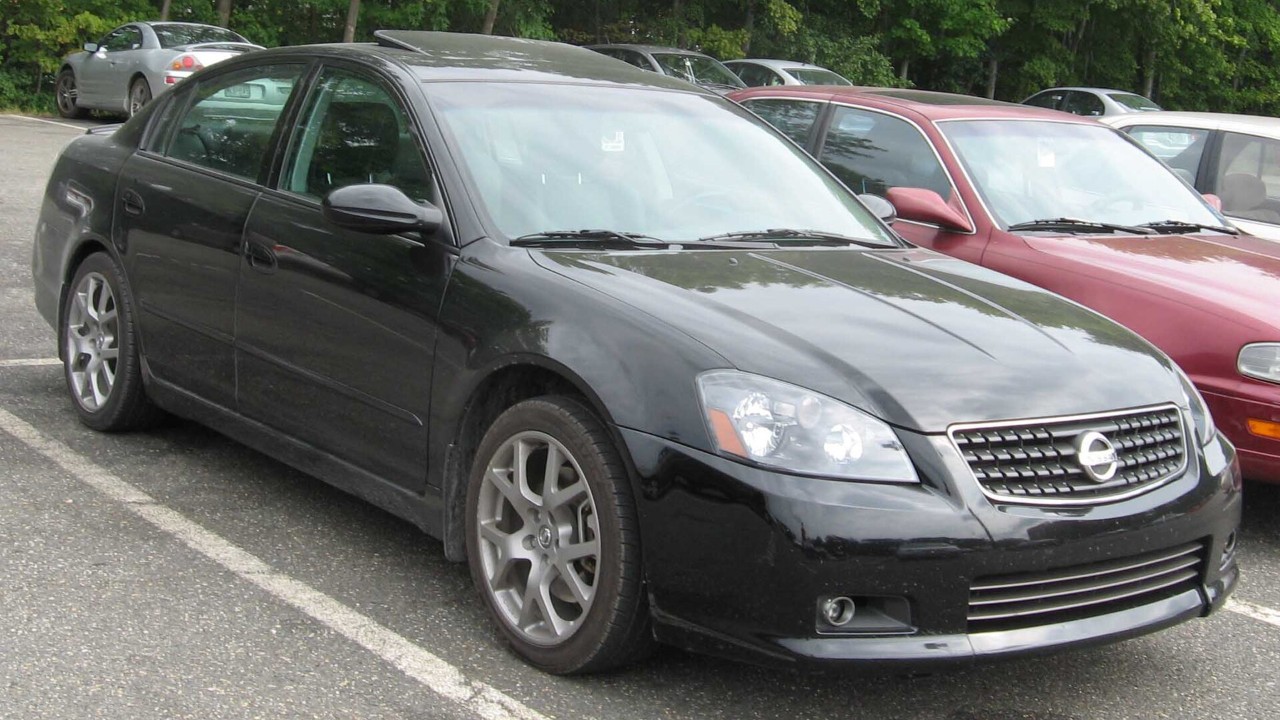
The Altima has an odd reputation these days. We even wrote about why the Nissan Altima became the internet’s punching bag. Yet for two model years, Nissan built a version that deserves far more respect than the jokes suggest.
The SE-R arrived for 2005, alongside a facelift of the third-generation car. Its 3.5-liter V6 made 260 horsepower and 251 lb-ft of torque. By comparison, Nissan rated the regular Altima V6 at 250 horsepower, so the SE-R sat clearly at the top of the range. Better yet, buyers could pick a six-speed manual. Nissan also fitted bigger brakes, 18-inch wheels, a stiffer suspension than the 3.5 SE and a high-flow exhaust.
The numbers were strong. Car and Driver measured 0 to 60 mph in 6.1 seconds, while MotorWeek recorded 5.8 seconds with the automatic. Those times matched many sports coupes of the day. We’d call the SE-R one of the most entertaining front-drive sedans of the 2000s. If you want one, hunt for the six-speed manual, because it makes the most of that eager V6. Also, check the service history carefully, as you would with any older performance car.
5. 2002 Pontiac Bonneville SSEi

Pontiac had built a supercharged Bonneville since 1992. By the time the redesigned car arrived for 2000, the SSEi name meant a blown 3.8-liter V6 under the hood. That engine family had grown up fast. In the 1990s, its rating climbed from 205 to 225 and then to 240 horsepower as Pontiac fitted newer Eaton superchargers. From 1997, those cars also got a heavy-duty automatic to cope with the torque.
The 2000s SSEi also brought plenty of comfort. Front side airbags, leather upholstery and a 12-way power driver’s seat came with the package. More importantly, Pontiac introduced StabiliTrak stability control on the SSEi, a big deal for a powerful front-drive sedan. Then, for 2004, the GXP took over at the top, with a 275-horsepower Northstar V8.
Our earlier guide to the years Pontiac built the supercharged Bonneville SSEi covers the whole run. Here, we’d simply say this: the 2002 car is a comfortable family cruiser with a supercharger whine. That combination makes every on-ramp fun, and few sedans of the era felt so eager. Today, though, a tidy SSEi from this generation is a rare sight.
6. 2017 Ford Fusion Sport
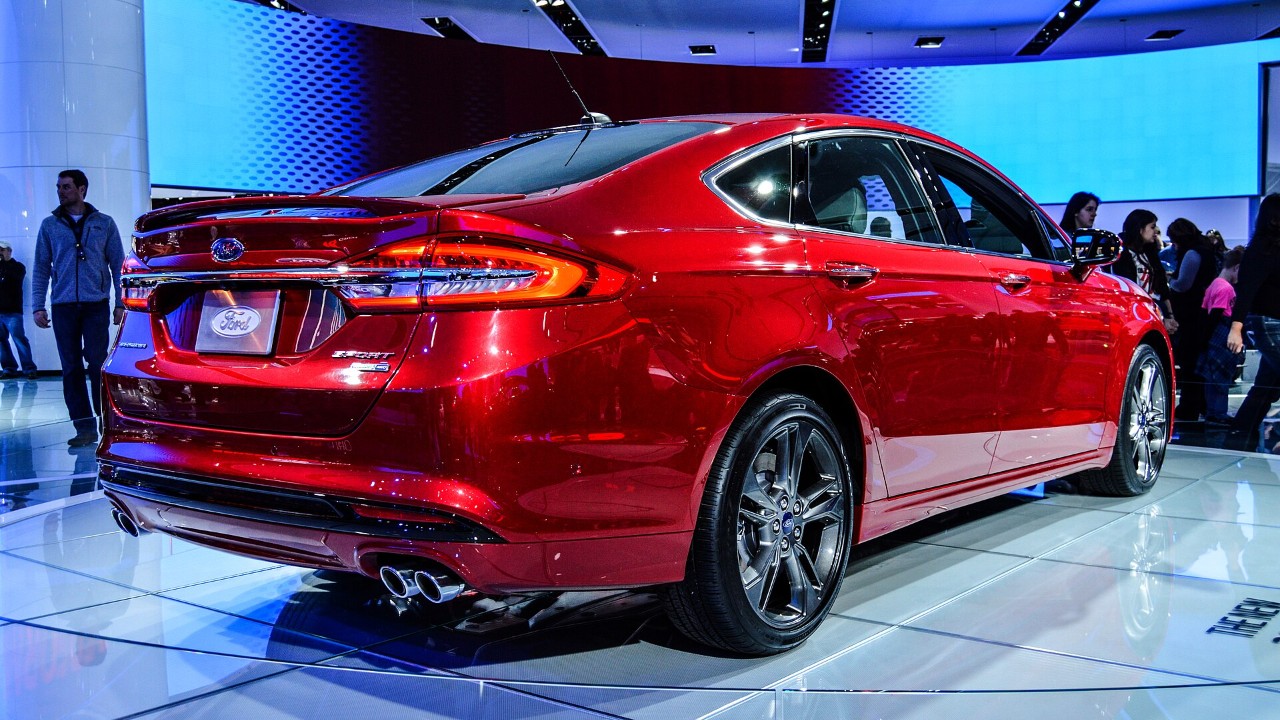
The Fusion Sport may be the newest car here, but it already feels forgotten. Ford dropped the Sport after the 2019 model year, and the whole Fusion line ended in July 2020. Ford was moving away from sedans in North America, so the hottest Fusion went with it.
It was a lot of car for a family sedan. According to MotorWeek’s road test, the twin-turbocharged 2.7-liter V6 made 325 horsepower and 380 lb-ft of torque. All-wheel drive came standard, along with a six-speed automatic and paddle shifters. Ford also fitted a continuous damping system that MotorWeek called a first for the segment, because it could react to potholes.
MotorWeek ran 0 to 60 mph in 5.3 seconds and the quarter mile in 13.9 seconds at 99 mph. Base price was $34,350. Those are serious numbers for a car that looked almost like a regular Fusion. In fact, MotorWeek averaged 24.1 mpg on regular fuel during its test. In our view, that’s exactly what made it fun. If you want a modern sleeper with room for the kids, the Fusion Sport is hard to beat.
7. Chrysler 300M Special
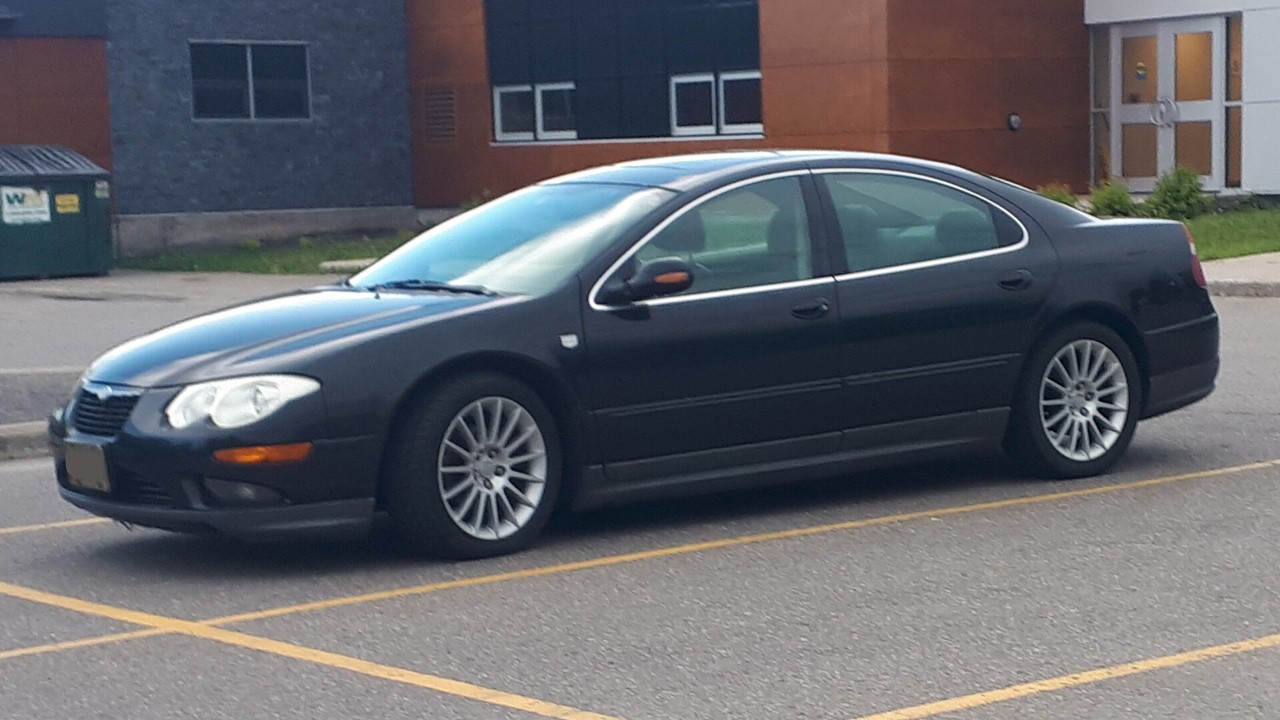
Chrysler’s 300M made a strong first impression. On November 16, 1998, Chrysler announced that Motor Trend had named the 300M its 1999 Car of the Year. In Chrysler’s release on the award, editor C. Van Tune called it “one of the freshest statements to come out of Detroit in years.”
The name revived Chrysler’s letter-series cars, picking up after the 1965 300L. The 300M was front-drive and V6-powered, though, unlike the big V8 coupes before it. Its 3.5-liter V6 made 253 horsepower for 1999. Car and Driver also put the 300M on its Ten Best list for 1999 and 2000. Then, in mid-2002, Chrysler added the 300M Special. It brought 255 horsepower, 258 lb-ft of torque and a shorter 3.89 final drive for quicker response.
The Special also got 18-inch tires, a performance dual exhaust, upgraded brakes and HID headlights. Inside, it had leather seats and imitation carbon-fiber trim. We think the Special was the best version of a car that already drove well. It felt firm, eager and a little bit dramatic. The 300M ended after 2004, and many people now forget it existed.
More from Fast Lane Only