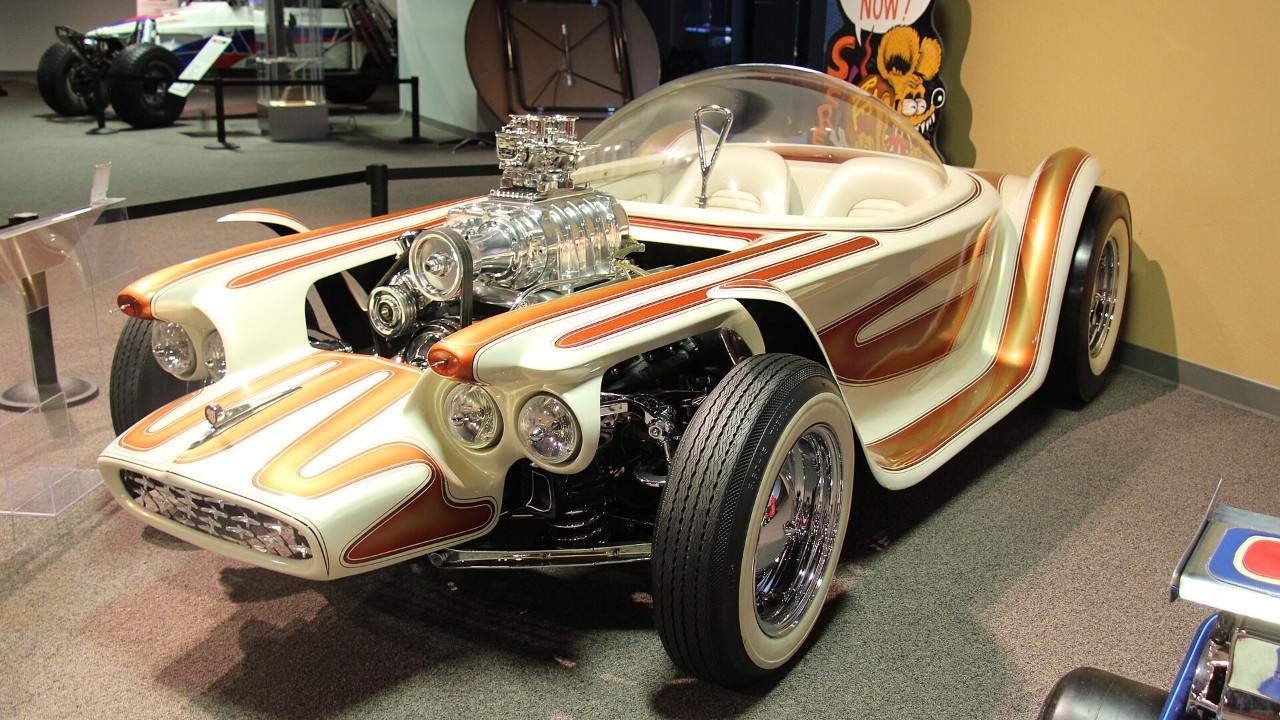
Ed “Big Daddy” Roth paid $1,500 for a purple Model T roadster called Tweedy Pie in 1962. By then, the car was already a magazine star. That deal says a lot about hot rodding in the 1950s and 1960s, when a single car could shape what thousands of kids built in their garages.
Each era of the hobby had cars like that. First came the dry-lakes roadsters of the 1940s, then the wild fiberglass show rods of the 1960s. Later, MTV turned a red 1933 Ford into the most famous hot rod on the planet. Plenty of great cars were built in every one of those decades. However, only a few set the template that everyone else followed.
These are our picks: ten hot rods that, in our view, defined an entire generation of builders. The verdict is our opinion. The builders, dates, engines and stories come from museum and club records, period magazines and enthusiast histories.
1. Tweedy Pie, Ed Roth’s Model T Bucket
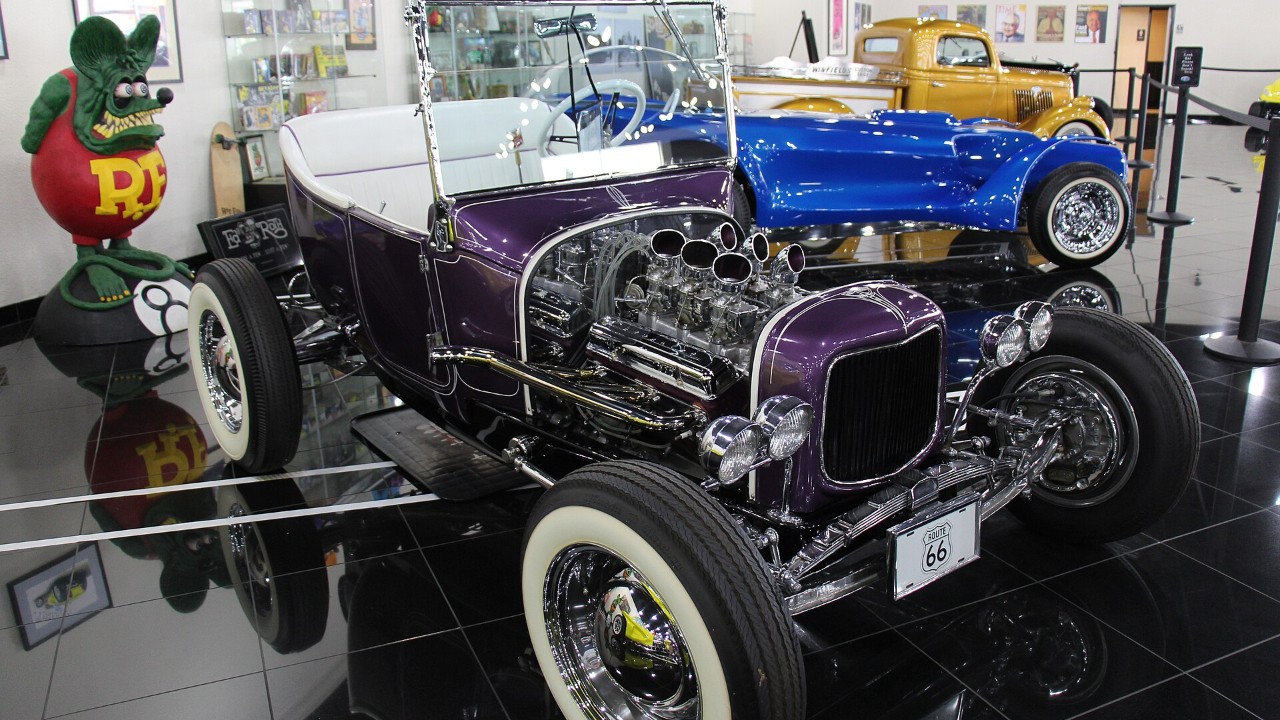
Bob Johnston built Tweedy Pie mostly between 1954 and 1956. He worked as an airplane instrument technician, so he packed the dash with excellent gauges. The body was a Model T roadster, painted Royal Triton Purple, and it sat on 1932 Ford frame rails.
In 1959, Johnston swapped the original flathead Ford engine for a 1957 Corvette V8. Ed Roth pinstriped the car in 1958, and then he bought it in 1962. Before that sale, it gained a polished Offenhauser manifold with six Stromberg 97 carburetors. It also made the cover of Rodding and Re-Styling. As Hagerty notes, Roth made only minor changes, and the car later became a popular Revell model.
That model kit is why we put Tweedy Pie first. It put the short, open T-bucket shape into thousands of young hands. In our view, Tweedy Pie helped make the T-bucket the default idea of a hot rod. A short body, an exposed engine and big rear tires became the formula for a whole wave of builders. Even today, that recipe is still the first thing many people picture.
2. 1959 Roth Outlaw
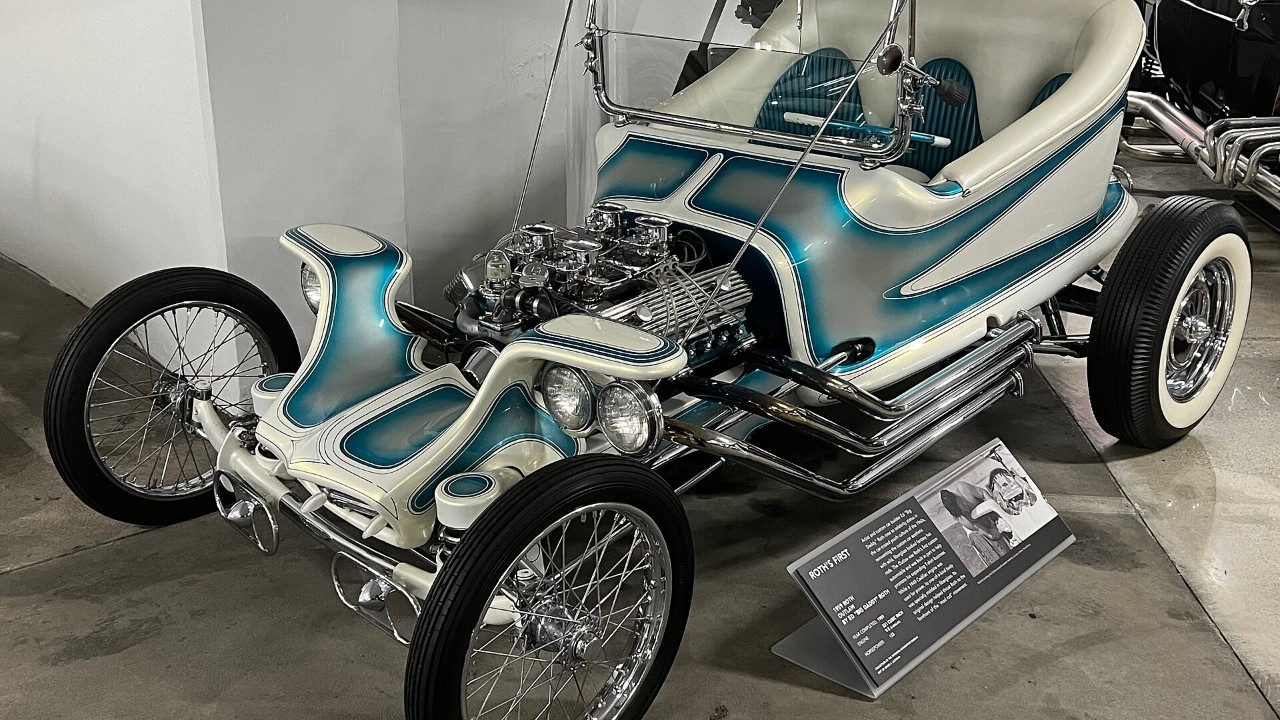
Roth built the Outlaw on a 1929 Ford Model A frame, and he powered it with a 1950 Cadillac engine. At first, he called it “Excalibur,” because the shifter was a sword. Later, the name changed to Outlaw, and the car appeared in the January 1960 issue of Car Craft.
However, the bigger story was how Roth built it. According to Hooniverse’s report from the 2018 Amelia Island Concours, the Outlaw was Roth’s first show rod made with plaster molds and fiberglass. In other words, he did not start from a production body at all. He sculpted his own. The “Big Daddy” nickname also took hold around this time, tied to sales of the Revell model of the car.
In our opinion, the Outlaw marks the moment hot rods turned into rolling sculpture. Builders no longer had to cut and modify old Ford bodies. Instead, they could shape anything they could imagine. At least one clone exists, built by Fritz Schenck, so the details on any Outlaw you see are worth a second look. Our photo shows the Outlaw on display at the Petersen Automotive Museum.
3. Uncertain T
Steve Scott was 17 when he started building the Uncertain T, around 1960. The idea came from a cartoon a classmate drew in his high school physics class. Scott finished the car in 1965, and it toured car shows across the country.
The details were wild. First, Scott formed a fiberglass body over a plug made from electrical conduit and a real 1921 Model T cowl. The frame used square aluminum tubing, and its hollow rails carried the engine’s coolant. Power came from a 384-cubic-inch 1957 Buick Nailhead V8 with Hilborn injectors. According to Fuel Curve, the car made the covers of Car Craft and Popular Hot Rodding. Then it vanished for decades.
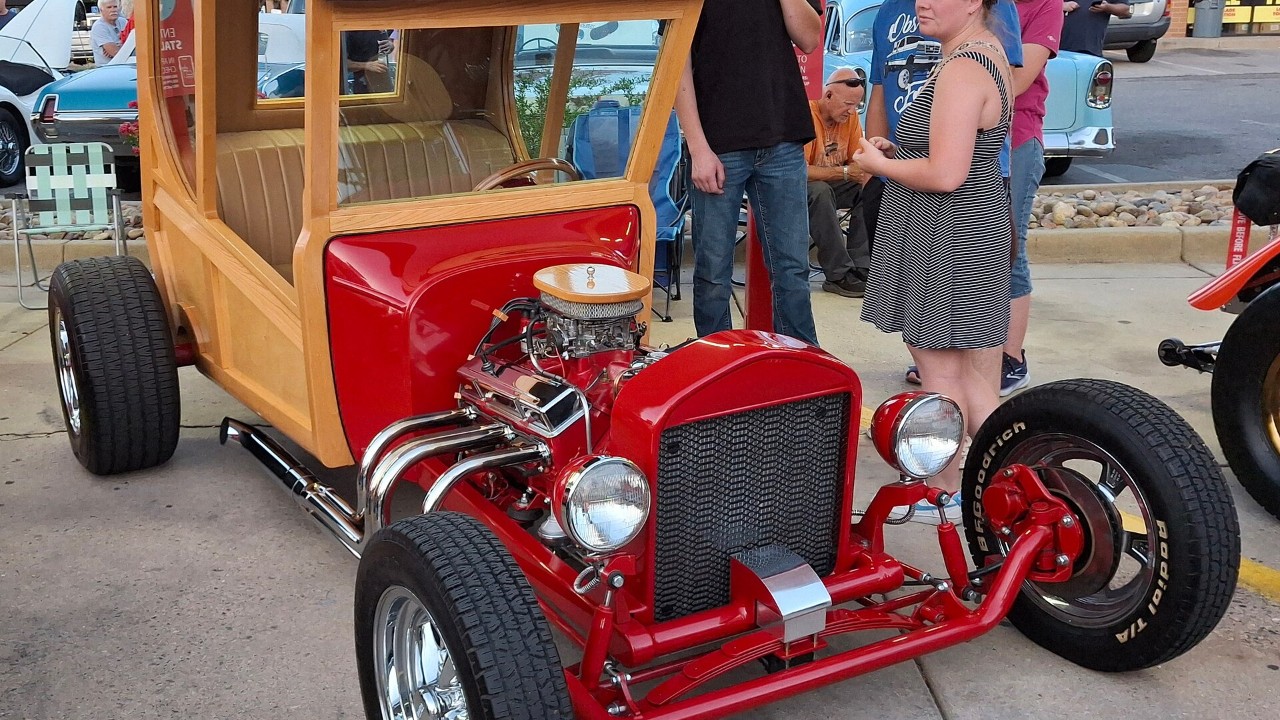
Hot rodders finally found it in late 2023, stored in a Van Nuys, California, warehouse. Beau Boeckmann of Galpin bought it, and it reappeared at the 2024 Grand National Roadster Show. We think the Uncertain T defined the cartoon-style show rod. It also became a Monogram model kit, and New Zealander Martin Bennett later built a full-size tribute from that kit. Our photo comes from the Golden Super Cruise in August 2026.
4. ZZ Top Eliminator
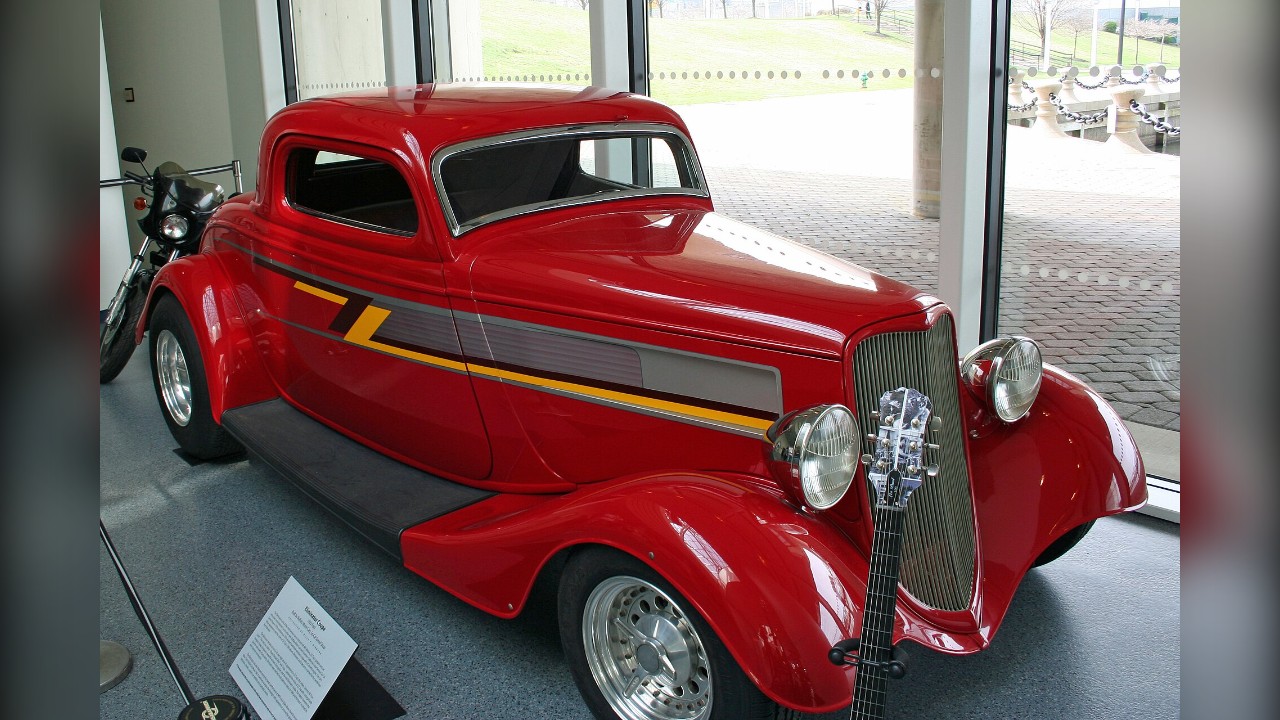
Billy Gibbons’ 1933 Ford coupe took about five years to build after he bought the donor car. Don Thelan’s Buffalo Motor Cars did most of the work, with guidance from Pete Chapouris. The finished car debuted in 1983.
Under the hood, the Eliminator ran a 350 Chevy V8 with a Camaro Z28 cam and a four-barrel carburetor. A Turbo 350 automatic sent the power back. However, the hardware matters less than the timing. According to Fuel Curve, the car starred in the MTV videos for “Gimme All Your Lovin’,” “Sharp Dressed Man” and “Legs.” It also appeared on the cover of ZZ Top’s 1983 album Eliminator.
That is why we think the Eliminator defined the 1980s for hot rodding. It brought a traditional Ford coupe to a whole generation who had never seen a dry lake or a drag strip. Monogram released a model kit of it in 1985. Later, the car spent time on loan at the Rock and Roll Hall of Fame in Cleveland. In our view, few hot rods have ever reached more people through a TV screen.
5. 1992 Boyd Coddington Aluma Coupe
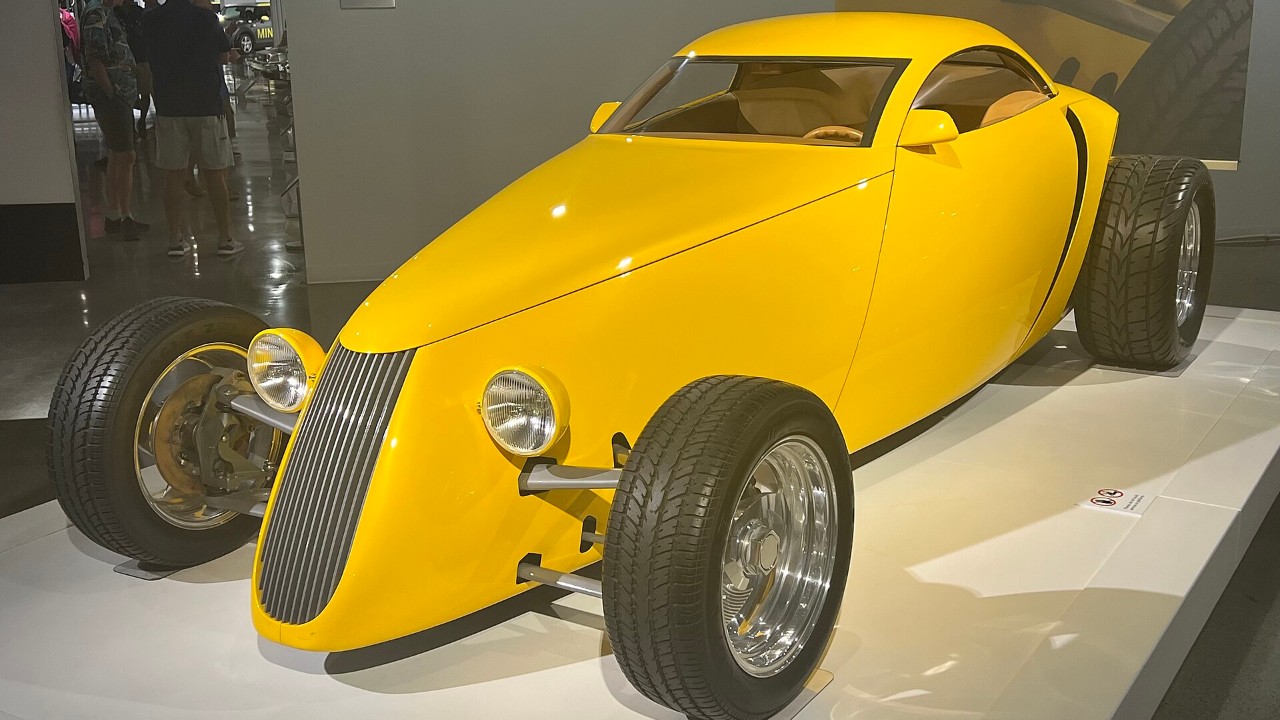
Larry Erickson designed the Aluma Coupe, and Boyd Coddington’s shop, Hot Rods by Boyd, built it. Marcel DeLay shaped the body. As the name suggests, the body, the billet wheels and the engine are all aluminum.
Still, the layout was the real surprise. Instead of a front-mounted V8, the coupe uses a turbocharged 2.0-liter Mitsubishi four from a 1991 Eclipse. That engine sits behind the cabin, mounted sideways, and drives through a Mitsubishi four-speed automatic. According to Hagerty’s tour of the Petersen Vault, it was rated at over 300 hp. Mitsubishi even showed the car in its booth at the 1992 New York International Auto Show.
In our view, the Aluma Coupe pointed the way to the high-tech, billet-and-smooth-surfaces era of the 1990s. It proved a hot rod could use a modern import engine and still look like a hot rod. Collector David Sydorick later donated it to the Petersen Automotive Museum, where it is shown often. For more cars that broke the mold, see our list of hot rods so radical they pushed the limits of the rules.
6. CadZZilla
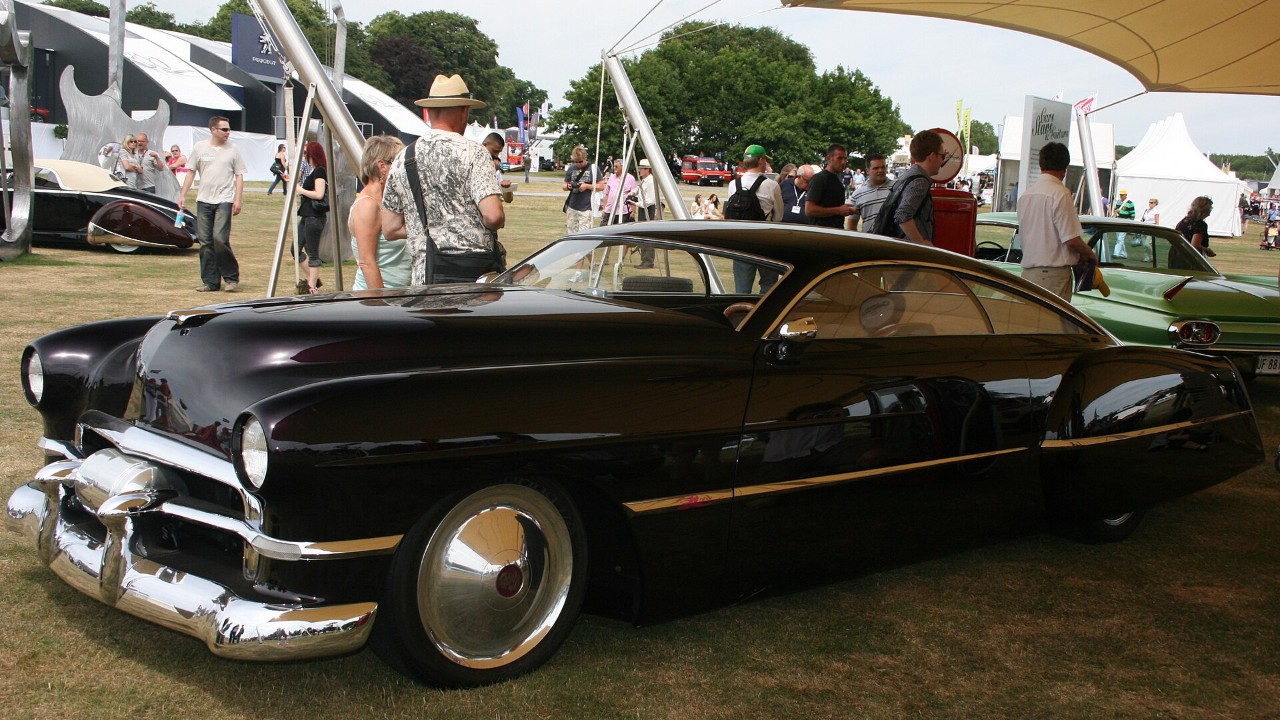
Billy Gibbons commissioned CadZZilla, conceived in 1989. It started as a 1948 Cadillac Series 62 Sedanette, a two-door fastback. Larry Erickson, then working for Cadillac, drew the shape, and Jack Chisenhall also shaped the design. Boyd Coddington’s team, led by body man Craig Naff, built it.
The builders chopped the top, sectioned the body and fitted a new windshield. They also used C4 Corvette suspension parts and a 500-cubic-inch Cadillac V8 with fuel injection. The deep purple paint came from House of Kolor. Hagerty’s Brandan Gillogly wrote that “CadZZilla set the bar for custom cars for decades.” Reportedly, the build cost about $900,000.
We agree with that verdict. After all, CadZZilla took a classic 1940s Cadillac and stretched it into something that looked both old and futuristic. In our view, a generation of custom builders then chased the same smooth, long, low look, because nobody had seen a Cadillac look like that before. In our view, it is the bridge between 1950s lead-sled customs and the 1990s high-end builds. It also shows what Erickson and Coddington could do together, three years before the Aluma Coupe.
7. Munster Koach
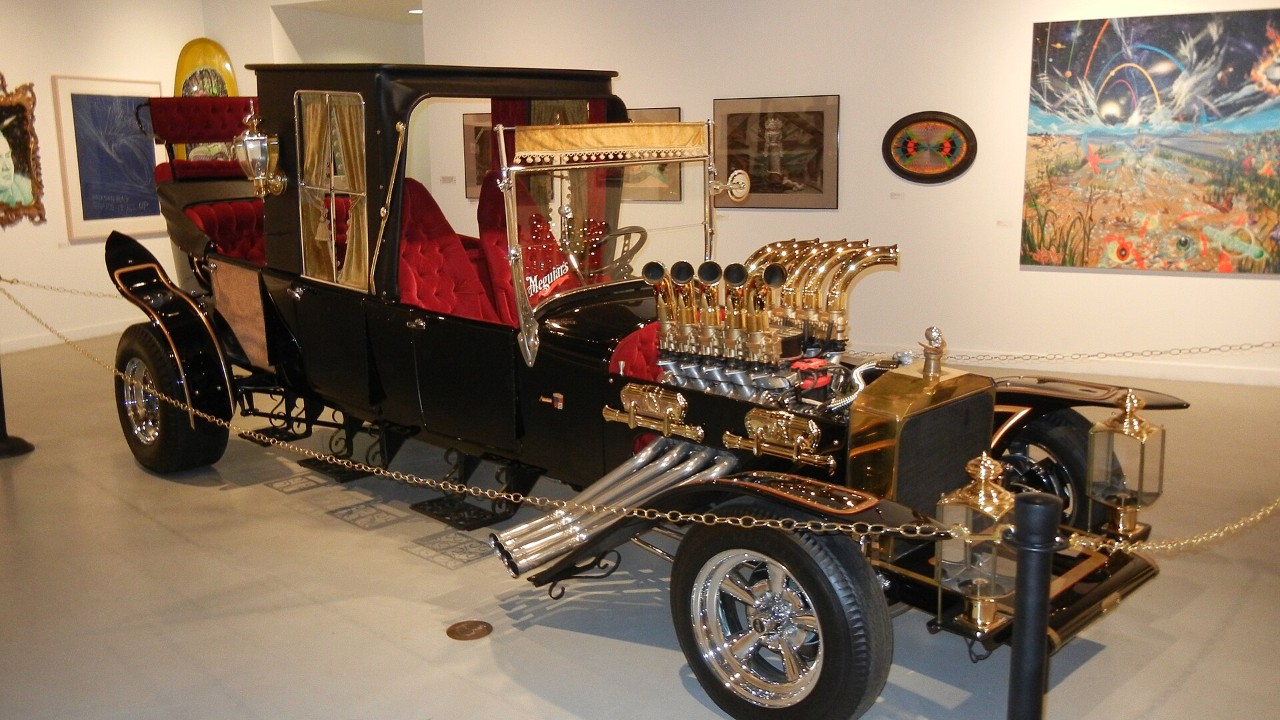
Barris Kustoms built the Munster Koach for the TV show The Munsters. Tom Daniel designed it and was paid just $200 for the work. Tex Smith started the build, and Barris shop foreman Dick Dean finished it.
The car used three Ford Model T bodies, stretched to 18 feet on a 133-inch hand-made frame. A 289-cubic-inch Ford V8 sat up front, fed by 10 Carter carburetors. The ornate scrollwork alone took about 500 hours to hand-form. Our earlier story on how the Munster Koach came together goes deeper into the build.
Why does it belong here? The Koach put a stretched, chromed, multi-carburetor hot rod in front of TV viewers every week. In our view, that weekly exposure did as much as any magazine cover to spread the custom-car bug. Dick Dean also built a second authorized Koach in 1984 for the Hollywood Christmas Parade, with help from his son Keith. That car was restored in 2011. Meanwhile, an unauthorized copy exists too, which is why any Koach you see deserves a close look. In our view, the Koach defined the TV-car craze of the 1960s.
8. 1932 Ford Ray Brown Roadster
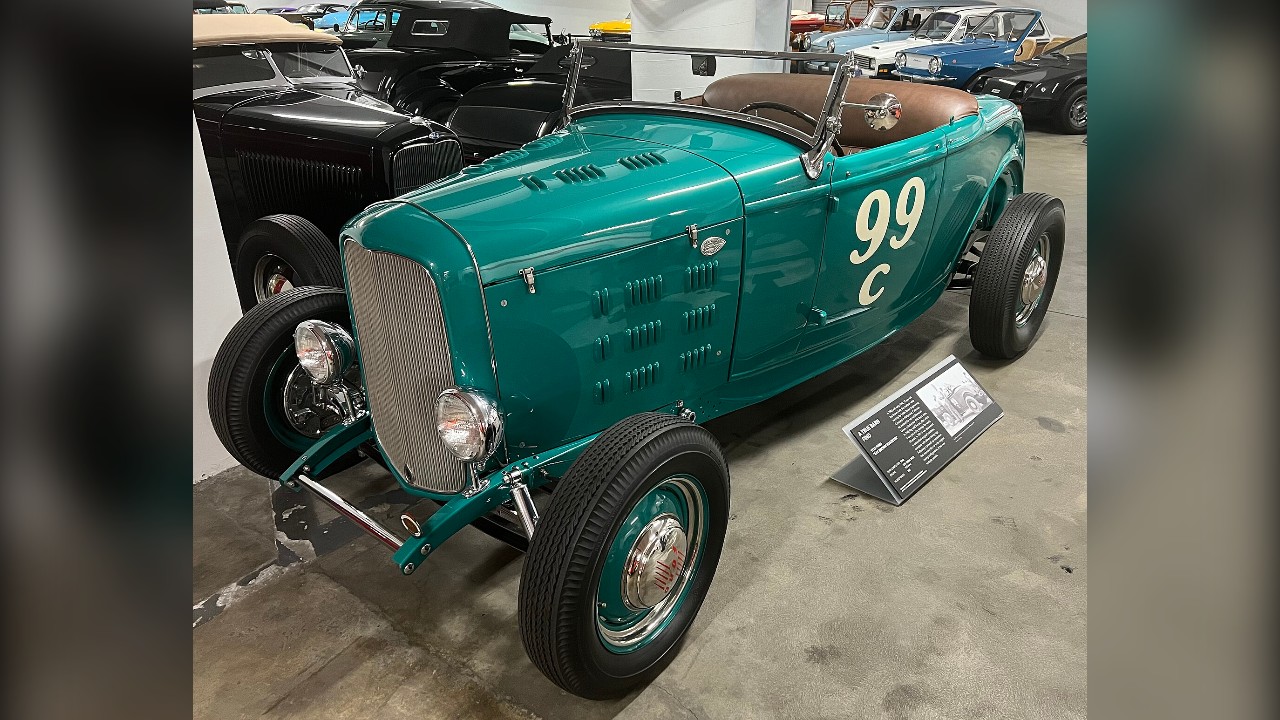
Ray Brown was born in 1928, and he started building his 1932 Ford roadster at 16. According to the American Hot Rod Foundation, the car ran as No. 99C and earned 11 timing tags at SCTA meets at El Mirage dry lake. It ran in the 125 mph range, which was remarkable for a street-driven car built by a teenager.
Brown worked for Eddie Meyer Engineering in Hollywood, a maker of speed parts for cars and boats. As a result, the roadster still wears some of that company’s parts. Around 1947, he also installed surplus aircraft safety belts. That detail shows how seriously he took the speed he was chasing.
We think Brown’s car defined the postwar generation. It was a true dual-purpose machine, driven on the street during the week and raced on weekends. In our view, that formula, a stripped Deuce roadster with a hopped-up engine, became the foundation of the whole hobby. In retirement, Brown had Tommy Sparks build a flathead V8 for it. Our photo shows the roadster at the Petersen Automotive Museum.
9. Ed Roth Surfite
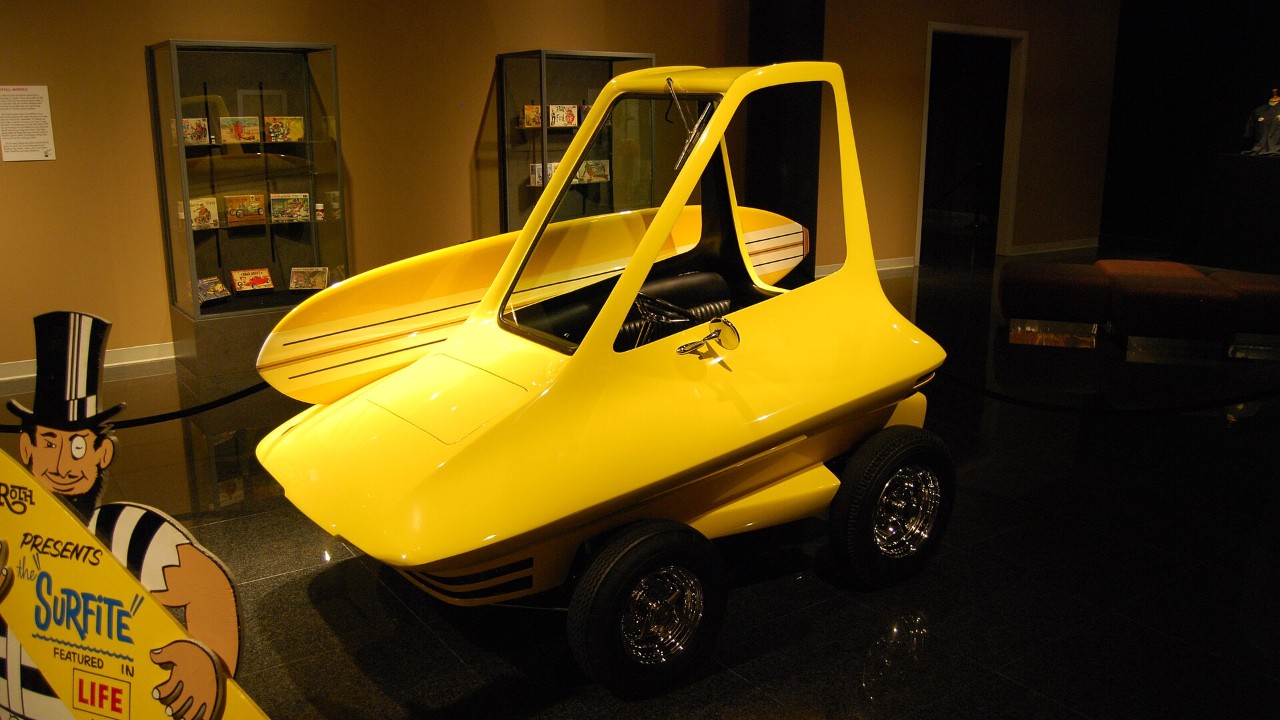
Roth’s beach-era creation was the Surfite, a tiny 1964 show car and surfboard carrier. He based it on an Austin Mini Cooper chassis and hid a chrome-plated 1,269 cc Mini Cooper engine under a cover in the front.
Roth then parked the car in Malibu, hoping to land it a movie role. In the end, the plan worked. The Surfite turned up in the 1965 films Beach Blanket Bingo and Village of the Giants. Like Tweedy Pie before it, the Surfite also became the basis of a Revell model kit, which carried the beach-buggy look far beyond California.
In our view, the Surfite shows how quickly hot rodding absorbed new trends. Only a few years after the Outlaw, Roth was building around a small British economy car instead of a big American V8. That flexibility helped define the 1960s show-rod scene, where anything could become a custom. It is also one of Roth’s most cheerful designs, and we think it still looks like pure fun. Besides, it proves a hot rod never needed a huge engine to win a crowd.
10. Ed Roth Orbitron
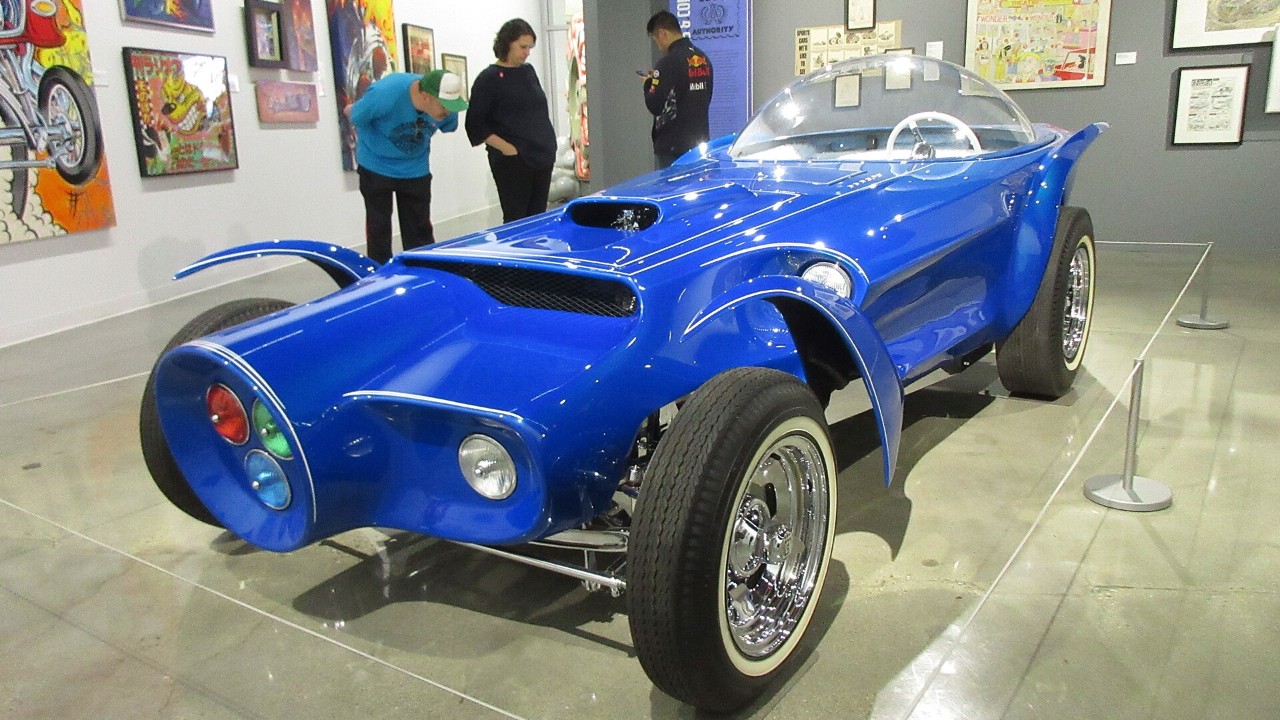
Roth built the Orbitron in 1964 with designer Ed “Newt” Newton. It was a bubble-top show car with an off-center body and three headlights, in red, green and blue. That trio was inspired by television. Car Craft featured it in 1965.
Then the car disappeared. Many years later, though, it turned up in Ciudad Juárez, Mexico, parked outside an adult bookstore. It had lost its nose and its bubble top. Beau Boeckmann of Galpin Auto Sports bought it and brought it home for restoration. Newton himself supervised the work, and Larry Watson oversaw the new Candy Blue paint.
We picked the Orbitron because it captures the space-age optimism of the mid-1960s show rod better than anything else. In our view, it also defines a second generation of fans, the people who watched a lost legend come back to life. The restoration team also included Dave Shuten and James “Jimmy C.” Cleveland, so the car came back with real expertise behind it. It was among the Roth cars shown at the 2018 Amelia Island Concours d’Elegance.
More from Fast Lane Only