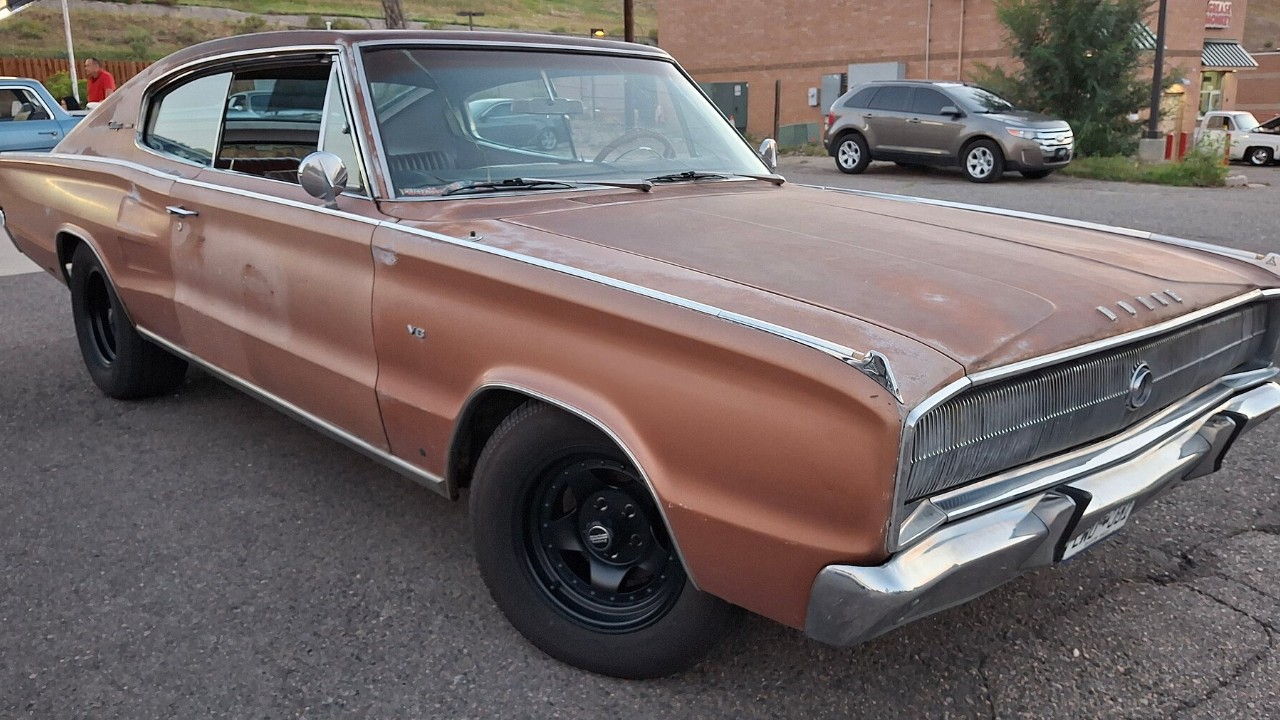
The first Dodge Charger fastback rolled out in mid-1966 on the Coronet’s chassis. Dodge kept the Charger on that B-body platform until 1978. Then, after a long gap, the name came back in 2006 on a rear-drive sedan built in Brampton, Ontario, and that car ran until December 2023.
Across those years, the Charger changed shape, size and purpose more than once. It was a fastback, a muscle coupe, a personal luxury car and finally a four-door police and family workhorse. What the best versions share is hardware that looks built for far more than the brochure asked of it.
These are our picks for 12 Chargers that seem made to keep going. The verdict is our opinion, and we make no promise about any single car’s odometer. Every spec below comes from period figures, maker data and road tests. We’ve also included the Australian Charger, because Chrysler Australia’s coupe earned its place.
1. 1967 Dodge Charger fastback
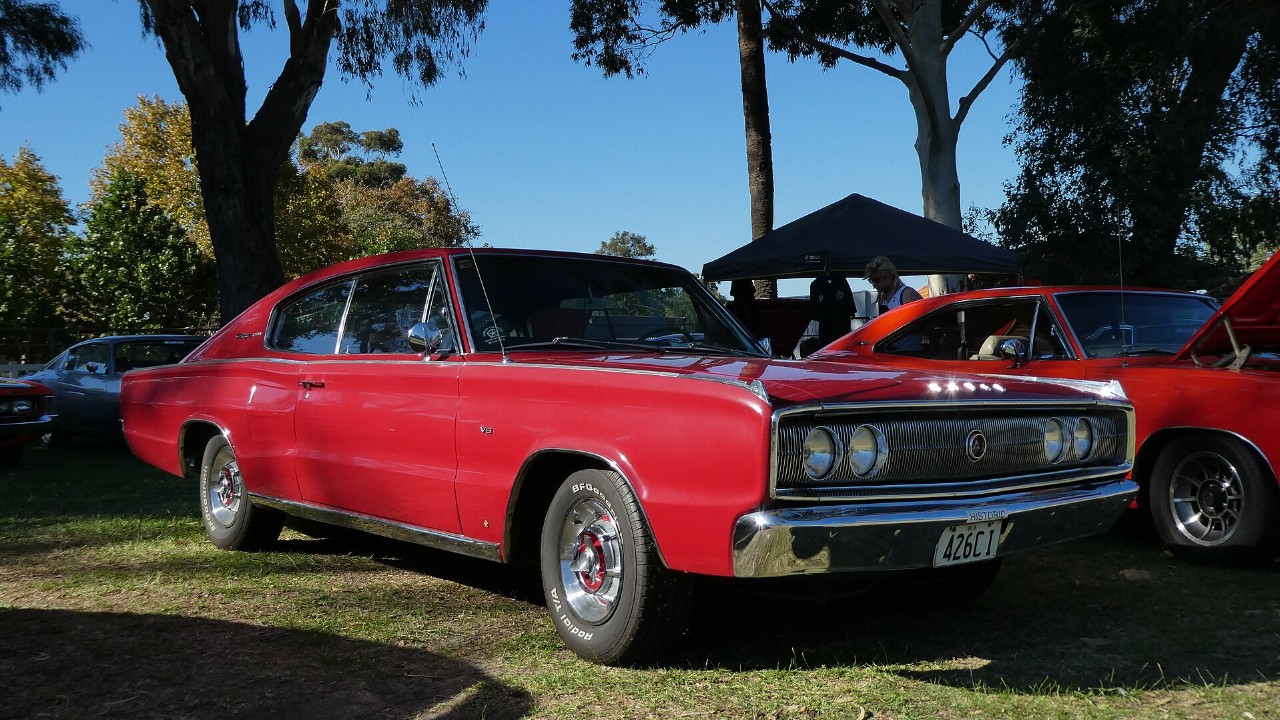
The 1967 Dodge Charger fastback was the second and last year of the original shape. Its fastback roof sat over a cabin unlike anything else at Chrysler. A full-length center console split four bucket seats, and the grille hid rotating headlights.
For 1967, Dodge also added the 440 Magnum and the R/T package. The 361 left the range, and a 383 took its place. Only 118 cars got the 426 Hemi that year. Sales fell to 15,788 from 37,344 the year before, so these are not common cars today. In 1966, the first year of the Dodge Charger fastback, only 468 cars got the Street Hemi. Dodge had aimed that first car squarely at AMC’s Rambler Marlin.
Our take: the 1967 fastback had a chassis that carried Chrysler’s biggest engines, even when most buyers chose smaller ones. That margin is why we think a well-kept small-block car can feel so relaxed. If you find one, check that the console and rear buckets are complete. Those parts are what make a Dodge Charger fastback from these years special, and we’d expect them to be harder to replace than mechanical parts.
2. 1972 Dodge Charger
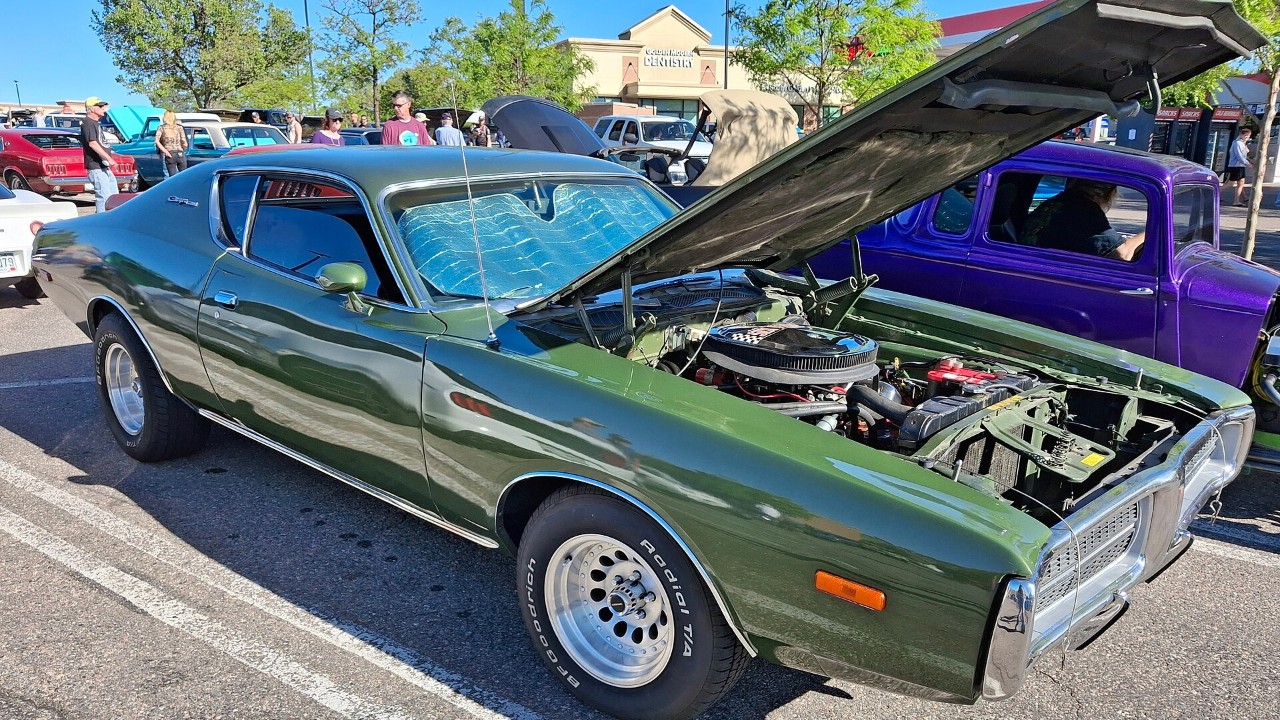
Dodge restyled the Charger for 1971 with curvy “fuselage” sheet metal. A year later, it reshuffled the range. The Rallye option replaced the R/T, and a 400 four-barrel took over from the 383. Hidden headlights, standard on earlier cars, had become an option with the 1971 body. Then, for 1973, Dodge dropped them altogether.
The ratings also changed in 1972, because Dodge now quoted SAE net figures. As a result, the 440 was listed at 280 hp net, against 350 hp gross before. Meanwhile, buyers could still pair the 340, 400 or 440 Magnum with a Hurst pistol-grip four-speed.
In our view, the 1972 car is a smart buy for someone who wants a big-block Charger to use. It has the same tough B-body bones as the famous 1970 car, yet it lacks the same collector spotlight. That makes it a car you can enjoy without worrying about every mile. Our advice: a 400 automatic is a sensible pick, while a four-speed 440 is the one that will make you grin. Either way, the drivetrain was built with plenty in reserve.
3. 1973 Dodge Charger Rallye 440 Magnum
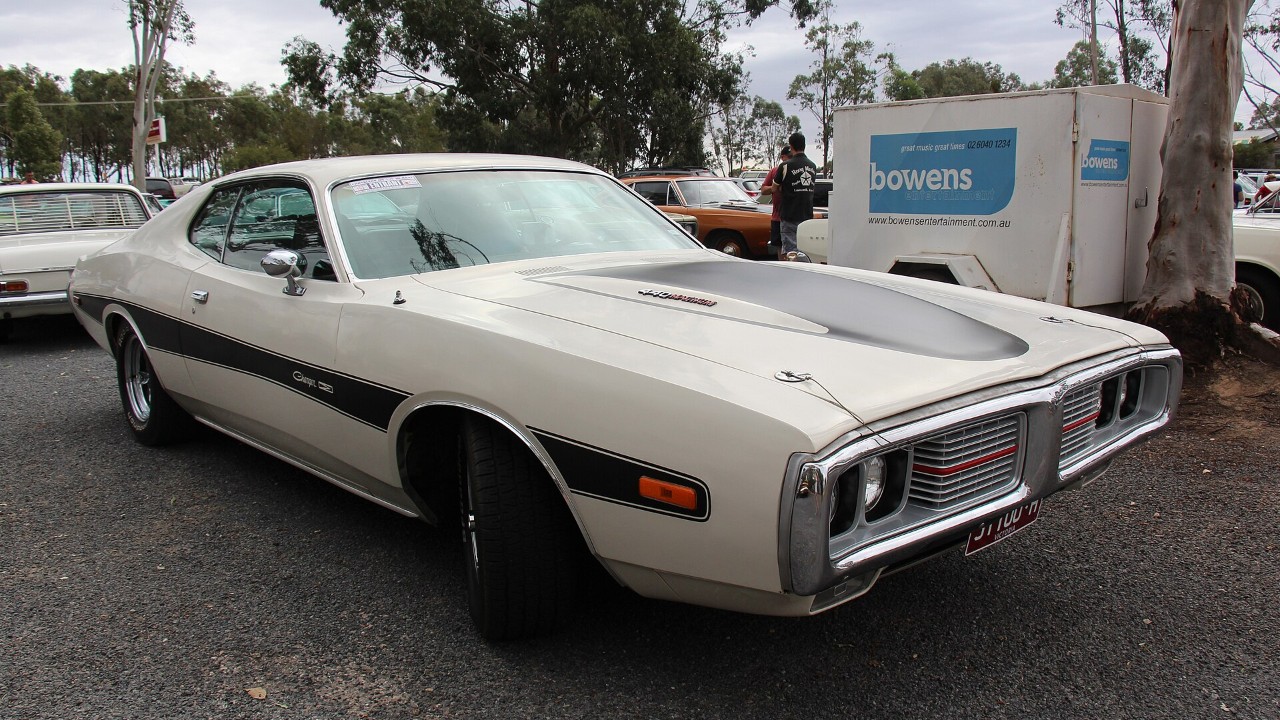
By 1973, the Charger had become a strong seller again. Dodge sold about 108,000 that year. The 318 was standard, and the options ran up through the 340, 360 and 400 to the 440. Every engine on that list was a V8.
The Rallye was the sporty Charger of this era, and the 340 was offered only on that model. Hidden headlights were gone for 1973, so every car wore its lamps out in the open. That small change gives the 1973 car its own face, and we think it has aged well.
Pairing the Rallye trim with the 440 Magnum gave you the most engine Dodge offered in the car that year. In our opinion, a big-block in this car is all about easy, unstressed power. It doesn’t need to rev to move, and it cruises with little effort. Our take: a Rallye 440 is the 1973 Charger we’d choose. Check the fender tag and paperwork before you pay extra, since the Rallye look is easy to add to a base car. Then drive it often, because that’s what these cars were built for.
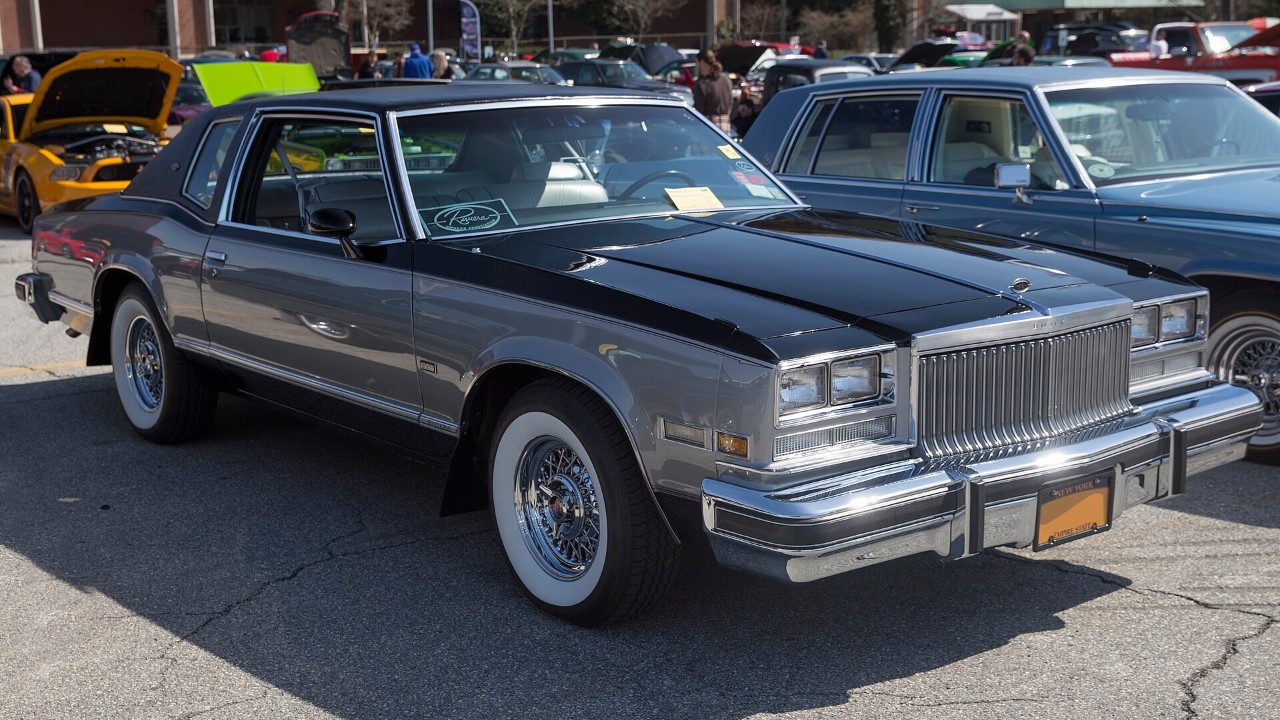
4. 1977 Dodge Charger SE
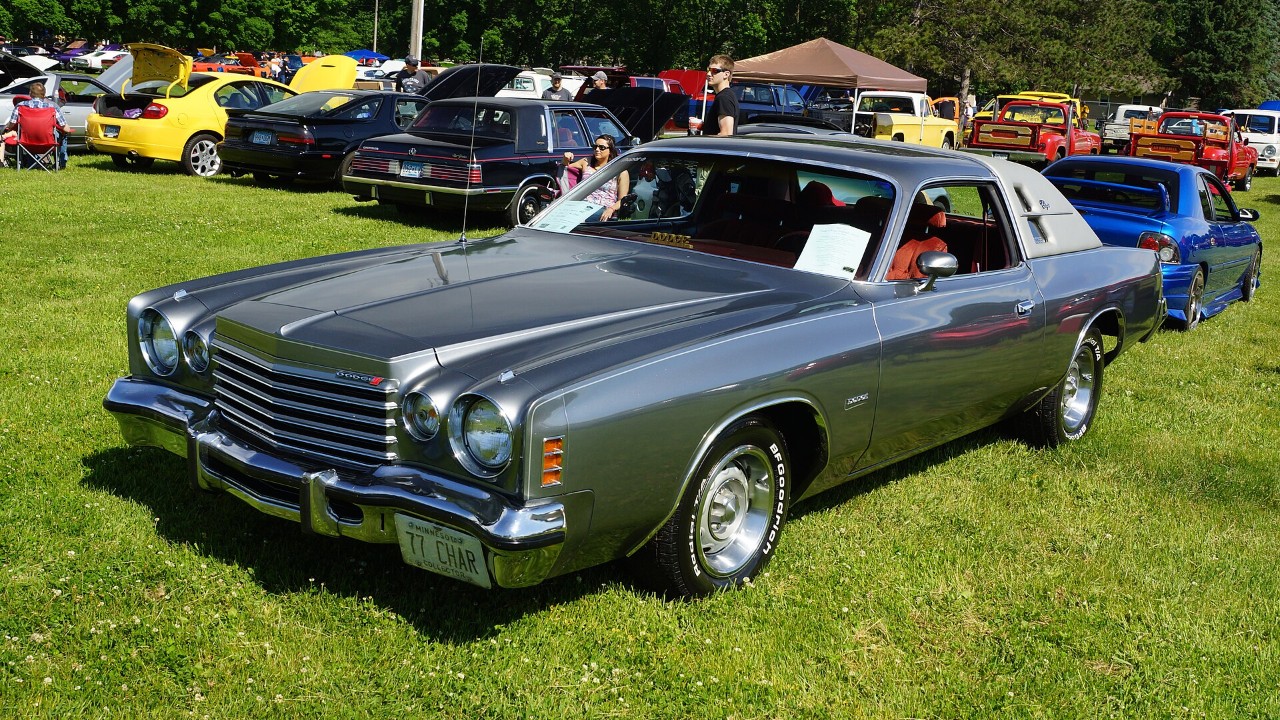
From 1975, the Charger shared its body with the Chrysler Cordoba. Hagerty notes that the Cordoba outsold it badly, 150,105 to 30,812 in 1975. Even so, the Charger SE was a well-equipped car. Hagerty lists bucket seats, power steering, an automatic, power front disc brakes and electronic ignition as standard on the 1976 SE.
For 1977, Dodge dropped the base and Sport models, which left only the SE and the Daytona. Estimated production that year was 30,367. The Daytona was an appearance package offered with a 360 or a 400. The car in our photo wears one of the dress-up packages of the period, and the basic hardware underneath stayed the same.
Our take: the late Charger SE gets little love, but it shares its proven B-body hardware with a decade of Mopars. In our view, that makes it one of the easiest Chargers to keep running. Hagerty says the 1976 SE’s base 318 was rated at 115 horsepower, and optional 360 and 400 engines added more. If you want a comfortable 1970s cruiser with Mopar roots, the 1977 SE is a fair place to start.
5. 1974 Chrysler Valiant VJ Charger 770 E55
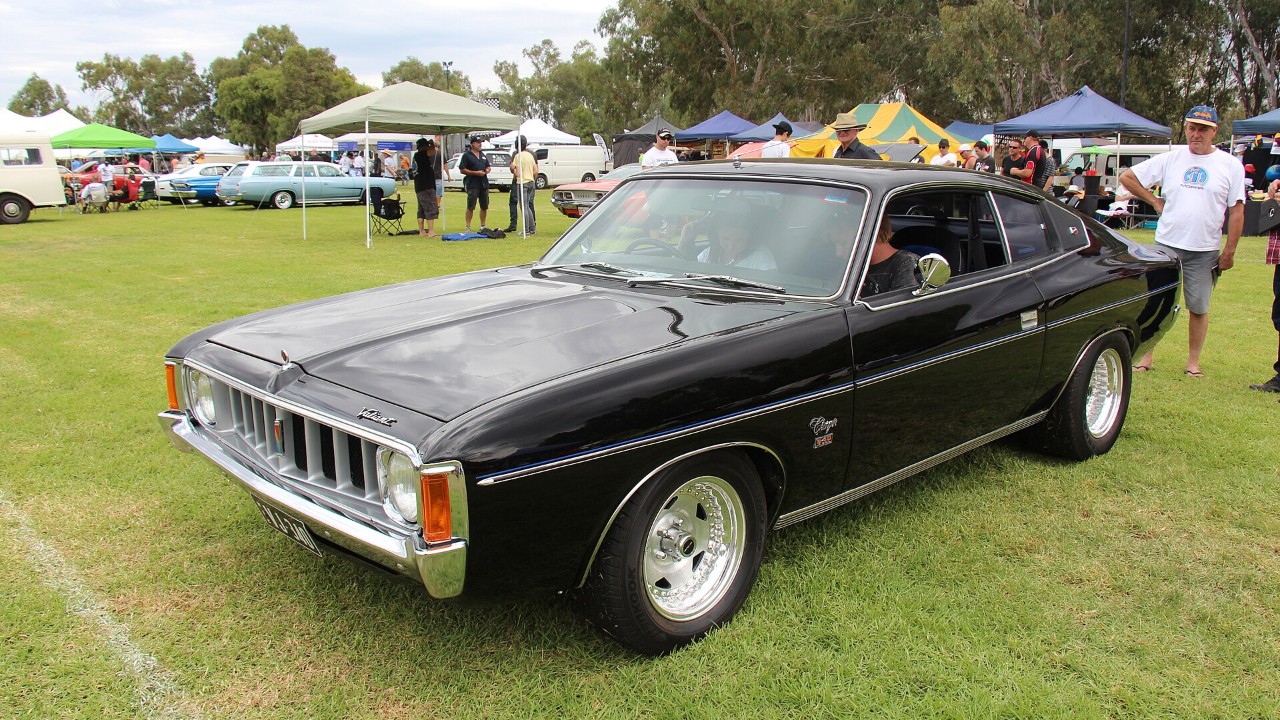
Australia had its own Charger. Chrysler Australia introduced the Valiant Charger in 1971 as a two-door hardtop on a shorter version of the Valiant sedan. It won the Wheels Car of the Year award that same year. At one point, Chargers made up 80 percent of Australian Valiant production.
The VJ series replaced the VH in March 1973. The Charger 770 sat at the top of the range, with automatic transmissions and V8 options. E55 was the code for the biggest of them, a four-barrel 340 V8 rated at 275 bhp. Later, in late 1974, Chrysler added a 360 V8 as option E57. Most Chargers used six-cylinder engines of 215, 245 or 265 cubic inches, and you can read about engines like those in our list of inline sixes we rank above the rest.
Our take: the Valiant Charger was built for Australian roads and Australian distances, and the 340 gave it serious muscle. For more of the family, see 10 Valiants that looked like the future. If you ever see an E55 770 for sale, check its build plate before anything else.
6. 2007 Dodge Charger SRT8
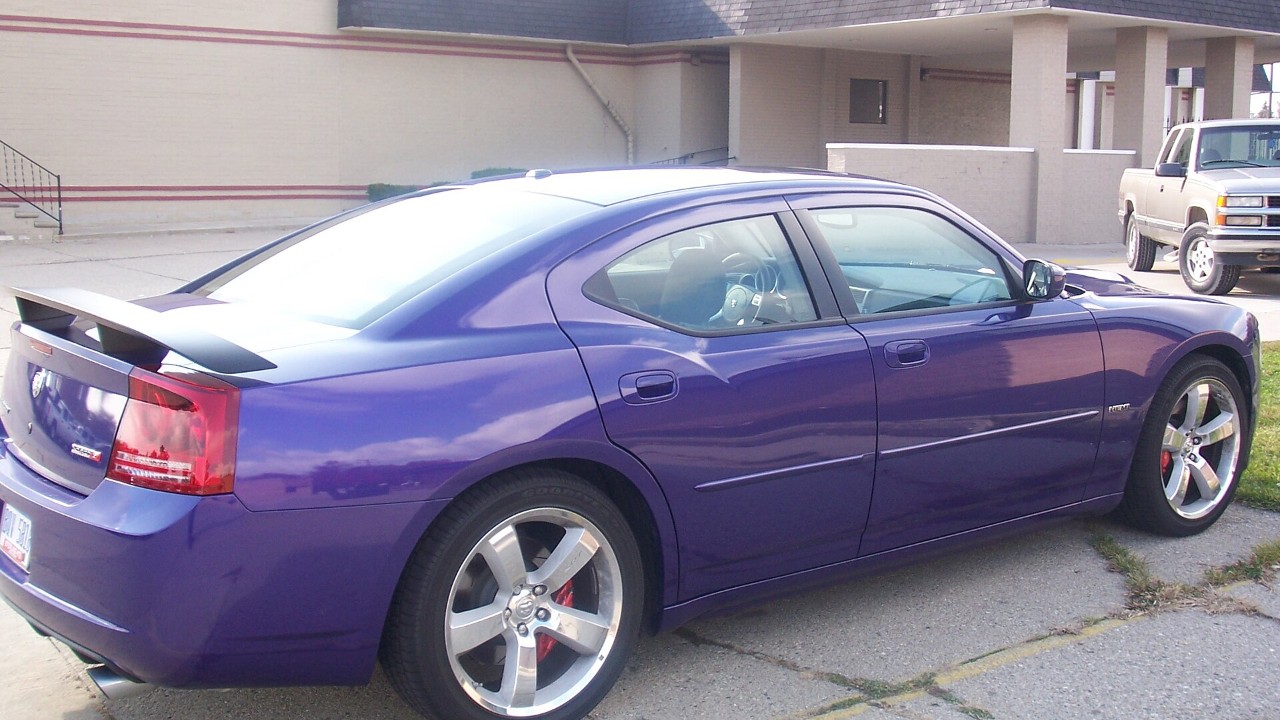
When the Charger returned, it borrowed some serious parts. The LX platform used a five-link rear suspension and a W5A580 automatic, both derived from Mercedes-Benz components of that era. Chrysler built the car at Brampton Assembly in Ontario.
The SRT8 sat at the top of the range from 2006 to 2010. It used a 6.1-liter Hemi V8 rated at 425 horsepower and upgraded Brembo brakes. Testing put its 0-to-60 mph time at 4.8 seconds. For a big four-door sedan, that was serious pace, and it carried four adults while doing it. Also, from 2007 the SXT and R/T could be ordered with all-wheel drive, which split power roughly 60/40 between the rear and front wheels.
In our view, the first SRT8 is the modern Charger that proved the idea. It combines a heavy-duty Mercedes-derived driveline with a big Hemi that rarely works hard on the street. Also, the 2007 car in our photo wears Plum Crazy paint, which suits it well. Our take: buy one with service records and keep up with the fluids. Then enjoy a big sedan that never feels short of breath.
7. 2011 Dodge Charger Rallye Plus
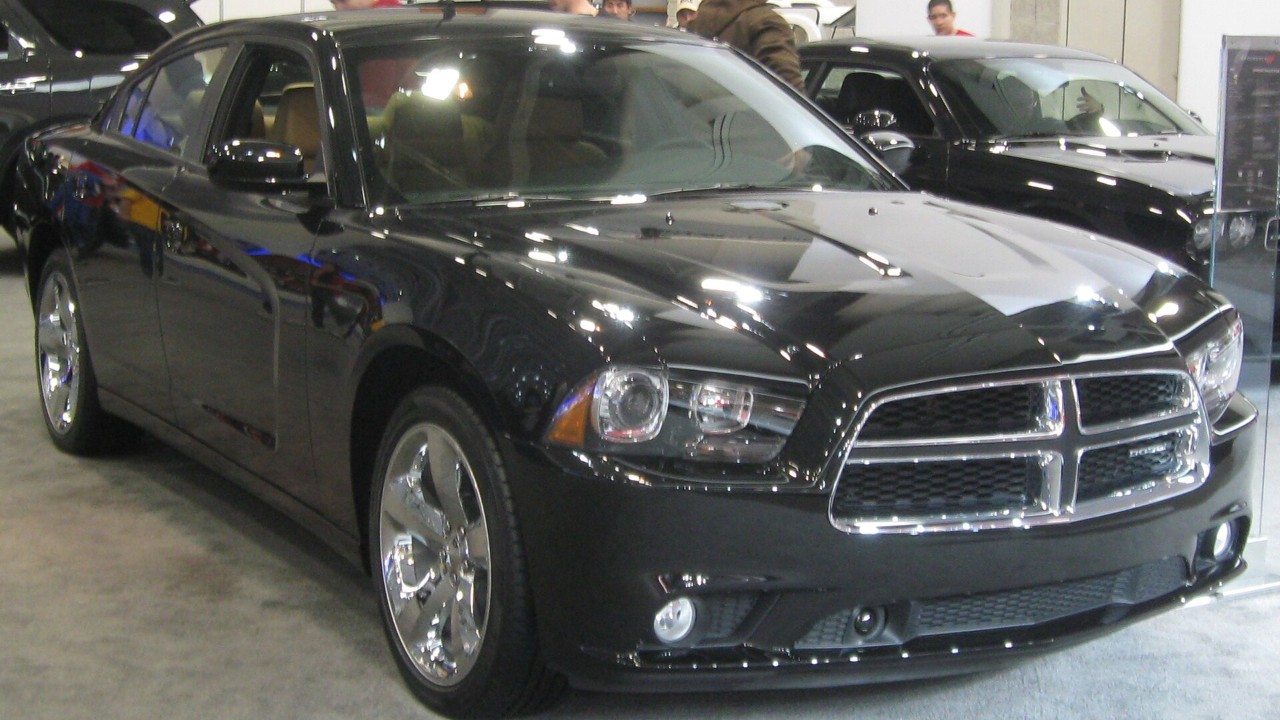
The 2011 Charger began a new generation, and it brought a new V6. That engine was the 3.6-liter Pentastar, rated at 292 horsepower. By comparison, the earlier 3.5-liter V6 had made 250.
Cars.com’s 2011 specs list the Rallye and Rallye Plus among the trims below the R/T. Both started at $25,395, the same as the SE. In other words, the Rallye Plus added equipment without a jump to the V8 price. The R/T models began at $30,395. Above them, Cars.com lists R/T Plus, R/T Max and Road/Track versions, plus all-wheel-drive R/T cars. Later, Rallye Appearance Packages returned for 2014.
We like the Rallye Plus because it represents the everyday Charger that most people actually bought. It’s a big, rear-drive sedan with a modern engine and a simple layout. Then, from 2012, Dodge added an eight-speed automatic for the V6, so the 2011 cars use the older gearbox. Our take: a 2011 V6 Charger is a sensible used buy, provided it has a clean history. Look for a car with its maintenance records, and expect it to feel at home on long highway days.
8. 2012 Dodge Charger SRT8 Super Bee
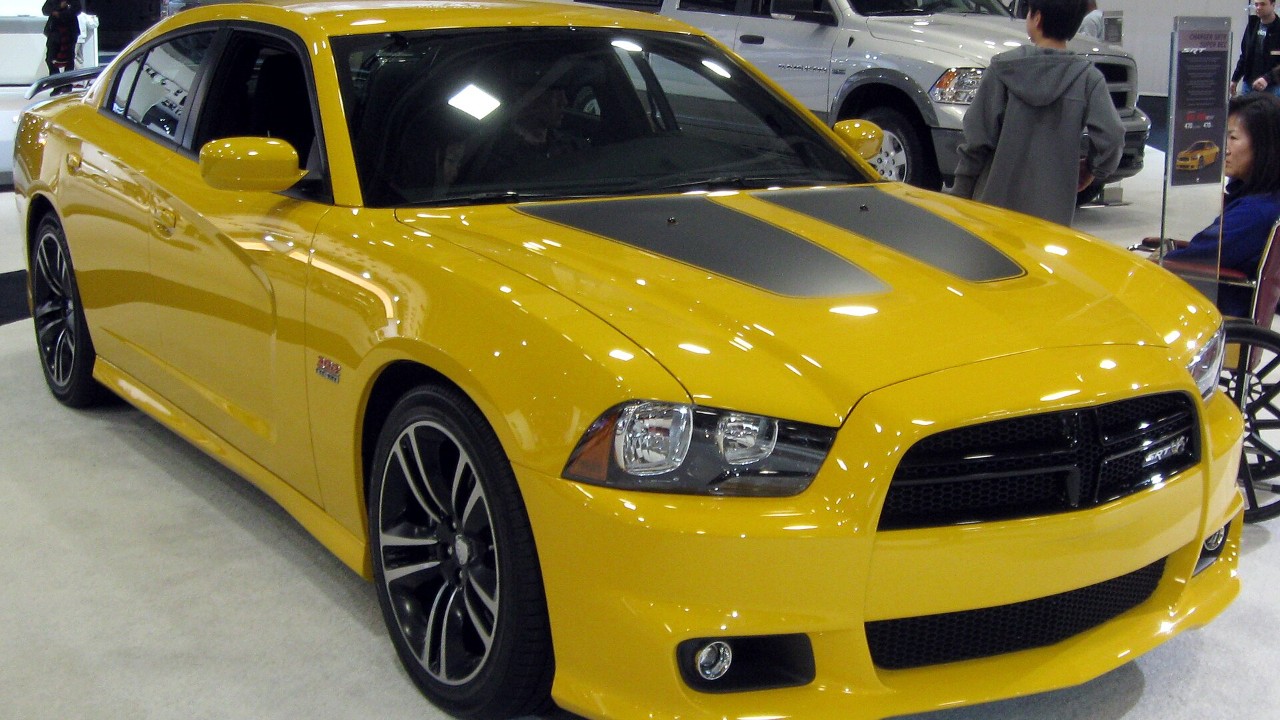
Dodge brought back the Super Bee for 2012 and gave it the big engine. The car used the 392 Hemi, a 6.4-liter V8. In the 2012–2014 SRT8, that engine was rated at 470 horsepower. Before that, the first modern Super Bee had arrived for 2007 with the 425-horsepower 6.1-liter Hemi, limited to 1,000 cars.
Paint choices were part of the point. The Super Bee came in just two colors, Stinger Yellow and Pitch Black. Later, the R/T Scat Pack took over the Super Bee’s role in the lineup.
Our take: the 2012 Super Bee is a great example of a car that seems to have plenty in reserve. A 392 cubic-inch V8 doesn’t need to work hard to move a sedan, and in our view that’s good news for longevity. Because the engine is the same 6.4-liter Hemi family Dodge kept using for years, parts support should stay strong. Buyer advice: favor a car with documented oil changes and an unmodified engine. Then simply drive it, because a Super Bee kept in a garage misses the whole point of the car.
9. 2015 Dodge Charger SRT 392
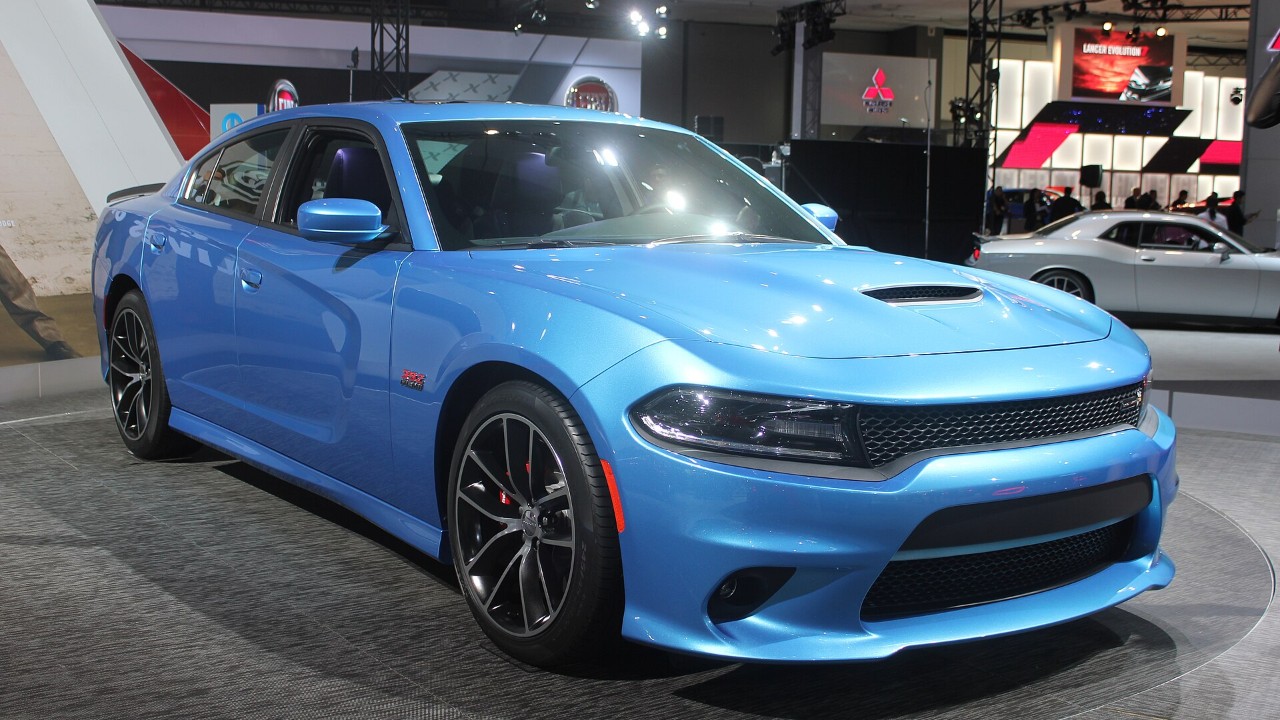
The 2015 update brought new styling and a new name for the top non-supercharged car. The SRT 392 was rated at 485 horsepower. It ran from 2015 through 2023, the end of the Charger sedan. Its powertrain was shared with the R/T Scat Pack, which used fixed-rate Bilstein shocks. By comparison, the 5.7-liter Hemi in the regular R/T stayed at 370 horsepower.
Its brakes tell you how seriously Dodge took the car. The SRT 392 used 15.4-inch front rotors and 13.8-inch rear rotors. Meanwhile, by 2015 every Charger engine sat in front of a ZF eight-speed automatic. On the SRT 392, it handled every bit of the Hemi’s output.
In our view, the SRT 392 is the sweet spot among the later Chargers. It has a big naturally aspirated V8, huge brakes and a modern gearbox, yet it avoids the complexity of a supercharger. For that reason, we think it’s one of the best long-term Charger buys. Our take: look for an unmodified example with a clean title, and budget for tires and brake pads, since this car uses both freely when driven as intended.
10. 2015 Dodge Charger SRT Hellcat
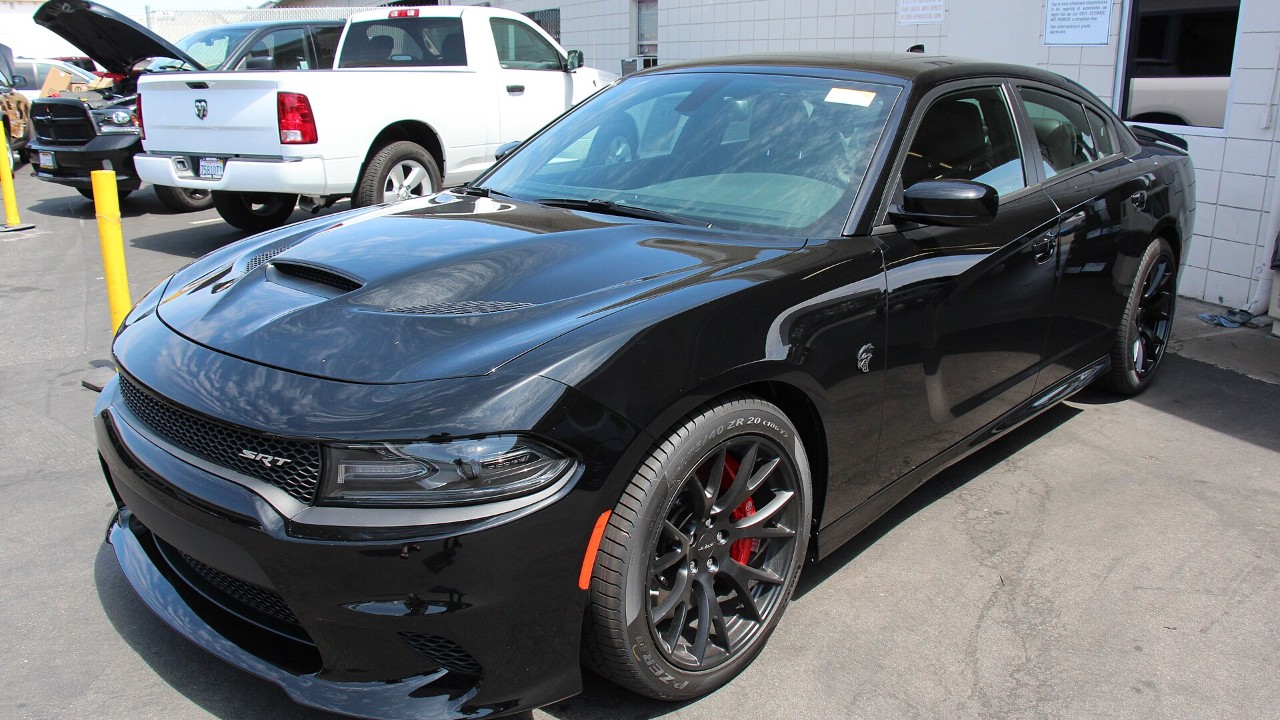
The Hellcat made headlines for its numbers, and they still stand out. Its supercharged 6.2-liter Hemi V8 made 707 horsepower and 650 lb-ft of torque. The Hellcat used the heavy-duty ZF 8HP90 version of the eight-speed automatic. Dodge kept a Charger Hellcat in the range from 2015 until production ended in 2023.
Speed testing went past 200 mph in both directions, with a best run of 206.90 mph. For a sedan with four doors and a big trunk, that figure is remarkable. It also shows how much strength Dodge had to build into the driveline to cope.
Our take: a car engineered for that kind of load is under little strain on a normal drive. That’s why we put the Hellcat on this list, even though owners rarely use all of its power. Of course, tires, brakes and fuel cost real money. Buyer advice: buy one with a clean history and no track abuse, and keep its cooling system in top shape. We’d also avoid heavily tuned cars, since the factory setup is already more than enough for the road.
11. 2018 Dodge Charger GT AWD
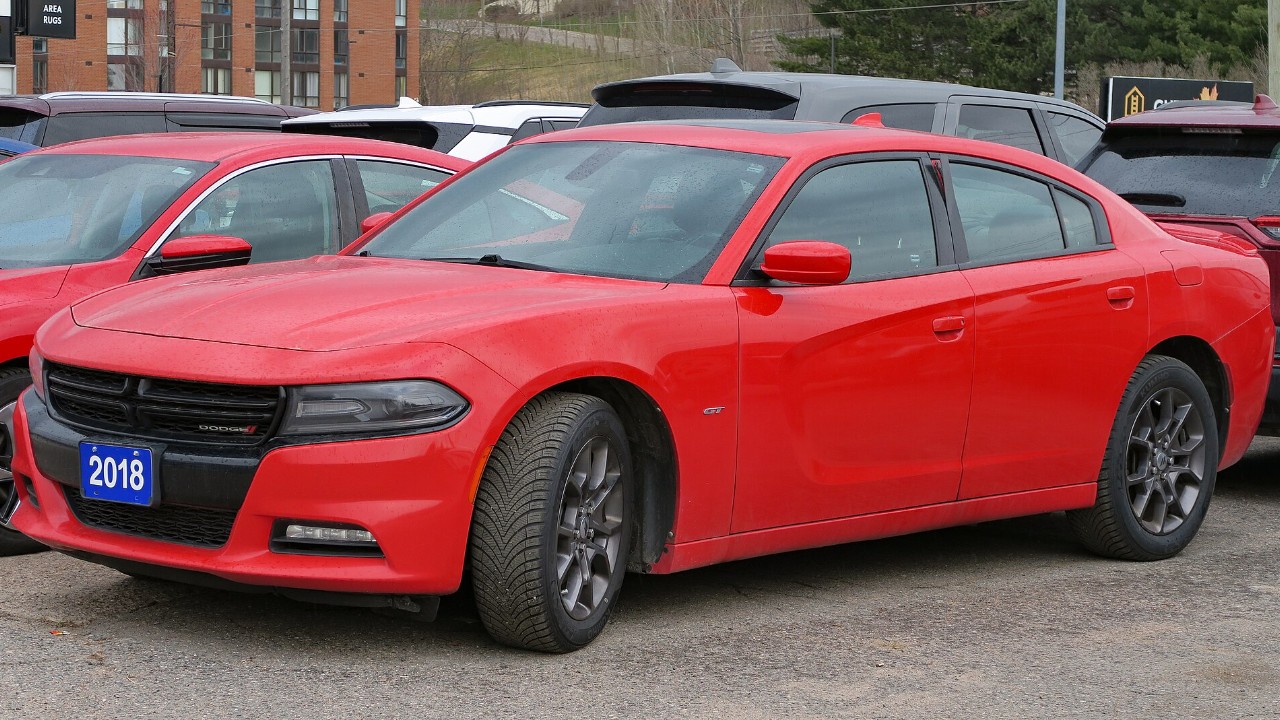
All-wheel drive was not new to the Charger, but for 2018 Dodge grouped it under the GT name. Car and Driver’s test describes a 3.6-liter V6 rated at 300 horsepower and 264 lb-ft. It drove through an eight-speed automatic. According to the test, the GT and GT Plus got 8 more horsepower and 4 more lb-ft than the base V6.
The all-wheel-drive system works mostly in rear-drive mode, with the front axle disconnected. When sensors detect slip, an active transfer case sends torque forward. Car and Driver’s car weighed 4,281 pounds and reached 60 mph in 6.4 seconds. On the skidpad, it managed 0.79 g.
Our take: the GT AWD is the Charger for people who face real winters. It keeps the big rear-drive feel most of the time and adds traction when the road turns slick. Because the V6 is a proven engine and the car isn’t chasing big power, we think it’s built to last. Buyer advice: check the transfer case service history and confirm that the AWD system engages, and you’ll have a practical, durable four-door.
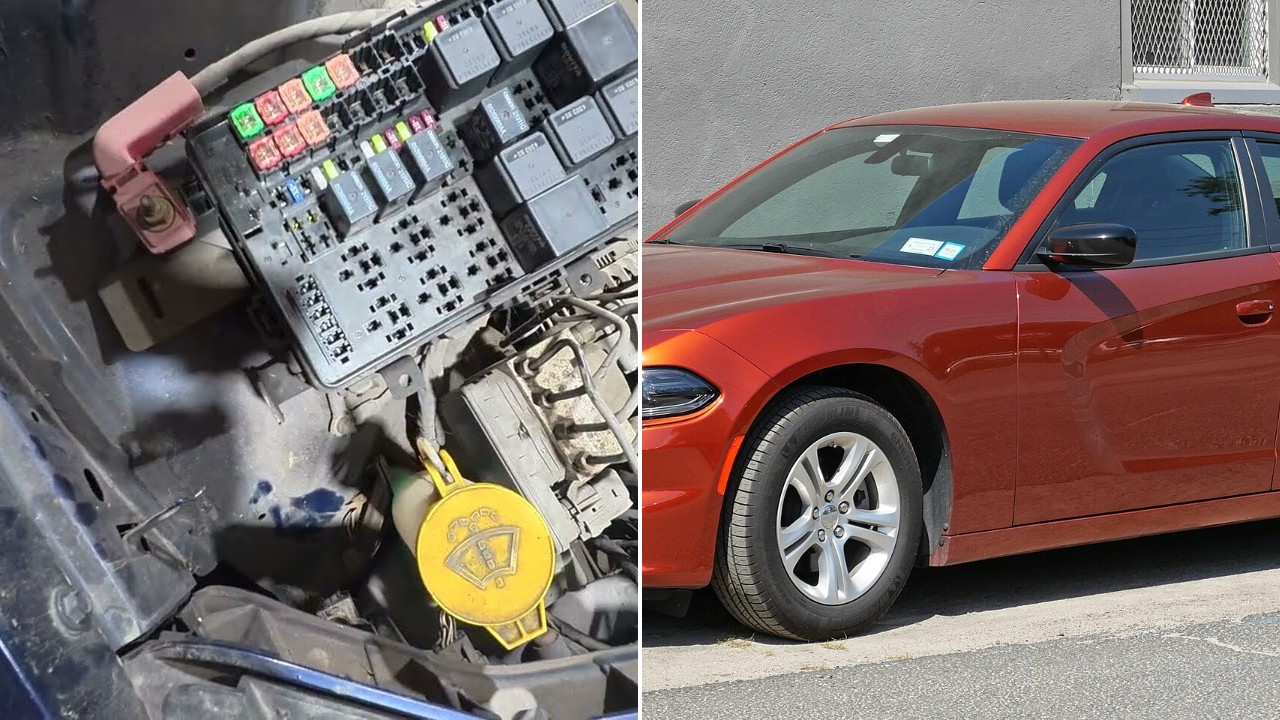
12. 2018 Dodge Charger Pursuit
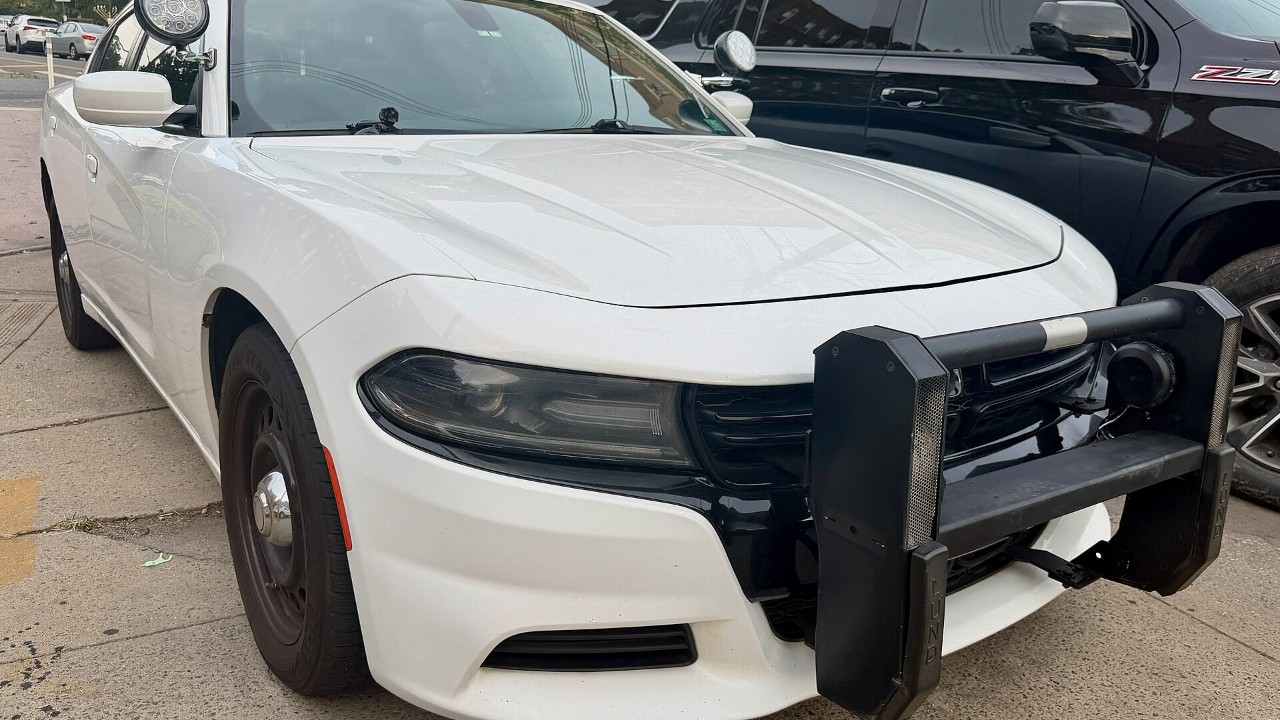
The police Charger appeared early in 2006 as the Charger Police Package. Dodge renamed it the Charger Pursuit in 2011. Its job was harder than any civilian Charger’s, and its hardware reflects that. In 2015, for example, Pursuit buyers could choose a 292-horsepower 3.6-liter V6 or a 370-horsepower 5.7-liter Hemi V8. Like every Charger of this era, it came from Brampton Assembly in Ontario. Underneath, it was the same rear-drive sedan that families bought.
The police package added upgraded heavy-duty brakes and a severe-duty cooling system. It also used police-tuned steering and a column-mounted shifter. Later, the all-wheel-drive V8 Pursuit gained an active transfer case with front-axle disconnect, a feature exclusive to its segment.
In our view, a car built for police duty is the clearest case on this list. It was built for police work, so its brakes and cooling were upgraded beyond a civilian car’s. However, many retired police cars lived hard lives. Buyer advice: if you buy an ex-police Charger, look for service records, check for idle-hour wear, and budget for interior repairs. A good one makes a tough, affordable daily driver.
More from Fast Lane Only