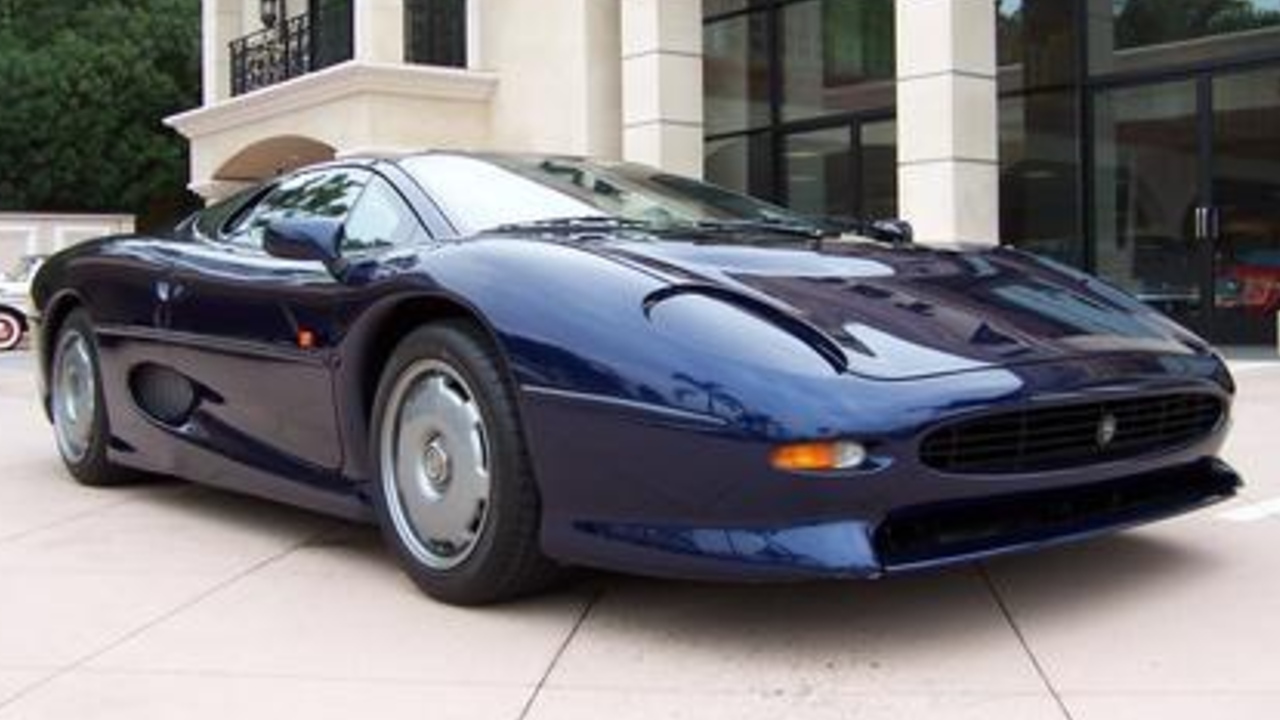
The Jaguar XJ220 arrived as a statement that a traditional British luxury brand could build a road car capable of topping 200 miles per hour. Conceived as a limited production supercar with racing technology and dramatic styling, it pushed Jaguar into a performance territory that had previously belonged to specialist exotics. More than three decades later, it still stands as the fastest Jaguar ever built for the road and a benchmark for how far a manufacturer will go to chase a headline number.
Yet the XJ220 is more than a single speed figure. Its story runs from an ambitious concept to a controversial production pivot, then on to a brief reign as the fastest production car in the world and a long afterlife as a misunderstood icon. To understand why it matters, I look at how it was engineered, what it actually achieved, and why its reputation has shifted over time.
From skunkworks concept to record-breaking reality
The Jaguar XJ220 began as an internal passion project, created by engineers who wanted to translate the brand’s racing experience into a road-going supercar. The goal was simple to state and difficult to execute: build a two-seat machine that could reach 220 miles per hour, a target that ultimately gave the car its name. The production version emerged as a low, wide coupe with dramatic proportions, a mid-mounted engine, and a cabin configured strictly for two occupants, a layout confirmed in contemporary technical descriptions of the two-seat supercar.
When Jaguar committed to building customer cars, it had to balance that extreme performance brief with real-world usability and safety. The company produced the XJ220 in limited numbers, positioning it as a flagship that sat far above its regular sedans and grand tourers. Official material from Jaguar later emphasized that the XJ220 remained the fastest Jaguar ever produced and highlighted how the car’s relatively low mass, quoted at 1,470 kilograms, helped it reach its performance targets while still being usable on public roads. That combination of low weight and high speed underpinned the car’s claim to be a genuine road car rather than a thinly disguised racer.
Engineering a 200+ mph road car
To deliver on its 220 mile per hour ambition, Jaguar had to treat the XJ220 as an engineering exercise in minimizing drag and maximizing stability at very high speeds. The bodywork was shaped to be as aerodynamically efficient as possible, with a long tail and integrated rear wing surfaces that kept the car planted as speeds climbed. Underneath, the chassis and suspension were designed to cope with both the demands of a smooth test track and the imperfections of public roads, a balance that is reflected in period accounts of the car’s dual role as a performance flagship and a usable grand tourer. The result was a machine that, while extreme, still met the legal and practical requirements of a road car.
Performance figures from the era show how effective that approach was. Contemporary testing recorded the XJ220 accelerating from rest to highway speeds with an urgency that matched or exceeded other supercars of its time, and its top speed runs confirmed that it could comfortably clear the 200 mile per hour threshold. One detailed retrospective notes that performance was “spectacular” by the standards of the early 1990s and that the car’s acceleration and top speed placed it among the quickest production vehicles ever built, a status supported by period performance data. Even if the final production car did not quite reach the theoretical 220 mile per hour target in official testing, it comfortably met the broader goal of being a 200+ mile per hour Jaguar that customers could register and drive on the road.
Fastest production car in the world, briefly
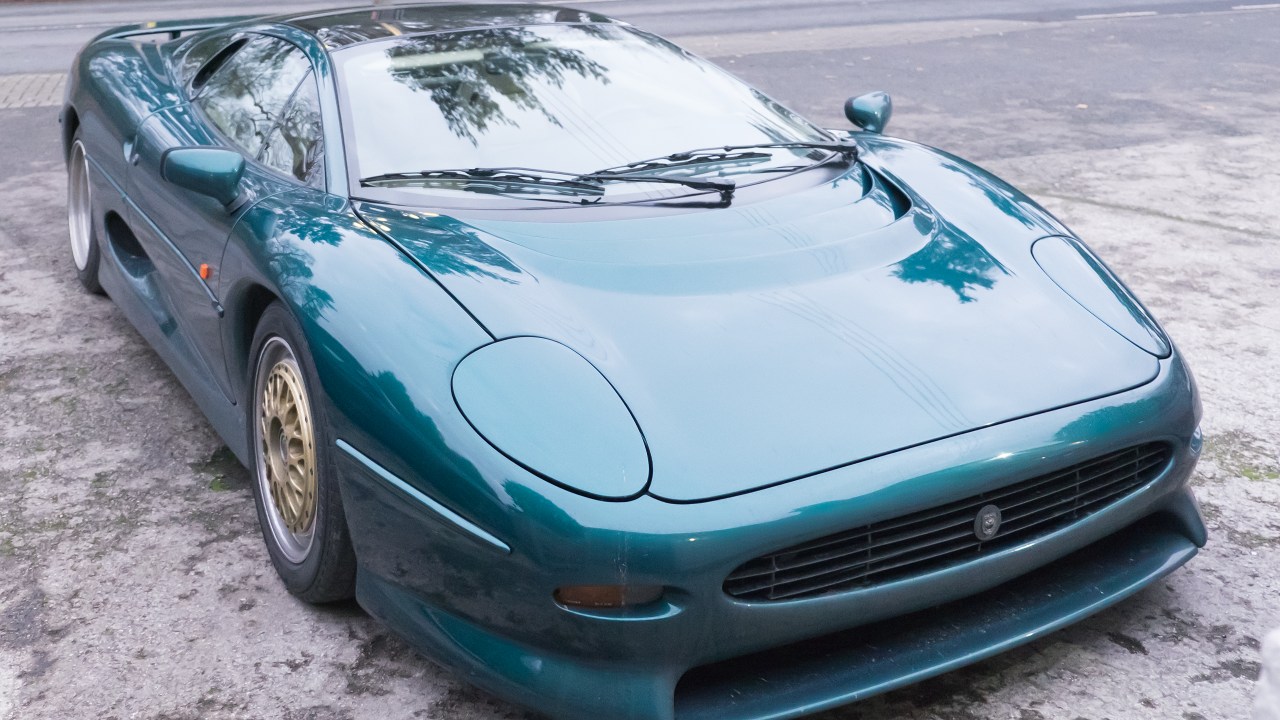
The XJ220’s most famous achievement is its short-lived status as the fastest production car in the world. In the early 1990s, verified high speed runs showed that the Jaguar could reach a top speed that eclipsed its rivals, giving it the record for a period between 1992 and 1993. That achievement is documented in later summaries that describe how The Jaguar held the title before being surpassed by newer designs. For Jaguar, a company better known for elegant saloons and Le Mans history, that record was a powerful marketing tool and a clear signal that it could compete with the most exotic names in the business.
There was, however, a gap between the aspirational name and the measured reality. Reports from the time and later retrospectives note that while the car’s designation referenced 220 miles per hour, the verified top speed fell short of that exact figure. One account explicitly points out that despite the aspirational name, the production car did not hit the full 220 miles per hour target, even though it still set the production car record. That nuance matters because it shaped how enthusiasts talked about the XJ220: it was both a record holder and a car that, in the eyes of some critics, did not quite live up to the most literal reading of its badge. Yet in practical terms, it delivered what mattered most, a road-legal Jaguar capable of exceeding 200 miles per hour and outpacing every other production car of its day.
Why the XJ220 still matters to Jaguar
Within Jaguar’s own history, the XJ220 occupies a unique place as the fastest car the company has ever produced. Official anniversary material released by Jaguar to mark two decades since the car’s launch explicitly described the XJ220 as the fastest Jaguar ever and emphasized its combination of low weight and high speed. That same material highlighted how the car’s 1,470 kilogram mass was achieved despite its size, underscoring the engineering effort that went into keeping the structure light enough to support extreme performance. In other words, the XJ220 was not just a marketing exercise, it was a serious technical project that stretched the company’s capabilities.
That legacy continues to influence how Jaguar thinks about performance. Later high performance models, even if they did not chase the same top speed records, benefited from the lessons learned in aerodynamics, chassis tuning, and high speed stability that were developed for the XJ220. Retrospective analyses of the car’s history and specifications point out that it remains a reference point for Jaguar’s performance ambitions, with its brief status as the fastest production car in the world and its enduring record as the quickest Jaguar road car forming a key part of the brand’s narrative. When Jaguar looks back on its most daring projects, the XJ220 stands out as the moment when it proved that a company rooted in luxury and endurance racing could also build a road car that broke the 200 mile per hour barrier.
A misunderstood supercar finding its place
Over time, the XJ220’s reputation has shifted from controversial to quietly revered. Early criticism often focused on the gap between the car’s name and its measured top speed, as well as on the expectations that surrounded such an ambitious project. Some enthusiasts fixated on the fact that the production car did not quite reach the full 220 miles per hour target, a point noted in later summaries that describe how the aspirational name outpaced the verified figure. Yet those same accounts also acknowledge that the car’s actual performance was extraordinary and that it held the production car speed record, a combination that complicates any simple narrative of disappointment.
Today, detailed histories of the XJ220’s development and performance tend to emphasize its achievements rather than its perceived shortcomings. One comprehensive overview of the car’s history and specifications notes that its performance was spectacular by contemporary standards and that it briefly stood at the top of the production car hierarchy, while official Jaguar material continues to celebrate it as the fastest Jaguar ever built. When I weigh those facts, the XJ220 looks less like a flawed promise and more like a pioneering supercar that delivered a genuine 200+ mile per hour experience on the road, even if it fell a few miles per hour short of the number in its name. In that light, the 1990 Jaguar XJ220 earns its place as a landmark in both Jaguar’s history and the broader story of road-going supercars.
More from Fast Lane Only: