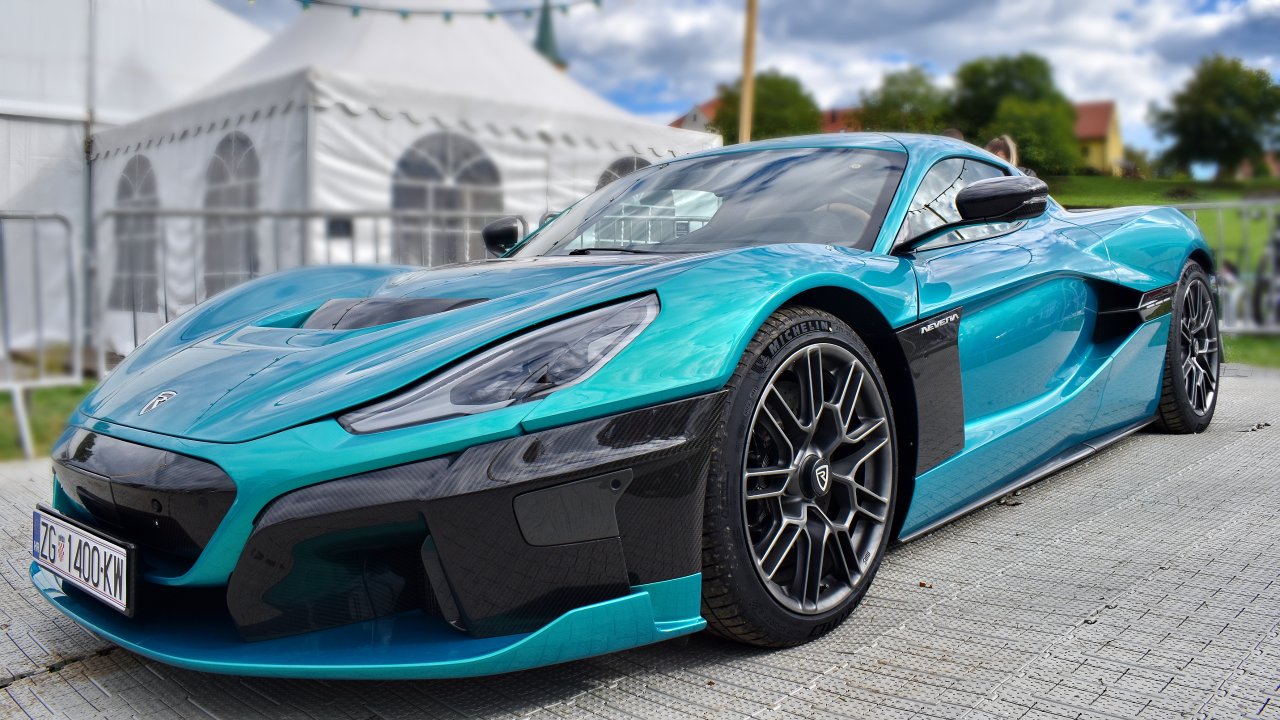
The 2022 Rimac Nevera did not just nudge electric performance forward, it forced engineers to rewrite what road‑legal acceleration can look like. With power, traction control and aerodynamics all tuned around instant torque, this Croatian hypercar turned the old benchmarks of 0 to 60 and quarter‑mile times into starting points rather than finish lines.
By pairing four independent electric motors with a race‑grade carbon structure and sophisticated software, the Nevera reset expectations for how quickly a street car can gather and shed speed. Its record runs, verified on professional test tracks, now serve as the reference for both electric and combustion rivals trying to keep up.
From wild prototype to production record‑breaker
When the Rimac Nevera reached production, it arrived with numbers that sounded closer to a video game than a registration document. Official data lists the car’s output at 1,407.7 k W, which translates to 1,888 hp and 1,914 PS, delivered by four electric motors, one at each wheel, that can be controlled independently for both traction and torque vectoring. Other reporting echoes that headline figure with a quoted 1,914 horsepower and 1,740 pound‑feet of torque, noting that this represents a gain of 336 hp and 560 pound‑feet over an already extreme benchmark, which underlines how aggressively Rimac pushed the envelope for a road‑legal EV.
The Nevera’s top‑end performance quickly matched its spec sheet. Verified testing describes the car reaching a top speed of 412 kph, or 258 mph, which aligns with separate coverage that calls the Rimac Nevera the fastest EV in the world at 258 m p h and again cites 1,914 hp and 1,741 lb‑ft of torque. That combination of power and speed is supported by a carbon monocoque that Rimac describes as one of the World’s most advanced, developed under the guidance of the former C_Two Chief engineer, and designed to handle the immense loads that come with repeated full‑throttle launches and high‑speed braking.
Acceleration that makes old benchmarks obsolete
For decades, enthusiasts treated Zero to 60 in 3.2 seconds as a supercar calling card, and Just a few tenths either way separated the quick from the merely quick. The Nevera effectively erased that scale. Technical data now credits the car with an Acceleration figure of 0 to 60 m p h in 1.74 seconds, while a separate breakdown of its Performance lists 0 to 300 km per hour in 9.22 seconds. Those numbers are not marginal gains, they are a wholesale reset of what a road‑legal car can do from a standstill, and they explain why traditional combustion benchmarks suddenly feel dated.
The Nevera’s dominance is even clearer when looking at how it strings multiple metrics together. Official test‑day results show the car setting 23 performance records in a single session, including a 0 to 400 to 0 km per hour run completed in 29.93 seconds. That figure captures both the ferocity of its acceleration and the strength of its braking system, since the car must surge to 400 km per hour and then return to a standstill without any significant loss of performance. Independent coverage of its quarter‑mile performance, quoting an 8.25‑second pass, reinforces the idea that the Nevera is not just quick off the line but can sustain its charge deep into triple‑digit territory.
How Rimac’s hardware and software bend physics
The Nevera’s headline times are not just the product of raw Power, they are the result of a tightly integrated hardware and software package. Each of the Nevera’s four wheels is driven by a carbon‑sleeve permanent‑magnet electric motor, with individual control that allows the car to meter torque precisely to each contact patch. That layout, combined with a low‑slung battery pack and the stiff carbon monocoque described in Rimac’s own technical material, gives the control systems a stable platform from which to work, especially during violent launches and high‑speed transitions.
Rimac’s own engineers highlight the Nevera’s ability to summon maximum output instantly, a trait that would be unmanageable without sophisticated electronics. The company’s descriptions of its monocoque and chassis emphasize how the structure and aero package were tuned together so the car could repeatedly deliver its full 1,914 horsepower without overheating or destabilizing under load. External analyses of its Technical Specifications and Performance figures, including the 0 to 60 m p h in 1.74 seconds and 0 to 300 km per hour in 9.22 seconds, show how effectively that integration works in practice, translating theoretical power into repeatable, real‑world acceleration.
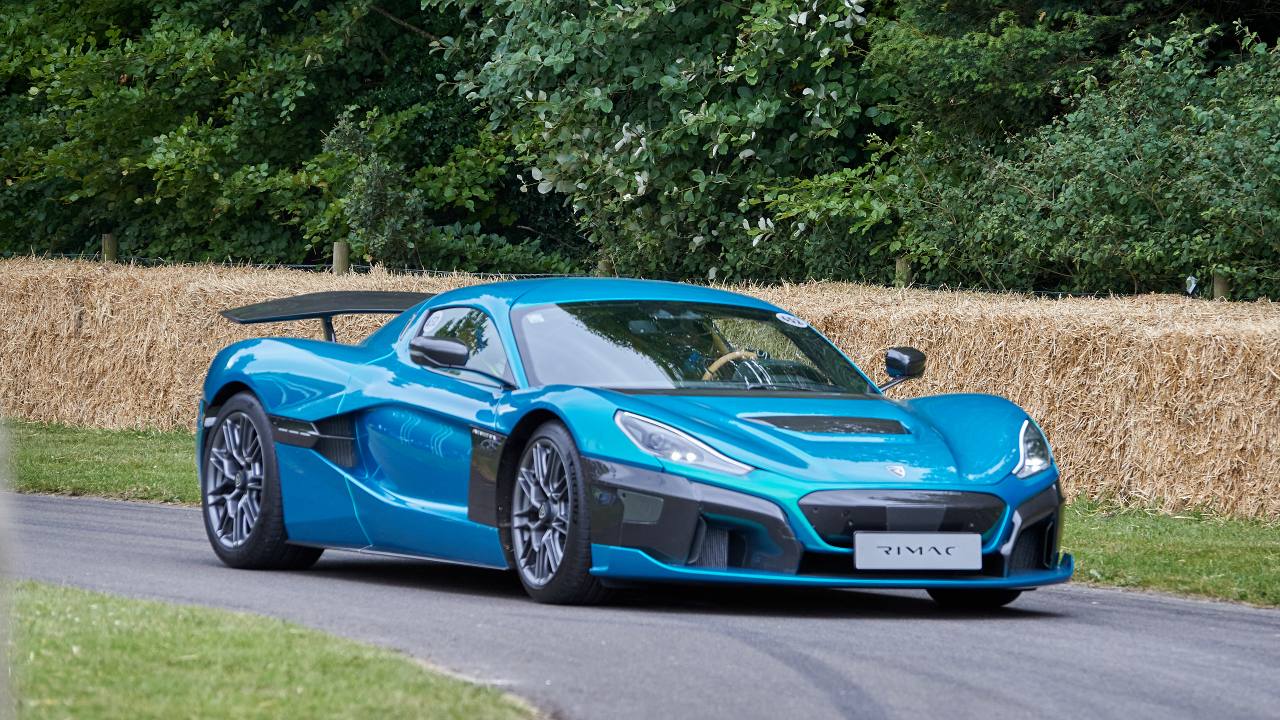
The Nevera R and the escalating record war
Rimac did not stop with the original car. The Nevera R, described as a sharper evolution in material on Nevara Revamped The Rimac Nevera R, takes the same basic package and turns it into a track‑focused weapon. Official communication from the company notes that at higher speeds the Nevera R reaches 200 km per hour in 3.95 seconds, compared with 4.42 seconds for the standard car, illustrating how the updated aero and power delivery pay off as speeds climb. A detailed breakdown of its performance at Germany’s Automotive Testing Papenburg reports that from July 5 to 8 the Nevera R shattered 24 world speed records, including 23 previously held by the original Nevera, with independent verification.
The standout figure from that test program is the 0 to 249 to 0 mph, or 0 to 400 to 0 kph, run completed in 25.79 seconds. Video coverage of the event highlights the same 0 to 400 to 0 km per hour time of 25.79 seconds and notes a new top speed of 431.45 km per hour, while written summaries describe how the Nevera R Destroys 24 World Records and underline that the car reached 400 km per hour and then returned to a stop in that single, continuous effort. Social media reporting on the car adds context, citing a top speed of 268.2 mph, or 431.5 kph, and a power figure of 2,107 hp, along with a 0 to 60 mph time of 1.66 seconds and 0 to 124 mph (200 kph) in 3.95 seconds. Those numbers show how the Nevera R extends the original car’s advantage and keep Rimac at the center of an intensifying rivalry with brands like Koenigsegg, which has publicly targeted the same 400 km per hour braking‑and‑acceleration records.
Why the Nevera’s numbers matter beyond bragging rights
It is tempting to treat the Nevera’s figures as pure spectacle, but they are already reshaping how performance is measured. Coverage of the broader hypercar landscape notes that the Rimac Nevera, at 258 m p h and 1,914 hp, sits among a small group of machines that can out‑accelerate a current Formula 1 car in certain scenarios, particularly in short sprints and standing starts. Earlier commentary on acceleration standards, which once framed Zero to 60 in 3.2 seconds as a defining threshold, now looks conservative next to a production EV that can do the same run in 1.74 seconds and, in Nevera R form, 1.66 seconds. The gap between those figures is not just a talking point, it is a sign that electric drivetrains have changed the shape of the performance curve.
The Nevera’s impact also extends to how engineers think about repeatability and usability. Social media reporting on the Nevera R points out that at roughly 4,850 pounds, or 2,200 kg, the car still blends daily usability with record‑breaking speed, a balance that Mate Rimac himself has emphasized. That weight figure, combined with a WLTP range quoted at around 402 km for the R variant and the original car’s ability to run multiple record attempts in one day without any significant loss of performance, shows that extreme acceleration no longer has to come at the expense of practicality. In that sense, the 2022 Rimac Nevera did more than reset acceleration math for hypercars, it set a template for how future electric flagships will be judged: not just by how quickly they reach 400 km per hour, but by how often they can do it, how safely they can stop, and how livable they remain between those headline runs.