Two senators are pushing to pause the federal gas tax through early autumn, arguing that drivers should not bear the full cost of a conflict-driven price spike at the pump. Their proposal would temporarily remove a key source of highway funding in order to offer short-term relief during a period of geopolitical tension and domestic political pressure.
The plan reflects a familiar Washington tradeoff: immediate consumer relief versus long-term investment in infrastructure and climate policy, now sharpened by war in Iran and volatile global oil markets.
What the Gas Prices Relief Act would do
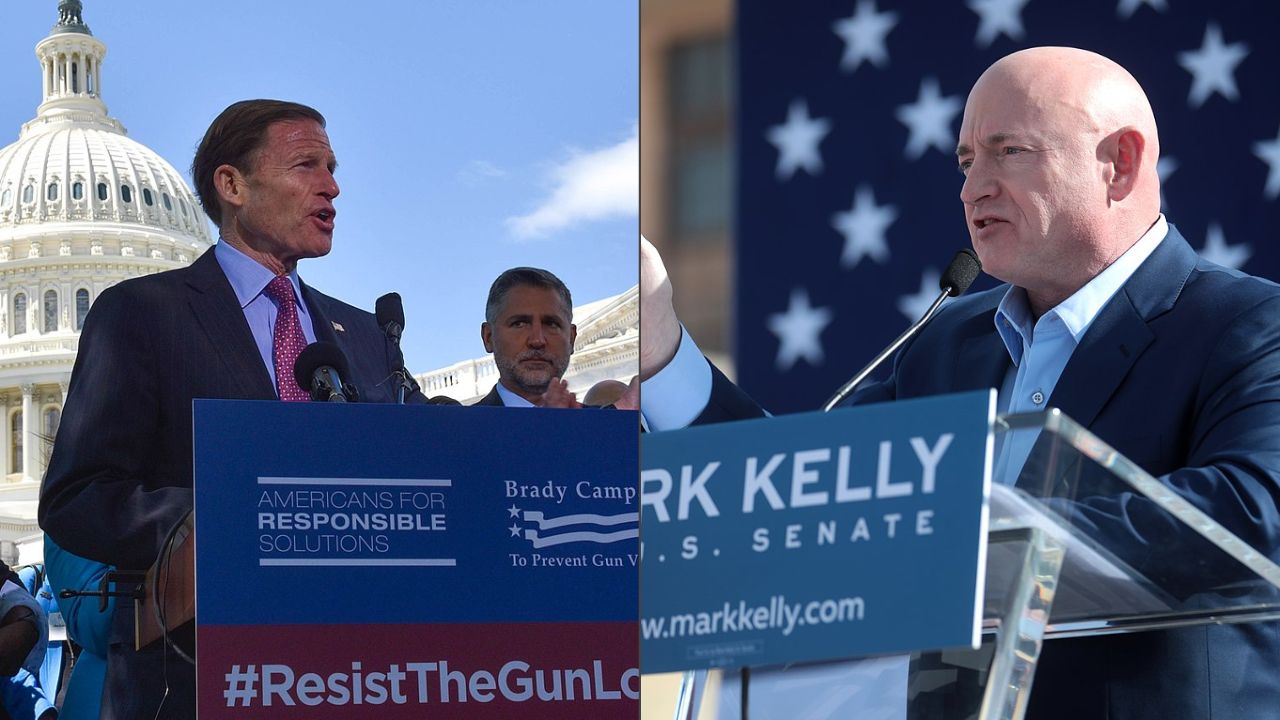
U.S. Senators Mark Kelly of Arizona and Richard Blumenthal of Connecticut have introduced a new Gas Prices Relief Act that would suspend the federal gasoline tax through October 1. The measure is framed as an emergency response to a rapid run-up in fuel costs that has hit commuters, truckers, and small businesses across the country.
The federal gas tax currently adds 18.4 cents per gallon for gasoline and 24.4 cents for diesel, money that normally flows into the Highway Trust Fund. Under the Kelly Blumenthal proposal, that levy would be set to zero for several months, with the federal government backfilling lost infrastructure revenue from general funds to avoid an immediate hit to road and bridge projects.
The same legislation would direct the U.S. Treasury Department to monitor how fuel wholesalers and retailers respond to the tax holiday. Supporters want to ensure that any suspension shows up as lower pump prices for drivers, not simply higher margins for refiners and gas stations.
The lawmakers behind the push
Senator Mark Kelly, who represents a state where long commutes and limited transit options make drivers especially sensitive to fuel costs, has positioned the bill as a pocketbook measure for working families. He has also linked the effort to broader concerns about national security and the economic fallout from the Iran conflict.
His partner on the Senate side, Richard Blumenthal of Connecticut, has echoed that argument and framed the tax holiday as a way to counter what Democrats describe as reckless decision-making in the Middle East. Both senators are part of a broader group of Senate Democrats searching for visible responses to voter anger over rising prices.
On the House side, Representative Chris Pappas of New Hampshire is carrying the companion legislation. His office has described the bill as a way to suspend the gas tax through October 1, 2026, and provide Americans with breathing room as they confront higher costs for everything from groceries to home heating.
Representative Chris Pappas has stressed that the measure is being led in the House by members who represent swing and working-class districts where gas prices are a constant political issue. His earlier work on a similar measure in the 117th Congress, cataloged as H.R. 6787, laid some of the policy groundwork for the current effort.
Link to earlier gas tax debates
Pappas previously rolled out a proposal to suspend the gas tax and lower costs at the pump amid what his office described as skyrocketing prices. That earlier plan, detailed in a House press release, similarly aimed to run the suspension through October 1, 2026, and relied on pressure and oversight to push retailers to pass savings along to consumers.
The new Gas Prices Relief Act essentially updates that concept for a different crisis, the war in Iran, and a different political moment. It also reflects lessons from state-level gas tax holidays in 2022, when some governors paused their own levies and economists later debated how much of the benefit actually reached drivers.
Supporters argue that the federal government has more tools than states did to police price behavior, especially with the Treasury Department explicitly tasked with monitoring the suspension. They also insist that backfilling the Highway Trust Fund from general revenues can prevent a sudden slowdown in construction projects.
Why prices are spiking now
The current push is rooted in a specific backdrop. Senate Democrats have linked the surge in gasoline prices to the U.S. military conflict with Iran, describing how global oil markets have tightened as shipping lanes and production facilities face new risks.
One legislative background analysis notes that the conflict has driven a sharp increase in prices across the country, with national averages climbing rapidly in a matter of days. That spike has amplified inflation concerns that were already present for households dealing with elevated rents, food costs, and interest rates.
For lawmakers like Kelly and Blumenthal, representing states that rely heavily on car travel, the politics of that surge are straightforward. Constituents see the price on the station sign every day, which makes fuel costs a more visible and emotionally charged issue than many other economic indicators.
Support, skepticism, and the road ahead
The Kelly proposal has been described in one account as a plan to suspend the federal gas tax through October 1, with the explicit goal of blunting the price spike linked to the Iran war. That report notes that the legislation would also bar oil companies from using the tax holiday as a reason to cut refinery output or manipulate supply.
More from Fast Lane Only