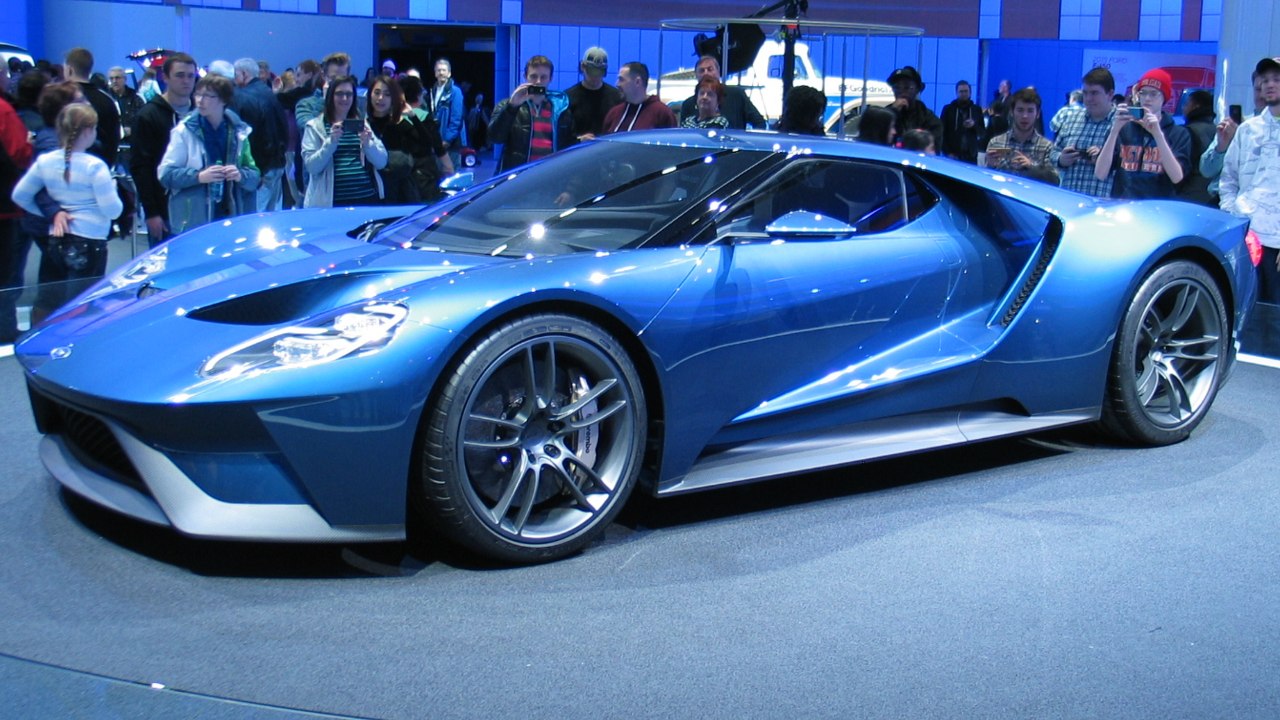
The 2017 Ford GT arrived as more than a nostalgic tribute to the GT40. It was the first GT conceived from the outset around active aerodynamics and a carbon fiber structure, turning the nameplate into a rolling test program for Ford’s next generation of performance technology. Instead of relying on displacement and drama alone, the car chased lap time and efficiency through airflow management, lightweight materials, and a tightly packaged twin-turbo V6.
That shift in priorities reshaped everything from the GT’s teardrop cockpit to its flying buttresses and deployable rear wing. The result was a limited-production supercar that treated drag, downforce, and mass as variables to be tuned in real time, not fixed compromises baked into the bodywork.
Carbon at the core, not as an afterthought
The 2017 GT was built around a carbon fiber tub from day one, which meant the structure itself could be lighter and stiffer than a comparable aluminum chassis. Engineers leaned on Carbon to cut mass wherever possible, because few innovations deliver a broader performance and efficiency payoff than weight reduction. The central cell, integrated roll structure, and body panels all used carbon fiber, allowing the GT’s dry weight to sit just over 3,000 pounds, which placed it between rivals like the McLaren 675LT and Ferrari 488 in mass while still meeting modern safety targets.
That carbon-intensive approach was not just about this one halo car. Ford positioned the GT as a laboratory for techniques that could eventually filter down to models such as the Fiesta ST and Focus ST, with the company explicitly linking the supercar’s composite know-how to future high-volume applications. By proving that a largely carbon structure could be manufactured with repeatable quality and integrated with aluminum subframes and suspension hardware, the GT program gave Ford a template for lighter architectures across its performance range, a point underscored in technical material that framed the car as a showcase of carbon fiber innovation.
Active aerodynamics as a primary design tool
Where earlier GTs relied on fixed bodywork and brute power, the 2017 car treated aerodynamics as something to be adjusted on the fly. The body was sculpted so that its airflow could be actively managed, with moveable elements around the exterior that changed shape and angle depending on speed, braking, and drive mode. Ford’s own technical brief described how the GT’s aerodynamics change on demand to suit different conditions, with the goal of maintaining positive downforce in all situations while minimizing drag on straights, a philosophy captured in the phrase GT’s aerodynamics change.
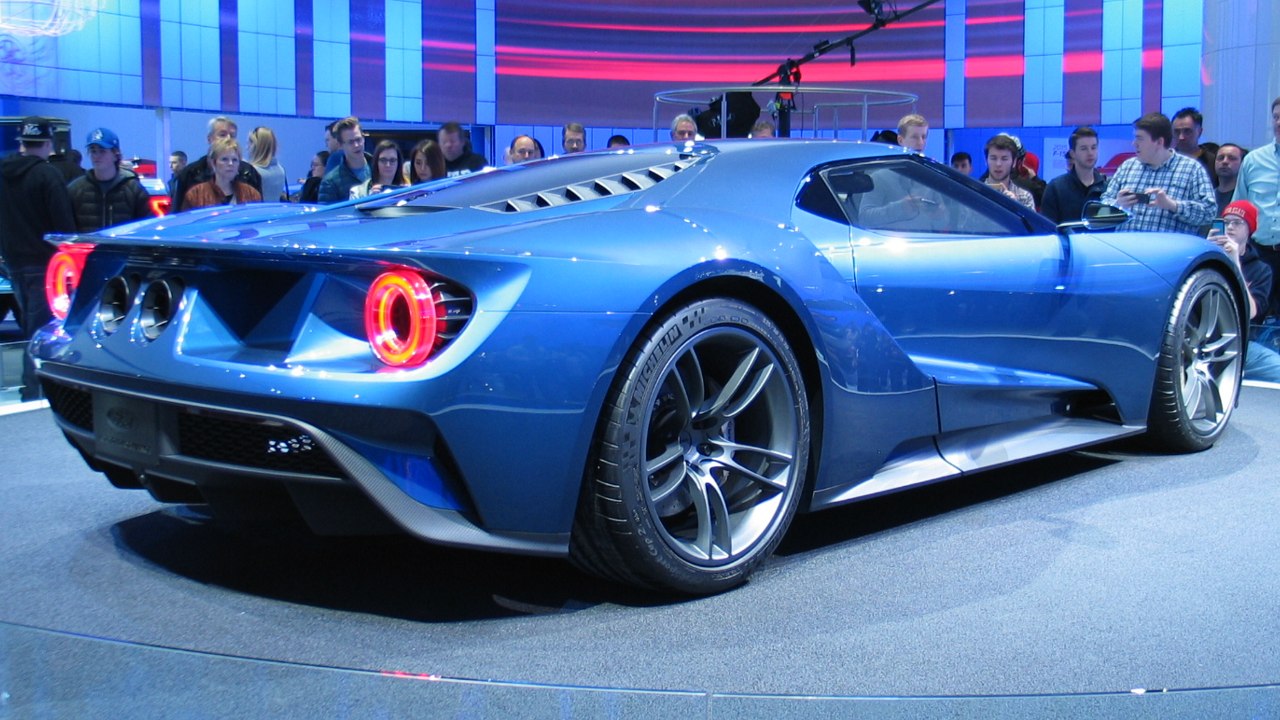
Up front, The Ford features active aerodynamics that start with an intake hiding grille shutters, which open or close to manage airflow through the radiators and underbody. At the rear, a hydraulically actuated wing rises, tilts, and even serves as an airbrake under heavy deceleration, while the underfloor and diffuser geometry work with the wing to balance the car. Reporting on early development rides highlighted how the system could raise the wing at higher speeds and then drop it again around 81 mph to reduce drag, illustrating how the GT put the dynamic in aerodynamics rather than treating aero pieces as fixed styling add-ons, a strategy detailed in both active aerodynamics and broader engineering explainers that described putting the dynamic into the car’s shape.
EcoBoost power and a race-first mission
Under the rear clamshell, the GT broke with its V8 predecessors and adopted a 3.5 liter twin-turbocharged EcoBoost V6, a decision that was controversial among traditionalists but central to the car’s mission. Ford’s engineers argued that the smaller, boosted engine allowed a tighter packaging envelope and cleaner airflow through the rear bodywork than a larger V8 would have allowed, which in turn improved both drag and cooling. The engine itself shared architecture with Ford’s endurance racing powerplants, and internal material noted that the GT’s engine largely differs from the truck-based units that share its displacement, with bespoke internals and tuning aimed at sustained high-load track use, as outlined in technical summaries of the GT’s engine.
Much like the original GT40, this modern GT was conceived as a race car first, with the road version following the competition program rather than the other way around. Showcasing Ford’s commitment to environmentally-friendly performance, the company used the EcoBoost-powered GT to argue that efficiency and endurance could coexist with supercar-level speed. All power is sent to the rear wheels through a seven speed PowerShift dual clutch automatic transmission, a layout that supports rapid shifts and keeps the engine in its boost window, and Ford claimed that the GT would reach 0 to 60 mph in about 3 seconds and exceed 200 mph, figures echoed in performance-focused coverage that highlighted how All power is sent through that gearbox even as the car chased endurance racing success.
Design that serves airflow and the driver
The GT’s shape is dramatic, but nearly every flourish is tied back to airflow or packaging. The teardrop cabin, long rear buttresses, and open channels through the body were all honed to reduce frontal area and guide air to the radiators, intercoolers, and rear wing. Development accounts describe how, when the design team hit a wall reconciling heritage cues with performance targets, they turned again to the profile of the original GT40, using its low nose and cab-forward stance as a starting point before layering in modern surfacing. That process was summarized internally as a balance of performance efficiency and modern seduction, a phrase that appears in a detailed design review of the car’s proportions.
Inside, the GT is sparse but carefully executed, with fixed seats integrated into the carbon tub and adjustable pedals and steering column that move toward the driver. Physical knobs control the HVAC system, milled from metal and clustered within easy reach, a choice that reflects a focus on tactile control rather than touchscreens at triple-digit speeds. Engineers faced a challenge keeping the compact cabin cool because of the extensive glass and the proximity of the mid-mounted engine, and early drive reports noted how the HVAC system had to be tuned so that it could keep the driver comfortable without overwhelming the person next to them, a detail captured in first drive impressions that highlighted the role of Physical knobs and the compact climate package.
From boardroom allocations to auction-block icon
Even before customers saw their cars, the first production examples underscored how strategically Ford treated the GT. The initial 2017 build was allocated to Ford Chairman Bill Ford, with the second car going to then chief executive Mark Fields, a sequence that signaled how tightly controlled the early run would be. The car itself carried all the typical supercar cues, including a mid mounted engine, rear wheel drive, and a sleek, aerodynamic body, but instead of a manual shifter it relied on steering wheel mounted transmission paddle shift controls, a configuration described in early coverage that noted how the GT had all the typical cues but leaned on modern paddle shift controls to match its active aero and carbon structure.
As production continued, the GT quickly became one of the most coveted American supercars ever made, a status reflected in its performance at high profile auctions. One documented example was sold new through Three Oaks Ford of Three Oaks, Michigan and specified with numerous desirable factory options, including exposed carbon fiber and distinctive graphics packages that emphasized the car’s structural material. When that car later crossed the block, catalog notes described it as one of the most coveted American supercars ever made, a phrase that captured how the combination of limited production, race pedigree, and advanced technology had already turned the 2017 GT into a collectible, as detailed in the listing for the car sold through Three Oaks Ford of Three Oaks, Michigan and its subsequent auction.