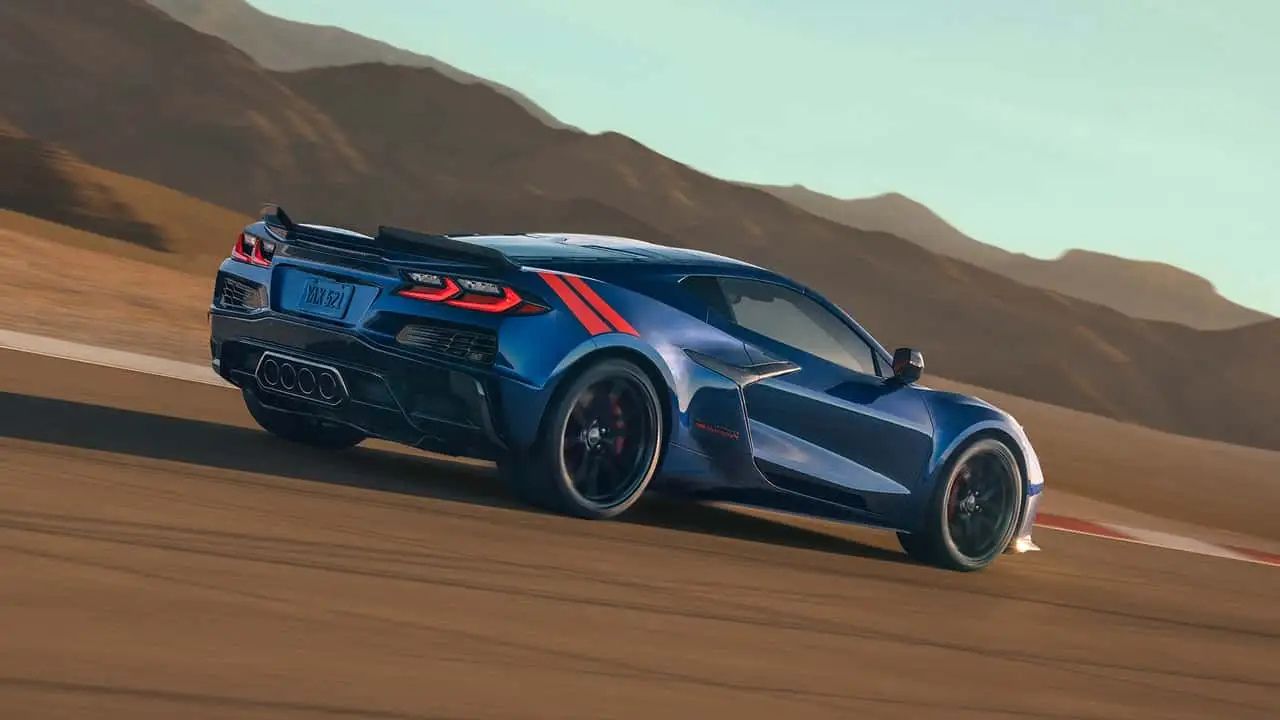
The 2027 Chevrolet Corvette Grand Sport will open at about $88,495 including destination, slotting into the lineup between the Stingray and the Z06 with a price that is aggressive by modern sports car standards but clearly a step up from earlier C8s. Chevrolet is also reshuffling trims and equipment for 2027, which changes how far that sticker really goes once buyers start checking boxes.
For Corvette shoppers, the new Grand Sport price is more than a number on a window sticker. It signals how Chevrolet intends to position its mid-engine icon for the next few years, how much performance enthusiasts can access without crossing the six-figure line, and how hard the brand is leaning into high-margin options and special packages.
What happened
Chevrolet has set the starting price for the 2027 Corvette Grand Sport 1LT coupe at $88,495 including the $1,995 destination charge, according to new pricing data. That figure applies to the base Grand Sport coupe in 1LT trim, with higher 2LT and 3LT trims climbing from there. The Grand Sport will also be offered as a convertible, which carries a premium over the coupe that pushes the starting price into the low $90,000s.
The Grand Sport revives a familiar Corvette nameplate and slots between the 2027 Corvette Stingray and the higher-output Z06. For 2027, the Stingray itself rises in price, with a 1LT coupe now starting in the mid-$70,000s before options, according to detailed Stingray and Grand. That spread of roughly $13,000 to $15,000 between a base Stingray and an entry Grand Sport sets the tone for the rest of the lineup.
Chevrolet is not only introducing the Grand Sport, it is reorganizing equipment packages. The Grand Sport 1LT brings a more performance-focused setup than a comparable Stingray, including a wider body, upgraded brakes and tires, and track-oriented cooling hardware. According to pricing guidance, many of the handling and appearance upgrades that previously lived in optional Z51 or appearance packages on the Stingray are effectively baked into the Grand Sport’s higher base price.
The company is also changing how certain options are bundled. A breakdown of the 2027 model year from Corvette pricing news notes that some standalone options on the 2026 car are now rolled into trim levels, while others are grouped into new packages that can quickly add five figures to the bottom line. That structure affects not only the Grand Sport but also the Stingray and Z06, which share many option groups.
At the top of the Grand Sport range, fully loaded 3LT cars can easily crest the $110,000 mark once buyers add popular extras such as carbon fiber wheels, upgraded interior materials, and performance packages. A detailed breakdown of the Grand Sport’s place in the range from new pricing analysis shows that the model is positioned to catch buyers who want more visual drama and track capability than a Stingray but are not ready to commit to Z06 money and maintenance.
Additional reporting from Grand Sport pricing points out that the new model effectively replaces the role of the previous-generation Grand Sport, which combined the wider chassis and hardware of the top-performance car with the more accessible engine of the base model. In the C8 generation, that same philosophy applies, but with a higher baseline of performance and a more premium price tag.
Why it matters
The Grand Sport’s $88,495 starting point matters because it reframes what “attainable” performance looks like in the Corvette universe. For decades, the Corvette’s appeal rested on delivering near-supercar performance at a price that undercut European rivals by tens of thousands of dollars. With the Grand Sport now brushing against $90,000 before options, that value equation is evolving.
Even so, the Grand Sport still undercuts cars like the Porsche 911 Carrera, which typically starts well into six-figure territory once destination and likely options are factored in. Enthusiasts who compare performance numbers per dollar will see that the Corvette remains a strong deal, especially given the Grand Sport’s standard hardware. Commentators cited in recent analysis argue that Chevrolet is leaning into this positioning, using the Grand Sport to bridge the gap between a relatively affordable Stingray and the more exotic Z06 and E-Ray.
Yet the price jump relative to the Stingray is not trivial. A buyer cross-shopping trims will notice that moving from a well-equipped Stingray 2LT to a base Grand Sport 1LT can mean a difference of more than $10,000 for a car that shares the same basic engine. Shoppers who prioritize straight-line speed over track readiness may question whether the wider body, stickier tires, and upgraded brakes justify the extra money. That tension is central to how the Grand Sport will be received by the Corvette faithful.
The Grand Sport also signals how Chevrolet plans to extract more revenue from high-demand models. With supply of performance cars still constrained in some regions and demand for special editions strong, automakers have learned that buyers will pay for factory performance packages and cosmetic upgrades that once lived in the aftermarket. The detailed option structure described in recent coverage suggests that Chevrolet expects a significant share of Grand Sports to leave the factory with expensive add-ons, pushing real-world transaction prices well beyond the headline figure.
For existing Corvette owners, the pricing shift has implications for resale and trade-in values. A higher base price for the 2027 car can support stronger used values for recent Stingrays and Z06 models, since the cost to step into a new car continues to rise. At the same time, the Grand Sport’s position as the “sweet spot” of the range could put downward pressure on lightly optioned Stingrays if buyers perceive the mid-tier car as the more desirable long-term bet.
The Grand Sport’s pricing also reflects broader trends in the sports car market. Inflation, regulatory costs, and investment in electrification have all pushed sticker prices upward. Chevrolet is investing heavily in electrified performance, as seen with the E-Ray hybrid, and that spending has to be recouped somewhere. By positioning the Grand Sport at nearly $90,000, the company creates more headroom for future variants that may add hybrid assistance or special track packages at even higher prices.
For Chevrolet dealers, the Grand Sport’s arrival provides a new tool in negotiations. A salesperson can now walk a shopper from a Stingray into a Grand Sport by emphasizing the added performance and exclusivity, or steer a Z06 intender who is balking at the price down into a loaded Grand Sport. That dynamic is likely to keep showroom traffic engaged, even if some buyers ultimately decide to stay with a lower trim.
There is also an emotional component. The Grand Sport badge carries weight among Corvette fans, associated with track-ready cars that can be driven daily. Pricing it close to $90,000 elevates its status within the community. Owners who buy into the nameplate are not just purchasing hardware, they are buying into a lineage that includes historic racing Corvettes and previous generations that blended everyday usability with serious capability.
From a competitive standpoint, the Grand Sport’s price gives rival brands a clear benchmark. Ford can look at that $88,495 starting point when deciding how to position high-performance versions of the Mustang, and European brands can calibrate their own mid-engine and front-engine sports cars to appeal to buyers who might otherwise consider a Corvette. The figure becomes part of the conversation any time a shopper compares a Corvette to, say, an Audi R8 or a well-optioned BMW M4.
Finally, the pricing structure hints at how Chevrolet views the remaining life of the C8 platform. Setting the Grand Sport at this level, and allowing options to push it far higher, suggests that the company expects strong demand for at least several more model years. That confidence, reflected in the detailed breakdown from pricing analysis, indicates that Chevrolet is not yet ready to pivot the Corvette fully toward electrification or a new generation, and instead plans to maximize the current car’s market potential.
What to watch next
The first big question is how real-world transaction prices for the Grand Sport will compare with the official $88,495 starting figure. Early allocations often go to the most eager buyers, who are typically willing to pay for higher trims and options. Monitoring dealer inventory and sales data over the next year will show whether most Grand Sports leave showrooms closer to $95,000 or $110,000 than to the base price. Coverage from industry observers suggests that Chevrolet anticipates strong demand, which could keep discounts scarce.
Another key storyline will be how the Grand Sport affects the mix of Stingray and Z06 sales. If a significant share of buyers who would have chosen a Stingray instead stretch to the Grand Sport, the base car could become more of an entry point than the default choice. Conversely, if buyers see the Grand Sport as too close in price to the Z06 once options are added, Chevrolet may need to adjust equipment or pricing to maintain clear separation between the trims.
Enthusiast reaction will also shape the car’s trajectory. The Corvette community is vocal, and early track tests and owner feedback will quickly filter through forums, clubs, and social media. Positive impressions of the Grand Sport’s balance of performance and usability could cement its status as the “right” Corvette to buy, which would justify its pricing in the eyes of many shoppers. If, however, owners feel that the performance gap to the Stingray is modest in everyday driving, pressure could build for Chevrolet to enhance the Grand Sport’s standard spec or adjust its price.
Special editions and performance packages will be another area to watch. Chevrolet has a history of introducing limited-run appearance or track-focused variants later in a model’s life cycle. The Grand Sport’s hardware provides a natural foundation for such versions, which could arrive with even higher prices and more exclusive equipment. Any such move would further test how far Corvette buyers are willing to go financially for factory-backed performance.
Regulatory and economic factors could also influence future pricing decisions. If inflation stabilizes or declines, or if competition intensifies from new performance EVs, Chevrolet may face pressure to hold the line on Corvette prices or offer more equipment for the same money. Conversely, if demand remains strong and supply constrained, the company has little incentive to roll back recent increases.
For now, the headline is clear. The 2027 Corvette Grand Sport enters the market at $88,495 including destination, a figure confirmed by detailed breakdowns such as the one from Corvette-focused reporting. That number encapsulates both the enduring appeal of Chevrolet’s mid-engine sports car and the new financial reality of modern performance. How buyers respond, and how the company adjusts, will define the next chapter of the Corvette story.
More from Fast Lane Only