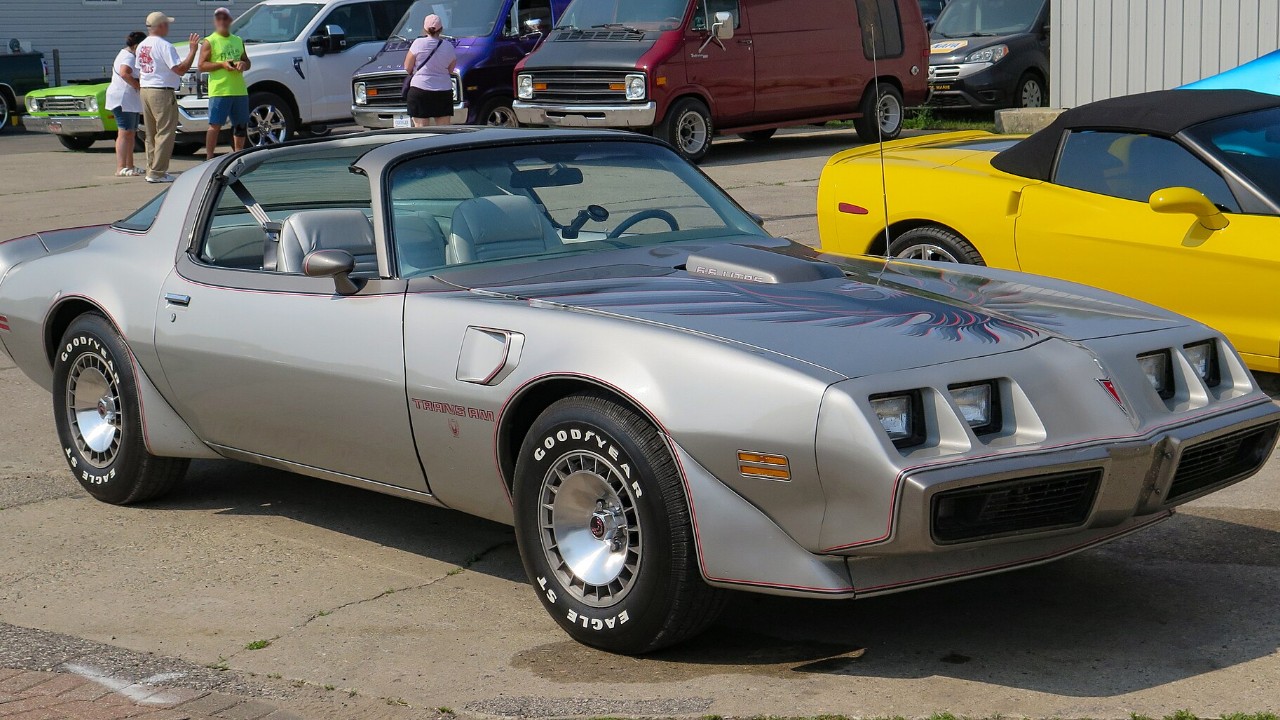
Pontiac launched the Firebird on February 23, 1967, about five months after Chevrolet’s Camaro. Just two years later, the car got its most famous name: the Firebird Trans Am. From there, the badge ran for more than three decades and outlived nearly every rival from the pony car wars.
Yet the cars that mattered most were not always the loudest ones. Some started as option codes that few buyers noticed. Others, meanwhile, were anniversary specials that looked like marketing at the time. Over the years, though, a handful of them turned into the Firebirds collectors talk about first.
These nine are our picks, the Firebirds we think grew into legends on their own terms. The verdict is ours. Every year, engine and production figure below comes from the sources linked through the list.
1. 1968 Pontiac Firebird HO 350
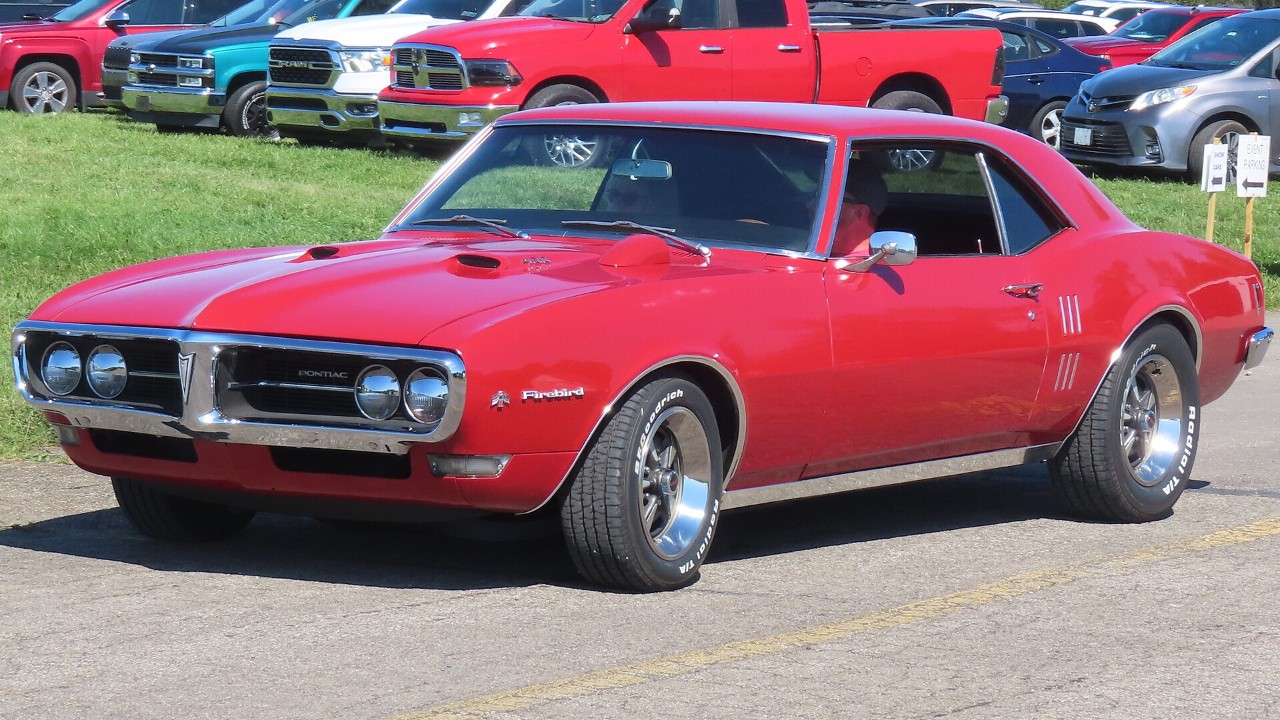
Big-block Firebirds get the posters, but the 1968 HO 350 showed early on that Pontiac could make a lighter car hustle. Pontiac gave its 350-cubic-inch V8 a revised camshaft. Then it sold the result as a high-output option in the Firebird’s second model year.
The factory rated the 1968 HO version at 320 horsepower. That put it in a sweet spot, in our view. It gave buyers real punch without stepping up to the big 400. As a result, the HO 350 car was the Firebird for people who cared about the whole drive, not only the drag strip.
In our view, this is the Firebird that proved the platform was more than a Camaro clone with a split grille. Pontiac’s own engines gave the car its personality from the start. An original HO 350 car rewards you every time the road bends. That is why it earns the first spot on our list. It is also a reminder that the Firebird story did not start with stripes and scoops. It started with a well-tuned small V8 in a light, good-looking coupe.
2. 1969 Pontiac Firebird Trans Am Ram Air IV
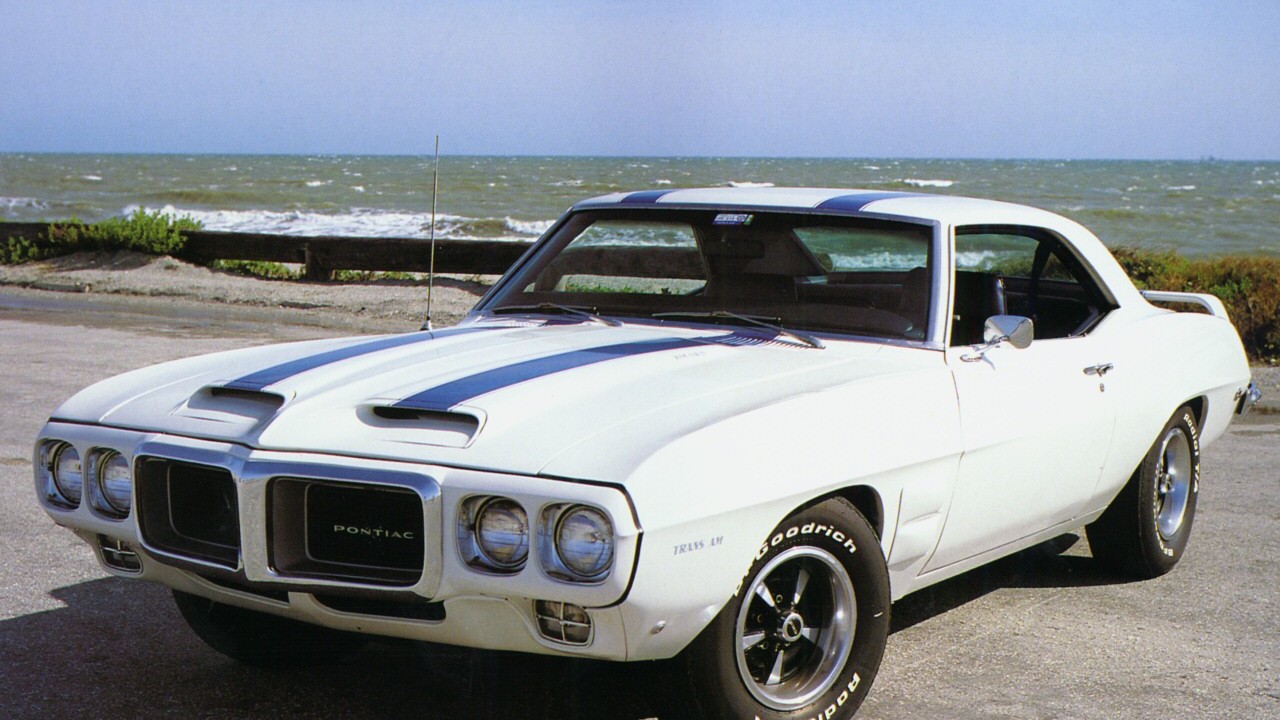
The Trans Am arrived in March 1969 as an option package coded WS4. Pontiac named it after the Trans Am road-racing series. It bundled handling and appearance upgrades into one order code. However, very few people ordered one that first year.
Pontiac built just 689 Trans Am hardtops and eight convertibles for 1969. Buyers could also add the Ram Air IV 400. It was rated at 345 horsepower at 5,000 rpm and 430 lb-ft at 3,400 rpm. That makes a first-year Ram Air IV car about as scarce as a production Firebird gets. For the backstory on how the badge came about, see our look at the story behind Pontiac’s Trans Am.
Our take: this is where the Firebird Trans Am name began, and every later car traces its stripes back to it. Few buyers knew what they had in 1969. Today, the first-year Ram Air IV car is the one Pontiac fans hope to find in an old barn. With fewer than 700 Trans Ams built that year, the odds are long. Even so, that rarity is exactly what turned a slow seller into a legend.
3. 1970 Pontiac Firebird Esprit
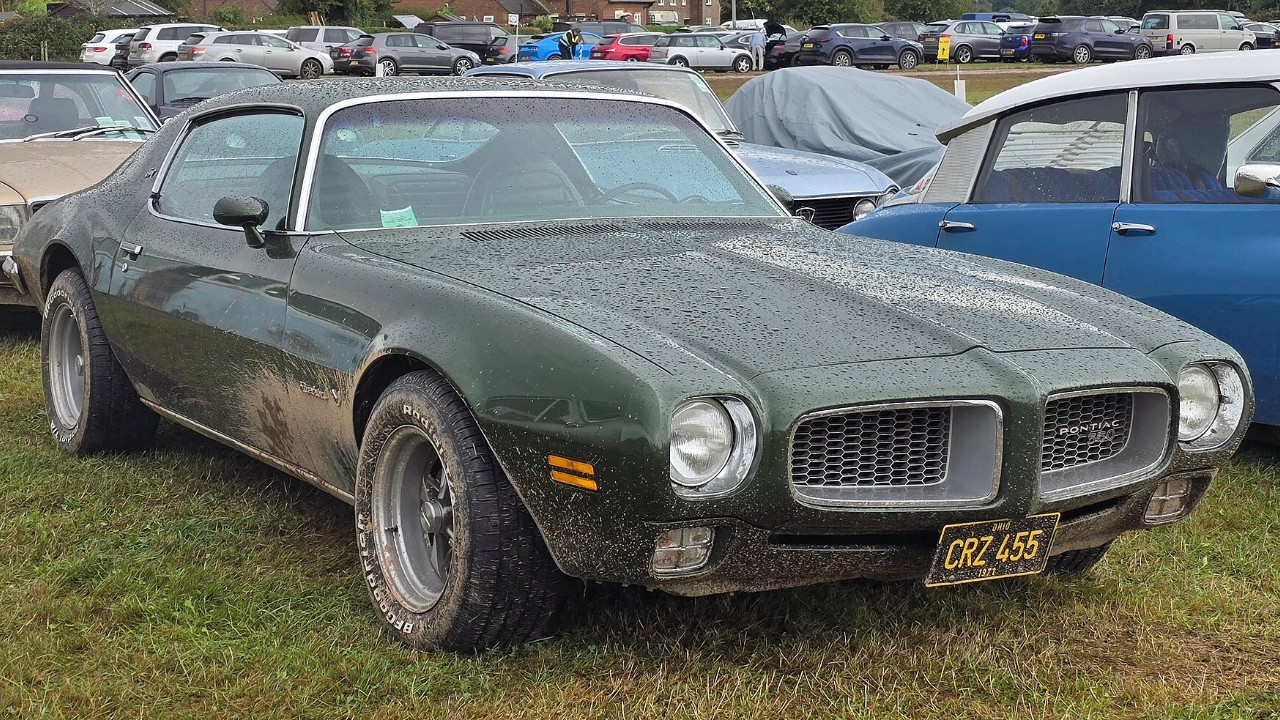
Of course, not every Firebird legend needed a hood scoop. When the second-generation car arrived for 1970, Pontiac split the range into distinct models, and the Esprit took the comfort role. Buyers got a deluxe interior, extra exterior trim and a smooth V8 as standard.
That standard engine was a 350 rated at 255 horsepower. By contrast, the Ram Air IV became exclusive to the Trans Am that year. So Pontiac drew a clear line between its touring Firebird and its road-racing one. Two very different cars shared one handsome new body.
We think the Esprit deserves more credit than it gets. It brought people into Pontiac showrooms who never planned to buy a muscle car. Clean survivors now show how good the 1970 shape looked without stripes or spoilers. We covered more of these under-the-radar cars in Firebirds that only true enthusiasts recognize, and the Esprit fits that idea perfectly. Our advice: if you want a 1970s Firebird you can drive every weekend, start your search here.
4. 1971 Pontiac Firebird Trans Am 455 HO
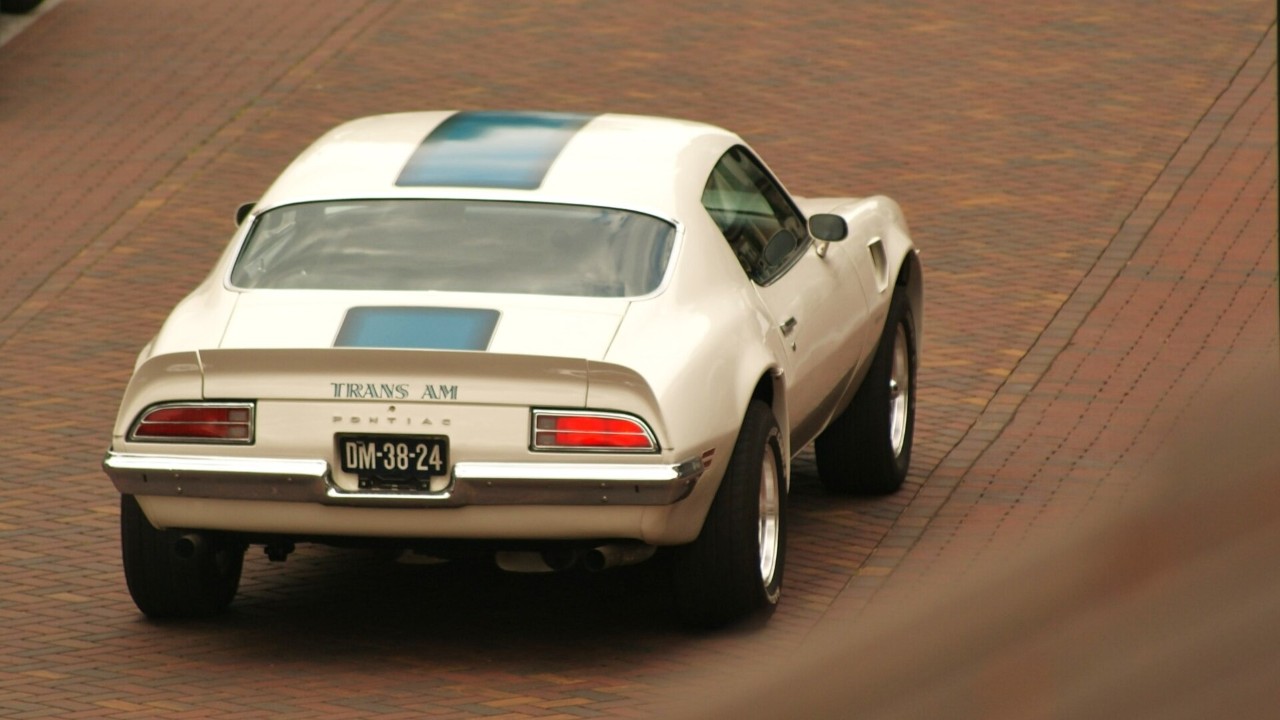
For 1971, Pontiac made the 455 HO the Trans Am’s engine. It arrived just as compression ratios started to drop across Detroit. So Pontiac leaned on displacement and better breathing to keep the car quick. That decision kept the Trans Am fast while many rivals were already fading.
Better breathing came from high-flow round-port cylinder heads, used on the 1971 and 1972 455 HO. Pontiac later carried that idea into the 1973 and 1974 Super Duty engine. So this car was a bridge between the high-compression 1960s and the last great Pontiac V8s. We wrote about the Super Duty’s rarest run in our piece on the Formula SD-455 built in just 58 units.
In our view, the 1971 455 HO Trans Am is the most underrated muscle car of its year. It had big torque, the new body and a real handling package. Meanwhile, the rest of the industry was easing off. Better yet, it looked the part without shouting about it. If you want one, check the engine codes carefully, because a correct 455 HO car is worth the extra effort to verify.
5. 1976 Pontiac Firebird Trans Am 50th Anniversary Limited Edition
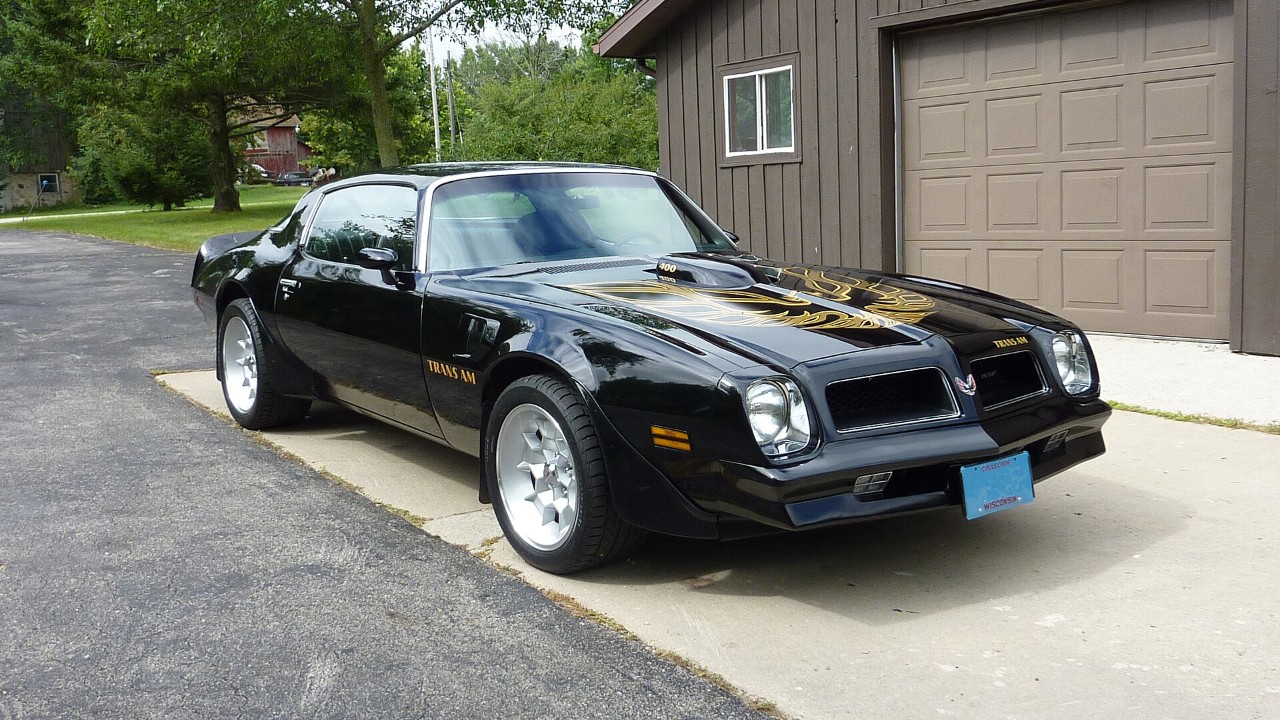
Before the movies made it famous, the black-and-gold Trans Am began as a birthday present. Pontiac built the 1976 Limited Edition, code Y82, to mark the brand’s 50th anniversary. It wore black paint with gold pinstripes, a gold grille, gold wheels and a gold hood bird.
According to Motorious’s history of the Y82 Trans Am, Pontiac built only 2,590 of them. Just 319 of those had the 455 H.O. and no Hurst T-tops. Meanwhile, 1976 was the final year for the 455, which makes those cars the end of an era for Pontiac’s big-cube V8s.
Our take: this is the car that created a look. Without the 1976 Limited Edition, there may never have been a black-and-gold Trans Am for Hollywood to borrow a year later. A 455-powered example, with its original paint scheme, is the one we would chase. The look caught on fast. Motorious reports that Pontiac built more than 15,000 black-and-gold Trans Ams for 1977 alone, and the scheme carried on under other option codes through 1981. All of that traces back to these 2,590 cars.
6. 1979 Pontiac Firebird Trans Am 10th Anniversary Edition
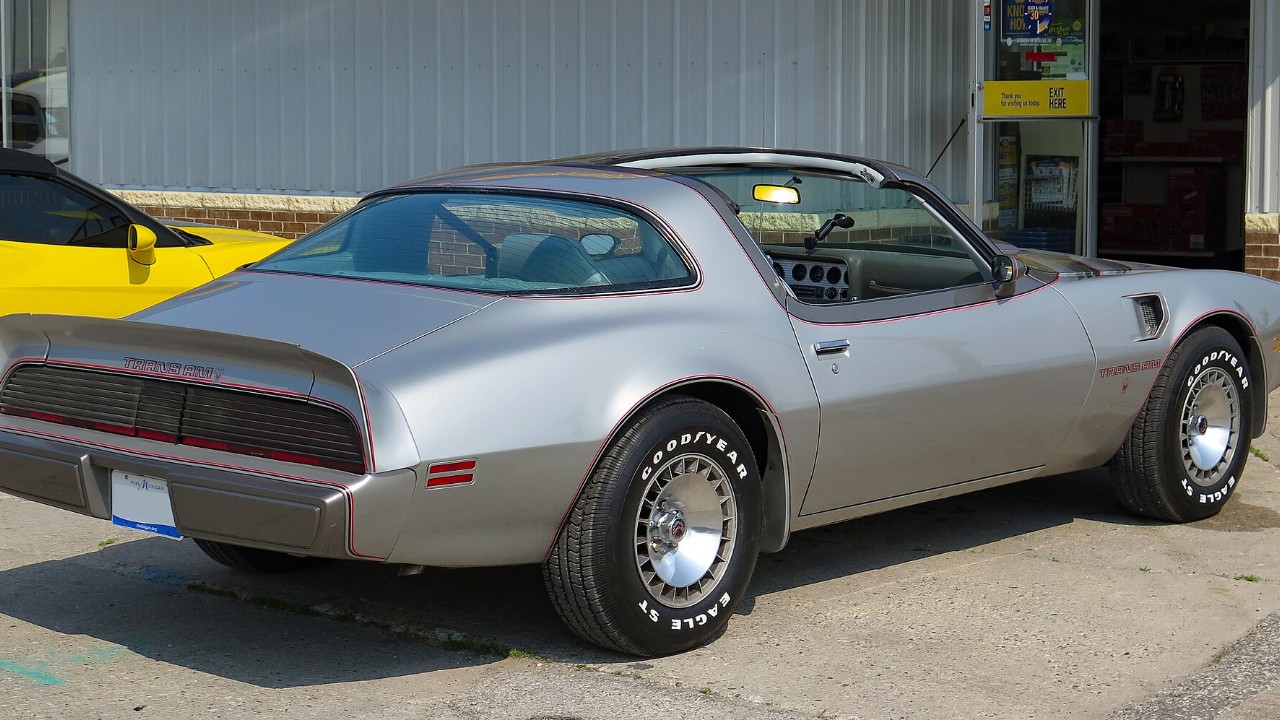
Pontiac celebrated a decade of the Trans Am with its flashiest Firebird yet. The 1979 10th Anniversary Edition, code Y89, wore platinum silver paint with charcoal gray accents, and mirrored T-top panels overhead. It looked like nothing else in a 1979 showroom.
In total, Pontiac built 7,500 of them, and 1,817 came with the W72 Pontiac 400 and a four-speed manual. That smaller group matters most to collectors. Those cars pair the anniversary look with a genuine Pontiac engine and a stick shift.
We’d call this the high point of disco-era Pontiac style. It was over the top, sure, but it was also fast for its day and built in real numbers. If you shop for one, look for a four-speed W72 car. Those 1,817 carry the most weight in the Firebird world. Either way, we see the 10th Anniversary car as the moment the Trans Am stopped being a niche option. A run of 7,500 special editions shows how far the badge had come since 689 hardtops in 1969.
7. 1987 Pontiac Firebird Trans Am GTA
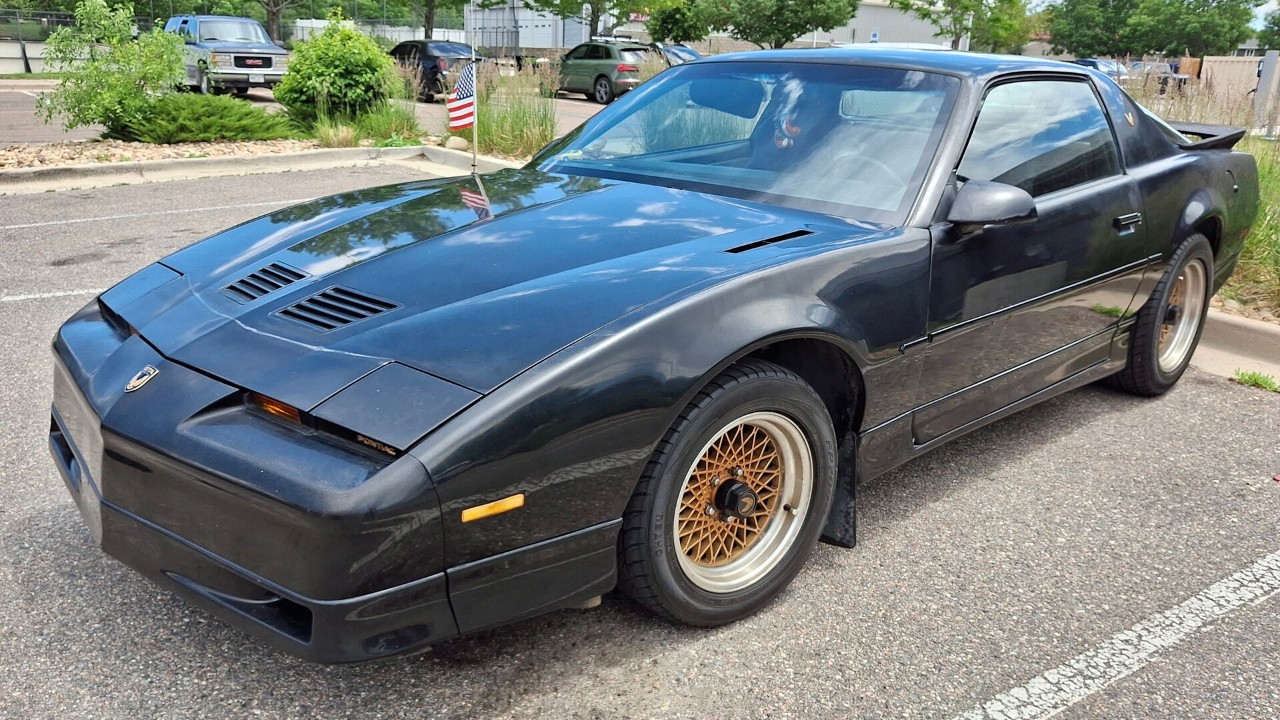
By the late 1980s, Pontiac’s top Firebird had a new name tacked onto the old one. The GTA, short for Gran Turismo Americano, was a Trans Am option package sold from 1987 through 1992. It was also the most expensive Firebird money could buy.
For example, buyers could get it with the LB9 305 or the L98 350, both with tuned-port fuel injection. Then, in 1988, Pontiac also built 718 notchback GTAs, a body change that set them apart from the regular hatchback cars.
In our view, the GTA was Pontiac’s answer to the question of whether an American car could be both modern and comfortable. Fuel injection made the V8s smooth and dependable, and the car felt more grown up than the Firebirds before it. A well-kept L98 car is a smart buy for anyone who grew up with 1980s posters on the wall. The rare 1988 notchback is the one to hunt if you want something few people at a car show will recognize. Either way, the GTA showed that a Trans Am could age gracefully.
8. 1989 Pontiac Firebird Trans Am 20th Anniversary Edition
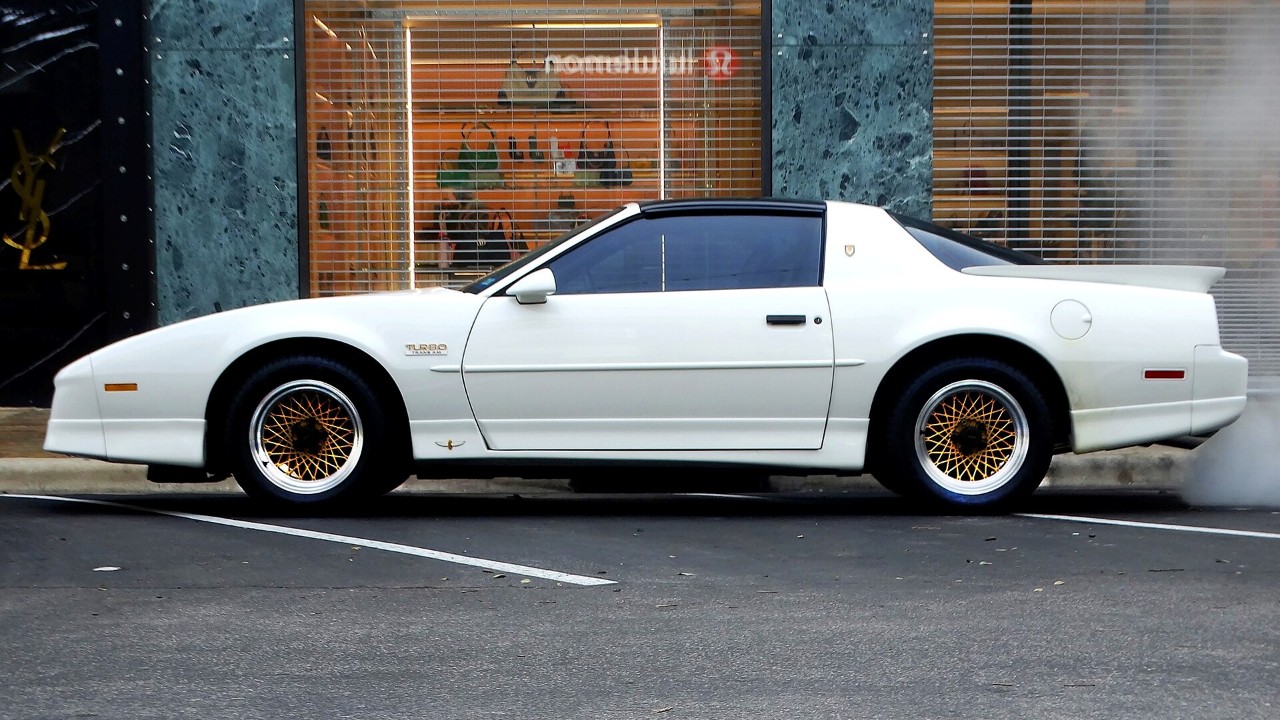
The fastest Firebird of its era had no V8 at all. For the 20th anniversary in 1989, Pontiac fitted the Trans Am with a turbocharged 3.8-liter V6 from Buick. The result paced that year’s Indianapolis 500 with almost no changes.
According to Silodrome’s profile of the Turbo Trans Am, Pontiac built 1,555 of them, all white with tan leather. Production Automotive Services in Michigan assembled the engines with an intercooled Garrett T-3 turbo. Pontiac rated it at 250 horsepower and 340 lb-ft, but a period Car and Driver test found most cars closer to 300 horsepower. Independent tests ran 0 to 60 mph in 4.6 seconds.
Our take: this is the Firebird that rewrote what a Trans Am could be. Silodrome calls it the fastest-accelerating production Trans Am offered to the public at the time, which is quite a feat with two fewer cylinders than its V8 siblings. It also came with the WS6 package and four-wheel disc brakes. Low production, a pace car role and real speed make it one of the easiest Firebirds to love, then and now.
9. 2002 Pontiac Firebird Trans Am Collector Edition
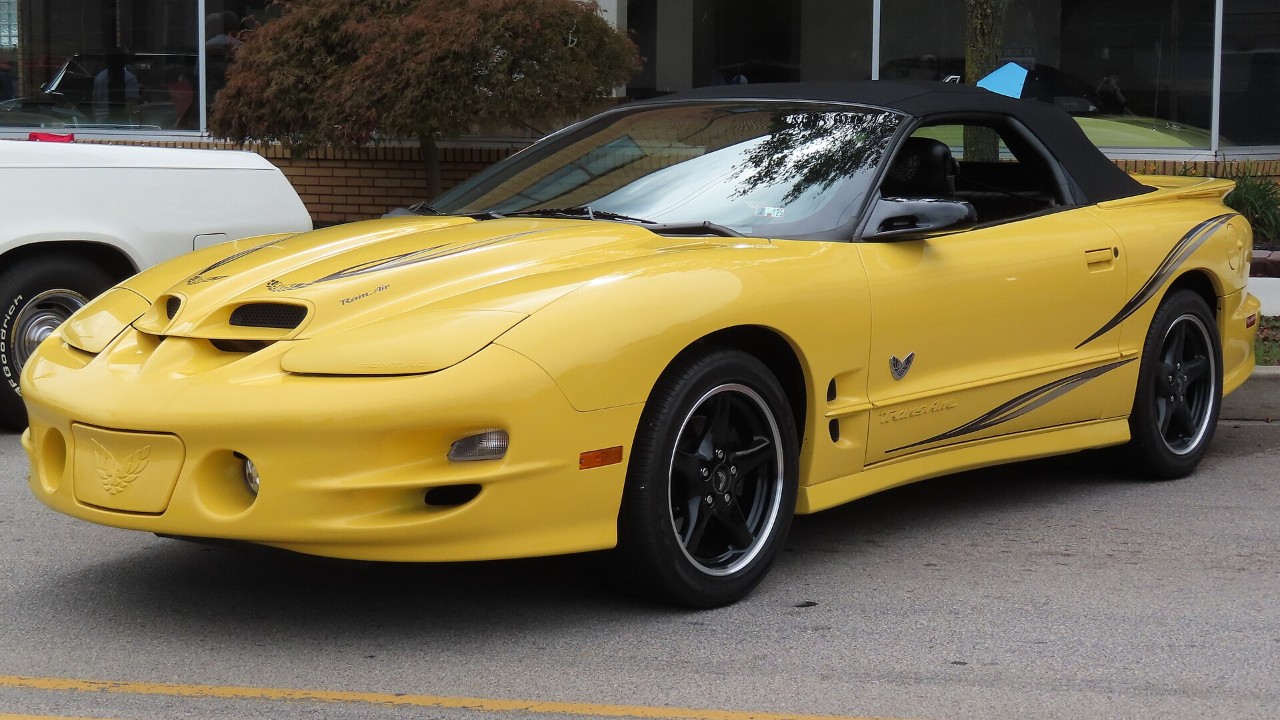
The last Firebird left the line in 2002, and Pontiac sent it off in bright yellow. The Collector Edition came as a WS6 convertible or a WS6 T-top coupe. Twin black stripes ran from the hood to the tail.
Meanwhile, under the hood sat the LS1 V8, rated at 310 horsepower in 2002 WS6 form. So the Firebird did not limp to the finish. Instead, the badge went out at full strength rather than fading away.
We think the 2002 Collector Edition is the perfect bookend to this list. It links the stripes of the 1969 car with modern fuel injection and a modern chassis. Buy the best one you can find and keep the stripes intact. After all, there will never be another factory Firebird Trans Am. In our view, few final editions carry as much meaning. This one closed a 35-year run that began with a Pontiac coupe in early 1967, and it did so with the stripes, the T-tops and the V8 that made the name famous.
More from Fast Lane Only