American Motors sold 55,125 Javelins in the car’s first model year, and the AMC Javelin package list grew fast after that. Between 1968 and 1974, AMC dressed its pony car in racing spoilers, neon paint, designer fabric and big V8s.
Most people remember the Javelin as the plucky rival to the Mustang and Camaro. However, the cars that interest us most are the special packages and editions that came and went in a year or two. Some were built to satisfy racing rules. Others were pure showroom flash. All of them, in our view, make a Javelin more fun to own and drive than the base car.
These six are our picks, and the verdicts are our opinion. The dates, prices, colors and production counts come from published model histories and period-focused sources. If you want a Javelin that stands out at a show and feels special on a back road, start here.
1. 1969 AMC Javelin Mod package
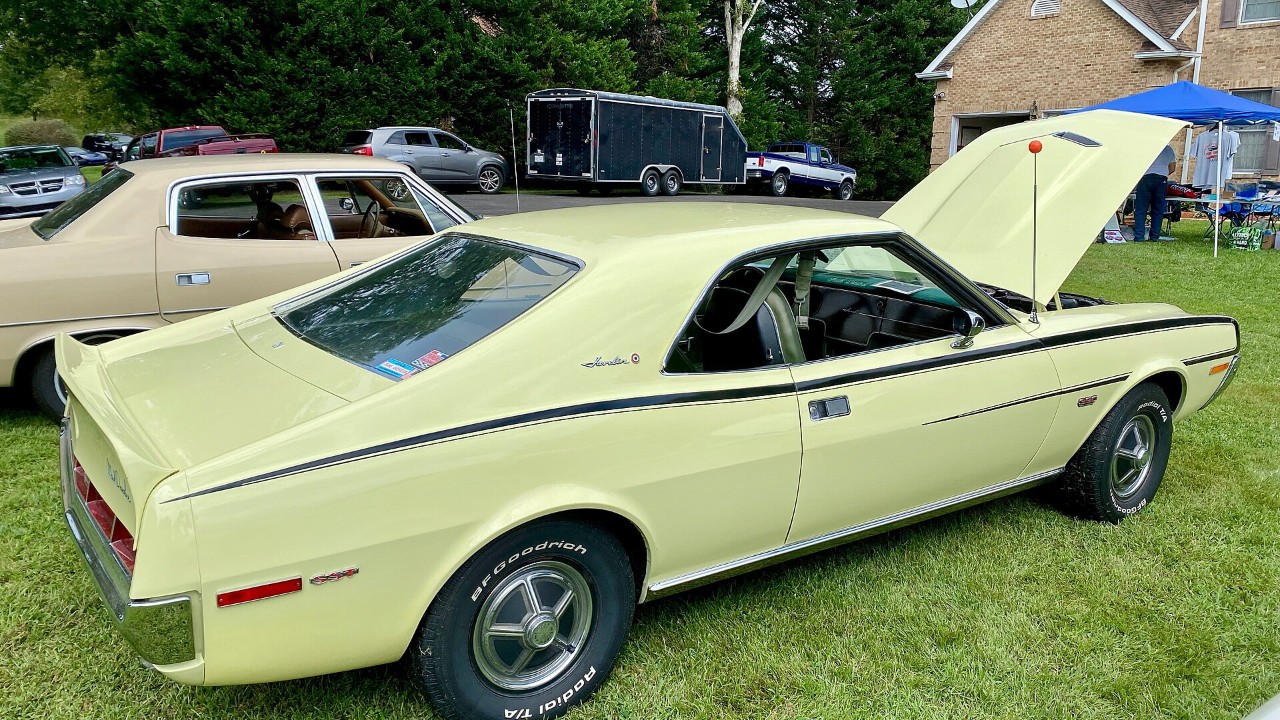
Halfway through 1969, AMC gave the Javelin a new look without touching the sheet metal. The Mod Javelin package added a roof-mounted spoiler that AMC named after land speed racer Craig Breedlove. It also brought simulated “exhaust” trim along the rockers and twin blacked-out hood scoops.
That combination tells you a lot about AMC in 1969. The company had little money for new bodies, so it sold attitude instead. In our view, a roof spoiler named for a land speed racer was a clever bit of marketing. Meanwhile, the fake side exhausts gave the car a race-car profile from the curb.
Our take: the Mod package is the most honest kind of dress-up. It doesn’t pretend to add horsepower. Instead, it makes a well-balanced car look as quick as it feels. If you shop for one, check that the spoiler and rocker trim are original, since trim like this can be added to any car later. We’d also look at our earlier rundown of Javelins that proved Detroit had competition for the bigger-engine versions that pair well with this package. In our view, a Mod Javelin with a V8 and a manual gearbox is one of the best-value ways into a factory-styled late-1960s pony car.
2. 1969 AMC Javelin Big Bad paint
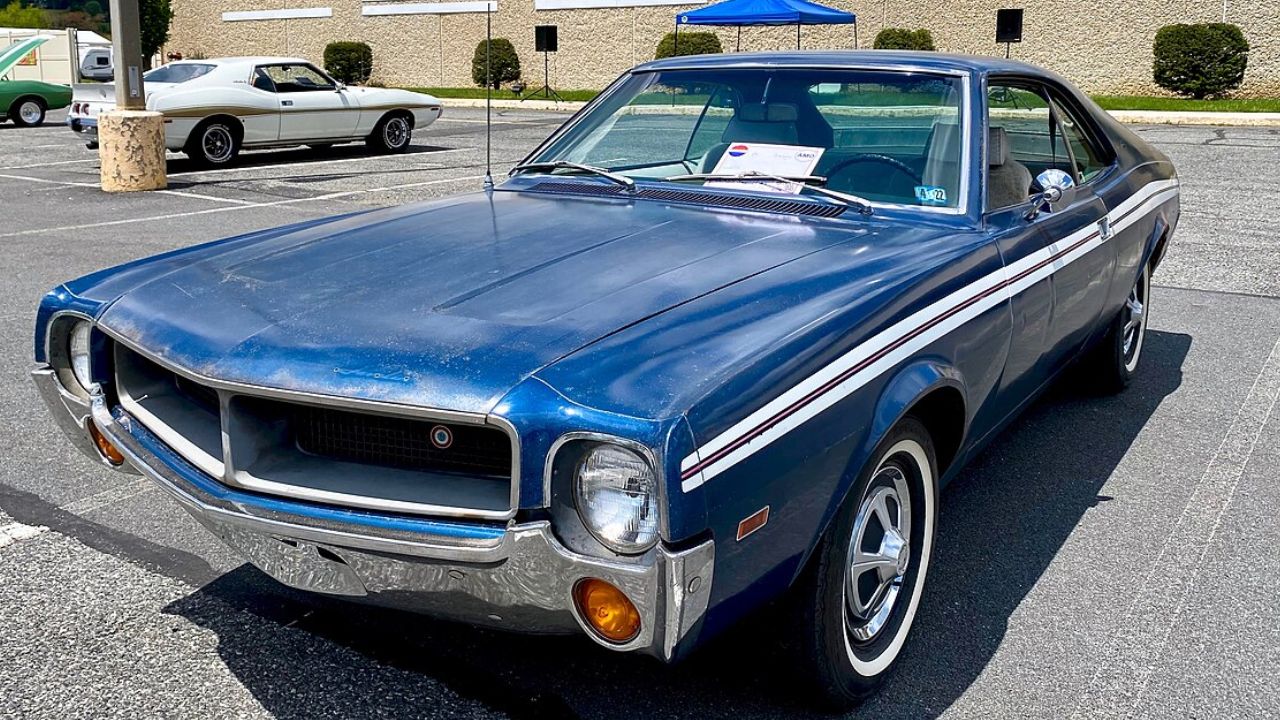
AMC chose a name that matched the colors. From mid-1969, buyers could order “Big Bad” paint in neon blue, orange or green. The bumpers were painted to match, so the whole car glowed from end to end.
Painted bumpers were a bold move at the time, because chrome bumpers were the norm. Color-matched bumpers made the Javelin look smoother and more modern. In addition, the bright hues suited the Mod package parts of the same year. As a result, a Big Bad Javelin is easy to spot from across a parking lot, even next to Mustangs and Camaros in their own loud colors.
Our take: Big Bad paint is the reason we smile every time one of these rolls into a car show. It shows AMC at its most playful, at a moment when the company was trying hard to look young. We love that it changed the car’s whole character for the price of a paint option. If you’re buying, ask for documentation, because the paint is simple to copy. A real Big Bad car is worth the extra homework, and to our eyes it’s the best-looking Javelin of the first generation.
3. 1970 AMC Javelin SST Mark Donohue
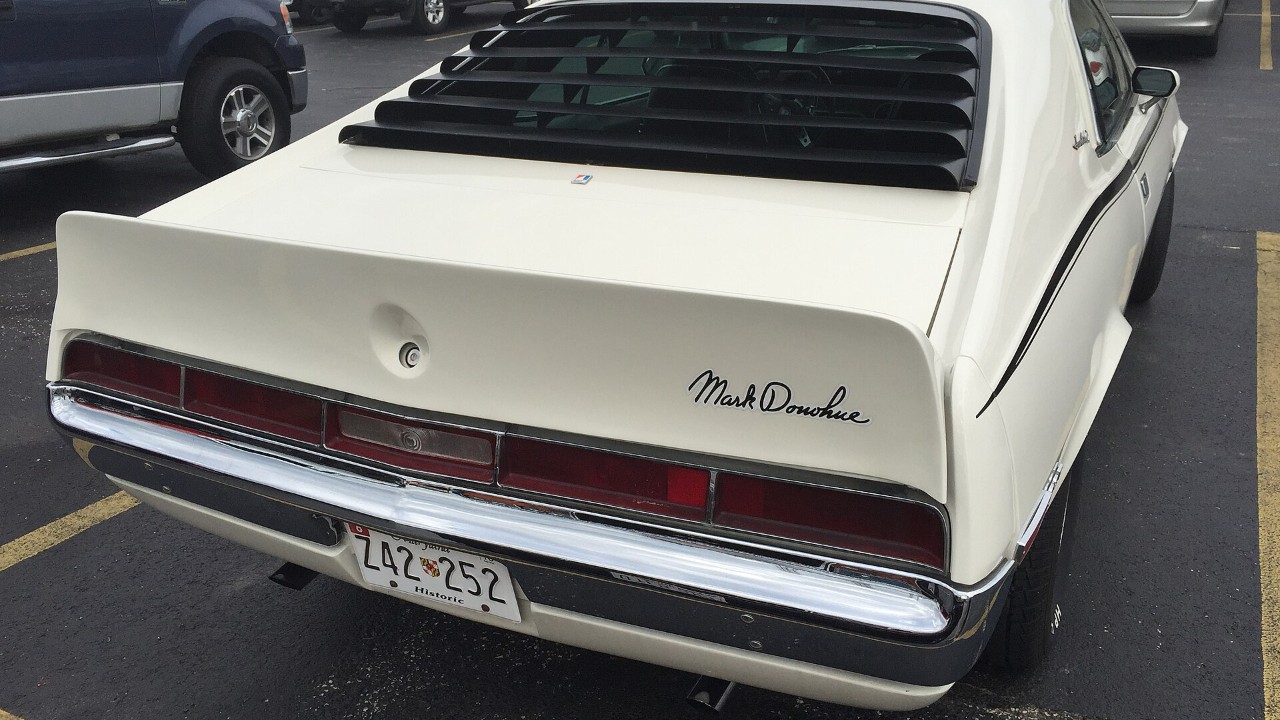
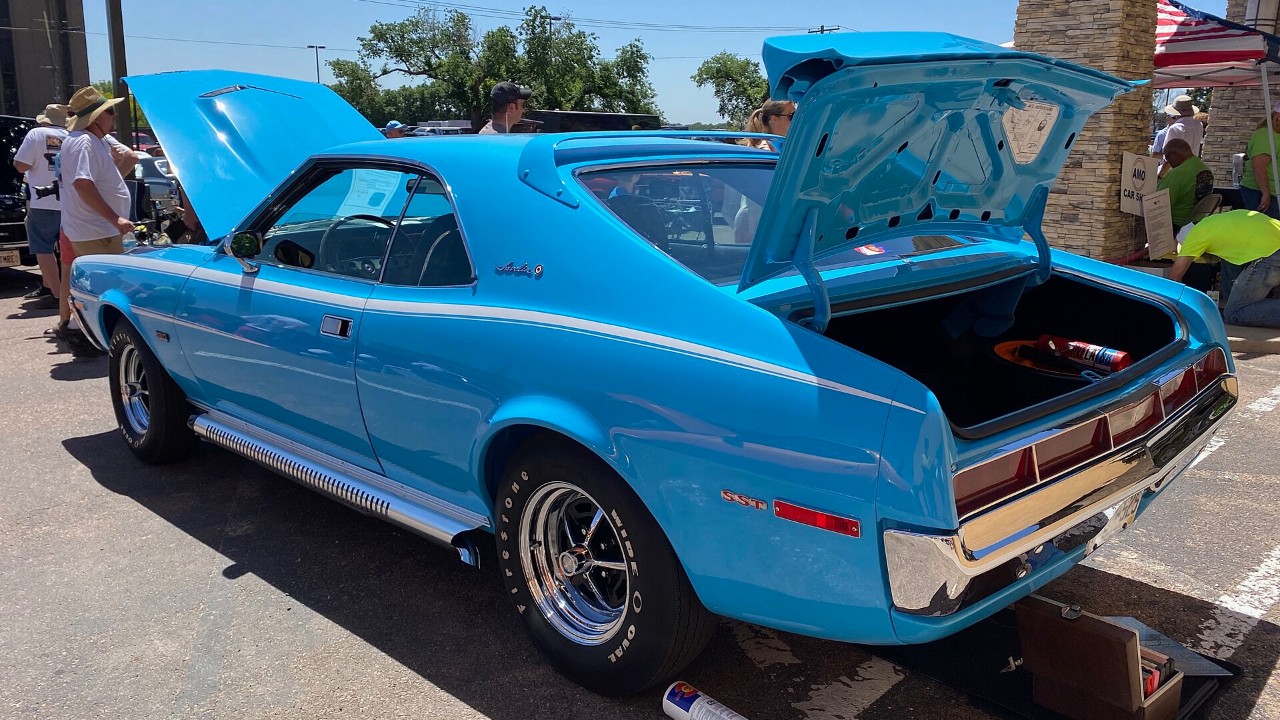
This one exists because of a rulebook. According to Old Cars Weekly, Trans-Am rules required the spoiler on Mark Donohue’s race car to appear on at least 2,500 cars the public could buy. So AMC built a road-going Mark Donohue Javelin. Its rear ducktail spoiler matched the race car and carried a chrome Donohue signature on the right side.
Old Cars Weekly also gives a sense of how the SST went. It says the 390-cubic-inch, 325-horsepower SST reached 60 mph in 7.6 seconds and ran the quarter-mile in 15.1 seconds. AMC built 28,210 Javelins for 1970, including 19,714 SSTs. Model histories put the Donohue run at 2,501 cars. However, AMC gave them no special VIN or door tag, so proving a car is genuine takes careful paperwork.
Our take: the Donohue Javelin is the purest link between AMC’s showroom and the race track. You get a real homologation special that looks like a normal SST to most people. The owner featured by Old Cars Weekly estimates that about 500 of the originals survive. If you find one, insist on a build sheet or dealer paperwork, since the spoiler alone proves nothing.
4. 1971 AMC Javelin SST 401
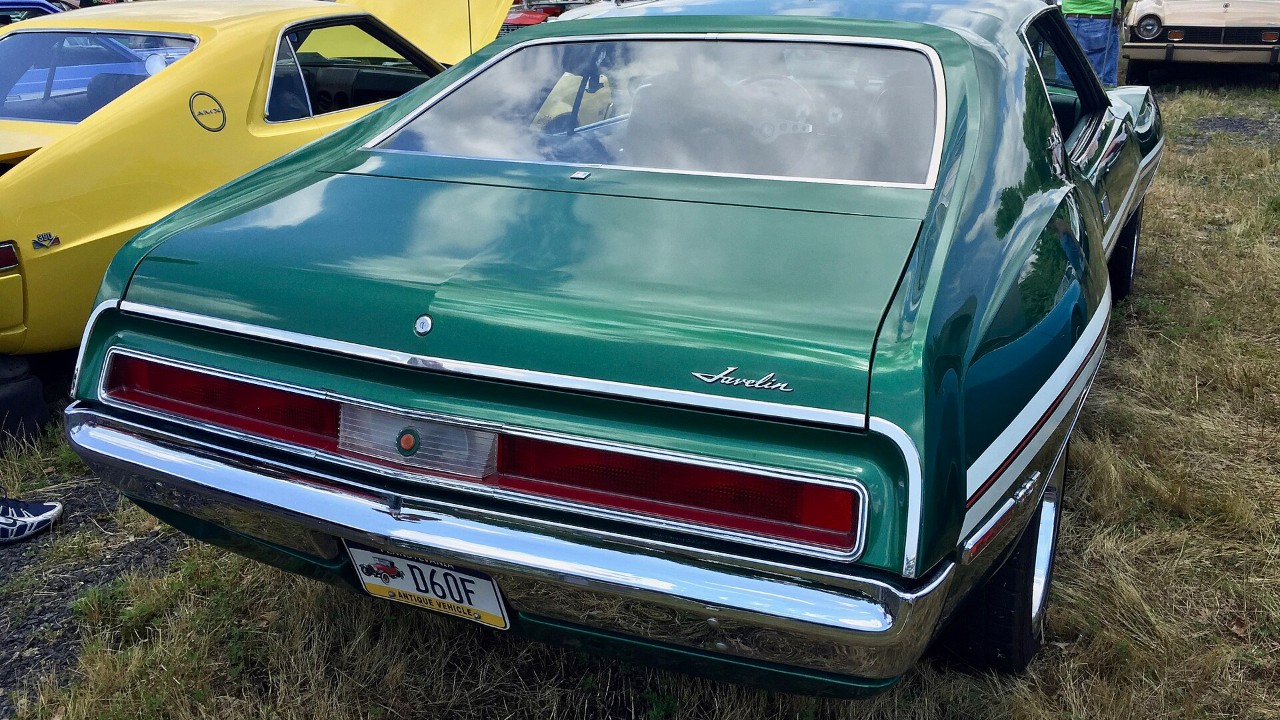
The second-generation Javelin arrived for 1971 with a new body and big fender bulges. Model histories say the bulges were designed partly to clear oversized racing tires, and the press compared the look to the Corvette. That same year, the AMX stopped being a separate two-seater and became a premium Javelin instead.
The engine that matters here is the 401 V8, rated at 330 horsepower. In our view, it gave the SST real muscle-car pace. The racing program helped its image, too. Javelins won the Trans-Am title for American Motors in both 1971 and 1972. In fact, the state of Alabama bought 132 Javelins in 1971 and 1972, with the 401 V8, as highway patrol cars.
Our take: an SST with the 401 is the sleeper of the family. It skips the AMX’s extra trim, but it keeps the engine that made the car fast. That makes it a great choice for drivers who care more about the drive than the badges. We covered the market for this car in our look at the Javelin SST 401. If you’re shopping, confirm the engine code before you pay a 401 price.
5. 1972 AMC Javelin Pierre Cardin
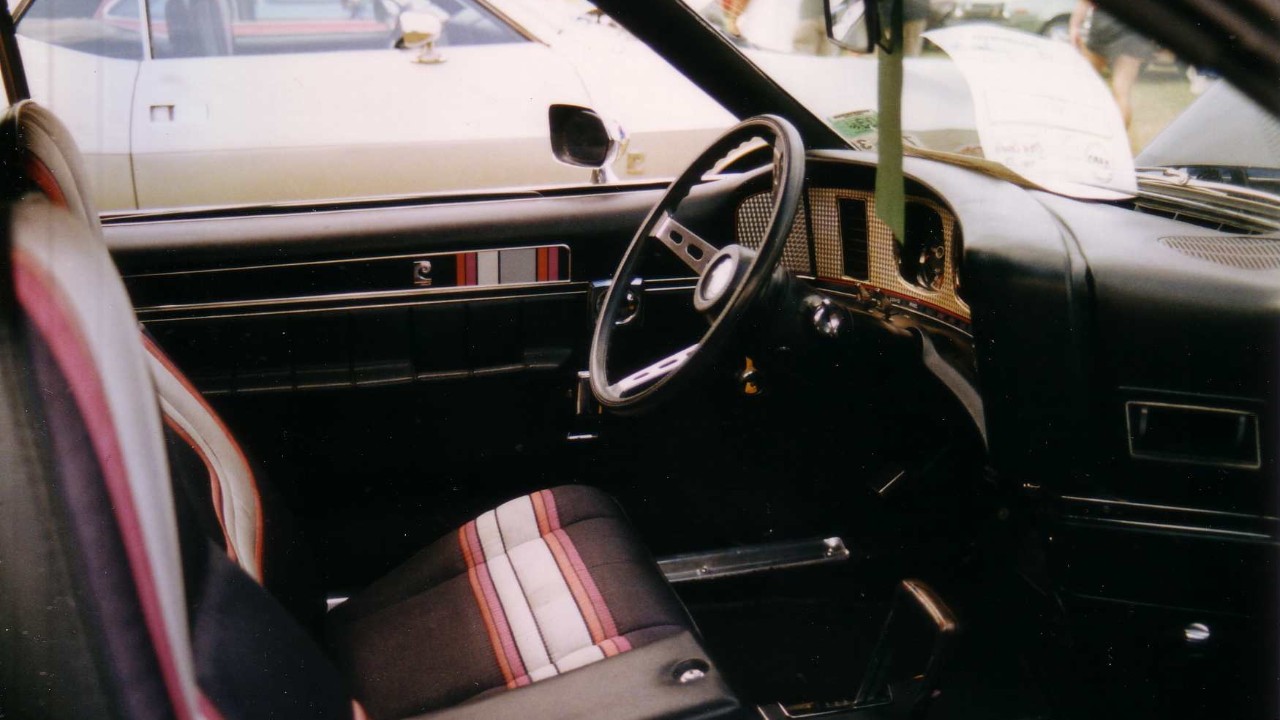
In 1972, AMC hired a Paris fashion house to design a car interior. The Pierre Cardin option went on sale on March 1, 1972, and it cost $84.95. The fabric used six bold nylon stripes in red, plum, white and silver laid over black. Model histories say AMC built 4,152 Javelins with it across 1972 and 1973.
Consumer Guide puts that number in context. It says AMC built roughly 60,000 Javelins in those two years, and only 4,100 or so had the Pierre Cardin package. That is about a 6.5% take rate. Consumer Guide also lists a limited set of exterior colors for these cars: Snow White, Stardust Silver, Trans Am Red, Wild Plum and Diamond Blue.
Our take: the Cardin Javelin is the most 1970s object on this list, and we mean that as praise. It is a muscle-era pony car with a designer label, sold during the same 1972 season as AMC’s Buyer Protection Plan warranty. The stripes make every drive feel like a costume party. When you look at one, check the seat fabric and door panels closely. The original Cardin material is the whole reason to buy this version, so it should be right.
6. 1968 AMC Javelin Go Package
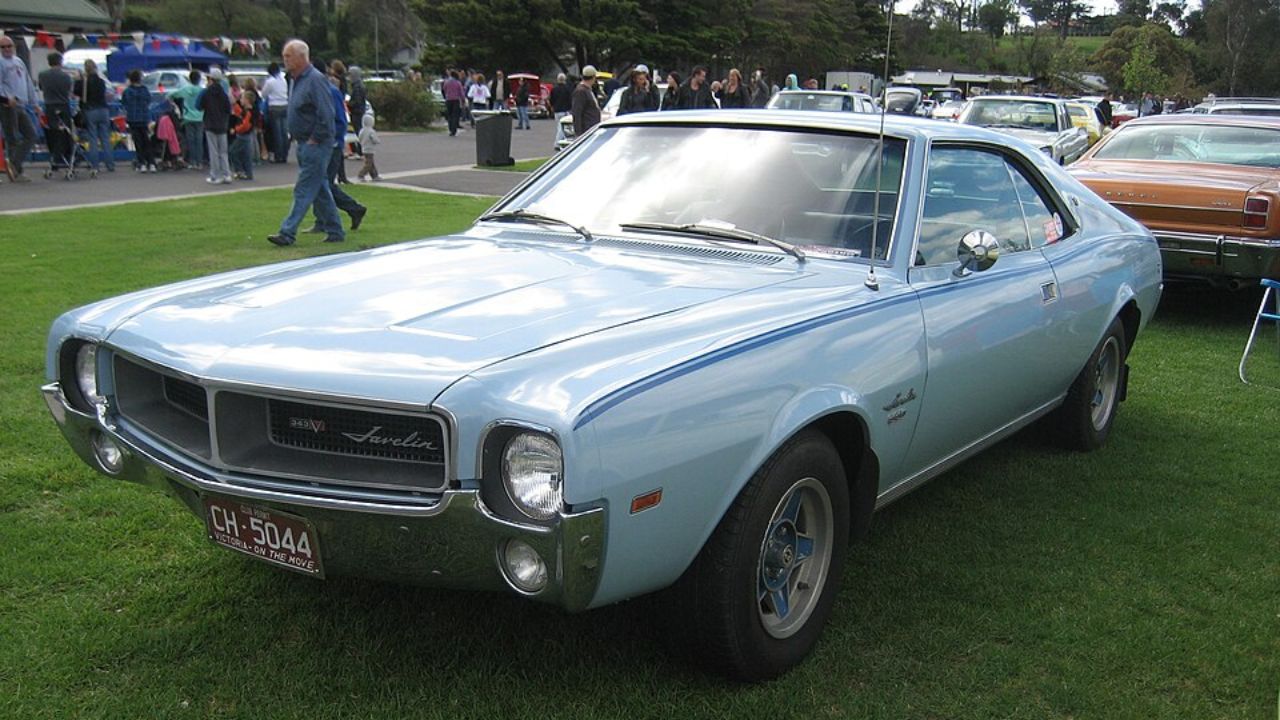
Our list ends where the Javelin began. The Javelin debuted on August 22, 1967, as a 1968 model, and sales started at $2,743. For buyers who wanted more, the Go Package added a four-barrel 343 V8, front disc brakes, heavy-duty suspension and red-line tires on Magnum 500 wheels. One period test car reached 60 mph in 8 seconds.
That list of parts says a lot about the AMC Javelin package philosophy. The Go Package didn’t chase the biggest engine in Detroit. Instead, it bundled the brakes and suspension a driver actually needs with a strong mid-size V8. As we explained in how the 1968 AMC Javelin took on the Big Three, that balance was AMC’s way into a market it had never played in before.
Our take: the Go Package is the driver’s Javelin of the first year. It pairs a strong V8 with the brakes and suspension to use it, which is exactly the balance we look for. If you want one, look for the disc brakes and Magnum 500 wheels as signs of a real Go car, and then verify with paperwork. Of the 55,125 Javelins built for 1968, a documented Go Package car is the one we would want to keep.
More from Fast Lane Only