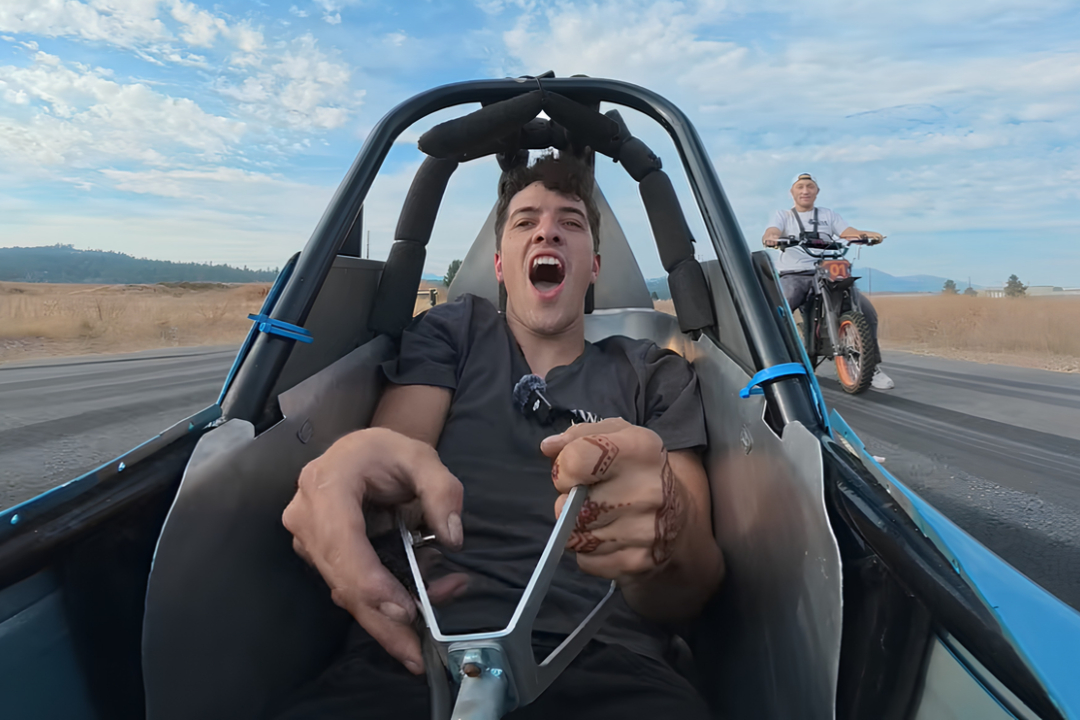
There is a very specific kind of stupid that only Facebook Marketplace can enable, and it usually starts with someone typing “junior dragster” into the search bar at 11 p.m. and deciding a race car built for a fourth grader is a completely reasonable purchase for a grown man. Three grand later, Will and Taylor owned exactly that: an all-aluminum, freshly painted, genuinely quick little dragster designed for kids aged six to twelve, which they immediately decided to fold their adult bodies into and drive as fast as physically possible.
The car itself was, improbably, kind of a steal. Metallic pink and blue paint that looked fresh enough to be a wrap, a fully aluminum chassis, and not one but two engines included in the deal, the installed single-cylinder unit doing the actual work, plus a mysterious second engine so exotic neither host could identify it. Stamped “Extreme Billet Engine, Papa’s 1290” and machined from what looked like a single solid chunk of aluminum, complete with a Mikuni carburetor and fuel pump Will suspected was built to run on straight alcohol, it was the kind of spare parts inclusion that suggested somebody, at some point, had taken this tiny race car far more seriously than a toy has any right to be taken. It never got started. A suspected straight-alcohol fuel system is not a beginner’s Tuesday afternoon project.
The rest of the car told a less glamorous story. The front tires had gone from rubber to something closer to fossil, cracked and dry-rotted plastic-rimmed bicycle tires that looked like they’d been sitting in a field since the Clinton administration. The fuel tank, when opened, produced a substance Will described as unlike any fuel he’d seen in his life, dark, gelled, and smelling exactly as bad as that sounds. And the cockpit, built around the general body proportions of a sixth grader, initially fit Will about as well as a wetsuit fits a walrus, wedged in low enough that he compared himself to a cave diver, knees bent nearly to his chest with the throttle and brake tucked somewhere underneath them.
Getting a lawnmower-adjacent engine to breathe again
Before anyone could think about speed, the car needed to prove it could run at all, and that meant confronting the fuel tank first. The gelled, ancient gas inside raised real fears that it had already made its way into the carburetor, which would have meant a full teardown before the car moved an inch. Lucky timing saved them: the fuel pump was still dry, meaning the worst of the contamination hadn’t reached the carb yet. A fresh fuel line and new gas later, they gave the pull cord a shot.
It caught. Loud, through a screamer pipe exhaust that made an already-souped-up small engine sound considerably more menacing than its lawnmower origins suggested, the engine ran, spun the rear tires, and generally proved itself alive, even if it refused to idle cleanly without a proper carburetor cleaning nobody had time to do yet. For a machine that had apparently been rotting in a field for an unknown number of years, that counted as a genuine win.
The tires were the next gamble. Nobody expected the dry-rotted rear slicks, cracked deeply enough to look structurally offended by the concept of air pressure, to actually hold a fill. They did, and once inflated, the whole car’s ride height noticeably lifted, revealing a genuinely unusual five-lug wheel pattern that neither host had ever seen on anything go-kart-sized before. It also turned out these dry-rotted horrors were, bafflingly, brand new, purchased for around $500 each and apparently never actually used before the car went into storage.
Making a kid’s car fit an adult
With the mechanicals sorted well enough to attempt a drive, the last obstacle was purely anatomical: getting an adult body into a cockpit designed around the general dimensions of a middle schooler. Popping the quick-release front cowl exposed a surprisingly legitimate steering setup, a proper steering box connected by a shaft roughly four feet long to a steering wheel smaller than a dinner plate, along with an adjustable pedal assembly mounted on slotted aluminum rails.
The first attempt at sliding those rails forward wasn’t the fix, just progress toward one. It took a second pass, moving the rails to a mounting hole beyond what they’d initially assumed was the maximum setting, before things actually clicked into place. Once they did, the improvement was immediate and real: noticeably more legroom, a seating position Will called genuinely comfortable, and a fit that had gone from cave-diver cramped to something an adult could actually drive without folding in half. The car’s five-point harness, installed presumably for its intended pint-sized drivers, remained completely unusable regardless, since no adult spine bends far enough backward to sit in the position the harness assumed.
Beating an electric mini-bike, then losing feeling in his body
Out on a stretch of paved rural road, the dragster’s first real test revealed exactly what $3,000 and a big rear sprocket can accomplish: genuinely alarming acceleration paired with genuinely terrible visibility, tight steering geometry, and blind spots severe enough to make basic turning around into a full three-point maneuver.
That combination of speed and near-zero visibility set up the day’s centerpiece: a straight-line drag race against Tudio, an electric mini-bike capable of 31 mph and, crucially, instant torque the moment the throttle opens. On raw spec sheet numbers, the electric bike should have had a real shot. It didn’t. The dragster’s oversized rear sprocket, somewhere around 100 to 102 teeth by the hosts’ own account, dragged it past the mini-bike early and never let go, closing out the race as the clear winner despite giving up a head start earlier in testing. A GPS tracker pinned the dragster’s actual top speed at 36.6 mph, a number that sounds almost quaint until you remember the driver’s body was sitting roughly a quarter-inch off the pavement the entire time, turning an ordinary suburban speed limit into what Will described as feeling like a million miles an hour.
Taylor’s turn behind the wheel added the one data point still missing: what all of this actually does to a human body at full speed. Between a possibly bent rear axle, unbalanced dry-rotted tires, and a chassis engineered for the weight of an elementary schooler rather than a full-grown adult, the car developed a violent shake severe enough to blur his vision and leave his whole body tingling afterward. He still nailed the tricky three-point turnaround on his first try, one-upping Will’s own struggles with the same move.
Neither of them regretted it. Will called it his favorite purchase the shop has ever made, and engine swap plans are already in the works.
More from Fast Lane Only
- Unboxing the WWII Jeep in a Crate
- 15 rare Chevys collectors are quietly buying
- 10 underrated V8s still worth hunting down
- Police notice this before you even roll window down
*Research for this article included AI assistance, with all final content reviewed by human editors.