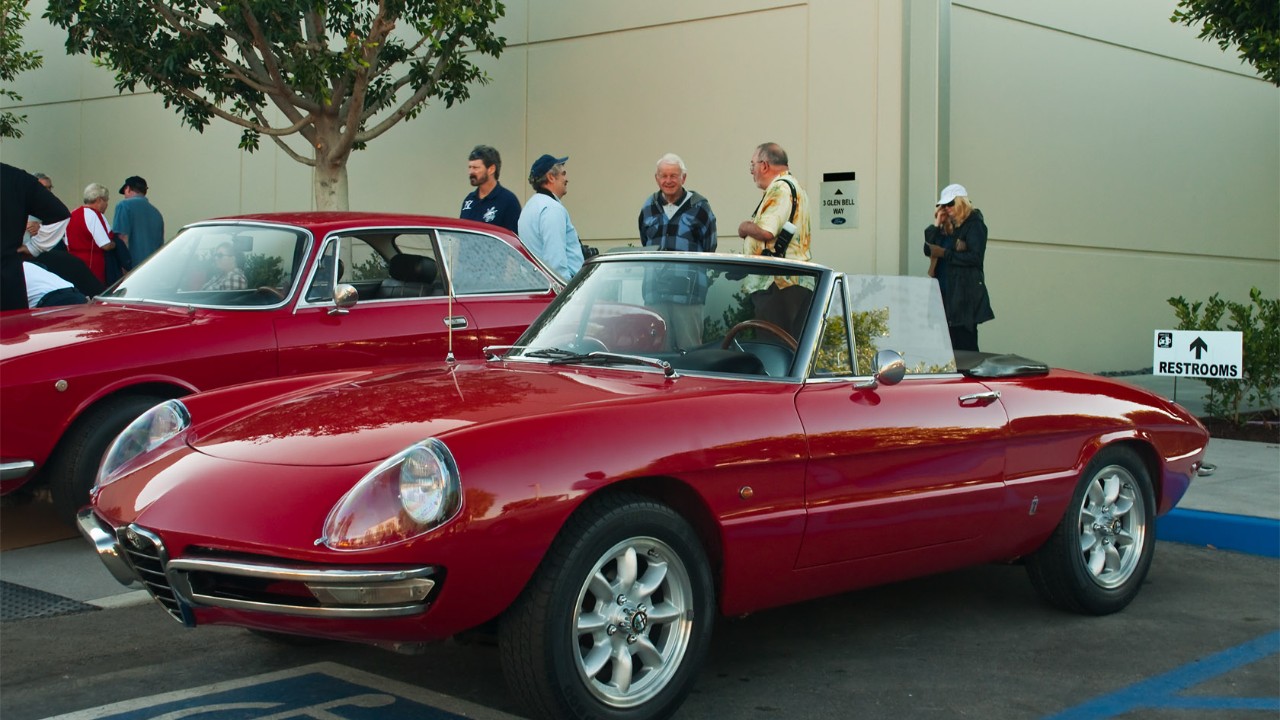
The Alfa Romeo Duetto got its name from a public contest that drew more than 100,000 entries. Then a 1967 film put one in front of millions of moviegoers. Italian sports cars have a habit of becoming stories like that.
Italy builds cars that make an ordinary errand feel like an event. Some do it with a howling V12, others with a tiny engine and a perfect steering feel. Still, not every one is fast, and not every one is expensive. What they share is a sense of occasion every time the key turns.
These are our picks, 12 Italian sports cars that make every drive feel special. Our choices and verdicts are opinion, plain and simple. The years, engines and production figures come from the references we read for this story.
1. 1967 Alfa Romeo Duetto
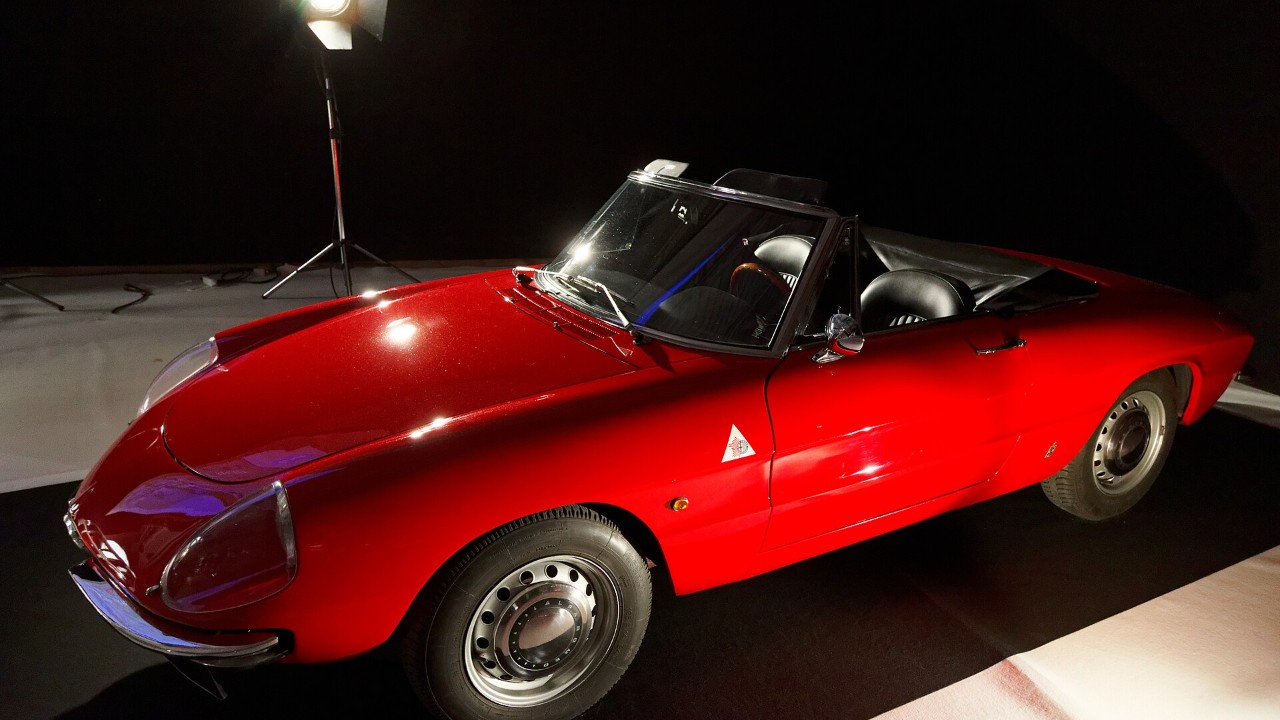
The Alfa Romeo Spider made its debut at the Geneva Motor Show in March 1966. Pininfarina designed and built it, with Aldo Brovarone and Battista Pininfarina credited for the shape. Its long, rounded tail earned the nickname “osso di seppia,” or cuttlebone.
Even the name came from the public. Alfa received more than 100,000 suggestions, and Guidobaldo Trionfi of Brescia proposed “Duetto.” However, a confectionery trademark blocked its official use, so Alfa sold the car as the Spider 1600. Under the hood sat a 1,570 cc twin-cam four with twin Weber carburettors, rated at 109 PS and 142 Nm of torque.
Then Hollywood stepped in. A 1966 Spider 1600 appeared in The Graduate, the 1967 film starring Dustin Hoffman, and the car became famous far beyond Italy. Alfa built 6,324 Spider 1600s before the 1750 Spider Veloce took over.
Our take: the Alfa Romeo Duetto is the purest version of the Spider, and the Alfa Romeo Duetto shape is the one we’d frame. Also, the boat-tail body looks right from every angle, and the twin-cam loves to rev. We’d pick a Duetto over any later Spider for that shape alone.
2. Alfa Romeo Giulia Sprint GT Veloce
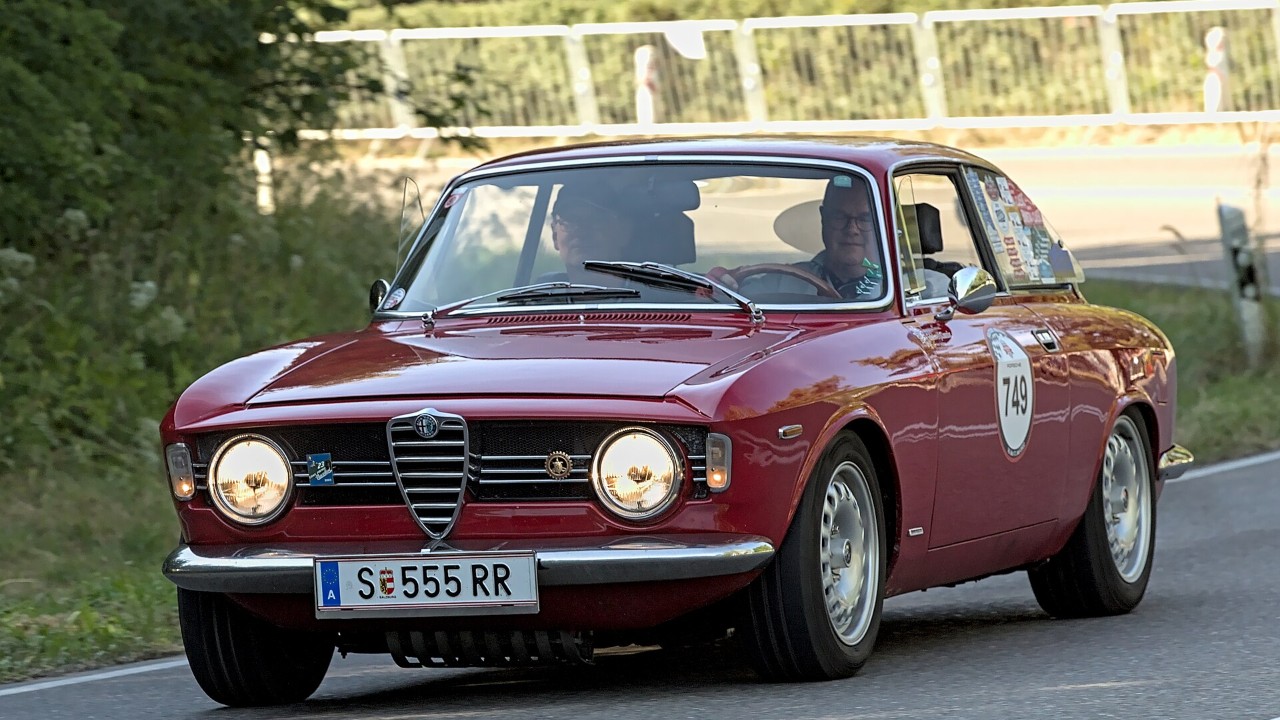
Giorgetto Giugiaro drew the basic shape of Alfa’s 105-series coupe while at Bertone. The Giulia Sprint GT Veloce arrived at the 1966 Geneva Motor Show as an improved version of the Sprint GT. It kept the earlier car’s “scalino,” the small step at the front edge of the bonnet.
Under that bonnet, the Veloce shared its engine type with the Alfa Romeo Duetto. It made 109 PS DIN, or 125 PS SAE, at 6,000 rpm, which was 3 PS more than the Sprint GT it replaced. As a result, the coupe gained a little more urgency without losing its sweet nature.
Alfa built 14,240 Giulia Sprint GT Veloces, including 1,407 right-hand-drive cars. Then the 1750 GT Veloce replaced it in 1967. For more of the brand’s best, see our list of Alfa Romeos that balanced beauty and bite.
In our view, the Sprint GT Veloce is the Alfa coupe to drive every day. After all, it has rear seats, a balanced chassis and a lovely engine. Above all, that stepped nose gives it a face you can spot from across a car show.
3. Ferrari 308 GTB Vetroresina
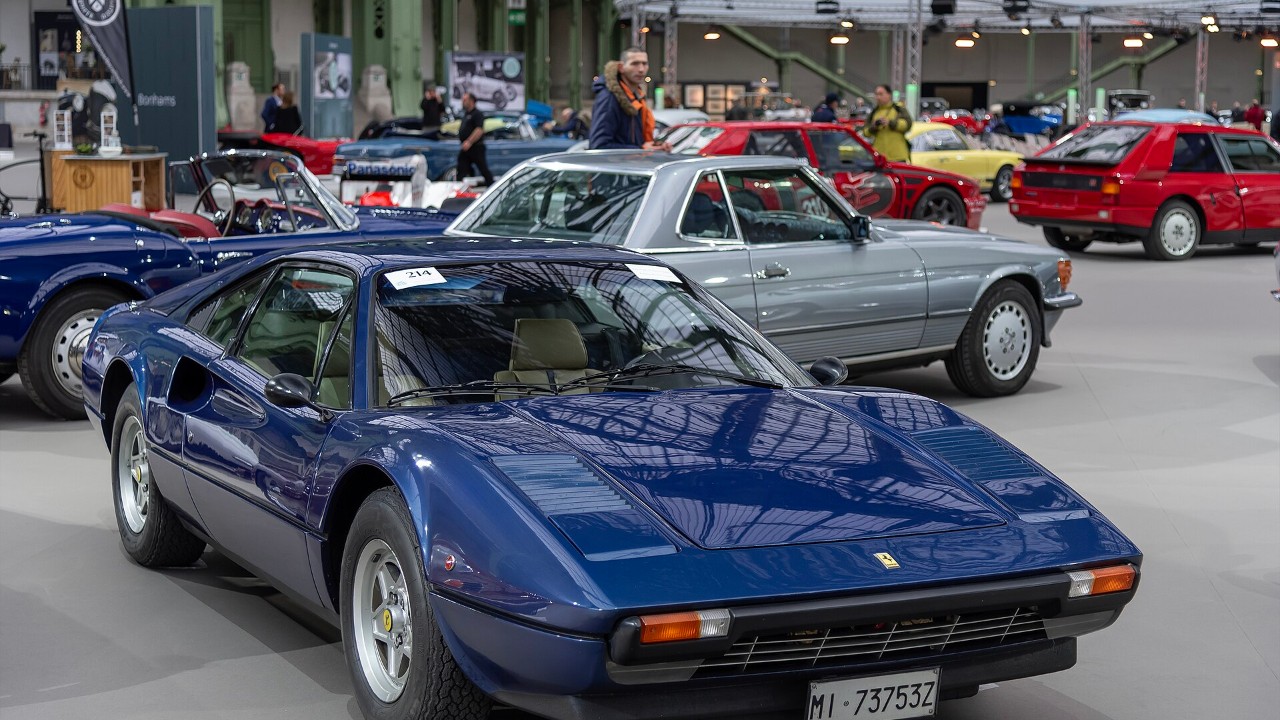
Ferrari showed the 308 GTB at the Paris and London shows in 1975, as a two-seat replacement for the Dino 246. Leonardo Fioravanti styled it at Pininfarina, and Scaglietti built it. According to Ferrari, the early body was all fibreglass except for an aluminium front lid.
That fibreglass, or “vetroresina,” is what makes these cars special. Ferrari built 808 of them before switching to steel bodies in June 1977, a change that added roughly 150 kg. European cars also used dry-sump lubrication and a 2.9-liter V8 rated at 255 bhp. For that reason, Ferrari lists the dry weight at just 1,090 kg.
The 308 GTB went on to a long life in steel, and Ferrari says it built 2,897 GTBs from 1975 to 1980. Even so, we’d single out the early fibreglass cars, since the later steel bodies added about 150 kg.
Our take: the Vetroresina is the 308 we’d choose. It is light, it sounds fantastic through four Weber carburettors and the Fioravanti shape is close to perfect. If you shop for one, insist on documentation, since the fibreglass body is the whole point.
4. Ferrari 348 tb
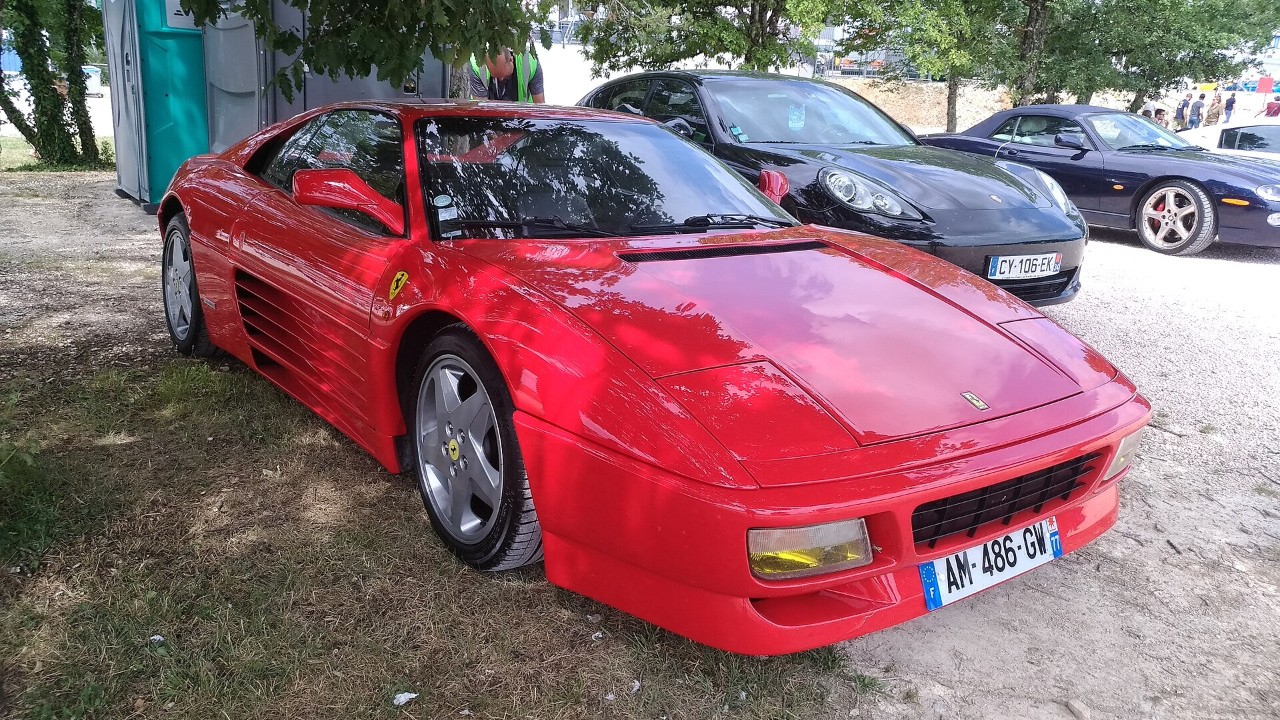
The 348 made its debut at the Frankfurt show in September 1989. Ferrari calls it the first all-new model after Enzo Ferrari’s death in August 1988. Its “t” stands for the transverse gearbox position, a layout carried over from Ferrari’s 312T Formula 1 car.
Power came from a 3.4-liter, quad-cam V8 with four valves per cylinder, rated at 300 PS. Meanwhile, the styling nodded to the Testarossa with straked side air intakes. Its 2,450 mm wheelbase was also 100 mm longer than the 328’s. Ferrari built 2,894 examples of the 348 tb, and the company says tb production ended in 1993.
The F355 eventually replaced it, and the newer car took most of the attention. That has left the 348 as one of the more approachable ways into a mid-engine V8 Ferrari, in our view.
Our take: the 348 tb is the Ferrari for people who like to drive. It feels mechanical and direct in a way later, more refined models do not. Before you buy, budget for regular belt services, and choose a car with recent records rather than low miles alone.
5. 2000 Ferrari 360 Modena
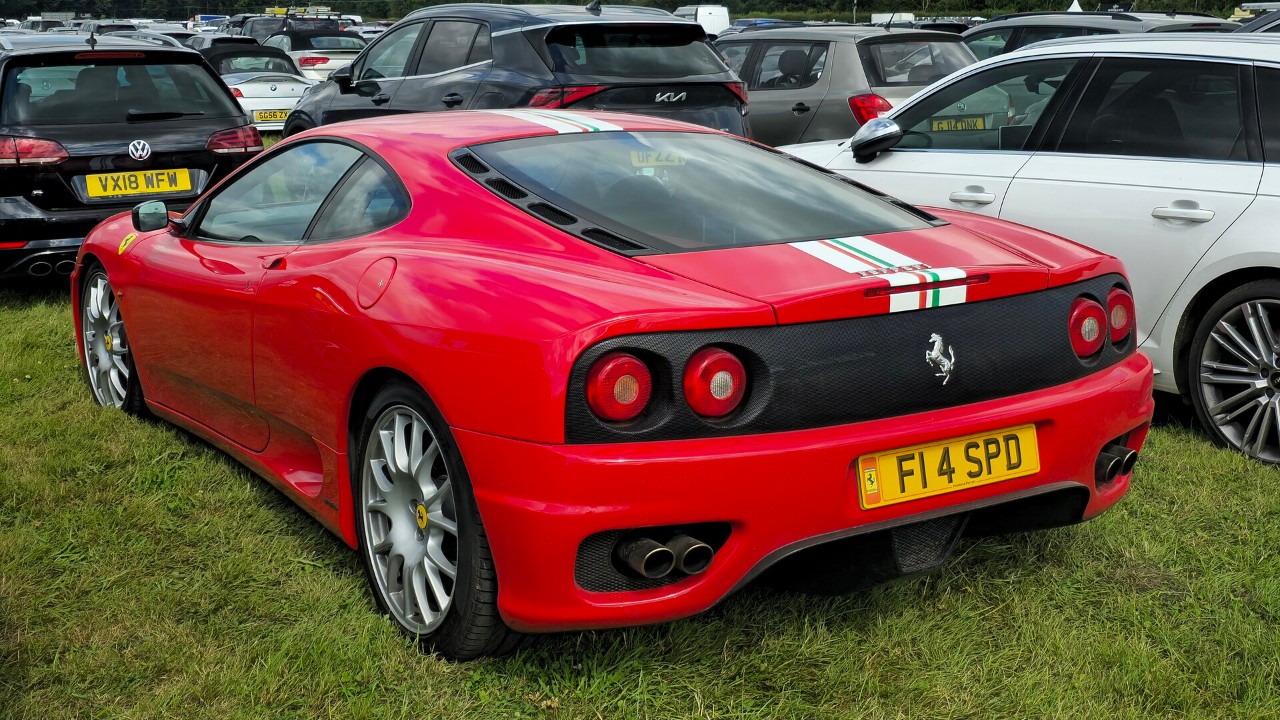
Ferrari launched the 360 Modena in 1999, and it changed how the company built its V8 cars. Working with Alcoa, Ferrari developed an all-aluminum space-frame chassis that was 40 percent stiffer than the earlier steel design. Ferrari also claimed a weight saving of 60 kg.
The 3.6-liter V8 made 400 PS, and owners could watch it through a curved glass engine cover. That window shows off the intake plenums and red crackle-finish cam covers. Ferrari also claimed the 0–100 km/h time dropped from 4.7 to 4.5 seconds. Buyers could choose a six-speed manual or the “F1” automated manual, built by Graziano Trasmissioni. Most took the paddles, which makes the manual cars a rarity.
Ferrari built 8,800 Modenas worldwide, and only 469 of them had the manual gearbox. By comparison, 1,810 of the 4,199 U.S.-market 360s were Modena coupes.
In our view, the 360 Modena is the moment Ferrari’s V8 cars went modern. It is light, stiff and fast, and that glass engine cover turns every fuel stop into a small show. If you want the full experience, hunt for one of those 469 manual cars.
6. Lamborghini Diablo
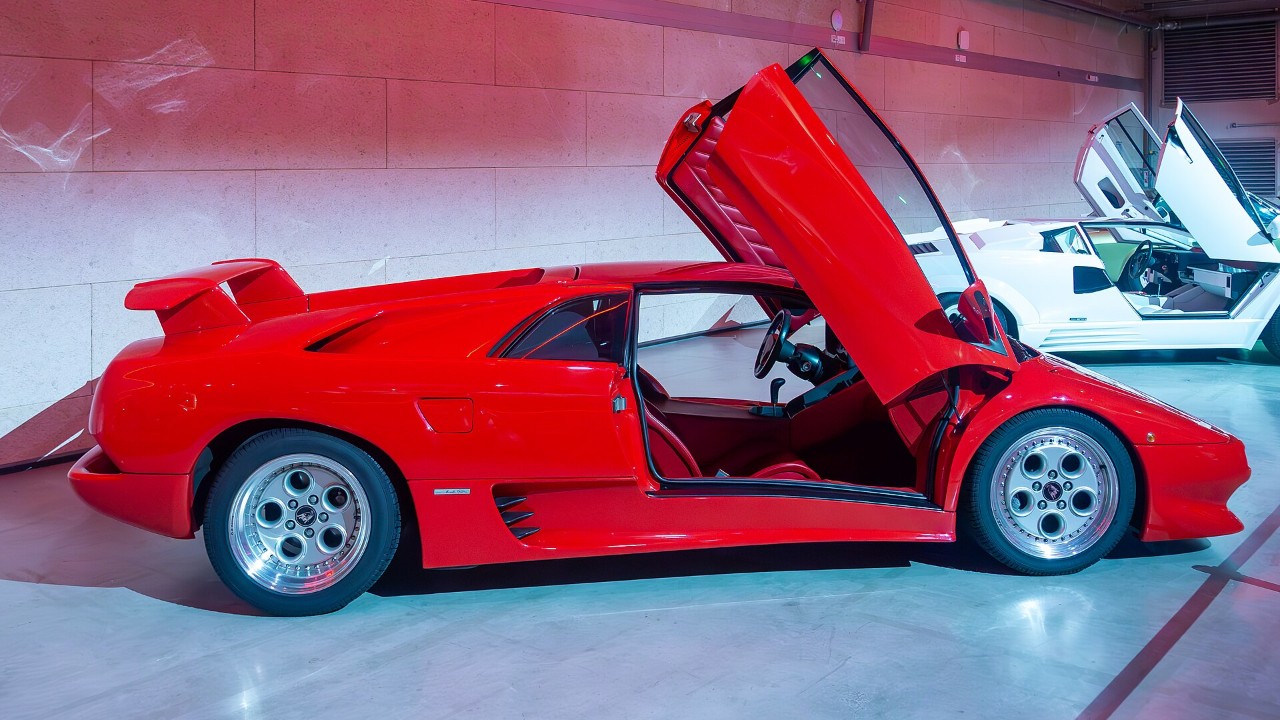
The Diablo made its public debut on January 21, 1990, and production ran until 2001. Marcello Gandini handled the first design. After Chrysler bought Lamborghini in 1987, though, its Detroit design team smoothed out many of the sharp edges and corners. That work was the third major redesign of the project before launch.
The car took its name from a fierce fighting bull raised by the Duke of Veragua and famous for a fight in Madrid on July 11, 1869. That suits the car, because nothing about it is shy. A 5.7-liter V12 produced 492 PS and 428 lb-ft of torque, and top speed reached 202 mph.
Lamborghini built 2,903 Diablos over that 11-year run. We’d bet a Diablo draws a crowd wherever it parks. It arrived at the height of the poster-car era, and in our eyes it looks as if it was drawn for a bedroom wall.
Our take: the Diablo is the poster car that actually delivers. It is wide, loud and a little intimidating, which is exactly the point. If you shop for one, remember that clutch and maintenance costs come with the territory, and a full service history matters more than color.
7. 2016 Fiat 124 Spider
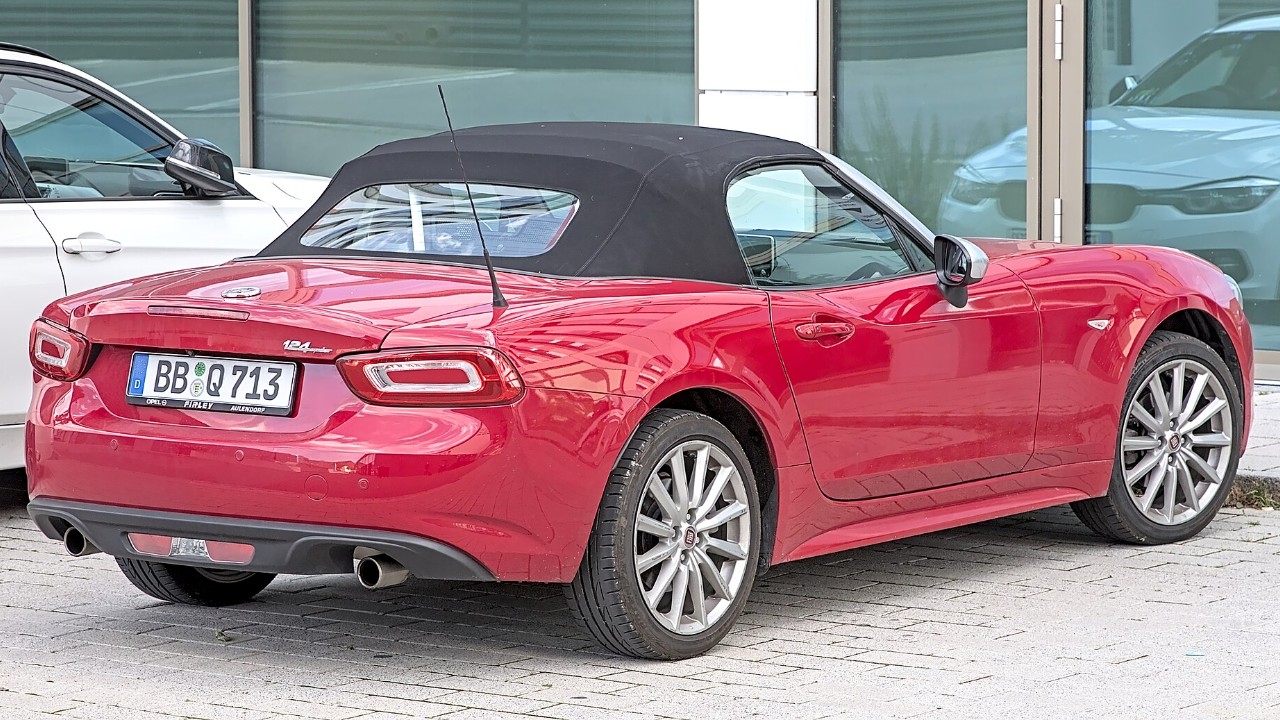
The modern Fiat 124 Spider has an unusual birthplace. Mazda assembled it at its Hiroshima plant, on the same line as the fourth-generation MX-5 that it is largely based on. Fiat supplied the engine, a 1.4-liter MultiAir turbo four.
In European form, that engine made 140 PS, while North American cars got 160 horsepower and 184 lb-ft. The nameplate and exterior details also echo the Pininfarina-designed Fiat 124 Sport Spider built from 1966 to 1985. Meanwhile, the Abarth version raised output to 170 PS. It reached 0–100 km/h in 6.8 seconds and topped out at 232 km/h.
Production ran from 2016 to 2019, and the total reached 41,321 cars. In North America, Fiat sold the 124 Spider for the 2017 to 2020 model years.
In our view, the 124 Spider earns its place as the most usable car here. It is Japanese underneath and Italian in style and engine, and that mix gives you a proven chassis with a little extra personality. Look for a well-kept Abarth with the manual gearbox if you want the most fun per dollar.
8. Lancia Stratos HF
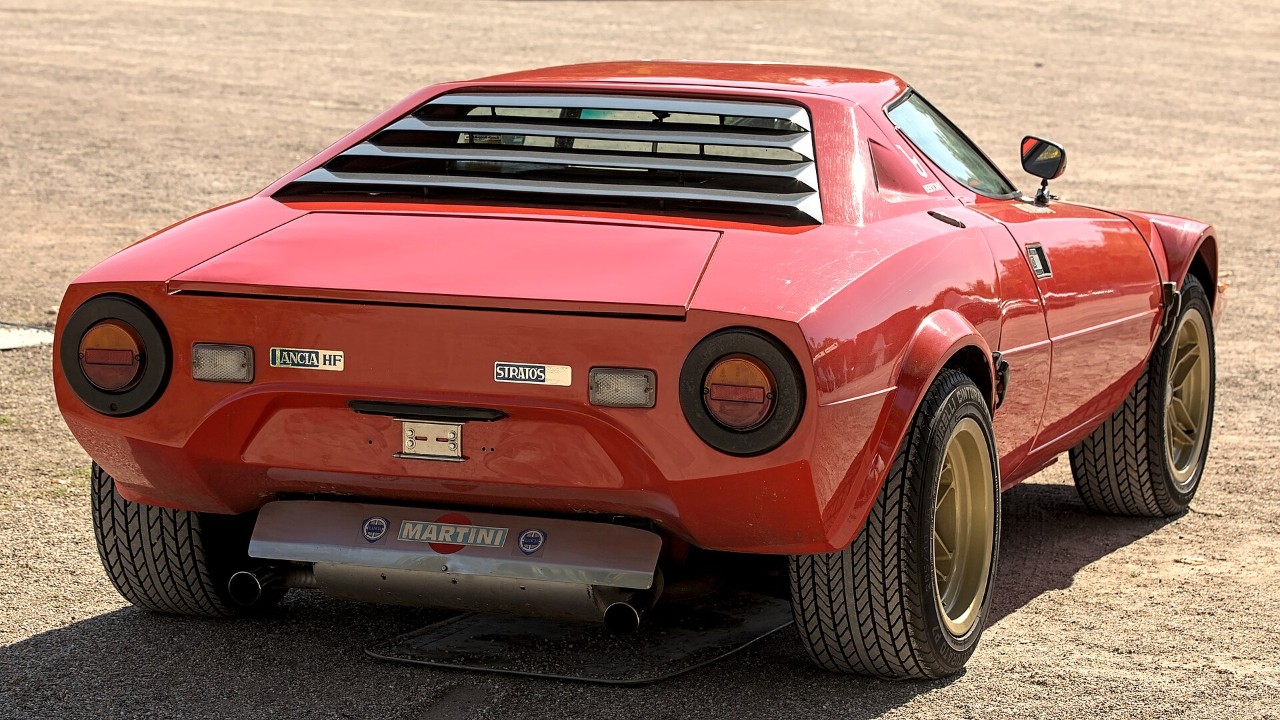
Marcello Gandini styled the Stratos at Bertone, and Lancia built it to win rallies. Group 4 rules required 500 cars for homologation, so production began in 1973. The car rode on a wheelbase of just 2,180 mm, which made it nimble on twisting stages.
For power, Lancia used the 2.4-liter Ferrari Dino V6. Even in road trim, the engine made 190 horsepower. That combination worked brilliantly. As a result, the Stratos won the World Rally Championship in 1974, 1975 and 1976. That is a remarkable record for a car built in such small numbers.
In the end, Lancia built about 492 cars between 1973 and 1978. In our view, the wedge shape makes it one of the most recognizable rally cars ever built, and that short wheelbase defines its character.
Our take: the Stratos is the most purposeful car on this list. Every line exists to make it faster on a rally stage, and the Ferrari V6 sounds the part. Driving one on a winding road must feel like a special stage of your own. If you ever buy one, verify the chassis history carefully with a marque specialist.
9. 1978 Alfa Romeo Alfetta GTV
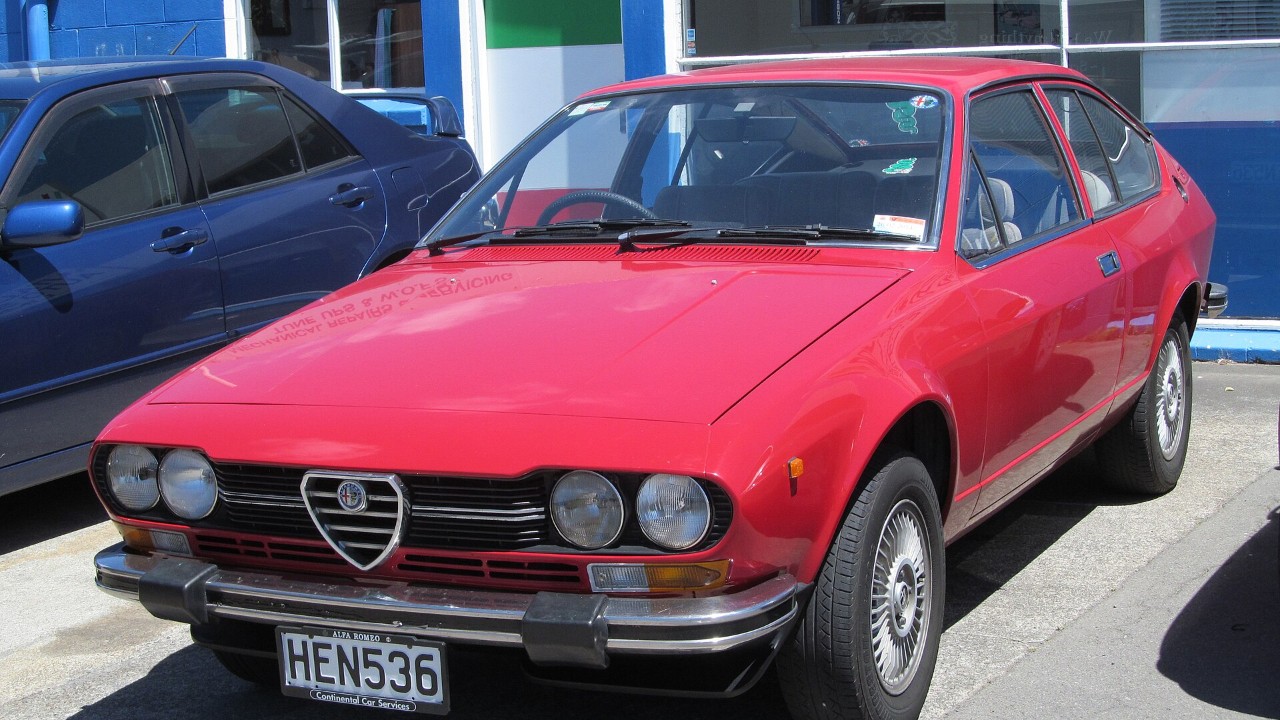
Giorgetto Giugiaro styled the Alfetta GTV at Italdesign as a two-door, four-seat fastback. Its bonnet line and tail lights echo the Alfa Romeo Montreal. Even so, its engineering was more interesting than its looks. Alfa put the clutch and gearbox at the rear, next to the differential, to balance the weight.
The rear suspension used a De Dion tube, and the rear brakes sat inboard beside the transaxle. That layout helps reduce unsprung weight, which helps both ride and grip. At first, the coupe launched in 1974 with a 1.8-liter engine. Then, from 1976, the GTV 2.0 used a 2.0-liter four rated at 122 PS, and a later version made 130 PS.
Alfa later dropped a V6 into the same body. In 1980, it released the GTV6 with a SOHC 2.5-liter V6 and Bosch L-Jetronic fuel injection.
In our view, the four-cylinder Alfetta GTV is the thinking driver’s Alfa. It is light, balanced and full of race-bred ideas, yet it has a proper back seat for two more people. If you shop for one, inspect the transaxle and check the body carefully for rust.
10. Maserati Coupe 4200 GT
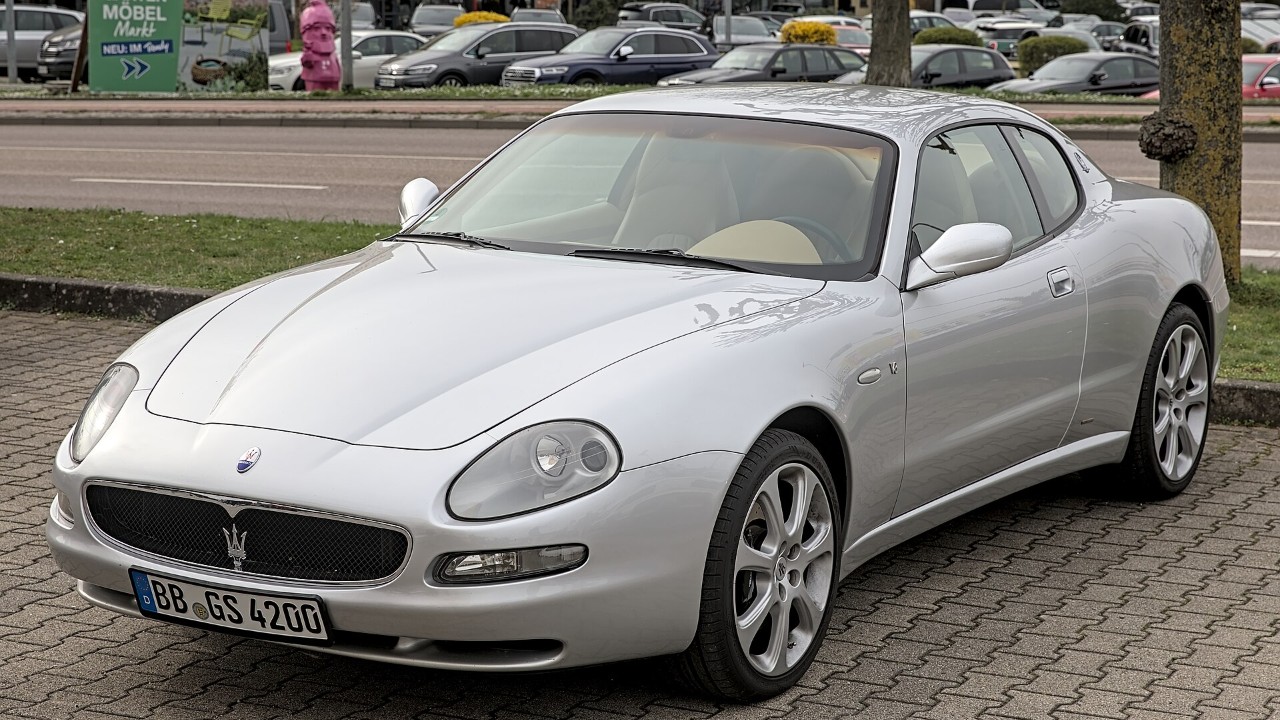
The Maserati Coupé arrived at the 2002 Detroit Auto Show, and it is often called the 4200 GT. Giorgetto Giugiaro of Italdesign designed it, using the 3200 GT as the starting point. However, the 3200’s boomerang-shaped taillights gave way to more conventional units. The Spyder reached U.S. buyers first in March 2002, and Coupé sales followed that May.
The heart of the car was a Ferrari-Maserati F136 V8 of 4,244 cc. In fact, it made 390 PS at 7,000 rpm and 450 Nm of torque. Most buyers chose the Cambiocorsa automated manual, built by Graziano, with Formula 1-style paddles. In fact, Cambiocorsa cars made up 11,409 of the 13,423 built.
Maserati built 6,449 Coupés, plus Spyders and GranSports, for 13,423 cars in total. Our list of underrated Maseratis covers more of the brand’s overlooked gems.
Our take: the 4200 GT is the Italian grand tourer we’d drive across a continent, since it pairs comfort with real speed. It sounds wonderful near its 7,000 rpm peak. Before you buy, have the Cambiocorsa clutch wear checked, and favor cars with full service records.
11. 1958 Abarth 750 GT Zagato
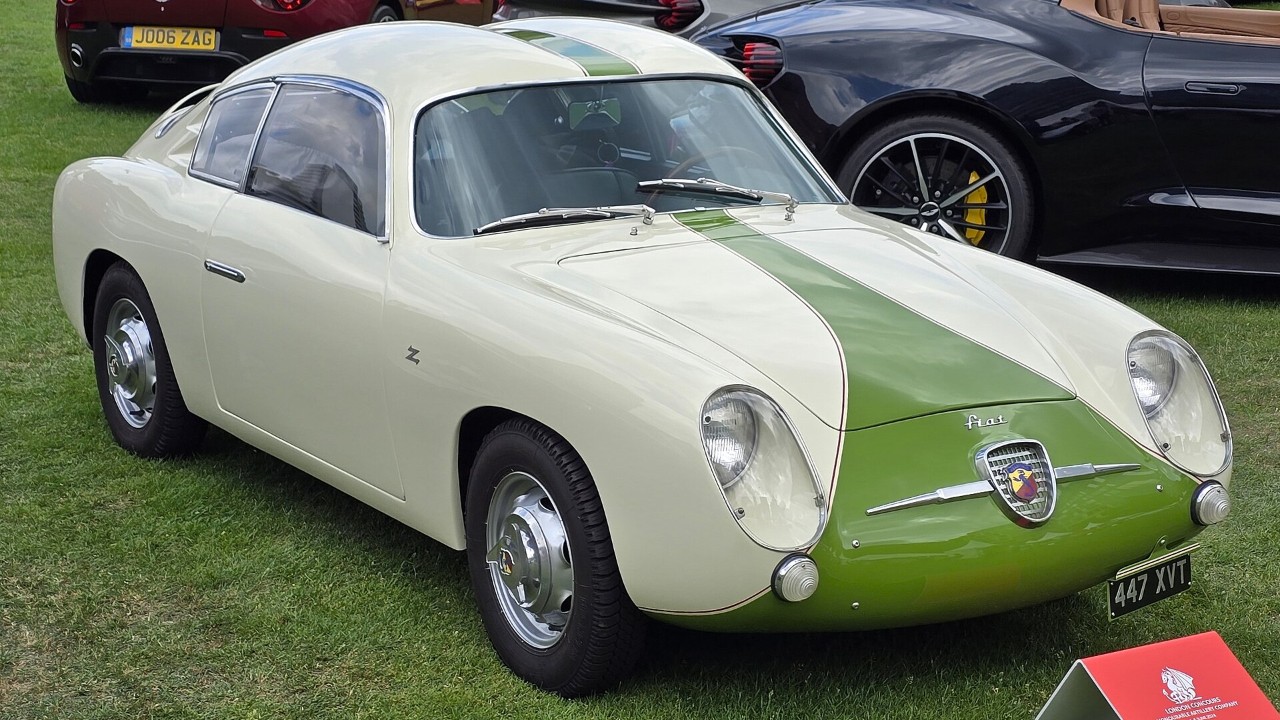
Abarth started with Fiat’s new 600 and turned it into a tiny racer for the road. According to RM Sotheby’s, Abarth bored and stroked the engine from 633 cc to 747 cc, with a modified camshaft and flywheel and a larger carburetor. The result made nearly 40 bhp and pushed the car past 80 mph.
Meanwhile, Zagato in Milan built the bodies. Because the roofline was so low, a normal-sized driver would have had little headroom. Zagato’s answer was two bulges in the roof, which gave the car its “Double Bubble” nickname.
Those bubbles became a Zagato signature on sporting coupes for years afterward. Meanwhile, RM lists the engine as an overhead-valve inline four, a simple recipe that Abarth tuned hard.
In our view, the 750 GT Zagato is the most charming car on this list. It is proof that an Italian sports car does not need a big engine to feel special. You sit low, the engine buzzes behind you and every corner becomes an event. For a reference point, RM Sotheby’s sold a 1960 example from the Elkhart Collection for $168,000.
12. 1973 Ferrari 365 GTB/4 Daytona
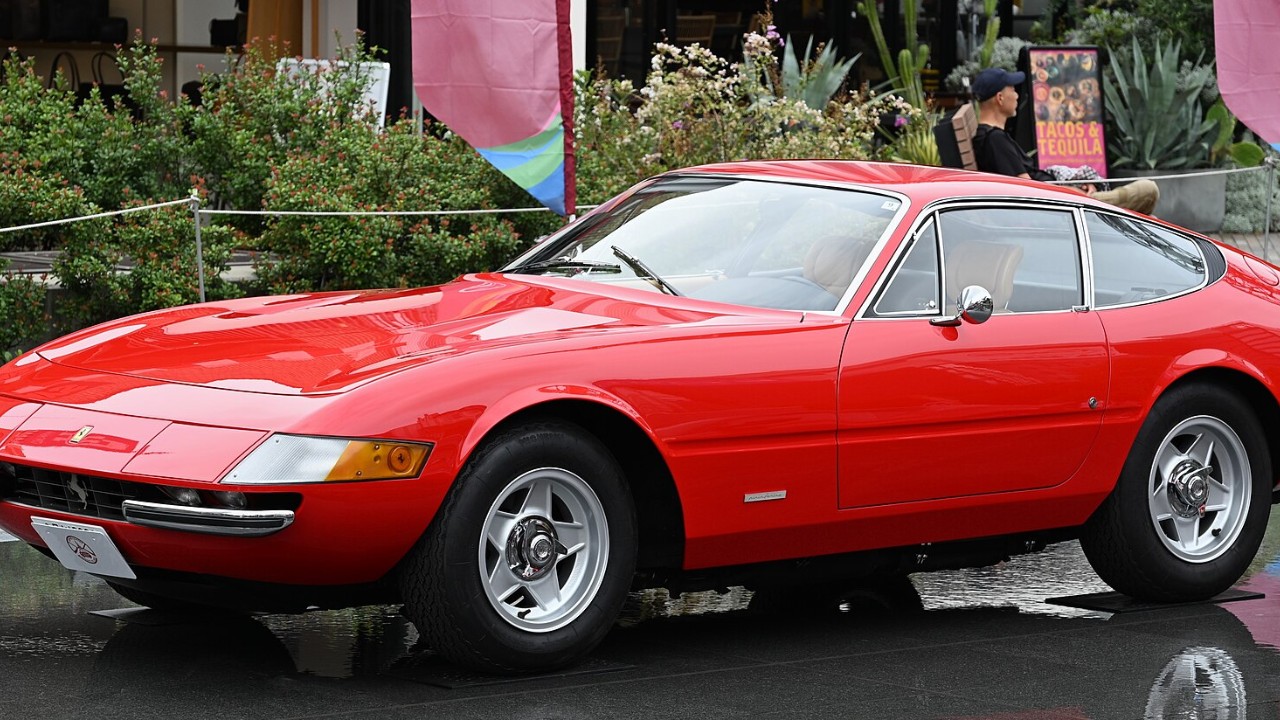
Ferrari introduced the 365 GTB/4 at the 1968 Paris Auto Salon as the replacement for the 275 GTB/4. However, the “Daytona” name was never official. Instead, the media reportedly applied it to mark Ferrari’s 1-2-3 finish at the 1967 24 Hours of Daytona.
Leonardo Fioravanti styled the car at Pininfarina, and a 4,390 cc V12 sat up front. That engine breathed through six Weber twin-choke 40 mm carburettors and made 352 PS at 7,500 rpm. Top speed reached 174 mph, and 0–60 mph took 5.4 seconds. Early cars had headlights behind an acrylic cover, but from 1971, a new U.S. safety rule brought retractable twin headlights.
A 1973 car therefore wears those pop-up lights. Ferrari built 1,284 coupes and 122 spiders, though the generally accepted total for the model is 1,406.
Our take: the Daytona is a high point of Ferrari’s front-engine V12 grand tourers, and it feels like one. The long nose, the sharp tail and that V12 make every drive an occasion. Our choice is a pop-up headlight coupe like this one, especially with a well-documented history.
More from Fast Lane Only