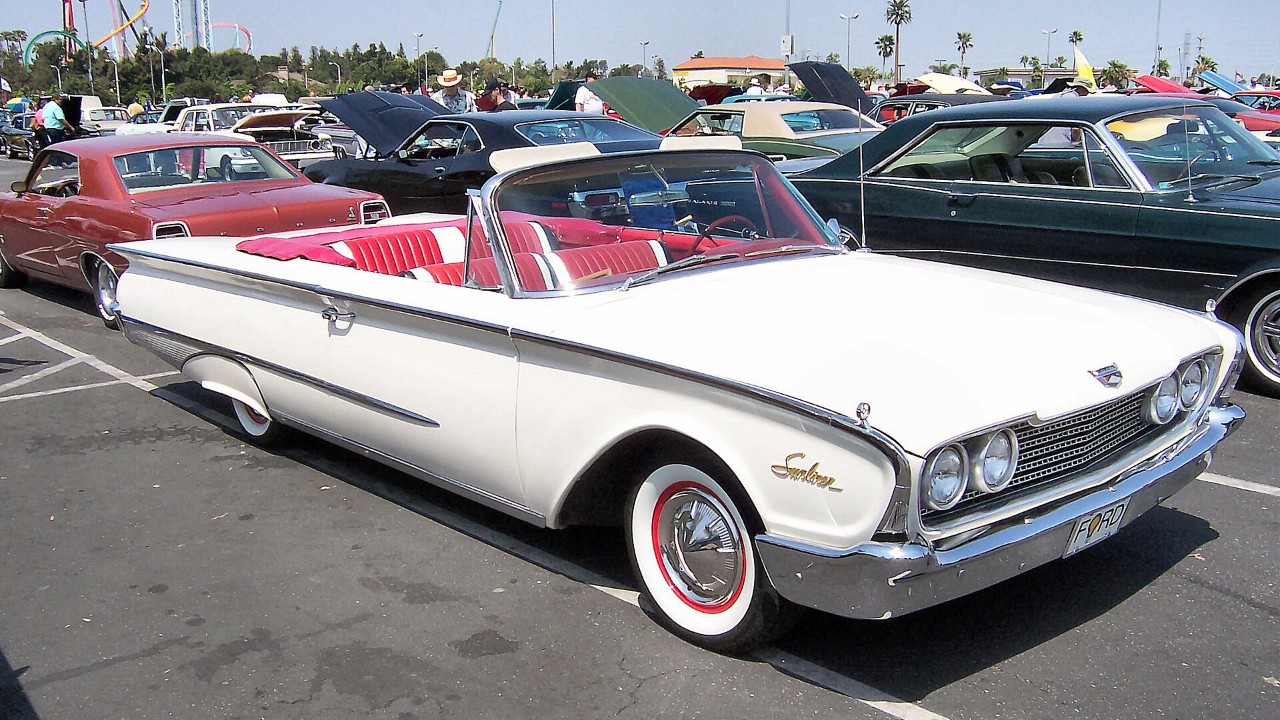
The 1960 Ford Galaxie Sunliner arrived on an all-new body, and Ford used that redesign only once. That one-year look is a good place to start a list about drop-tops that aged well. Some of these cars came from the big-chrome era. Others came from the boxy 1980s, when Detroit had almost given up on the convertible.
However, shine is not the same as fame. Plenty of open cars sold well, faded and then vanished from car shows. The ones that hold up are the cars with a clear idea behind them. That might be a wood-trimmed body, a hand-built roof or simply the last big droptop a maker ever sold.
So these are our picks, from the Galaxie Sunliner to a last-of-the-line Caprice. The years, engines and production counts come from period records, auction catalogs and model histories. The verdict that each one never lost its shine is our own opinion, and we explain it car by car.
1. 1960 Ford Galaxie Sunliner
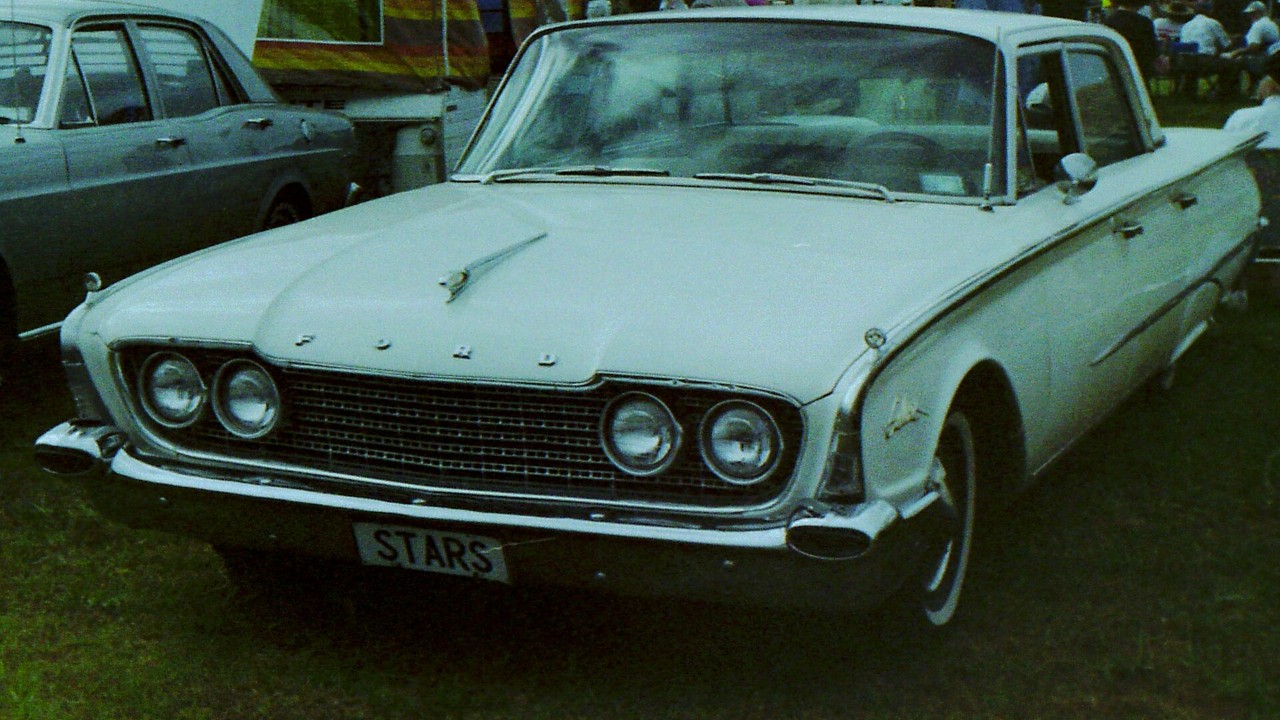
For 1960, Ford wrapped its full-size line in a longer, lower and wider body. The Galaxie Sunliner was the convertible version, and the name stayed on Ford’s big droptops through 1964. Yet the 1960 shape is the one that stands apart. It wore twin headlights in a scalloped nose, small curved fins and half-moon taillights.
That styling lasted a single model year. In addition, Ford moved the fuel filler to the center of the rear panel, an idea rivals later borrowed. RM Sotheby’s described all of this when it sold a Corinthian White 1960 Galaxie Sunliner at its Auburn Fall 2018 sale. That car had the 352 Interceptor V8, rated at 220 hp, with a two-speed Ford-O-Matic, and it brought $24,200.
Buyers who wanted more could order a midyear 352 rated at 360 hp. Ford also toyed with a Starlift roof for the Sunliner, but NASCAR banned it, and Ford built few, if any. Our take: a one-year design with a removable-roof footnote is exactly the kind of car that never gets old at a show. For another ragtop from this era, see our earlier list of rare convertibles from the 1950s and 1960s.
2. 1985 Chrysler LeBaron Town & Country Mark Cross convertible
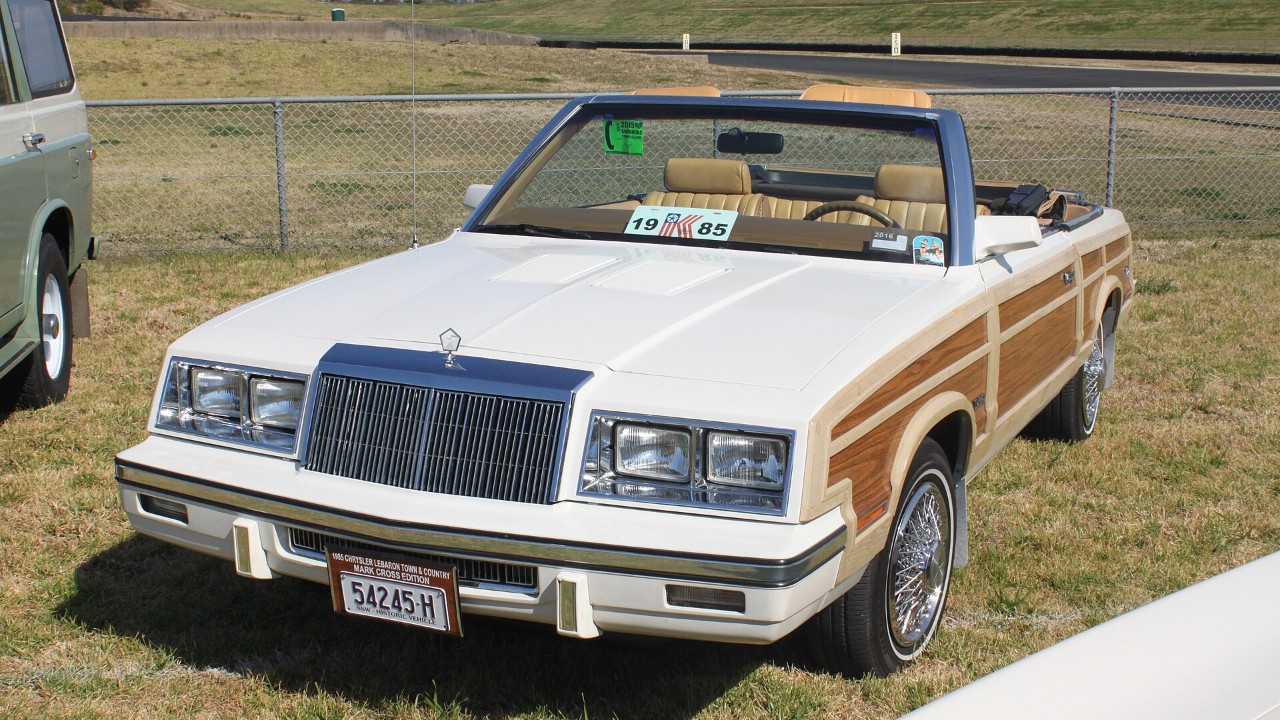
Chrysler brought the factory convertible back to Detroit in early 1982. The K-car LeBaron was the first factory-built domestic open car since the 1976 Cadillac Eldorado. A year later, Chrysler gave it a dressier twin. The Town & Country convertible added simulated wood paneling along the sides, a nod to the wood-bodied Town & Country of the 1940s.
That version was always the rare one. Chrysler built only 1,105 Town & Country convertibles from 1983 to 1986, while plain LeBaron convertibles ran to 16,475 in 1985 alone. In its later years, the Town & Country convertible could also carry the Mark Cross option package. With 1,105 cars spread over four model years, a Town & Country convertible turns up far less often than its plain sister.
In our view, this is the car that proves a K-car could have style. The wood strakes look like costume jewelry to some people. But next to a sea of beige sedans, they gave a modest front-drive platform real personality. Find a straight one with clean panels and you own a piece of Chrysler’s comeback, wrapped in the most 1980s trim imaginable.
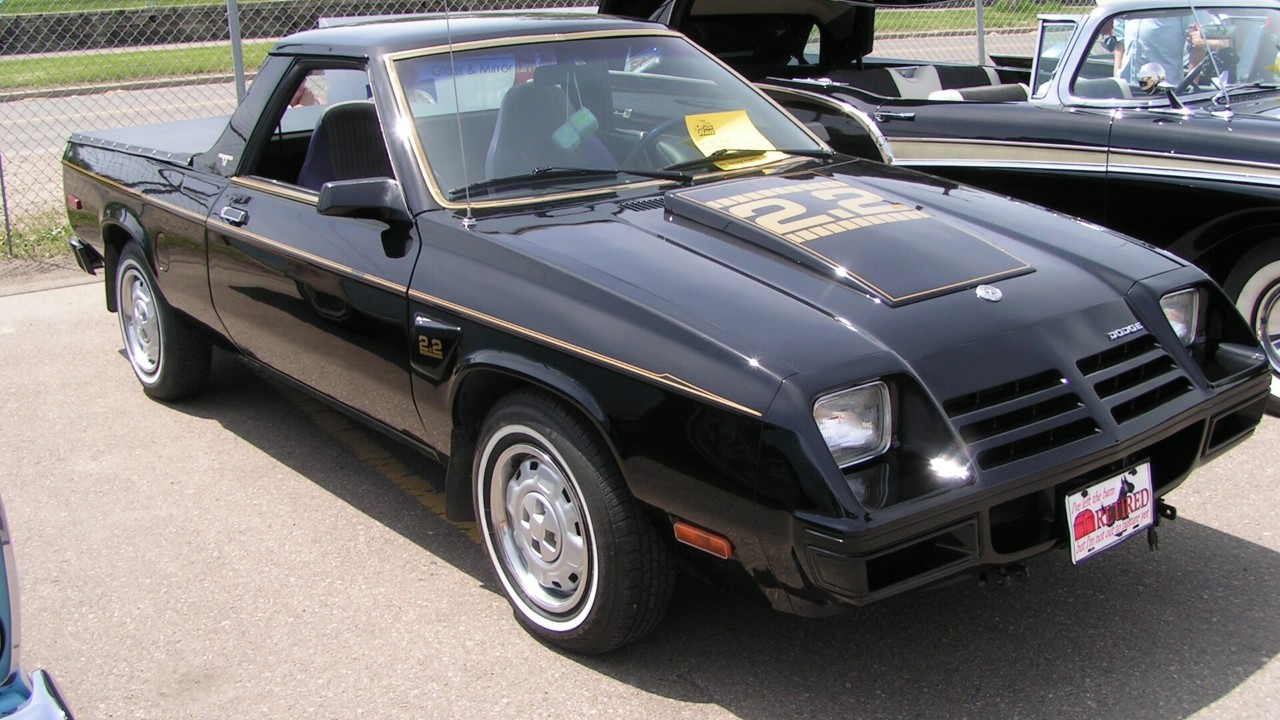
3. 1983 Dodge 400 convertible
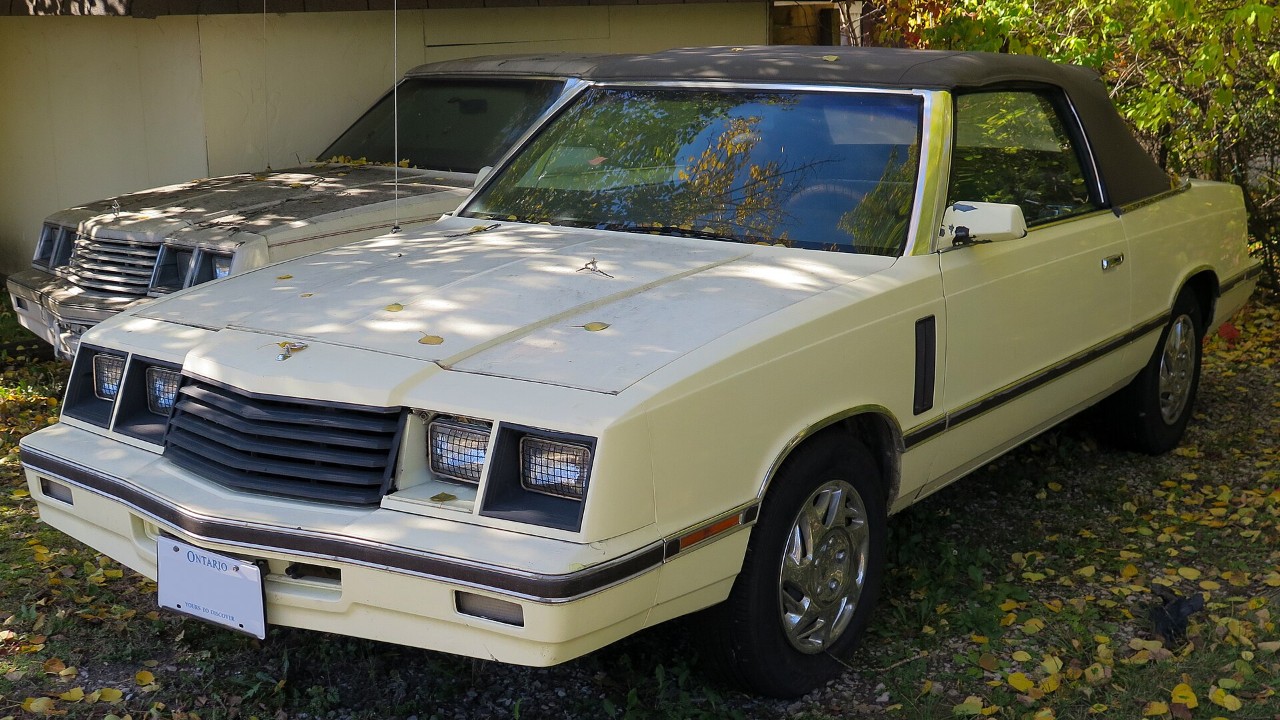
The Dodge 400 lived for just two model years, 1982 and 1983. Midway through 1982, Dodge added a convertible, and it was the brand’s first since the 1971 Challenger. An outside firm, Cars and Concepts, turned coupes into convertibles, and the finished car had no rear side windows at all.
Under the hood, the choice was simple. Every 400 convertible used the 2.6-liter four with an automatic, and the 2.2 offered in other 400s never went into the open car. For 1983, Dodge rated that engine at 93 hp. As a result, nobody bought one to win drag races. Instead, buyers wanted fresh air at a K-car price, and Dodge sold 4,888 convertibles in 1983, after 5,541 the year before. Across both years, that adds up to 10,429 open cars.
Then the name disappeared. For 1984, the coupe and convertible moved into the Dodge 600 line, so the 400 droptop became a short-lived curiosity. Our take: its blunt shape and blind rear quarters have aged into something charming. Because so few people remember the badge, a clean one draws more questions at a cruise night than many flashier cars do.
4. 1991 Buick Reatta convertible
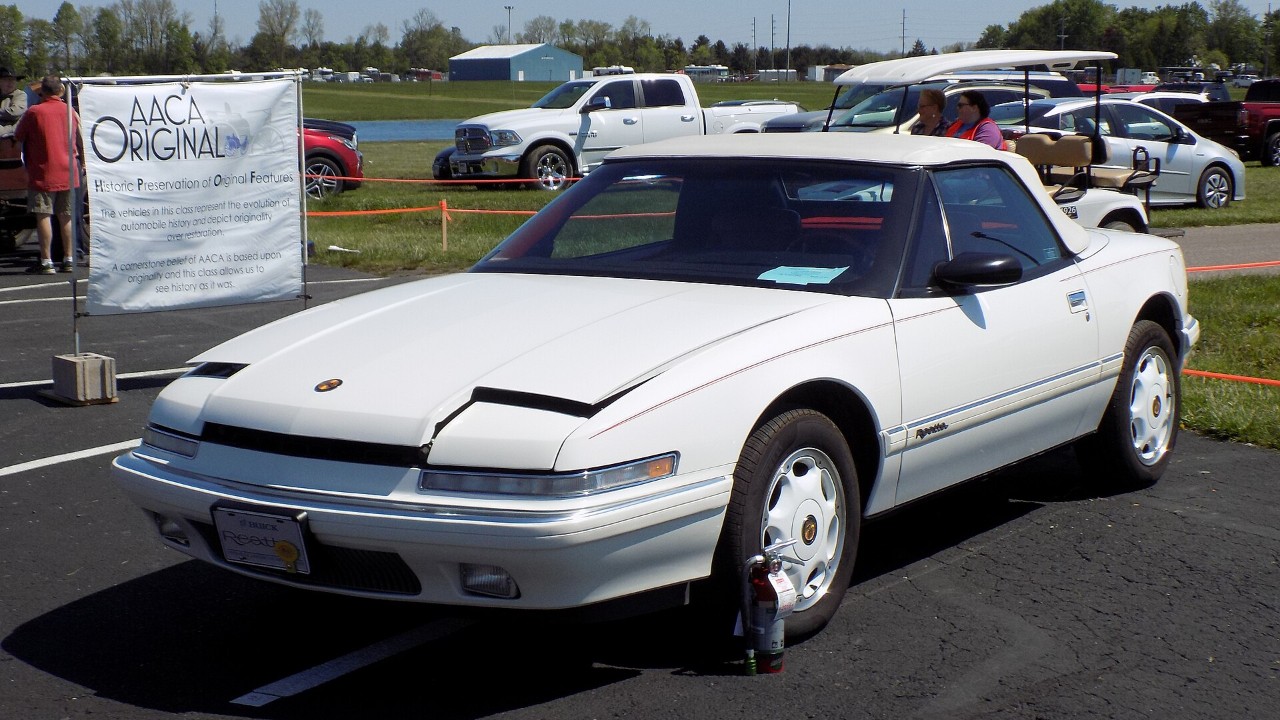
Buick’s two-seat Reatta started as a coupe in 1988, and the convertible did not arrive until 1990. American Specialty Cars designed its top. It was a manual roof in vinyl or cloth, with a glass rear window and an electric defroster. A rigid tonneau cover hid the folded top for a clean look.
For 1991, Buick added power pull-down motors for the rear bow. It also switched to the L27 version of its 3.8-liter V6. However, that improved car had almost no time on sale. Buick built only 305 Reatta convertibles for 1991, compared with 2,132 for 1990. Then the Lansing Craft Centre ended all Reatta production on May 10, 1991. Total Reatta output, coupes included, came to 21,751 cars.
We think the 1991 car is the one to want. It has the better top hardware and the newer engine, and it is the scarcest Reatta of all. The long hood and short deck also look far better with the roof down than most people expect from a front-drive Buick. In our view, that rarity and that silhouette keep it fresh. If you shop for one, the 1991 top motors are worth seeking out, because they make the roof easier to live with.
5. 1973 Pontiac Grand Ville convertible
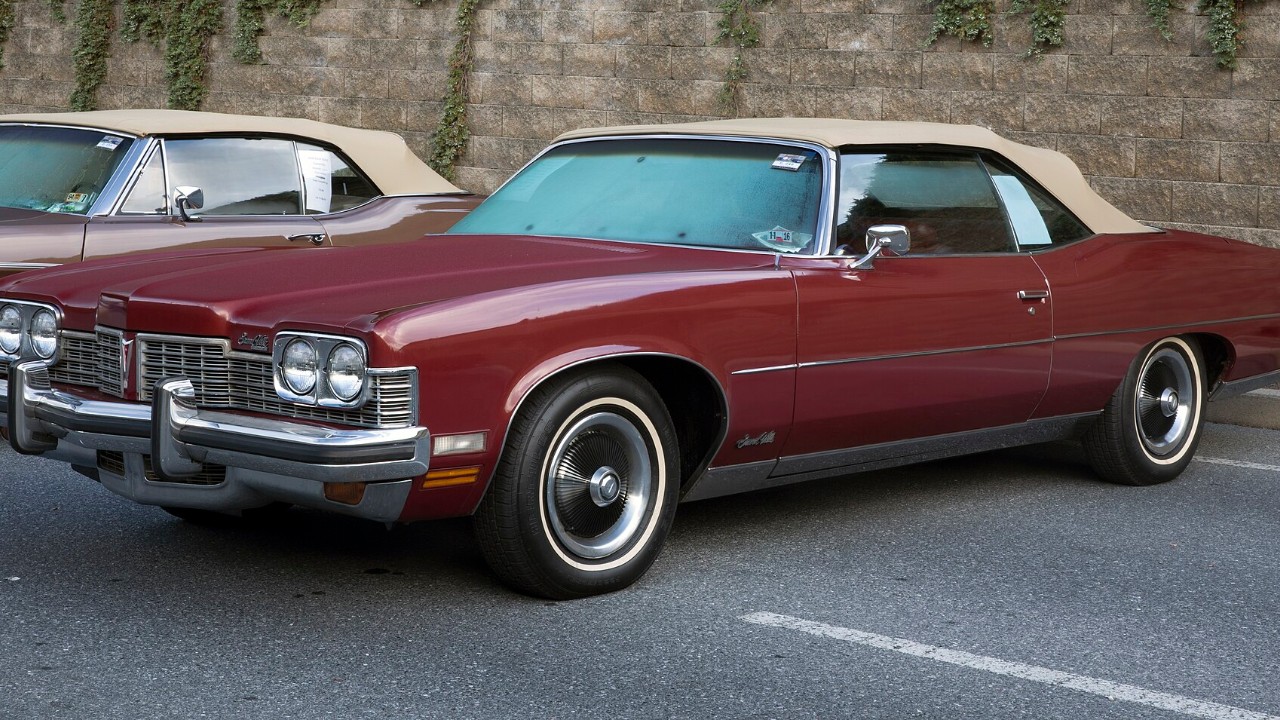
Pontiac sold the Grand Ville from 1971 to 1975. From 1973 on, it was also the only big convertible Pontiac sold. That made the 1973 car something of a flagship by default, and buyers noticed. Production jumped to 4,447 convertibles that year, up from 2,213 in 1972. Across five years, Pontiac built 15,963 Grand Ville convertibles, and 1975 was the busiest year at 4,519.
The standard engine on Grand Ville models was the 455-cubic-inch V8. In addition, the 1973 cars began a run of rear fender skirts that lasted through 1975. Those skirts stretch the body visually. With the top down, the car looks as long as a city block, which is half the appeal. If you restore one, keep the skirts.
The Grand Ville also has a place in history. When Pontiac built its last 1975 convertible, the company would not offer another until 1983. Our take: the 1973 car captures that final, unapologetic moment, before the gas crisis reshaped big cars. A clean one with the 455 and skirts remains, in our opinion, one of the most relaxed ways to spend a summer evening.
6. 1984 Ford Mustang GT Turbo convertible
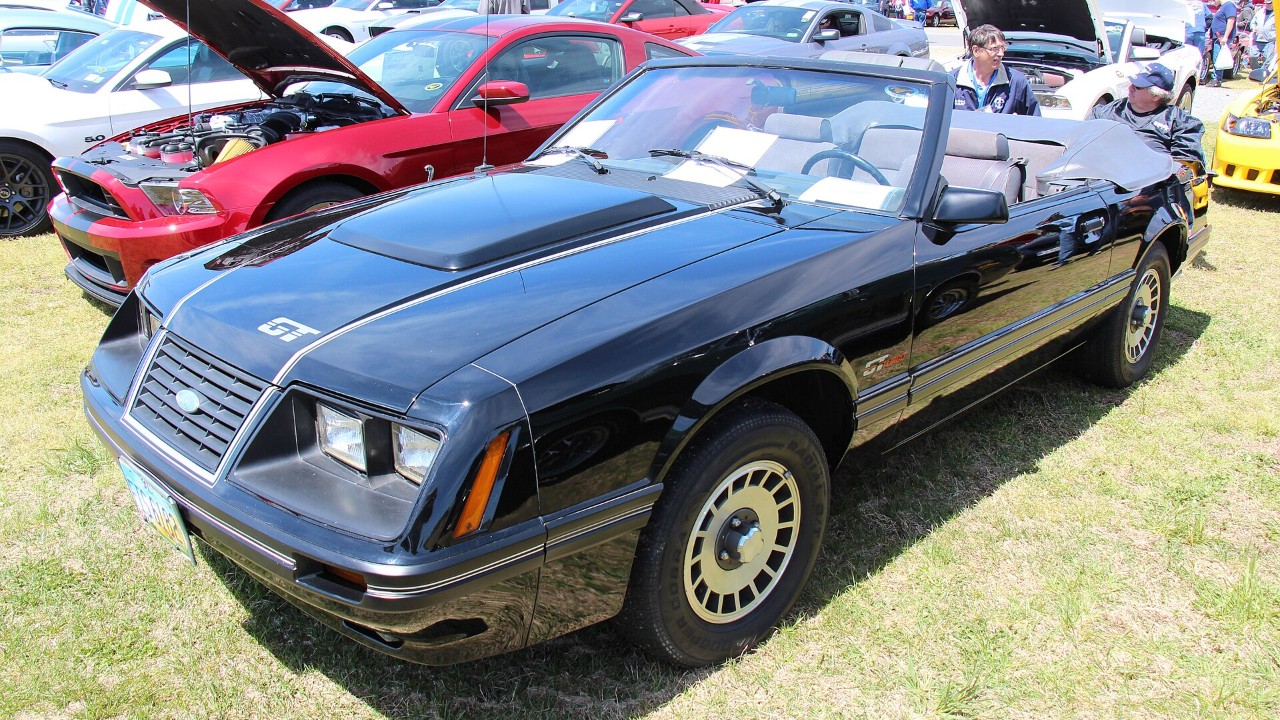
Most people remember the 1980s Mustang GT for its V8. But in 1984, Ford also sold a GT with a turbocharged 2.3-liter four. That engine had fuel injection and its own GT Turbo fender badges. According to one Mustang reference, Ford rated it at 145 hp and 180 lb-ft of torque.
Ford offered that turbo GT as a convertible too. Holley featured a 1984 Mustang GT Turbo convertible owned by Dan Clark at Ford Festival 2022 and called it a rare survivor. For context, Ford built 6,256 GT convertibles in 1984, a figure that includes both V8 and turbo cars.
Why does it make our list? Because it is an honest oddball. Ford sold a four-cylinder GT right beside the V8 car, and in our view that choice says a lot about how unsure the early 1980s felt. In our view, a turbo droptop with its original badges tells the story of that uncertain decade better than any V8 Mustang can. If you find one, check that the turbo badges and four-cylinder drivetrain are original, since that is the whole point of the car.
7. 1968 Oldsmobile Delmont 88 convertible
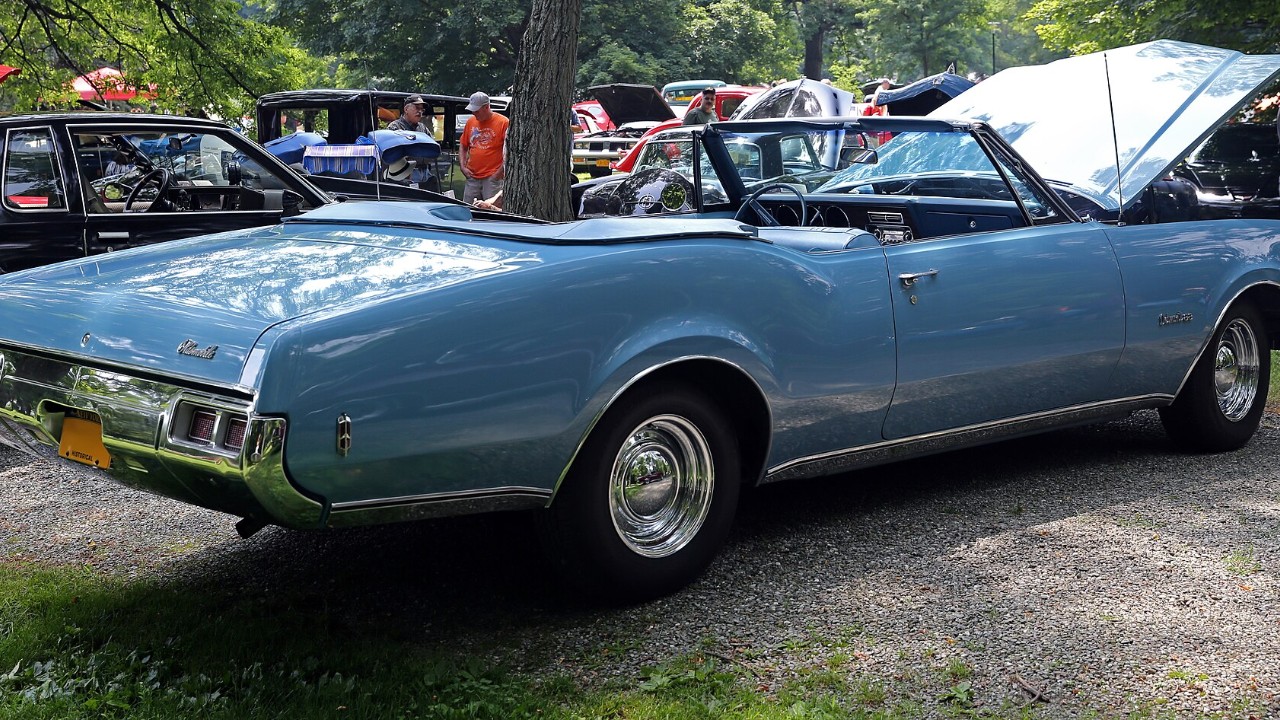
Oldsmobile used the Delmont 88 name for only two model years. It replaced the Jetstar and Dynamic names for 1967, and Olds dropped it after 1968. In 1967, a Delmont convertible started at $3,462. According to Curbside Classic, it was the price leader of the 88 series, below the Delta 88.
For 1968, the engines changed. The standard Delmont V8 became a new 350 rated at 250 gross hp, with a 310-hp version on the option list. A new 455 was also available. Barn Finds reported that the convertible it covered was one of only 2,800 built in 1968. By comparison, the pricier Ninety-Eight convertible reached 3,900 that year, so the cheaper Delmont was the scarcer open Olds.
Our take: the name is clumsy, but the car is not. It shares the long, clean sheet metal of its pricier siblings, so you get a full-size Olds droptop without the luxury trim. Since most people have never heard of a Delmont, a good one feels like a discovery. In our view, that surprise is a kind of shine that never wears off.
8. 1991 Volkswagen Golf Cabriolet
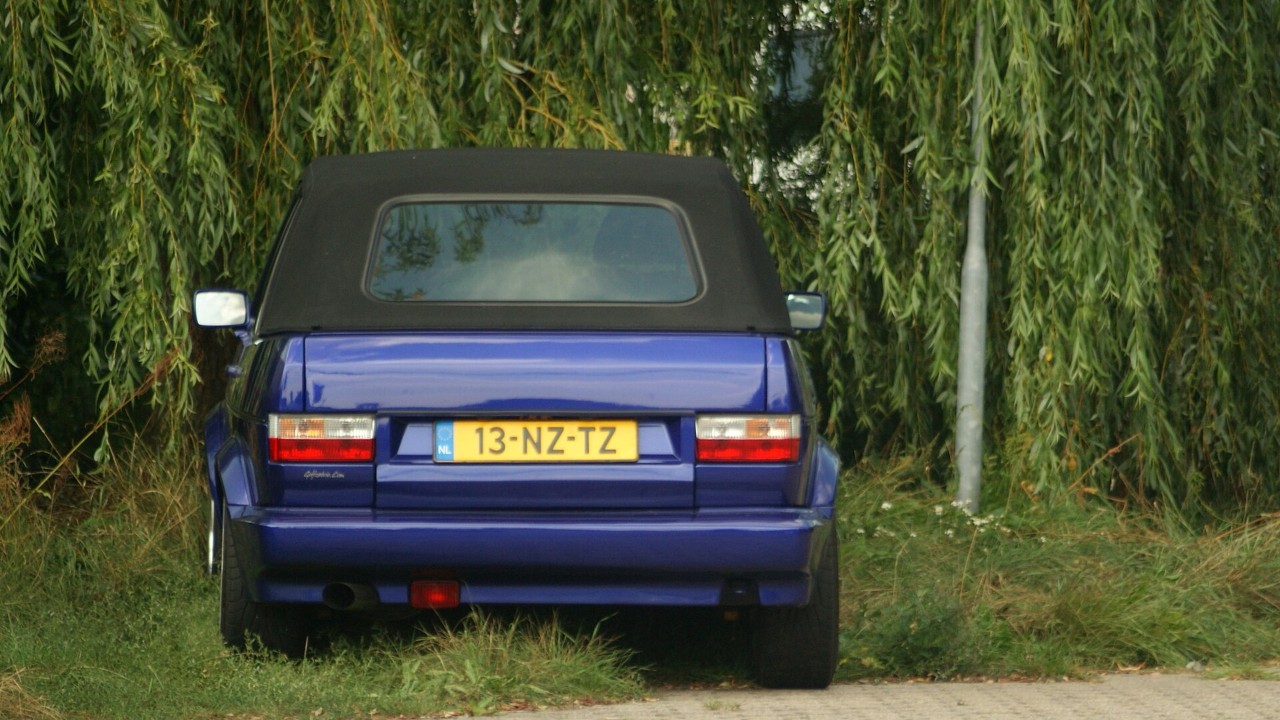
Volkswagen showed the first Golf Cabriolet at the Geneva show in February 1979. Production started that June, and VW kept building the same basic car until 1993. According to Volkswagen’s own history, it was the first car in its class with a fixed rollover bar.
That bar gave the car its look, and it also made the open body feel solid. More importantly, the formula worked. VW built 388,522 of these first-generation cabriolets, and its history credits nimble, economical engines and front-wheel drive for much of the appeal. That total beat the almost 332,000 Beetle Cabriolets, which Karmann had kept building in Osnabrück until January 1980.
So a 1991 car comes from the very end of a 14-year run. By then, the boxy shape looked old next to newer rivals, yet buyers kept choosing it. In our view, that is the best proof of shine there is. The upright windshield, the bar and the bulky folded top are part of the charm. Find a rust-free one and it remains one of the friendliest open cars of its era, and a late car with a good top is our pick.
9. 1965 Ford Galaxie 500 XL convertible
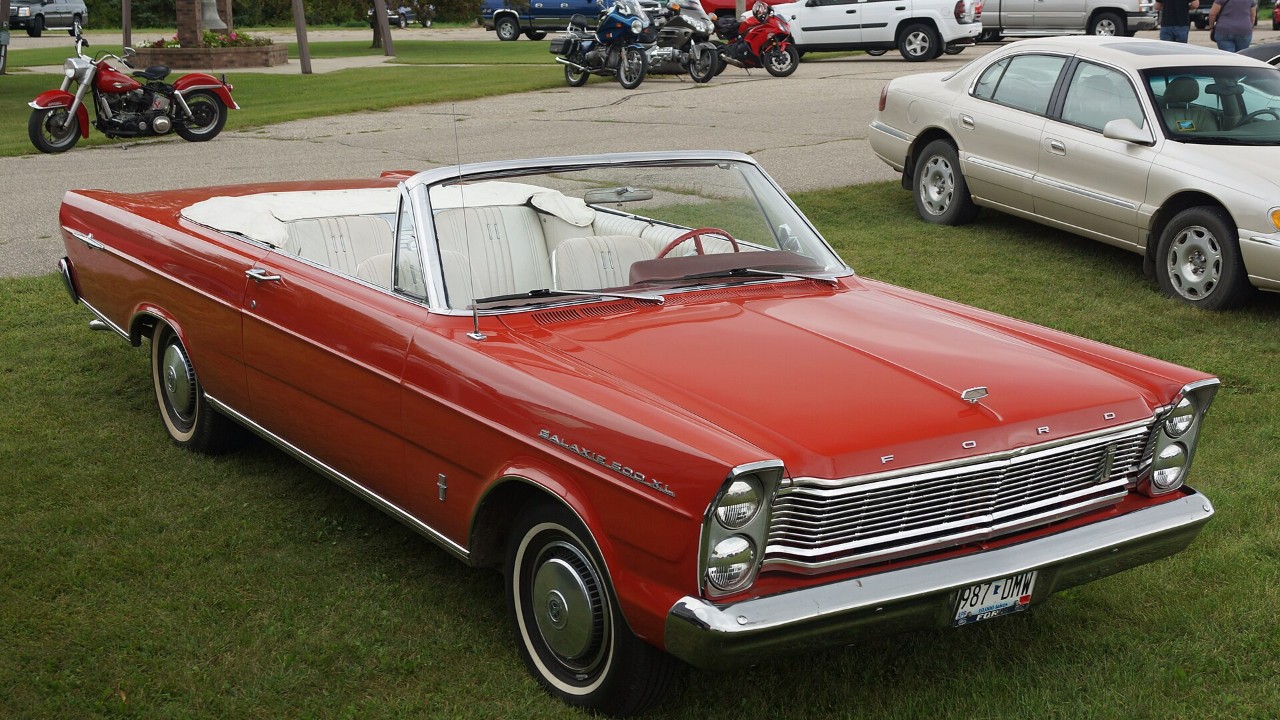
The XL was the sporty top of the 1965 Galaxie range. It came with bucket seats and a floor-mounted shift lever. Up front, stacked dual headlights and a fine horizontal grille gave the car a new face. Also, 1965 brought the first coil-spring rear suspension to the big Ford.
According to Old Cars Weekly, Ford built 9,849 Galaxie 500 XL convertibles for 1965. The base price was $3,426. A 289 V8 rated at 200 hp came standard, while a 300-hp 390 cost $246 more. The car in that story belongs to Russ and Sandy Kuenstler, and Sandy calls it her favorite. Closed XL models totaled 28,141, so the convertible made up roughly a quarter of XL production.
In our view, the 1965 XL is the sweet spot for big Ford convertibles. It has the crisp new body, the better ride and the bucket-seat cabin, without later bulk. If you want one, look for the 390, since it suits the car’s size. To read about how a Galaxie sibling surprised people a year later, see how the 1966 Galaxie 500 delivered big-block performance.
10. 1975 Chevrolet Caprice Classic convertible
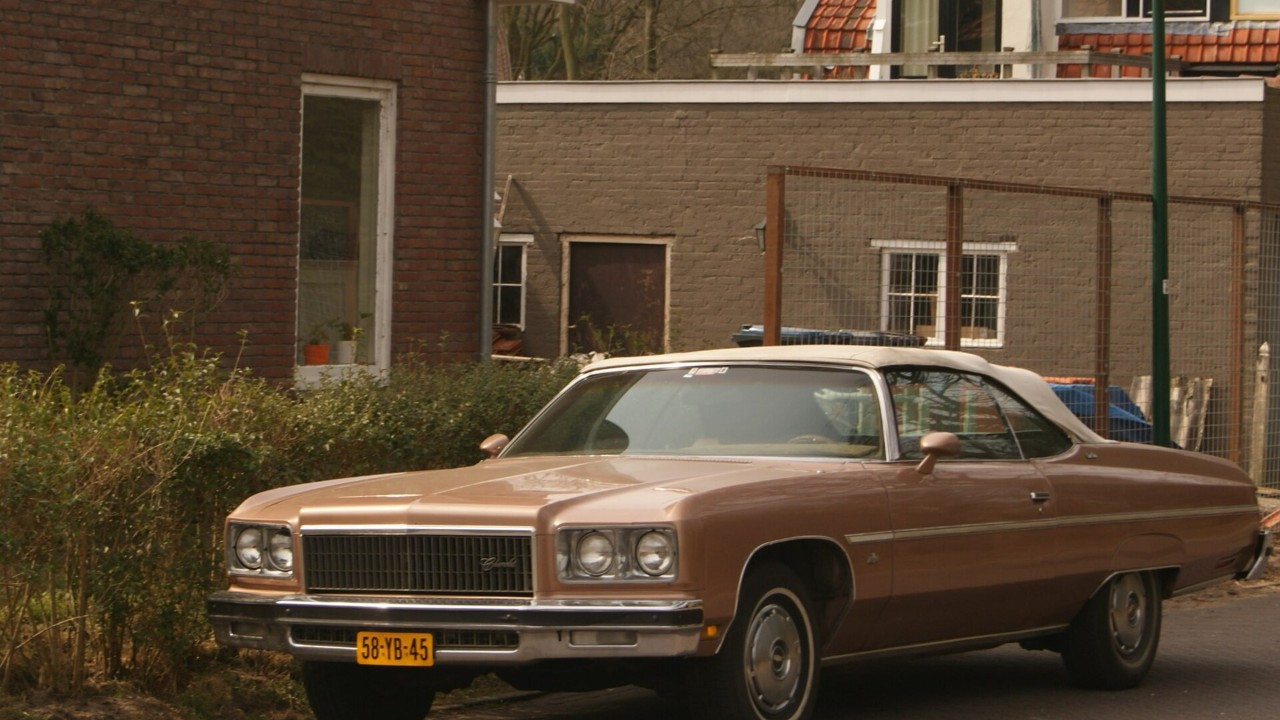
Chevrolet moved its full-size convertible from the Impala line to the Caprice for 1973. Two years later, Chevrolet dropped the open Caprice. The 1975 Caprice Classic convertible was the last of its kind, and Chevrolet sold about 8,350 of them that year.
The standard engine was a 350 V8 rated at 145 hp. Options included a 400 rated at 175 hp and, outside California, a 454 rated at 215 hp. California cars got a different base engine, a four-barrel 350 rated at 155 hp. Buyers could also choose 50/50 front seating. Those numbers look low today. Still, the big-block car moves with an easy, heavy shove that suits a boulevard cruiser.
Our take: this is the ending of an era you can actually drive. It is big, soft and comfortable with the top down, and it has no pretense about being sporty. For a look at how the Caprice name started out, read our story on how the 1966 Chevrolet Caprice changed expectations. Its last year ended with about 8,350 Caprice Classic convertibles sold, the final count for Chevrolet’s full-size ragtop of that era.
More from Fast Lane Only