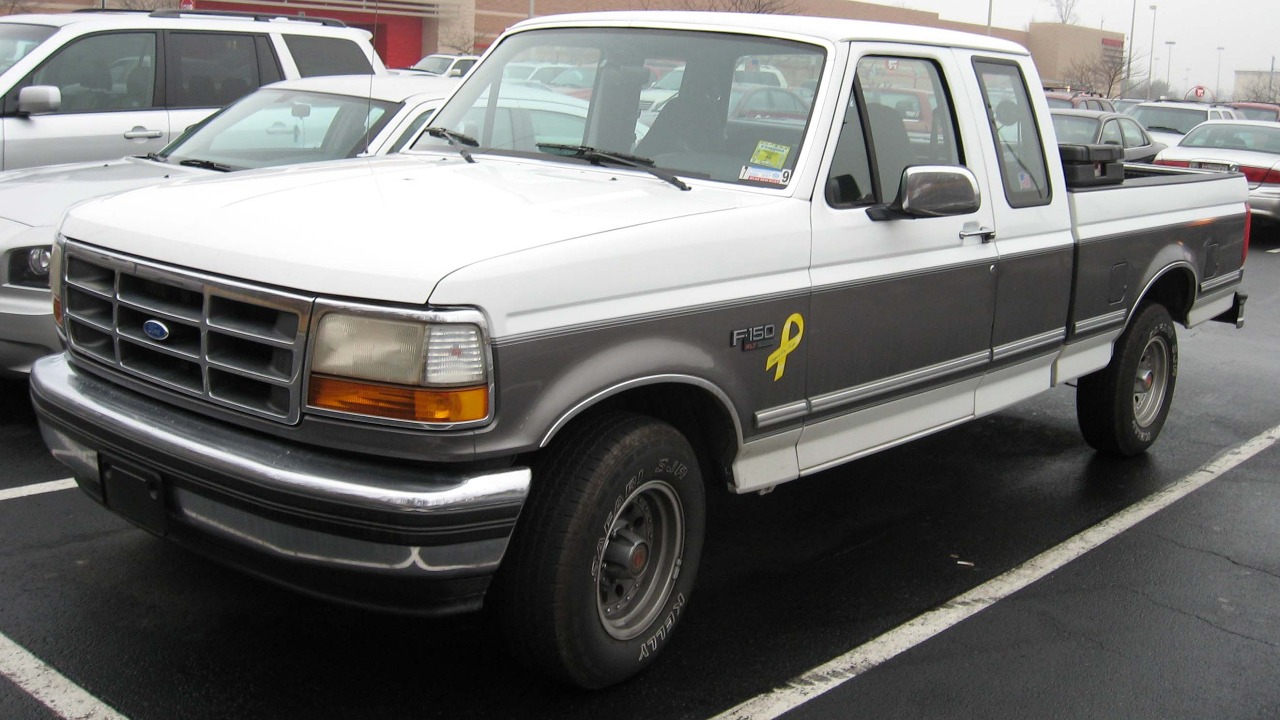
Among Ford loyalists, few debates are as intense as the argument over which F-Series generation stands at the top of the heap. The ninth-generation trucks, built in the first half of the 1990s, have quietly shifted from used workhorses to cult favorites, prized for their mix of old-school toughness and emerging modern comfort. The question is no longer whether they are desirable, but whether these so-called OBS models represent the high point of Ford truck engineering and character.
To answer that, it is necessary to look beyond nostalgia and examine how these trucks were designed, how they drive, how they hold up, and how they compare with both earlier steel-bodied work rigs and later aluminum-intensive, tech-heavy pickups. The evidence from owners, enthusiasts, and analysts suggests that the ninth-generation F-Series may not be perfect, but they come remarkably close to the ideal many truck buyers still have in mind.
The OBS formula: evolution, not reinvention
The ninth-generation F-Series did not arrive as a clean-sheet revolution, but as what enthusiasts describe as an evolution of the seventh and eighth generations rather than a completely new truck. That continuity meant familiar ladder-frame toughness and straightforward mechanical layouts, wrapped in a smoother, more aerodynamic body that still looked unapologetically like a truck. The 1992 to 1996 Ford F-150 and its heavier-duty siblings kept the square-shouldered stance that buyers expected, while softening the edges just enough to feel modern without losing the Old Body Style identity that later fans would celebrate.
That balance between refinement and tradition is central to the ninth generation’s reputation. Commenters who have lived with these trucks for decades describe them as “Hands down the most comfortable truck I’ve ever driven,” praising supportive seats, clear sightlines and details such as Equal size dual fuel tanks on some models that made long-distance driving more practical. At the same time, owners still talk about climbing into a 1996 Ford F150 XL that a family bought new and kept for more than ten years before passing it along, a pattern that underscores how these trucks were built to stay in service rather than cycle quickly to the next redesign.
Powertrain depth and the 7.3 mystique
Under the hood, the ninth-generation F-Series offered a powertrain menu that has aged better than many of its successors. The venerable 4.9 liter inline-six, often referred to as the “300 six,” delivered modest output but legendary durability, with one owner recalling a 1996 F-150 with the 300 six and a 5 speed manual that, while light duty and limited in cargo capacity, proved simple and dependable to operate. Enthusiasts like James Pittman point to that 4.9 as a key reason these trucks are “Easy to work on,” highlighting the straightforward access and lack of fragile add-ons that can complicate repairs on newer models.
For buyers who wanted more power, Ford refined its small-block V8s in this era. Powertrain updates included a 5.0 liter V8 whose output was increased to 210 horsepower, while the 5.8-li engine gave heavier half-ton and three-quarter-ton models the torque they needed for towing and hauling. At the top of the range, the 7.3 liter Power Stroke diesel in the F-250 and F-350 has taken on near-mythic status, with one detailed video review describing a 1997 Ford F250 with a 7.3 diesel as “quite possibly the best truck of all time.” In the same discussion, Comments from enthusiasts argue that the 9th-gen Power Stroke was extremely close to the best truck ever built, comparing it favorably even with the later 99 to 03 7.3 trucks that many consider almost the perfect truck, a testament to how well the ninth-generation chassis and driveline worked together.
Durability, maintenance, and real-world reliability
Any claim that a truck generation is the “greatest” has to be tested against how these vehicles survive decades of real use. Here, the ninth-generation F-150 and its siblings present a compelling record. Ownership Notes from a detailed analysis of the 1992 to 1996 Ford F-150 Base model describe robust construction and dependable mechanicals, with Routine maintenance such as oil changes every 3,000 to 5,000 miles generally sufficient to keep the trucks in good health. That kind of predictable upkeep, rather than constant troubleshooting of complex systems, is a major part of their appeal to buyers who still use them as daily drivers or work rigs.
Individual stories reinforce that statistical picture. One long-term owner recounts riding off the lot in a new 1996 Ford F150 XL purchased by a parent, who then drove it for the first ten years before handing it down, illustrating how these trucks often stayed in the same family for extended periods. Another driver on a truck forum notes that a ninth-generation F-Series was “Hands down the most comfortable truck I’ve ever driven” and reports still having it to this day, a simple but powerful endorsement of both durability and day-to-day livability. While no vehicle is free of issues, the absence of chronic, generation-defining failures in the sources, especially compared with later engines that suffered from problems such as spark plug thread failures on some Heads in 99 and newer modular V8s, strengthens the case that the ninth generation hit a sweet spot for reliability.
Driving character, usability, and owner affection
Beyond hard numbers, the ninth-generation F-Series has earned a level of emotional loyalty that newer trucks sometimes struggle to match. Enthusiasts frequently cite the styling, with James Pittman saying he likes the look and ranking it just behind his first favorite, the 80’s bullnose era, which places the OBS trucks in rarefied company among Ford’s most iconic designs. The squared-off yet slightly rounded front end, simple grille treatments and unfussy body lines give these trucks a timeless quality that has aged more gracefully than some of the more aggressively styled later generations.
On the road and on the job, owners describe a blend of capability and simplicity that is increasingly hard to find. Drivers who regularly trek through snow or gravel praise how a 1996 Ford F-150 confidently handles such conditions, highlighting secure traction, predictable steering and a solid, rattle-free structure even after years of use. Others emphasize how easy it is to live with these trucks day to day, from the straightforward manual controls to the lack of intrusive electronics. That usability extends to the garage as well, where the 4.9 and other engines in the lineup are regarded as Easy to work on, a trait that keeps maintenance costs manageable and encourages owners to keep these trucks on the road rather than replacing them at the first sign of trouble.
How the ninth generation stacks up against other F-Series eras
To judge whether the ninth-generation F-Series is truly the greatest, it has to be compared with both earlier and later Ford trucks. Modern rankings that evaluate all 14 generations of the F-150 place the 9th Generation (1992 to 1996) in an S Tier, describing the OBS (Old Body Style) era as one of the most beloved in Ford’s lineup. That assessment credits its 90s nostalgia, rugged simplicity and strong mechanical reputation, and it aligns with the way collectors and enthusiasts have driven up values for clean examples of these trucks. Separate analysis of why the 1992 to 1996 Ford F-150 is considered The Ford brand’s most collectible classic pickup notes that the F-150 has been the best-selling vehicle in America for decades, and argues that the current success of the full-size pickup segment can be traced in part to the formula refined in this generation.
More from Fast Lane Only