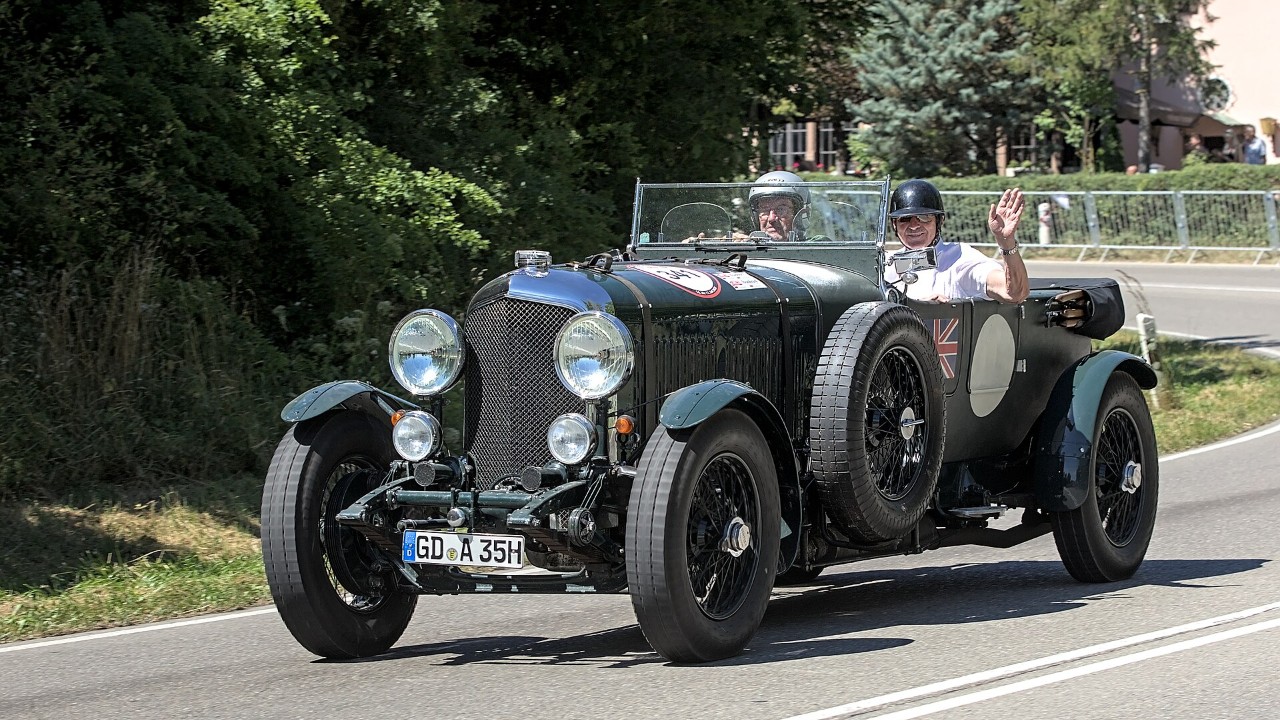
The Bentley 8 Litre was the last car W.O. Bentley took from drawing board to series production, and the company finished only 100 of them. Its big six-cylinder engine made about 220 hp. However, the car arrived just as the money ran out, and the cost of building it helped push Bentley Motors into receivership.
That makes the 8 Litre two things at once. It is the grandest car of the original Cricklewood company. It is also part of the reason that company stopped being independent.
Bentley never meant it as a racer. Instead, W.O. wanted a large, fast and silent luxury car that could carry heavy coachwork without strain.
Why W.O. built the Bentley 8 Litre
By the late 1920s, Bentley Motors had a reputation and very little cash. According to the German classic-car magazine Secret Classics, cars first left the Cricklewood works in London in 1919. Yet the first model, the 3 Litre, did not earn enough to keep the firm afloat.
Then, in 1926, the wealthy racer Woolf Barnato invested and became managing director. W.O. stayed on as chief developer. Even so, the company kept losing money, Secret Classics reports.
Meanwhile, W.O. had a design problem of his own. He disliked the supercharged “Blower” Bentleys, and the magazine describes the 8 Litre as his answer to them. Rather than force more air into a smaller engine, he simply built a bigger one.
At the car’s presentation, W.O. put his goal plainly. “I have always wanted to produce a dead silent 100-mph car, and now I think we have done it,” he said, as quoted by Secret Classics.
The engine and chassis by the numbers
Under the long hood sat an inline six of 7,983 cc, rounded up to eight liters for the name. Secret Classics notes that it used twin ignition. In addition, RM Sotheby’s model notes describe it as a single-overhead-cam design breathing through dual SU carburetors.
Both sources put output at about 220 hp. Power went to the rear wheels through a dry single-plate clutch and a four-speed manual gearbox, according to Secret Classics. RM Sotheby’s adds that servo-assisted drum brakes stopped all four wheels.
The car was also huge. RM’s catalog calls it “over 20 feet long and as tall as a man.” Even so, the auction house says the 8 Litre was “capable of 100 mph,” heavy body and all.
Bentley offered two chassis lengths. Secret Classics gives the long wheelbase as 3,963.4 mm and says it could top 160 km/h, or about 99 mph. The short chassis measured 3,658.6 mm. That magazine also credits the short car with reaching 200 km/h, though it is the only source here to give that figure.
Only 100 built, and why the plan fell short
Bentley had bigger plans. According to Secret Classics, the company planned 150 cars and made and stocked parts for that number. Barnato then diverted 50 of those chassis to the smaller 4 Litre.
As a result, the final count stopped at 100. The magazine breaks it down by year: five in 1930, 62 in 1931 and 33 in 1932. It also splits them by length, with 65 long-wheelbase cars and 35 short ones.
Coachwork varied from car to car. Secret Classics says only about 25 got open bodies. The rest carried saloons or touring coupés. Later, owners rebodied many cars as open tourers, which made the surviving original saloons all the more prized.
The receivership and the Rolls-Royce sale
Here the money ran out. RM Sotheby’s states it directly: only 100 chassis were completed before “the sheer cost of developing and building such a machine” drove the company into receivership.
Secret Classics fills in who pulled the plug. The firm’s main creditor, the London Life Assurance Company, looked for a buyer in 1931. It found one in Rolls-Royce. By the time of that sale, Bentley Motors had delivered 3,051 chassis and complete cars across four model series, the magazine says.
Still, the 8 Litre did not stop the day the company changed hands. Its year-by-year figures show 33 cars completed in 1932, after the Rolls-Royce purchase. In other words, part of the run came out of a company that no longer belonged to its founder.
That is also why RM’s catalog calls the 8 Litre “the last of the ‘W.O.s.’” After it, Bentleys would come from Rolls-Royce.
W.O.’s own car came home
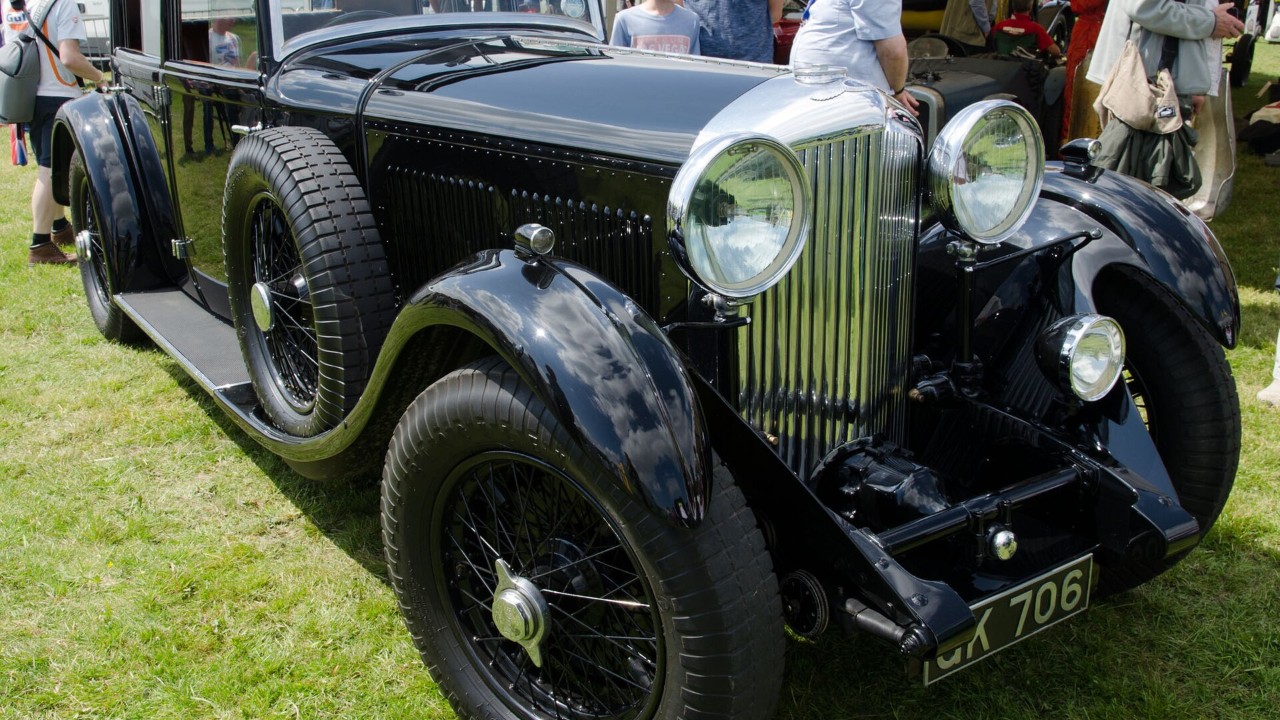
One Bentley 8 Litre has a better story than the rest. According to Secret Classics, the second car built served as W.O. Bentley’s own company car. It wore a saloon body by H.J. Mulliner on the short chassis, and it still carries its original UK registration, GK706.
W.O. sold it in 1931. Then, about 75 years later, Bentley bought it back and gave it a light restoration. During that work, the factory swapped the crankshaft for a preserved original spare.
Bentley found a use for the old part, too. Slices of the removed crankshaft became trim inlays in the limited Mulsanne W.O. Bentley Edition, Secret Classics reports.
Where the 8 Litre stands today
Survivors rarely change hands. When RM Sotheby’s offered a 1931 8 Litre tourer with Swallow coachwork at Amelia Island in 2016, it carried an estimate of $1,000,000 to $1,250,000. Yet the car did not sell.
For a closer look, Secret Classics notes that Bentley itself keeps examples. So does the ZeitHaus at Volkswagen Group’s Autostadt in Wolfsburg. Both hold cars from a run that stopped at 100, the last Bentleys W.O. developed himself.
More from Fast Lane Only