Some muscle cars are remembered for their speed, others for their sound—but the ones that really stick with you? They look the part. From sculpted fenders and long hoods to aggressive stances and just the right amount of chrome, great-looking muscle cars define their decade as much as they define performance.
This article walks through seven decades of the best-looking muscle cars ever built—one standout from each era, picked not just for horsepower, but for style that still holds up today. These are the ones that looked fast even when standing still.
1957 Chrysler 300C – Exterior

The 1957 Chrysler 300C wasn’t just sharp—it was one of the earliest muscle cars to combine style with serious power. Its clean, forward-leaning fins, wide grille, and signature crosshair tail lights gave it presence without being overdone. It looked upscale but had a mean streak under the skin.
Under the hood, the 300C packed a 392-cubic-inch HEMI V8 rated at 375 hp—nearly unheard of at the time. Only 1,918 coupes were built that year. With that long, low stance and aggressive proportions, it set the stage for what muscle cars would become just a decade later.
1957 Chrysler 300C – Interior

Inside, the 300C carried over the exterior’s refinement. Leather bench seats came standard, and the dash was laid out cleanly with full instrumentation and a push-button automatic shifter on the left. It was more of a grand touring car, but it never felt soft.
The 300C ran the quarter-mile in the high 14s—a fast number for a heavy car in 1957. It combined grace and muscle in a way few others could. It wasn’t loud about it either, which is what made it so appealing. That subtle confidence is what made it look—and feel—right.
1969 Pontiac GTO Judge – Exterior
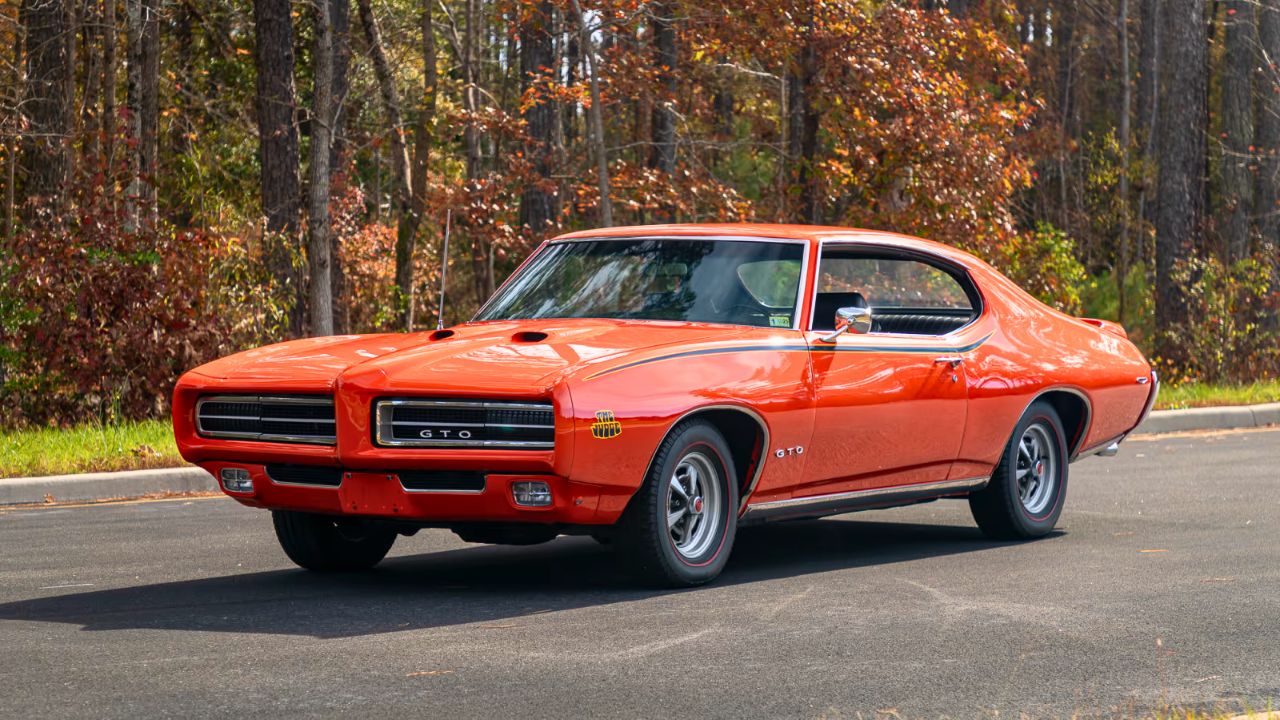
The 1969 GTO Judge took everything great about the original GTO and cranked up the attitude. With its Ram Air hood scoops, Endura nose, rear spoiler, and bold striping, the Judge looked fast even when parked. It was aggressive, but the lines still worked in harmony.
Pontiac offered the Judge as a high-impact option package on the GTO, with a standard Ram Air III 400 V8 rated at 366 hp. Just over 6,800 were built that year. The styling wasn’t just for show—every cue served the performance image Pontiac was building at the time.
1969 Pontiac GTO Judge – Interior
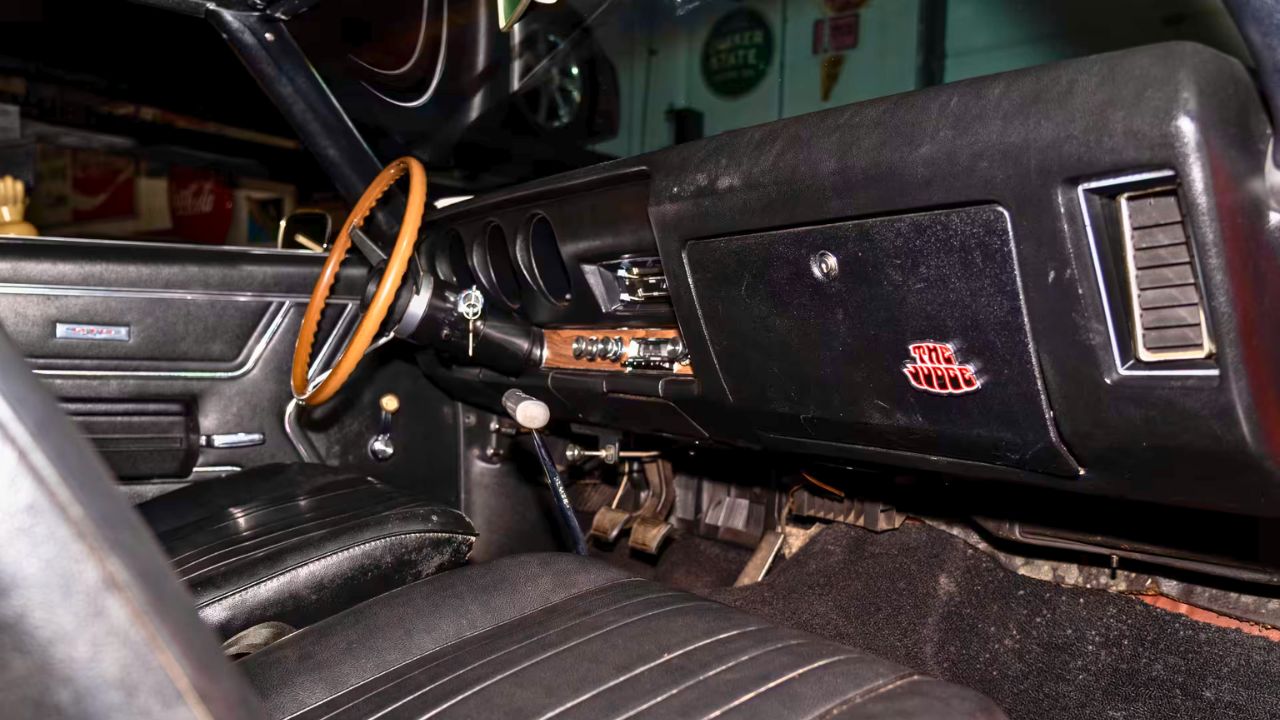
Step inside and you got high-back buckets, rally gauges, and a floor-mounted Hurst shifter. The cabin felt driver-focused without losing comfort. Buyers could add extras like an 8-track or hood tach, but even bone stock, the Judge looked like it meant business.
The wide track stance, flared fenders, and low ride height gave it a planted look that set it apart. It wasn’t just a muscle car—it was the muscle car that owned the spotlight. Even among its flashier rivals, the ’69 Judge had the right blend of theater and performance.
1970 Plymouth ‘Cuda 426 HEMI – Exterior

The 1970 ‘Cuda was all about stance and aggression. With its wide track, short deck, and menacing grille, it stood out even in a parking lot full of muscle. The optional shaker hood and hockey-stick side stripes weren’t just for show—they hinted at the 426 HEMI under the hood.
Only 652 HEMI-powered ‘Cudas were built that year, making them rare even when new. Dual exhausts, Rallye wheels, and high-back bucket seats finished off the package. You didn’t need to know what was under the hood to respect it—just looking at it did the job.
1970 Plymouth ‘Cuda 426 HEMI – Interior

Inside, the 1970 ‘Cuda was clean and driver-focused. You got an optional Rallye dash with a 150-mph speedo and oil, temp, and amp gauges right where you needed them. It wasn’t flashy, but it was well laid out—and all muscle.
The 426 HEMI made 425 hp and 490 lb-ft of torque, launching the car into legend. It ran low 13s in the quarter-mile with slicks and a skilled driver. This wasn’t just a pretty face—it was a full-blown street weapon wrapped in one of the sharpest-looking bodies Mopar ever built.
1987 Buick GNX – Exterior

The 1987 Buick GNX wasn’t loud in appearance, but it didn’t need to be. With its all-black paint, blackout trim, and no badges aside from the subtle GNX emblem, it looked like it meant business. It wasn’t flashy—it was focused.
Buick built just 547 GNXs in 1987. The flared fenders and mesh wheels weren’t styling exercises—they were functional touches to back up what was under the hood. Even standing still, the GNX had that don’t-mess-with-me attitude that made it one of the most serious-looking cars of the decade.
1987 Buick GNX – Interior

The GNX packed a turbocharged 3.8-liter V6 tuned by ASC/McLaren, good for a factory-rated 276 hp and 360 lb-ft of torque. But anyone who’s ever driven one knows the real numbers were closer to 300-plus horses and 0–60 in under 5 seconds.
Inside, it was all business: analog gauges with a special GNX-only boost readout, Lear Siegler bucket seats, and no-nonsense trim. This was a car that let its performance do the talking. It didn’t need stripes or chrome to prove its point—it did that a quarter-mile at a time.
1996 Chevy Impala SS – Exterior

The 1996 Impala SS looked like a cop car because it basically was. Chevy took the Caprice 9C1 platform and gave it a smoother, lower stance, blackout trim, and five-spoke alloys. Finished in black or burgundy, it looked subtle but serious.
The sleeper appeal was real. Most people didn’t realize the SS had a Corvette-derived LT1 5.7-liter V8 under the hood, good for 260 hp. It rode on a lowered suspension and had a wider track than the standard Caprice, giving it the look—and presence—of a true modern muscle sedan.
1996 Chevy Impala SS – Interior

Inside, the Impala SS gave you wide leather seats, a floor-mounted shifter, and full analog gauges. It wasn’t plush, but it wasn’t stripped down either. It felt like a performance car built for real roads and everyday use.
Chevy sold around 41,941 SS models in 1996, the final year of production before the plant switched to SUVs. Today, clean examples are getting harder to find. It’s one of the rare cars that managed to be both good-looking and under-the-radar—muscle wrapped in understatement.
2005 Ford Mustang GT – Exterior

When the 2005 Mustang hit the streets, it looked like a callback to the past without feeling like a costume. The long hood, short deck, fastback profile, and tri-bar taillights were all vintage cues, but they were blended into a modern shape that just worked.
The GT version came with a 4.6-liter SOHC V8 putting out 300 hp. With the optional 5-speed manual and 3.55 rear gear, it could run 0–60 in under 5.5 seconds. The look, the sound, and the proportions made it a standout right out of the box.
2005 Ford Mustang GT – Interior

The cabin gave you deep-set gauges, a chunky steering wheel, and upright seats that reminded you this wasn’t just a cruiser. You could even spec color-matched dash inserts for a little retro flair.
Ford sold over 160,000 Mustang GTs in 2005 alone. The design hit such a sweet spot that it influenced Mustang styling for over a decade. It brought back the muscle car feel without the quirks of old tech, making it one of the most recognizable—and good-looking—cars of the 2000s.
2015 Dodge Challenger Hellcat – Exterior

When Dodge dropped the Hellcat in 2015, it wasn’t subtle. The wide body, functional hood scoops, and retro-styled LED halo lights gave it a muscle-bound look that didn’t care about blending in. It had presence—and it backed it up.
The Hellcat’s 6.2-liter supercharged HEMI cranked out 707 hp and 650 lb-ft of torque, making it the most powerful production muscle car at the time. Dodge sold over 8,500 Hellcats that first year. It wasn’t just a muscle car—it was the muscle car everyone else had to respond to.
2015 Dodge Challenger Hellcat – Interior

Inside, the Hellcat kept things straightforward: thick-bolstered seats, a flat-bottom wheel, and a 200-mph speedometer to remind you what you were driving. The optional red key unlocked the full 707 hp, while the black key kept things a little more street-friendly.
What made the Hellcat work wasn’t just the numbers—it was the way it looked and felt. Big, angry, and unapologetically American. It took everything great about old-school muscle and wrapped it in a shape that said, “Yeah, I’ve got more horsepower than your house.”
Like what you read? Here’s more by us:
*Created with AI assistance and editor review.