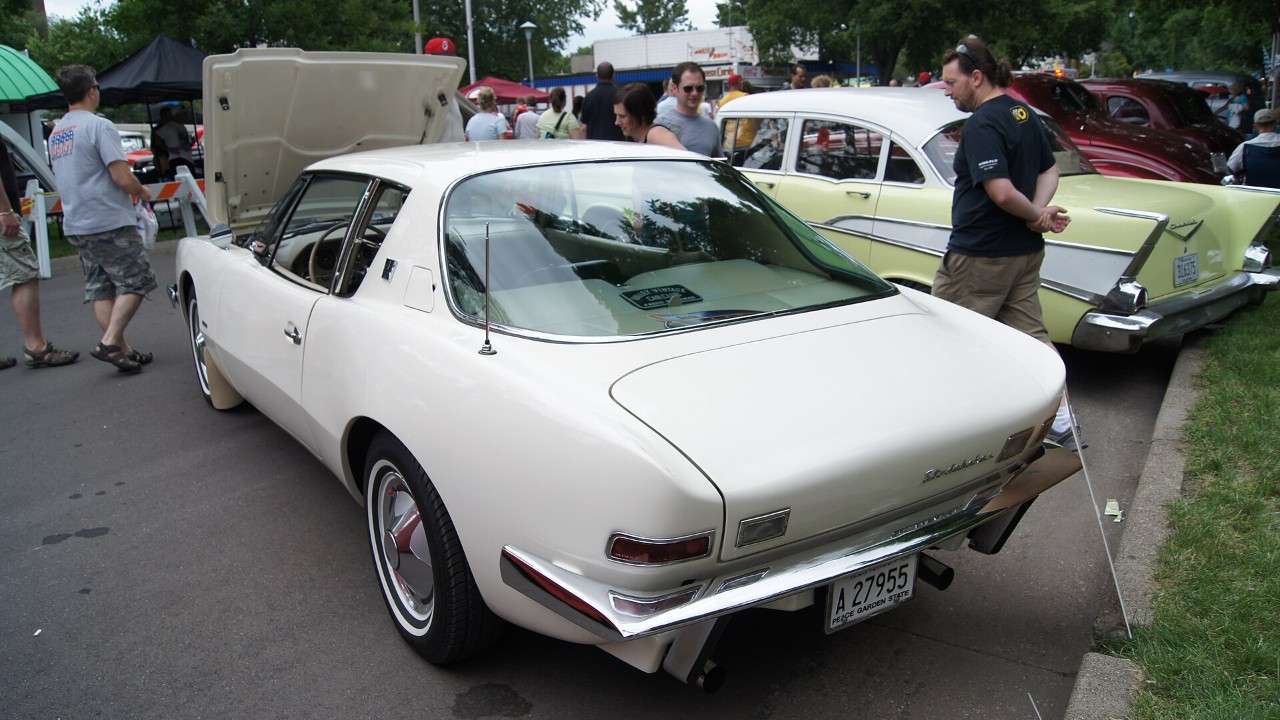
The Avanti Bonneville records came from one long day on the salt in 1962. Andy Granatelli took a supercharged Studebaker Avanti to the Bonneville Salt Flats in Utah. There, he set 29 speed records in a single session. Then, on a later visit, he pushed the same kind of car past 170 mph.
That was a remarkable result for a company that was running out of time. At the time, Studebaker was a small, struggling automaker in South Bend, Indiana. It needed its new Avanti coupe to give the brand a modern face. So the speed runs were a sales tool as much as a test.
Here is what was under the hood and what the records actually were. We also look at why people argue over how to describe them.
The man with the supercharger
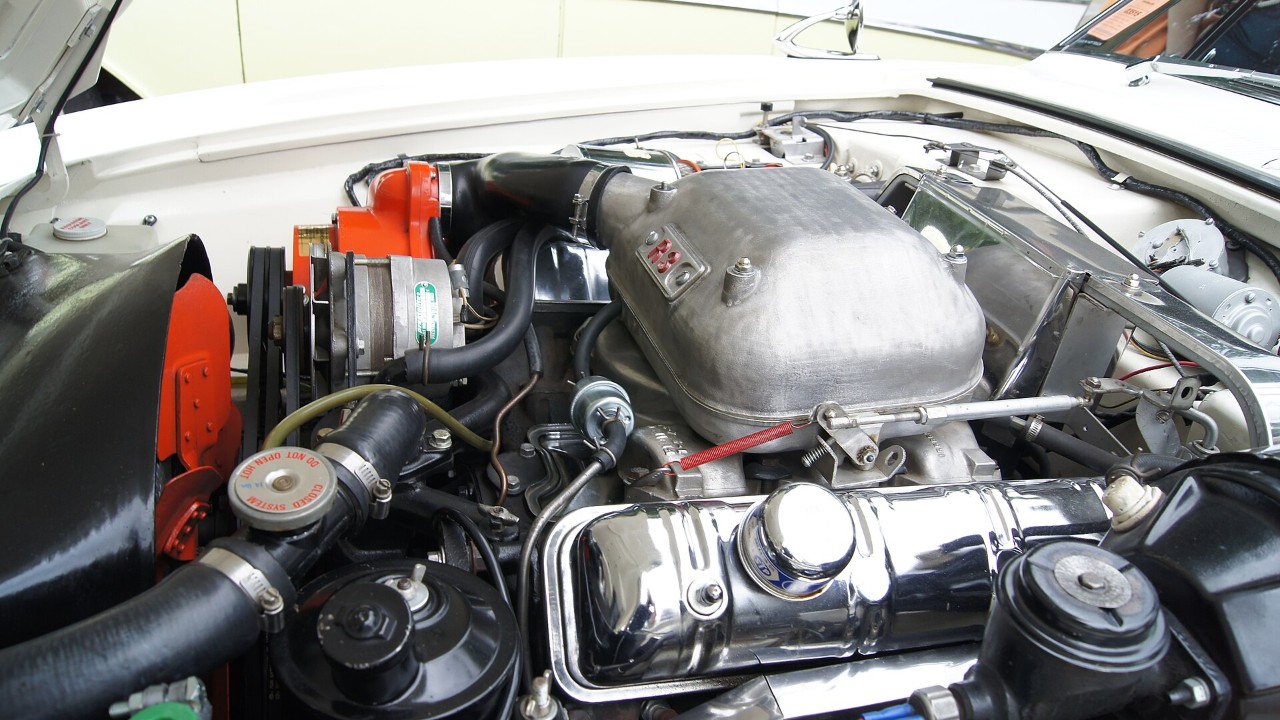
Granatelli was not a neutral driver. According to Classic Motorsports, he was president of Paxton Products at the time. Paxton also made the supercharger bolted to the engine. In other words, every mile per hour he found on the salt sold his own hardware too.
The magazine also lays out the engine ladder. First, the Avanti shared Studebaker’s 289-cubic-inch V8 with the Hawk. The R-1 version made 240 horsepower without a blower, while the supercharged R-2 made 289 horsepower. Granatelli then worked the R-3 up to 335 horsepower.
Specialist dealer Hyman Ltd. gives the R-3’s size as 304.5 cubic inches. It lists 335 horsepower and 400 lb-ft of torque from a high-output Paxton supercharger. Both Hyman and Classic Motorsports say only nine Avantis left the factory as R-3 cars. By comparison, Hyman puts total 1963 Avanti production at a bit over 4,500.
Three cars on the salt
Still, the team did not bring just one car. Mac’s Motor City Garage posted Studebaker’s 1962 factory film of the attempt. According to that post, Granatelli arrived in August 1962 with three new supercharged R3 Avantis built in South Bend. One was a practice car, one a backup and one the record car.
The site also flags an old debate, though. Some experts believe the red Avanti in the film was not the record setter. Instead, they say the real record car was gold. Hyman’s account points the same way. It says Granatelli ran an Avanti Gold coupe with an engine of his own design, which led to the R3.
Meanwhile, the sanctioning body took the “stock” claim seriously. Classic Motorsports reports that the United States Auto Club certified the Avanti R-3 as completely stock. It also says the car ran on Mobil premium pump gasoline. That detail mattered, because Studebaker wanted buyers to believe a showroom car could do the same.
What the Avanti Bonneville records actually were
The cleanest list of the runs comes from the Avanti history site theavanti.com. It says Granatelli set 29 records in 12 hours, all in American Class C. Each figure is the average of a two-way run. For that reason, the site stresses that these are not the top speeds the car reached.
From a flying start, the site lists 168.15 mph over one mile and 167.82 mph over five miles. Over ten miles, the average was 163.90 mph. Standing starts, by comparison, were slower: 92.03 mph for the mile, 139.69 mph for five miles and 151.66 mph for ten.
Classic Motorsports gives the same 168.15 mph mile and 163.9 mph ten-mile marks. Mac’s Motor City Garage adds a flying-kilometer figure of 168.24 mph. In addition, Classic Motorsports says the Avanti beat the old Class C record by more than 50 mph. A Dodge had held that mark.
Over 170 mph, and the “world” question
The higher speeds came later. According to theavanti.com, Granatelli returned with his R3 and recorded 170.78 mph. In the process, he broke five more Class C marks. Classic Motorsports, for its part, reports that the car hit 178.5 mph on the return leg of the 20-mile run.
However, the label on those 29 records depends on who you read. Both theavanti.com and Classic Motorsports describe them as American national records. Mac’s Motor City Garage, by contrast, calls them international speed records for production cars. Studebaker’s own advertising went bigger. From the fall of 1962, Classic Motorsports says, the company billed the Avanti as “The World’s Fastest Production Car.”
Either way, Granatelli kept going. About a year later, Classic Motorsports says, he came back with an experimental twin-supercharged Avanti. That car ran 196 mph.
Leftover engines and a long paper trail
The R-3 story did not end with the factory’s nine cars. Classic Motorsports reports that Granatelli later bought the leftover R-3 engines. He then retrofitted a few Avantis with them himself. As a result, R-3 history needs care whenever one comes up for sale.
The record runs also left plenty of paper behind. According to theavanti.com, twelve Studebakers set a combined 337 United States Auto Club records across six classes. Of the nine factory R-3 cars, Hyman Ltd. has listed one for sale. It is a 1963 Avanti R3 with its high-output Paxton supercharger.
More from Fast Lane Only