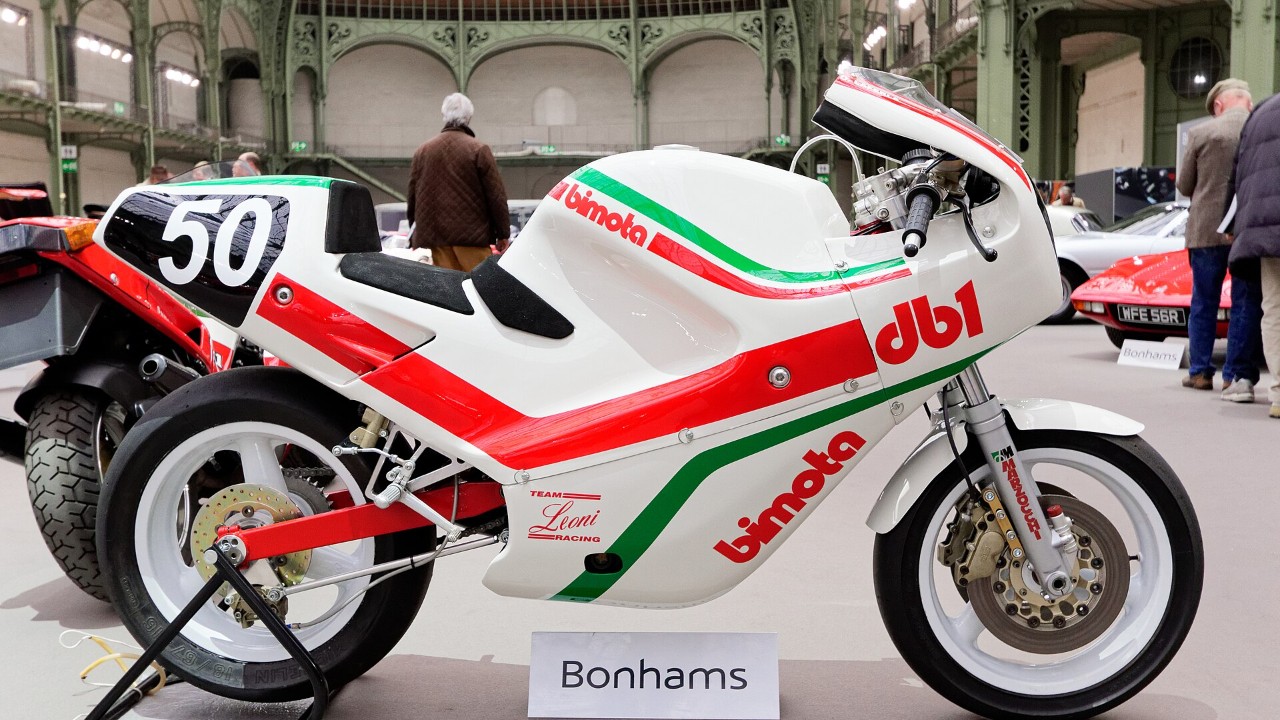
Bimota built frames, not engines. Valerio Bianchi, Giuseppe Morri and Massimo Tamburini founded the company in Rimini, Italy, in 1966, and its name combines their three surnames. Instead, for decades each model borrowed its engine from a bigger maker.
Because of that, the model names tell you whose engine is inside. The first letter stands for the engine maker, B stands for Bimota, and the number counts how many of its bikes used that maker’s engine. These eight show how the system worked, from a Honda four to a Ducati twin.
1. Bimota HB1 (Honda 750 Four)
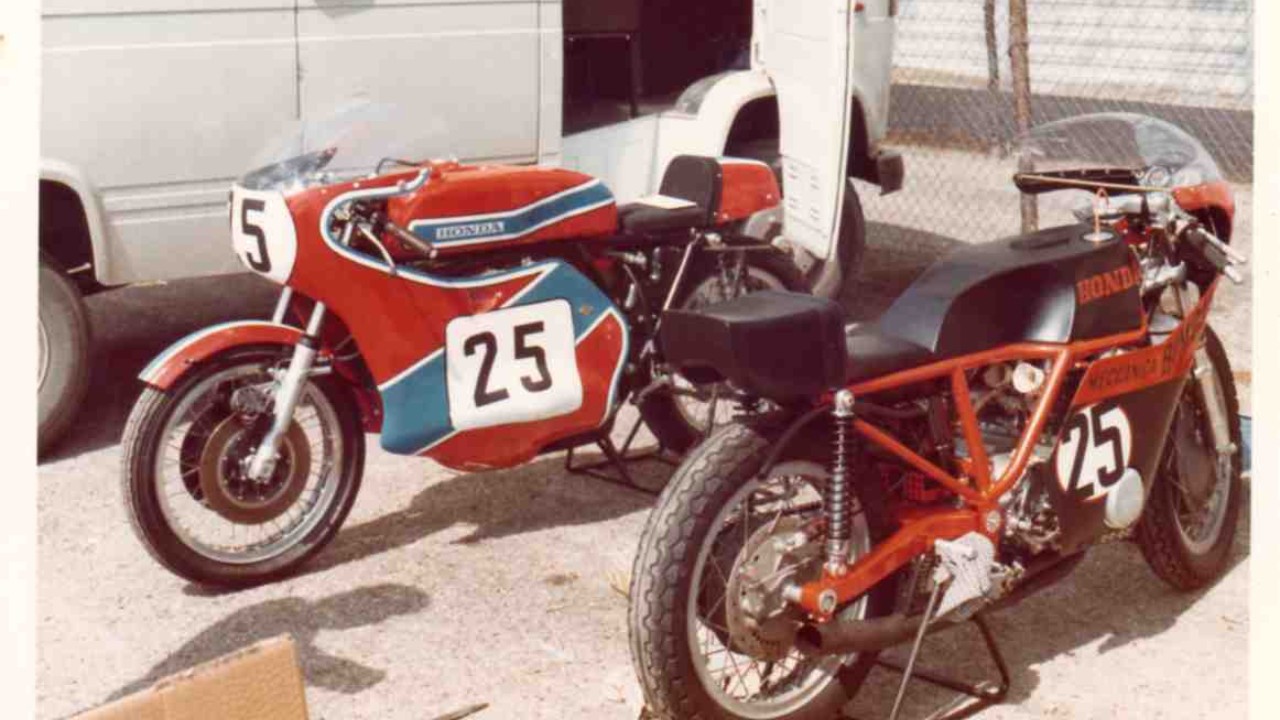
The HB1 was Massimo Tamburini’s first motorcycle and also the company’s first with a Honda engine. Its engine came from Honda’s 750 Four. The bike also introduced an eccentric-type chain adjuster, according to the company.
The firm made only 10, according to its heritage timeline. Bennetts BikeSocial breaks that down as one complete bike and nine kits, sold to the Swiss importer Rossi & Roncoroni. It puts the weight at about 155 kg.
2. 1977 Bimota SB2 (Suzuki 750)
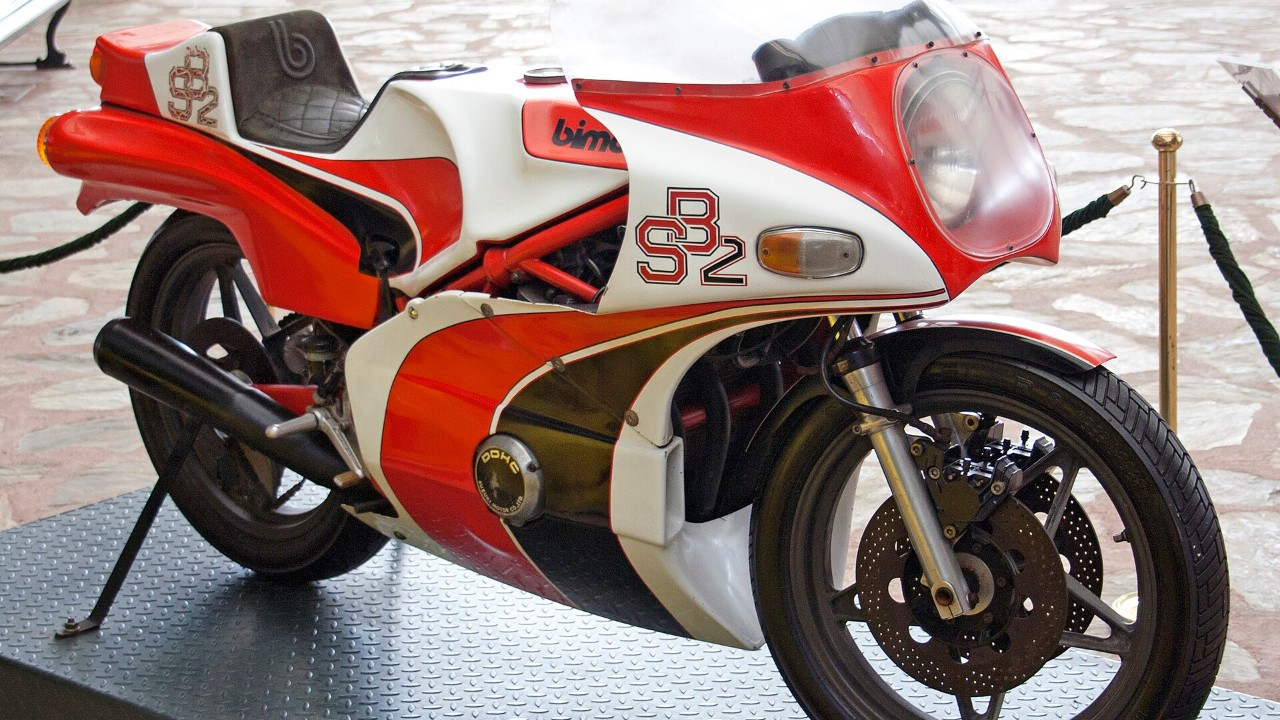
Before the SB2, Bimota’s 1976 SB1 had used a Suzuki TR500 racing engine, built for Suzuki Italia. Later, the SB2 became the first street-legal production model, according to the company’s history.
Its frame split into front and rear sections, with the engine working as a stressed member. In other words, the engine carried load instead of only sitting in a cradle. However, Bennetts says only 200 SB2 frames were built. It sold 170, and the other 30 were destroyed.
3. 1978 Bimota KB1 (Kawasaki Z1000)
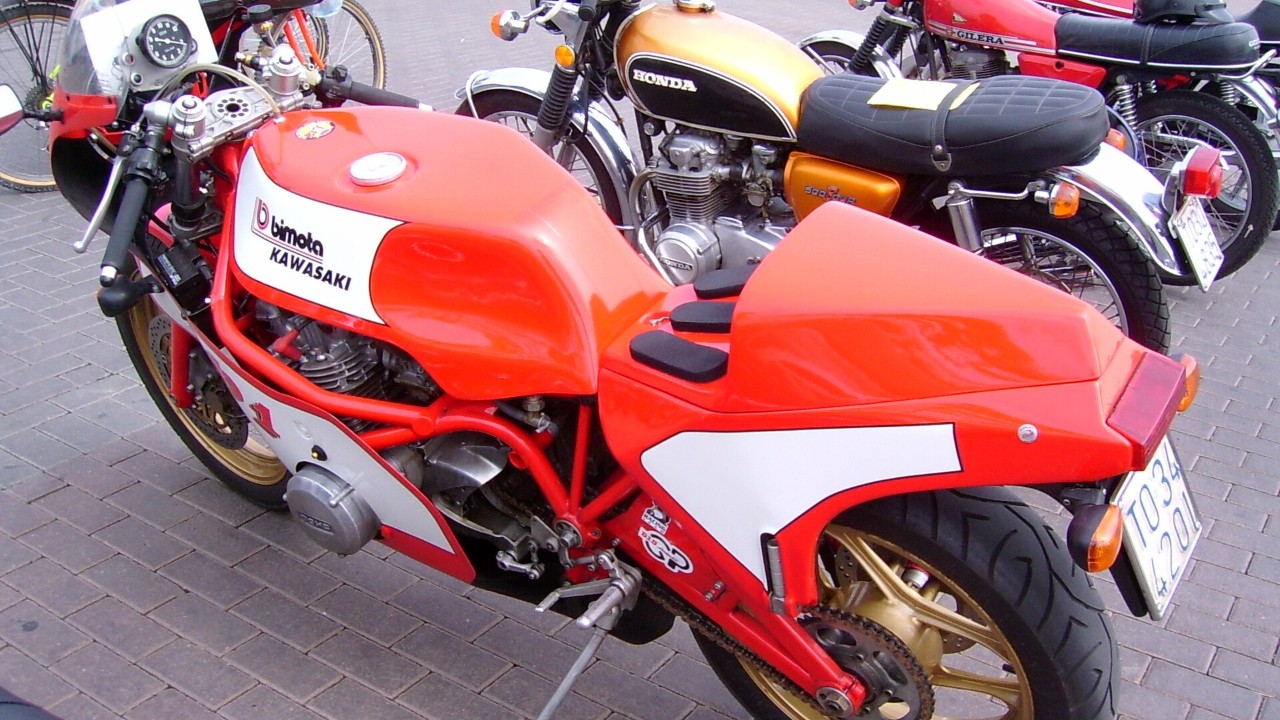
The KB1 made its debut in Milan in 1978, according to the Museo Nicolis, which displays one. It used Kawasaki’s air-cooled Z1000 four, with 1,015cc, four Mikuni carburetors and 83 CV. The bike weighed 193 kg.
In fact, the company calls it the best-selling of its pipe-frame models. The museum counts 827 built, almost all sold as kits, and only 16 left the factory assembled. Bennetts agrees on 827, spread across three series. Since it was the first Kawasaki-powered model, it took the name K-B-1.
4. 1980 Bimota YB3 (Yamaha TZ350)
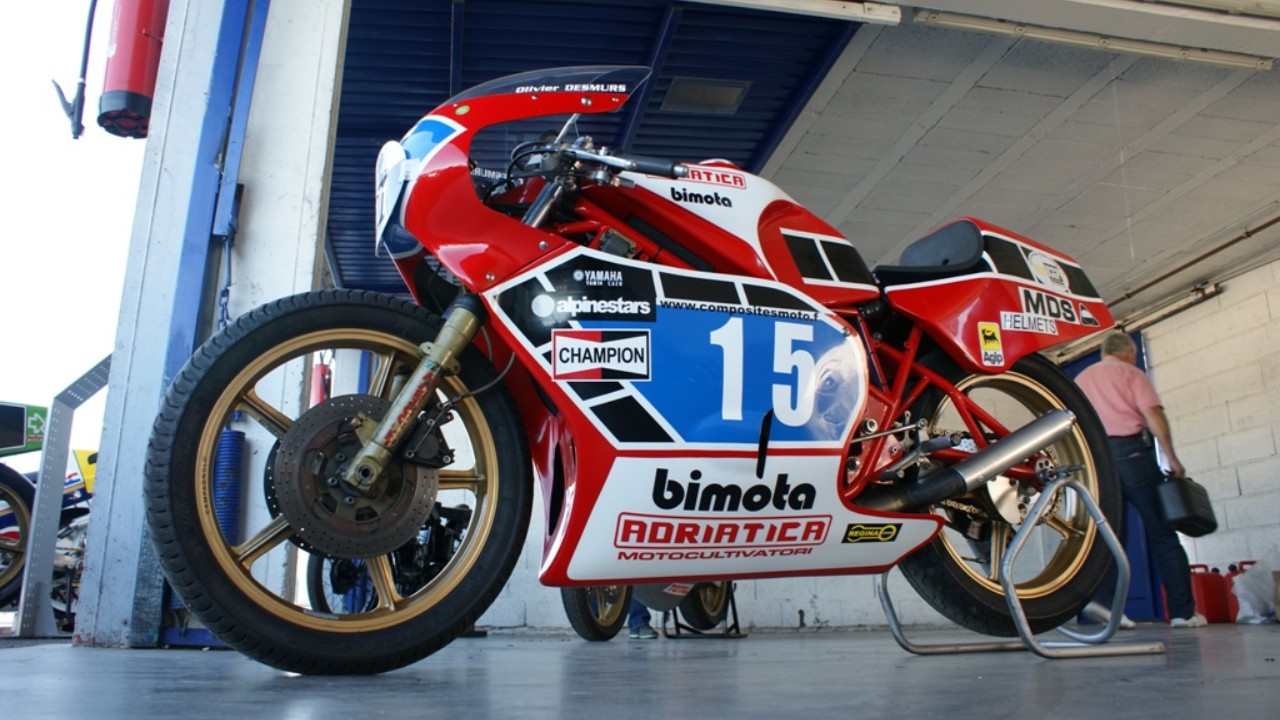
The YB3 was a racer, built around Yamaha’s TZ350 engine in a frame of Bimota’s own. In 1980, Jon Ekerold rode it to the 350cc world title. That was also the firm’s first world championship, the heritage page says.
Its name follows the code. Y stands for Yamaha, and the 3 marks the third Yamaha-powered Bimota, as the Museo Nicolis explains the system. Earlier, the 1974 YB1 had introduced cantilever-type suspension, according to the company.
5. 1985 Bimota DB1 (Ducati Pantah 750)
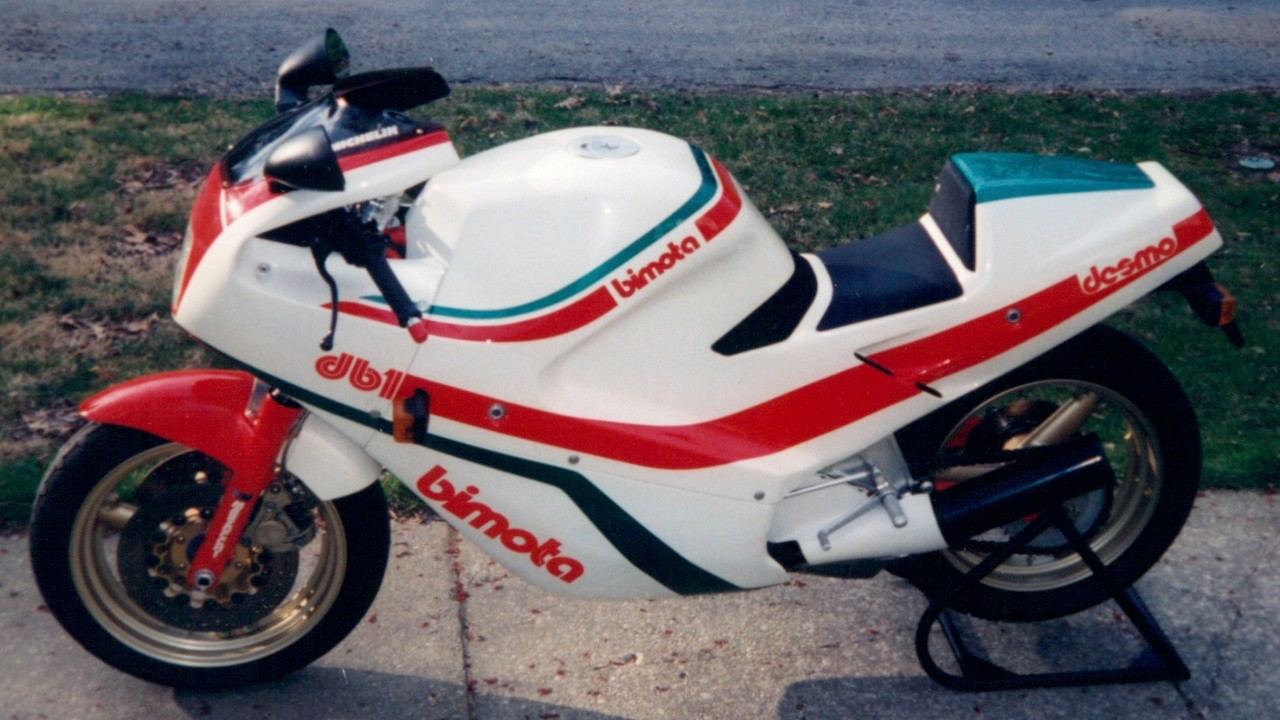
Then came the DB1, the first Ducati-powered model, according to the company. Its full bodywork hid the entire frame, so riders saw panels instead of tubes.
Bennetts lists it for 1985 and 1986 with Ducati’s 750cc Pantah engine, 63 hp and 160 kg. It also says Bimota sold more than 500 in two years, and more than two-thirds of them went to Japan.
6. 1986–1987 Bimota YB4 (Yamaha FZ750)
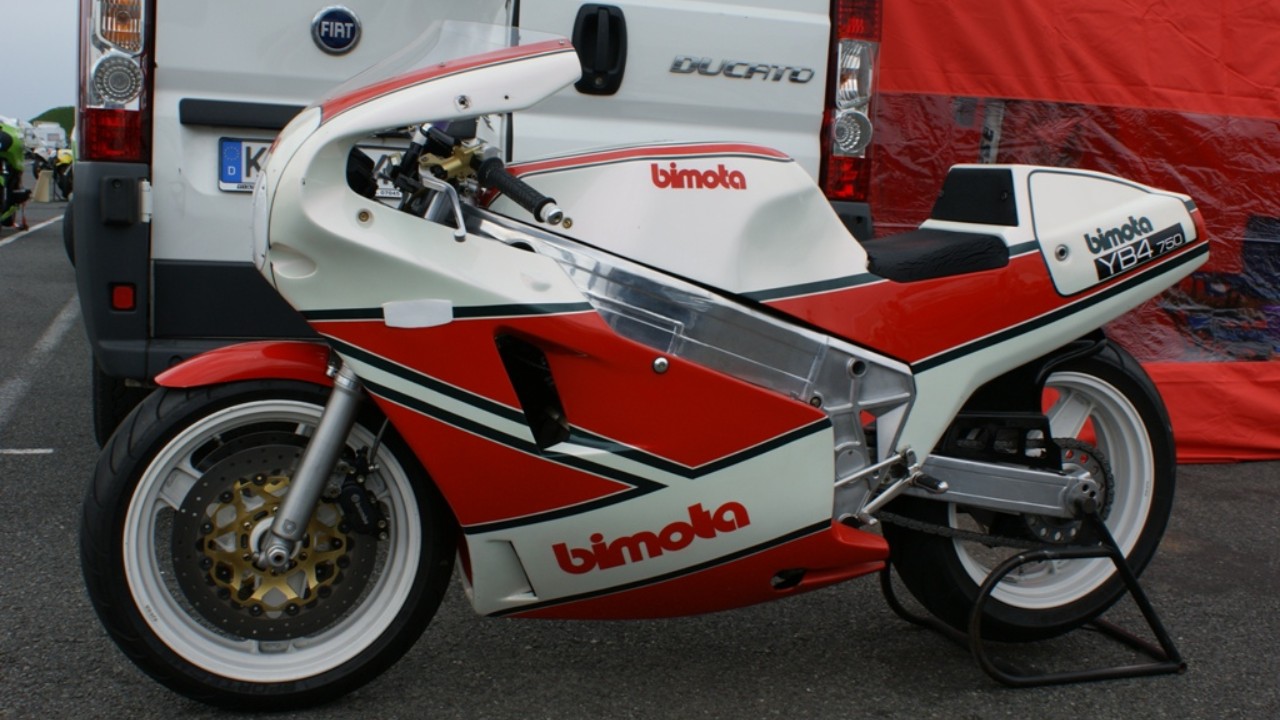
Next, the YB4 brought the company’s first aluminum frame in 1986. Federico Martini designed it as a twin-spar frame, according to the heritage timeline.
In 1987, Virginio Ferrari rode a YB4 with an FZ750 engine to the TT-F1 World Championship. Along the way, he won three of the seven races. Later, Bennetts lists a road version, the YB4 E.I., for 1988 and 1989, with a modified five-valve Yamaha four and electronic injection.
7. Bimota YB6 Tuatara (Yamaha FZR1000)
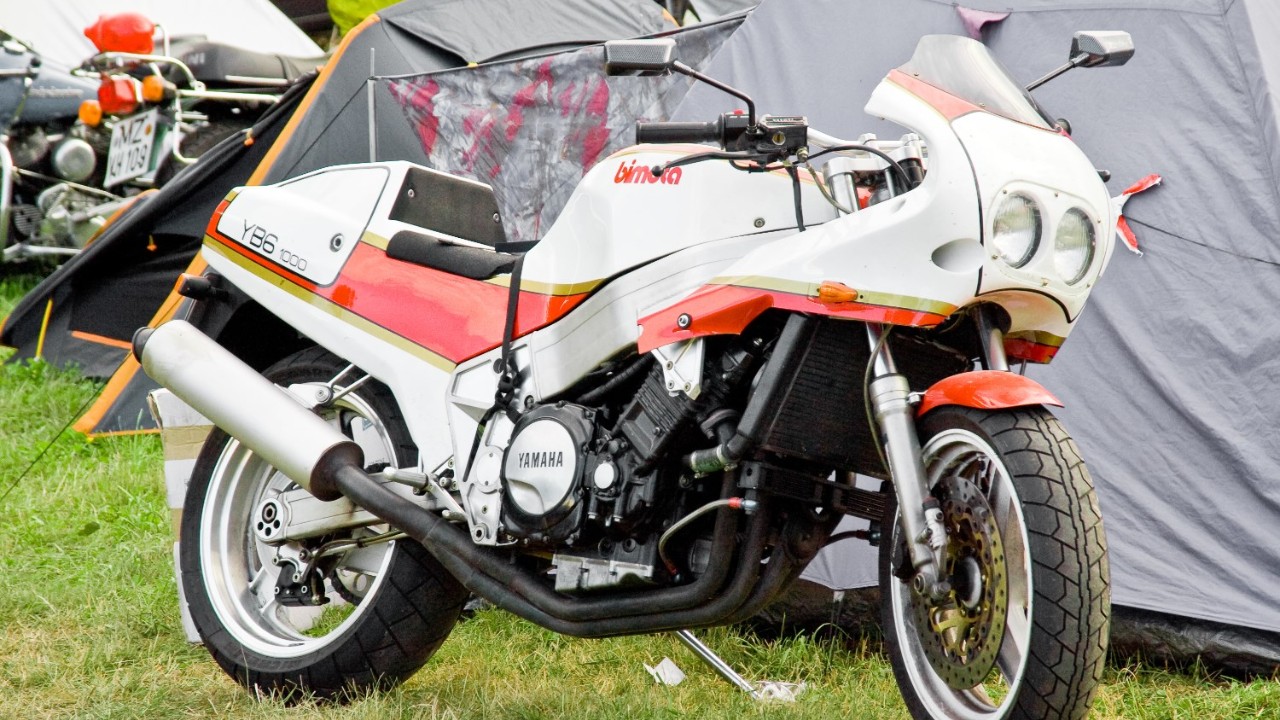
The Tuatara moved up to Yamaha’s FZR1000 engine, fitted with Marelli fuel injection. Bennetts quotes 145 hp at 9,500 rpm and a claimed top speed of 175 mph. It dates the model to 1990, though it says the launch came in 1989.
It was also one of the smallest runs on this list. Specifically, Bennetts calls it a limited edition of only 60 units. By the naming code, YB6 marks the sixth model built around a Yamaha engine.
8. 1990 Bimota Tesi 1D (Ducati 851)
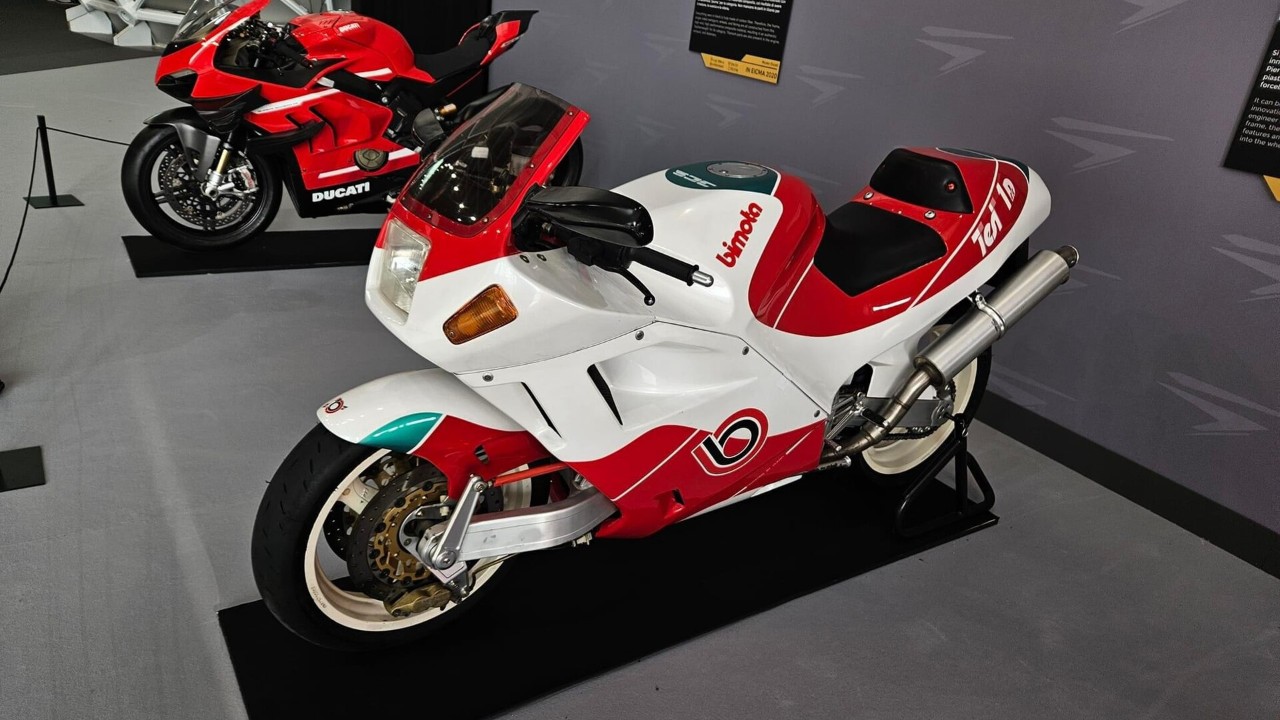
Finally, the Tesi 1D was the first production model with the company’s Tesi steering system. The company unveiled it at the 1990 Cologne show, according to its heritage page.
Bennetts lists it from 1990 to 1994 with the eight-valve Ducati Desmo 851 engine. Before that, earlier Tesi prototypes had tried Honda V4 and Yamaha FZ750 engines. The Ducati engine went into production, and Bennetts says it later grew to 904cc.
More from Fast Lane Only