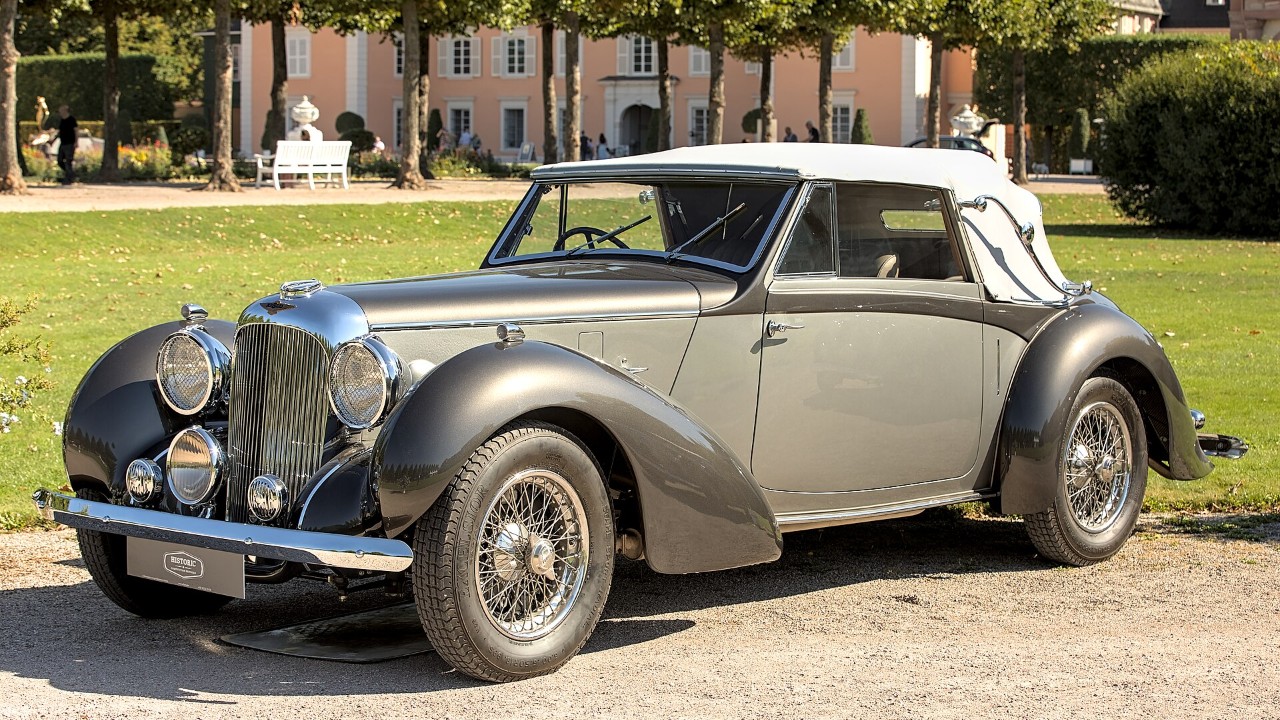
In June 1939, two Lagonda V12 cars finished third and fourth in the 24 Hours of Le Mans. Lagonda treated the race as a trial run, and W.O. Bentley set the pace from the pits. Then, within three months, Britain was at war, and the V12 never came back.
Yet Bentley could not even put his own name on it. Rolls-Royce owned Bentley Motors by then, so the car he oversaw at Lagonda wore a Lagonda badge instead.
Still, the V12 was his answer to his old employer. It was a 4.5-liter, twelve-cylinder luxury car aimed straight at Rolls-Royce, and a small British firm with a new owner built it in a hurry.
How W.O. Bentley ended up at Lagonda
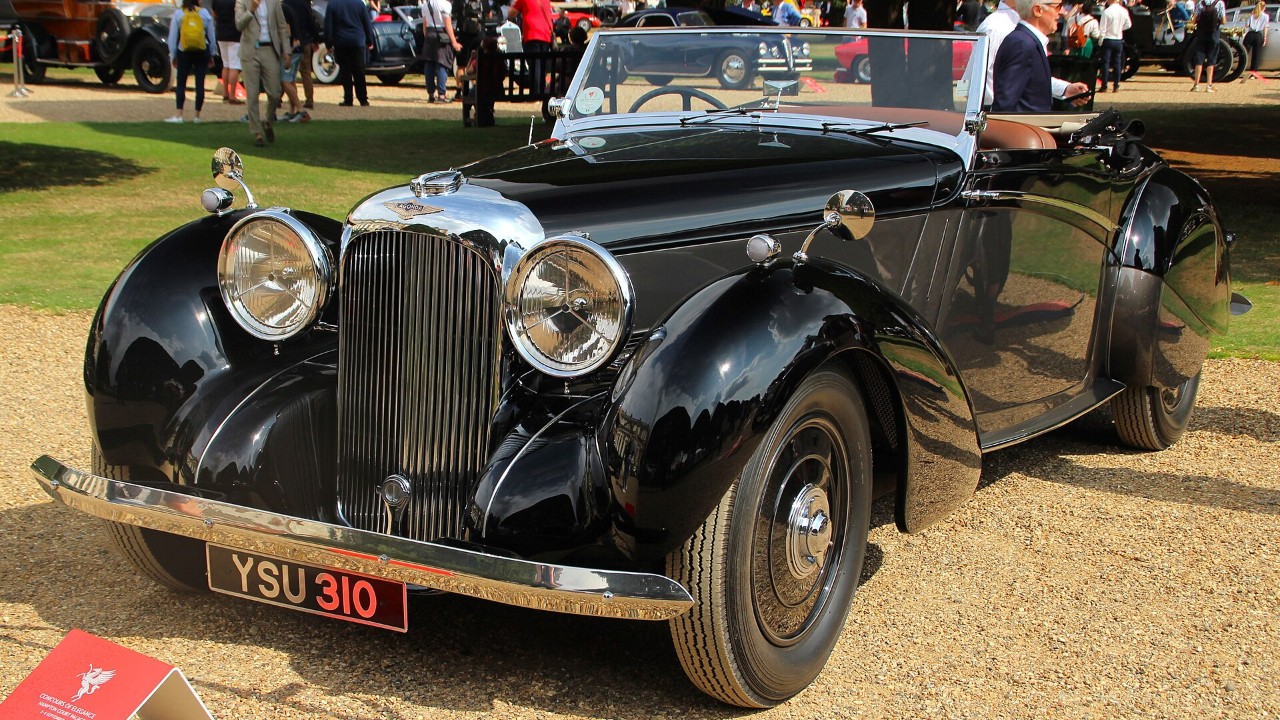
Alan Good, a 29-year-old lawyer, bought Lagonda for £72,500 in 1935, according to Motor Sport’s 1995 history of the car. He told the 29-strong workforce, “We are going to build the best car in the world, and have just two years to do it in.”
Bentley’s Rolls-Royce contract ended in April 1935. He then joined Lagonda’s board as technical director, Classic Cars magazine reports. At the same time, a 1988 Motor Sport profile notes that he was “unable by law to use his name on Lagonda cars.”
The engine was a team effort, not a one-man design. Bentley recruited three Rolls-Royce engineers, Sewell, Stark and Tresilian, to help with the new V12. Later, Tresilian followed him to Lagonda in February 1936. Bentley then put him in charge of the V12 project, according to Classic Cars.
Inside the Lagonda V12 engine
The engine displaced 4,480cc from a 75mm bore and an 84.5mm stroke. Its cylinders sat at 60 degrees, with one chain-driven overhead camshaft per bank and four main bearings, Motor Sport says. By comparison, Classic Cars notes that the Rolls-Royce Phantom III used seven main bearings.
Power is where the accounts differ. Bentley promised 200 bhp, but Motor Sport’s 1995 story says production cars fell “some 40bhp” short. The 1988 profile quotes a claim of 180 bhp at 5,500 rpm and calls that figure questionable.
Carburetion was also part of the problem. The first engine used a single twin-choke Stromberg, which proved inadequate. As a result, production cars switched to twin SUs.
Underneath, the chassis had torsion-bar independent front suspension and Lockheed brakes with 16-inch drums, according to the 1988 profile. In 1938, Lagonda offered three wheelbases of 10ft 4in, 11ft and 11ft 6in. The bare chassis cost £1,200, £1,225 and £1,250.
A late start for the V12
Meanwhile, Good’s two-year deadline slipped. A finished car with a painted wooden crankcase first appeared in public at Olympia in October 1936. However, Lagonda did not build the first car for the press until the end of 1937, Motor Sport says. Classic Cars dates the first V12 to February 1938.
Bentley himself wished for more time. In his autobiography, quoted by Classic Cars, he wrote that the V12 “could have been the best car for which I am responsible.” He also said he “would have given my right arm to have another two years to develop the car.”
The Lagonda V12 at Le Mans in 1939
Lagonda entered two cars in June 1939 as a trial run for 1940, according to the 1988 profile. They ran four SU carburetors, 8.5:1 compression and a 4.09:1 axle. One quoted figure for the race engines was 220 bhp, though the article suggests about 206 bhp at 5,500 rpm was closer to the truth.
Bentley did not chase the win. Instead, he capped the pace at one mph above the 82.35 mph average of the 1938 winning Delahaye. Dobson and Brackenbury finished third at 83.61 mph. Lords Selsdon and Waleran came home fourth at 83.35 mph, and only a Bugatti and a Delage finished ahead.
Classic Cars describes the entries as hurriedly prepared. Even so, both ran the full 24 hours almost trouble-free. At Brooklands that year, Brackenbury also won a race at 118.45 mph, 3.8 seconds ahead of Lord Selsdon.
How many were built, and why the V12 ended
Production figures, however, vary by source. Motor Sport says some 90 cars found customers in 1938 and that Lagonda built a further 40 in 1939. Classic Cars puts the total at 190 before the war halted production. Only five got Hooper bodies, each to a different design.
After the war, Lagonda restarted with a 2.6-liter model instead. Good and Bentley both wanted to continue the V12, however. But the company had “binned” the machine tools, dies and jigs, Motor Sport reports, and the economic climate ended the plan.
One survivor shows where the cars stand now. Classic Cars drove chassis 14083, a Hooper coupe built to a Barker design and recorded as delivered on 14 August 1939. It cost £1,600 new, and the magazine’s price guide now puts a car like it at £200,000 to £300,000.
More from Fast Lane Only