In March 1930, Woolf Barnato drove a Bentley Speed Six from Cannes to London and parked at his club before the Blue Train even reached Calais. That run made the Blue Train Bentley one of the best-known stories in the marque’s history. Yet nearly a century later, historians still argue about which car he drove.
Barnato was no ordinary driver. He was chairman of Bentley Motors, and he won all three Le Mans races he entered.
Here is how the run unfolded, what it cost him, and why two different Speed Sixes have claimed the title.
The man behind the wheel
Barnato came from a wealthy South African mining family and was an all-round sportsman. He won the Duke of York Trophy in a Bentley-powered motorboat before he raced for Bentley in 1926. That same year, he invested in the struggling company and became its chairman, with W.O. Bentley as chief engineer.
His record at Le Mans was perfect. In fact, he won all three races he entered, which makes him the only driver for any maker to win every Le Mans he started, according to Bentley’s heritage pages.
The £200 bet
The challenge began at a dinner party on a yacht. Barnato heard that Rover and Alvis cars had beaten the Blue Train from St Raphael to Calais. So he bet £200 that he could beat the train in a Speed Six, says Carole Nash’s history of the run. However, no one took the bet.
For the record, the train was the Calais-Méditerranée Express, better known as the Blue Train. His co-driver was Dale Bourne. Carole Nash calls him an amateur golfer, while the Pebble Beach Concours describes him as Barnato’s secretary.
The run from Cannes to London
First, the train left Cannes at 5:45 pm, with Barnato following. Heavy rain slowed the Bentley on the way to Lyon. Then, at 4 am, the pair could not find their planned fuel stop near Auxerre.
Even so, they reached Calais at 10:30 am after more than 570 miles at an average of 43.43 mph, Carole Nash reports. After a steamer crossing, Barnato drove on to London. He parked outside the Conservative Club on St James’s Street at 3:20 pm, and the Blue Train reached Calais four minutes later.
The Pebble Beach Concours account tells it slightly differently. In its version, the pair left the Carlton Bar in Cannes at 6 pm on Thursday, March 13, 1930. They reached Boulogne at 10:30 am and caught the 11:35 boat to Folkestone. Finally, they arrived at the Royal Automobile Club in Pall Mall at 3:30 pm, 15 minutes before the train reached Calais, after 786 miles.
Still, both versions agree on the result. Barnato was in London before the train was in Calais.
The price of winning
The run had a cost. The French motor manufacturers’ association fined Bentley about £160 for racing on public roads, according to Carole Nash. Bentley was also banned from the 1930 Paris Salon.
Barnato, for his part, played it down. “Any woman could have done the same thing without discomfort,” he later said, as the Pebble Beach account quotes him.
Which Speed Six was the Blue Train Bentley?
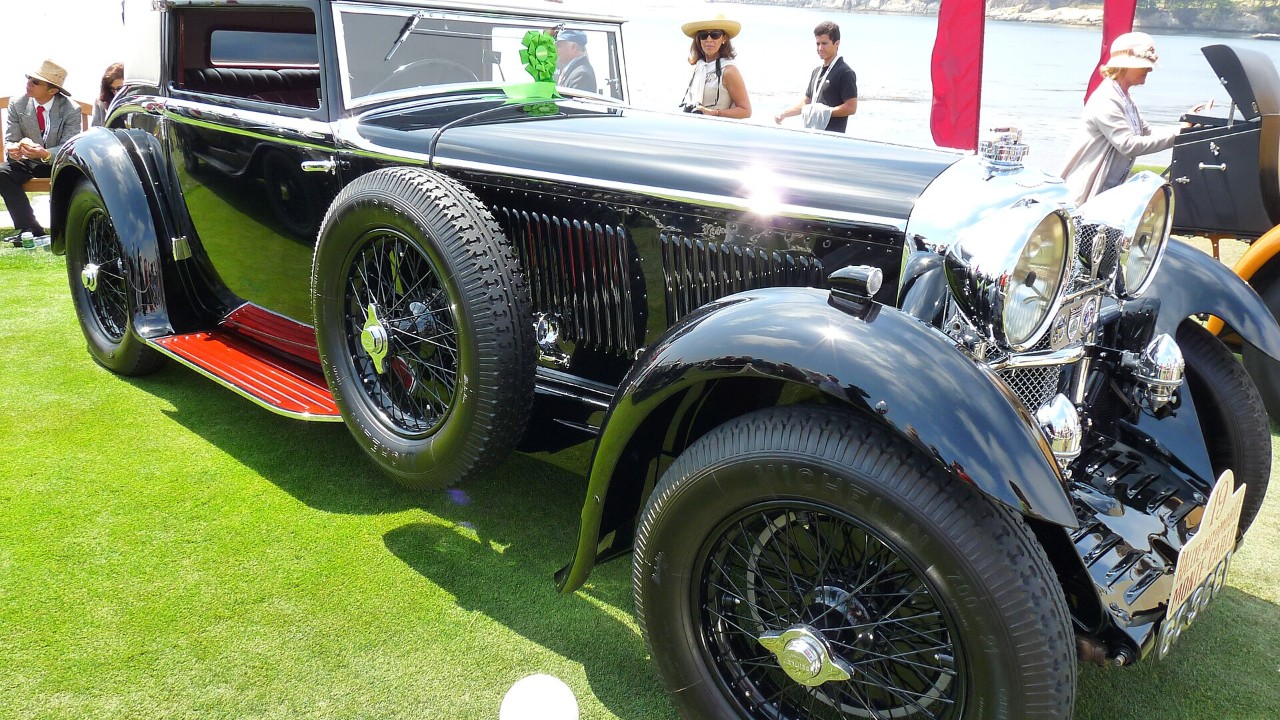
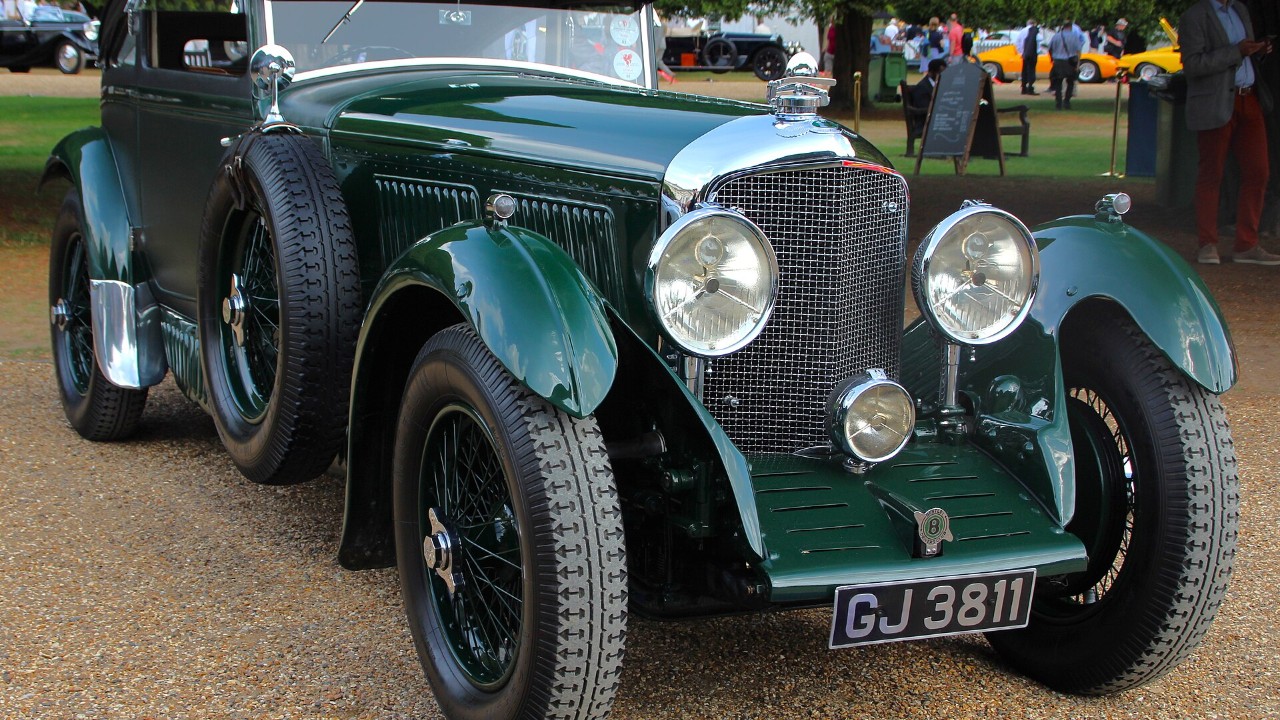
For decades, the Blue Train Bentley was thought to be a Gurney Nutting coupé, chassis HM2855, registered GJ3811. A famous Cuneo painting shows it racing the train. However, Pebble Beach notes that its final test and five-year guarantee were dated May 21, 1930, two months after the run. By June 2 it had covered only 391 miles.
The first recorded link between the coupé and the run is a 1967 article by Johnnie Green, Pebble Beach says. Meanwhile, Barnato’s own 1940s account mentions only “my Speed Six saloon.”
Instead, the evidence points to chassis BA2592, registered UU5999, a four-door Weymann fabric saloon. Barnato took delivery in June 1929 and drove it more than 16,000 miles in under a year. On March 15, 1930, the day after the run, it was at Bentley’s Kingsbury service department for a new starter, with 13,519 miles on it.
Sources even differ on who bodied the saloon. Pebble Beach credits H J Mulliner, while Motor Sport magazine calls it a Gurney Nutting Weymann saloon. Owner Bruce McCaw showed both cars at Pebble Beach in 2001. Even so, Carole Nash says no definitive proof has surfaced, and the coupé remains widely seen as the Blue Train car.
The Speed Six itself
Bentley built the Speed Six from 1928 to 1930 and made 182 of them, according to Bentley’s newsroom. Its six-cylinder engine displaced almost 6.6 liters from a 100 mm bore and 140 mm stroke. It made 180 bhp in road form and 200 bhp in racing form.
On top of that, the same model won Le Mans in 1929 and 1930. In 1929, Barnato and Tim Birkin led their Speed Six from the first lap to the finish.
Bentley marked the run’s 85th anniversary in 2015 with a Mulsanne “Blue Train” edition, reports Complete Car. Mulliner built only four, and their treadplates read “Blue Train 85 Years.”
More from Fast Lane Only