BMW has opened the new year in China with one of the sharpest price resets the premium segment has seen, cutting sticker prices on dozens of models by as much as the equivalent of $42,000. The move, focused heavily on electric and electrified vehicles, is already rippling through the world’s largest auto market as rivals respond and regulators watch a renewed wave of discounting. I see it as a pivotal moment that exposes both the intensity of China’s electric vehicle competition and the pressure on global brands to defend relevance there.
BMW’s sweeping price reset in its most important market
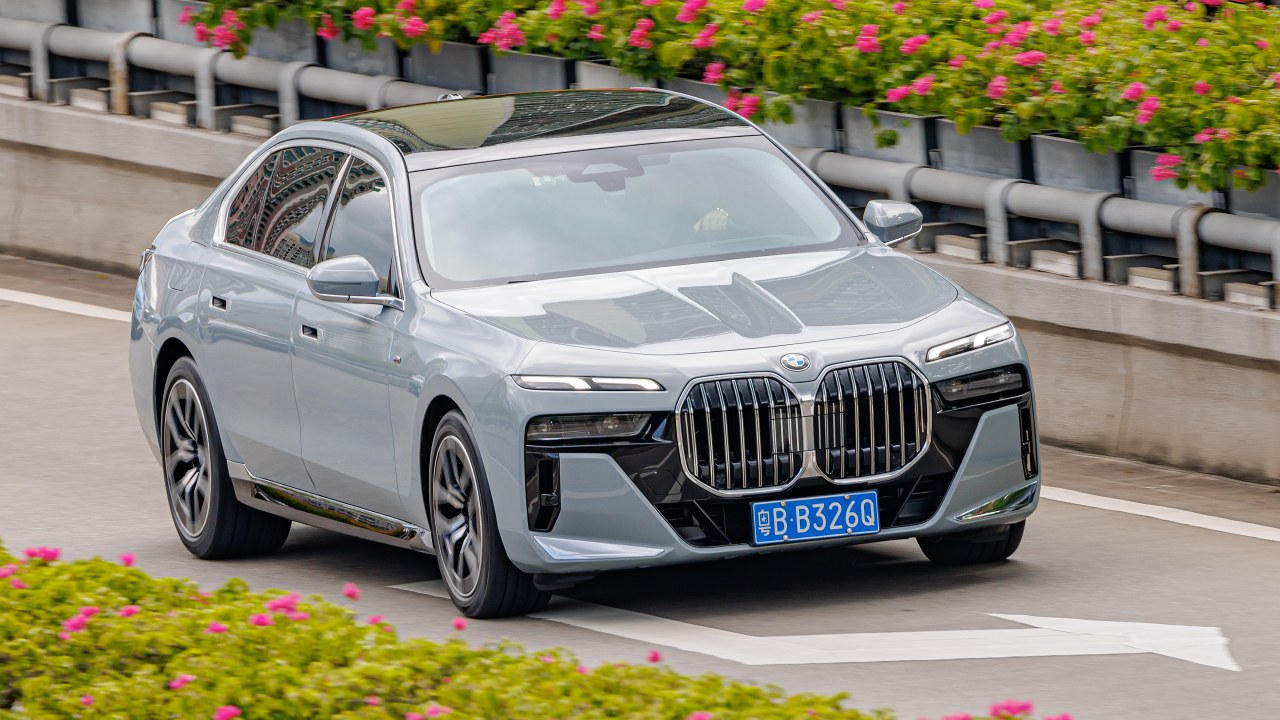
BMW has not tinkered at the margins, it has redrawn its pricing map in China. The company has adjusted official list prices on 31 core models, with reductions that reach up to 24 percent on some versions. For high-end electric flagships, the cuts are particularly stark, with the long-wheelbase i7 M70 reportedly becoming $43,000 cheaper and the stretched iX1 seeing its price reduced by nearly a quarter. By moving list prices closer to what buyers were already negotiating in showrooms, BMW is effectively formalizing a discount culture that had been playing out quietly at the dealer level.
The scale of the adjustment is clearest at the top of the range, where one electric sedan’s price has been lowered by about $42,000, while another major cut is described as 228,000 yuan, or about $32,600. These figures sit within a broader campaign that covers more than 30 models and includes both sedans and crossovers, with some combustion and plug-in hybrid variants also affected. BMW has framed the changes as a recalibration of recommended retail prices rather than an aggressive escalation of a price war, but the depth of the reductions, and the fact that they took effect at the start of the year, underline how central China has become to the brand’s global strategy.
Pressure from Chinese EV champions and global rivals
Behind BMW’s decision lies a brutally competitive Chinese market in which domestic brands have seized the initiative in electric vehicles. BYD’s new-energy vehicle sales exceeded 4.6 million units in 2025, a figure that illustrates how far local manufacturers have scaled up and how crowded the EV space has become. As Chinese groups flood showrooms with aggressively priced battery models and plug-in hybrids, foreign premium marques are being forced to choose between protecting margins and protecting market share. BMW’s cuts, which respond to price reductions of up to 300,000 yuan already circulating in the market, show which side of that trade-off it has prioritized for now.
The pressure is not only domestic. Other international players have also been trimming prices and rolling out incentives in China, including Tesla and Xiaomi, contributing to what regulators have previously tried to cool as a destabilizing discount spiral. Reports of carmakers slashing prices again in China, despite official efforts to discourage such tactics, suggest that competitive dynamics are overwhelming policy nudges. In that context, BMW’s move looks less like an isolated decision and more like a reluctant adaptation to a market where consumers have come to expect constant promotions and where any brand that stands still risks being left behind.
From quiet dealer discounts to open list-price cuts
What has changed in early 2026 is not that BMW models suddenly became cheaper in practice, but that the company has chosen to make those lower prices explicit. For much of the past year, buyers in China could already negotiate substantial reductions at authorized BMW dealers, with the gap between official list prices and transaction prices widening as sales softened. By cutting recommended prices by up to 24 percent, BMW is narrowing that gap and bringing transparency to a process that had increasingly depended on haggling and backroom incentives. The German carmaker has emphasized that these adjustments reflect a recalibration of list prices rather than a shift toward more aggressive discounting, but the effect for consumers is the same: lower visible entry points.
From my perspective, this shift from hidden to open discounts matters for brand perception. Premium marques typically guard their sticker prices to preserve an aura of exclusivity, even if they quietly support dealers with incentives. Once a company publishes a lower price, it resets expectations for residual values and future promotions. BMW has acknowledged that the new pricing is intended to benefit both authorized dealers and customers, suggesting that the previous model, in which retailers absorbed much of the pressure to negotiate, had become unsustainable. The move also simplifies comparisons for shoppers who are cross-shopping German luxury badges against fast-improving Chinese EVs that already advertise keen prices upfront.
Signals for China’s EV price war and regulatory tensions
BMW’s decision lands in a market that has already been grappling with the consequences of repeated price cuts. Late last year, reports described how carmakers in China, including BMW, Tesla and Xiaomi, were unveiling deep reductions and incentives despite regulatory warnings about excessive discounting. Authorities have been concerned that an unchecked price war could erode profitability, undermine investment in technology and destabilize employment across the auto supply chain. By starting 2026 with a sweeping repricing of its range, BMW is effectively betting that it can navigate those tensions, arguing that it is aligning list prices with reality rather than undercutting rivals in a race to the bottom.
Yet the practical impact is to intensify competitive pressure on other premium brands, which may now feel compelled to match or exceed BMW’s reductions to avoid losing share. When a leading foreign marque cuts prices on 31 models, including halo EVs, it sends a signal that the previous pricing structure for imported and locally built luxury cars in China is no longer tenable. That message will not be lost on policymakers who have tried to steer the market toward healthier competition. The fact that BMW’s adjustments come alongside reports of broader industry-wide drops suggests that the market is entering a new phase in which list prices, not just dealer incentives, are being reset across segments.
What the cuts reveal about BMW’s China strategy and EV future
For BMW, the strategic stakes go beyond a single year’s sales targets. China is its largest market, and the company has invested heavily in local production and electric platforms tailored to Chinese tastes. By slashing prices so visibly, BMW is signaling that it is prepared to sacrifice some margin to keep its EVs and high-end models in the consideration set of buyers who are increasingly drawn to domestic brands. The company has described the changes as part of a broader plan for its business in China for 2026 and 2027, suggesting that it sees the new pricing as a foundation for the next phase of its local strategy rather than a short-term promotion.
I read this as an acknowledgment that the traditional premium playbook, which relied on brand heritage and relatively firm pricing, is no longer sufficient in a market where technology, software and charging ecosystems are as important as badges. By aligning prices more closely with what customers are willing to pay, BMW is buying time to refine its electric offerings and digital services for Chinese drivers. Whether that bet pays off will depend on how quickly it can close the gap with domestic EV leaders on features and perceived value, and on whether the latest round of cuts stabilizes the market or triggers yet another wave of undercutting that erodes profitability for everyone.
More from Fast Lane Only: