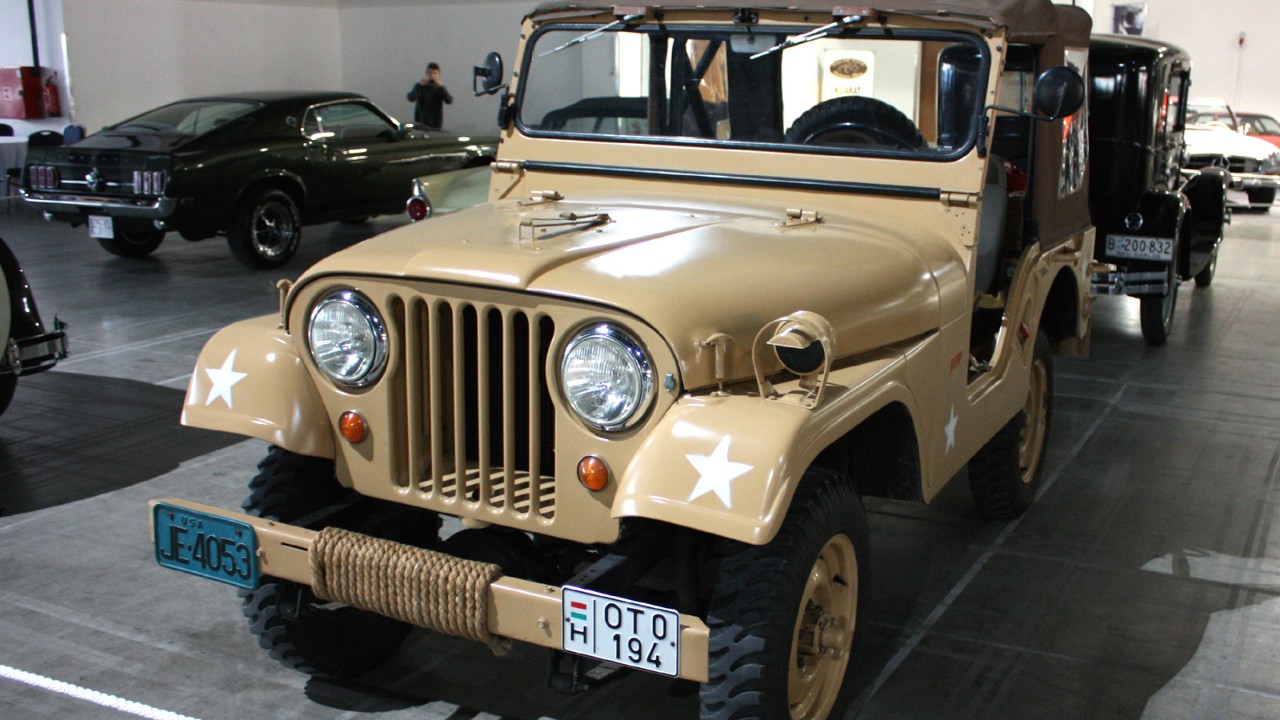
Few engines have changed hands the way the Buick Dauntless V6 did. Buick built it, then sold the rights and tooling to Kaiser-Jeep in 1967. Seven years later, with fuel suddenly scarce, GM paid to get the whole production line back from American Motors.
That round trip turned a cast-off compact-car engine into one of GM’s longest-running designs. It also gave Jeep buyers a strong option in the years before Jeep had its own six and V8. So the story belongs to off-roaders as much as to Buick fans.
Here’s how a V6 ended up in a CJ-5, then went home to Buick after the 1973 oil crisis.
A V8 with two cylinders missing

The engine started life as the Fireball V6 in the 1962 Buick Special. GM’s own heritage collection lists it as a 198-cubic-inch V6 rated at 135 horsepower. It also notes the odd-fire design, which gave the engine its uneven idle.
Buick got there fast. According to Mac’s Motor City Garage, engineers made the V6 by slicing the two front cylinders off the small aluminum V8. In fact, the whole program took less than 11 months, and the design phase covered barely 90 days.
Because it shared its layout with the 215-cubic-inch V8, the six kept that engine’s 90-degree V. Hagerty’s history adds that it weighed more than 200 pounds less than a fully dressed Chevy 216 inline-six. That Chevy six came in at about 650 pounds.
The engine grew in 1964. Its bore went to 3.75 inches and its stroke to 3.4 inches, for 225 cubic inches, according to Over-Drive magazine. However, Buick’s buyers wanted V8s by then, and the six had little future at Buick.
How the Buick Dauntless V6 ended up in a Jeep
Kaiser-Jeep had a different problem. Its CJ-5 had used the Hurricane four for about 15 years, and the company needed more power. That’s why the 225 was a natural fit, as Hagerty’s Craig Fitzgerald explains.
Jeep rebadged the engine as the Dauntless V6. Hagerty rates it at 150 horsepower and 235 lb-ft of torque. SlashGear’s history gives 155 horsepower and calls it almost double the output of the standard four. The CJ-5, the CJ-6 and the 1966 Jeepster Commando all offered it.
Then in 1967, GM sold the V6 rights and tooling to Kaiser-Jeep Corp., according to the Times Colonist’s history of the engine. Kaiser started building the 225 itself. It also gave the Jeep version heavier flywheels of 75 or 100 pounds for low-end pull, compared with about 45 pounds for a typical car flywheel, Offroaders.com notes.
AMC takes over, and the V6 goes quiet
Ownership changed again in 1970. By February of that year, American Motors had closed a $75 million deal to buy Jeep from Kaiser, according to Automotive Timelines.
AMC had engines of its own. As a result, it replaced the Buick-derived V6 with its own inline-sixes, Over-Drive reports. Offroaders.com says the Dauntless did not appear in Jeeps after 1971.
Still, AMC kept something valuable. The tooling and the production line for the V6 stayed in its hands. Nobody at the time knew how much that would matter three years later.
The oil crisis brings it home
The first oil crisis in 1973 changed the math for every carmaker in Detroit. Over-Drive writes that the crisis pushed GM to hunt for more economical engines. Meanwhile, the Times Colonist adds that the CAFE fuel economy rules that followed gave Buick another reason to want a smaller engine.
So Buick went back to AMC. In April 1974, GM offered to buy back the tooling and manufacturing line, and it began building engines that August, according to Over-Drive. The same history says AMC’s per-unit cost was too high for GM to keep buying engines from it.
Buick moved quickly once the deal closed. Just 137 days after it agreed to buy the line back, the odd-fire V6 was in five cars, Hagerty reports. Those were the Skyhawk, Apollo, Skylark, Century and Regal, with the LeSabre added for 1976.
From the 231 to 25 million engines
Buick did not simply restart the old 225. Instead, it opened the bore to 3.8 inches, the same as the Buick 350 V8, to make the 231. Over-Drive counts 78,349 of those engines installed in 1975 Buicks.
The rough idle went away next. In 1977, Buick redesigned the crankshaft with split pins so the V6 fired at an even 120 degrees, Hagerty writes. Later, the 3.8-liter grew into the 3800 Series, the name most people know today.
The Buick Dauntless V6 that Jeep owners bolted into their CJs was, in other words, the ancestor of a GM engine family that ran for decades. According to Hagerty, GM built 25 million of these engines over 46 years.
More from Fast Lane Only