The Isetta microcar opened at the front like a refrigerator, and it went on to sell more than 161,000 copies. That single fact says a lot about Europe in the 1950s. People wanted a roof over their heads on the way to work, and a motorcycle no longer felt like enough.
So small factories, scooter makers and even aircraft engineers got to work. Some of their cars were brilliant. Others, by comparison, were odd, cramped or slow. However, nearly all of them were honest answers to a real problem, and that is why we like them so much.
These nine are our picks, the microcars we admire most for their ideas, their engineering or their sheer nerve. The years, engines and numbers come from maker histories, museum and heritage records and auction results. As for the admiration, that is our own opinion, and we make no apology for it.
1. 1956 BMW Isetta 300 microcar
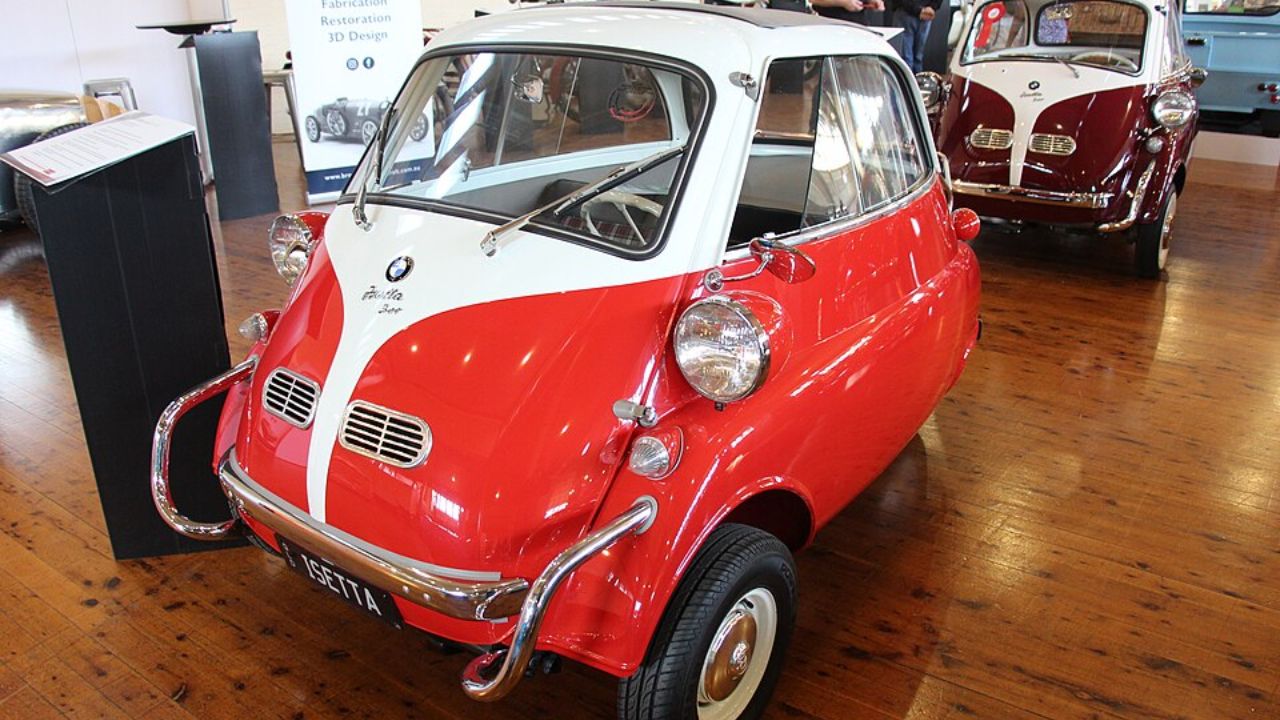
The Isetta was not a BMW idea at first. Iso in Italy built the original in 1953, and the design came from Ermenegildo Preti and Pierluigi Raggi. Then BMW bought the licence along with the complete body tooling. Its first Isetta appeared in April 1955, and the larger 300 engine followed in February 1956.
That engine was a single cylinder of about 297cc, rated at 13 PS, so it was hardly fast. Of course, the party trick was the door. The whole front of the car swung outward, and the steering wheel and instrument panel swung out with it. As a result, you stepped straight in from the curb. In the end, Isetta sales reached 161,728 units, which made it the top-selling single-cylinder car in the world. That is a remarkable total for an Isetta microcar with one cylinder.
Our take: the Isetta earns its place because it worked as a business, not only as a novelty. If you want the full story of what it did for its maker, we covered why the 1956 BMW Isetta saved a company. We admire any car that turns a cheap idea into a factory’s lifeline.
2. 1957 Messerschmitt KR200

Fritz Fend was an aircraft engineer, and his KR200 looks the part. Messerschmitt then built it from 1955 to 1964. You sit in tandem, one behind the other, under a clear acrylic canopy. Instead of a steering wheel, the driver holds a bar, much like an airplane’s. The canopy is hinged on the right side, so you climb in sideways, the way a pilot boards a cockpit.
Meanwhile, power came from a 191cc Fichtel & Sachs two-stroke single of about 10 PS. That sounds feeble, but the narrow body cut through the air. In fact, a modified KR200 ran for 24 hours at Hockenheim on August 29 and 30, 1955. It averaged 103 km/h, or 64 mph, and broke 22 international class records.
These cars are not out of reach, either. For example, RM Sotheby’s sold a red 1955 KR200 at its Auburn Fall 2021 sale for $21,450. In our view, the KR200 is the most purposeful microcar ever made. It is a fighter cockpit for the commute, and it proved its speed on a real race circuit. That record makes us grin every time we see one.
3. 1957 Heinkel Kabine 153

Heinkel introduced its Kabine in October 1956, and the model number told you the wheel count. The 153 had three wheels, while the 154 had four. We prefer the three-wheeler, because it is the purest version of the idea. By comparison, the four-wheel 154 started with a 204cc engine, which Heinkel later cut to 198cc for insurance reasons.
The Type 153 used a 174cc engine rated at 9.2 PS. It weighed just 250 kilograms, or 551 pounds, and it could reach 87 km/h, about 54 mph. Like the Isetta, it also had a single door at the front.
The design also lived a long life after Heinkel let it go. Trojan Cars in Britain built it as the Trojan 200 from 1960 until 1966. Meanwhile, Los Cedros assembled Kabines under licence in Argentina. Our take: that second career is the best review a small car can get. When other companies pay to keep building your design, you clearly got the basics right. For us, the 153 is the smart buy among front-door bubble cars. It gives you the full bubble-car experience with less weight to haul.
4. 1957–1958 Zündapp Janus

Zündapp made motorcycles, and it had never built a car before the Janus. The design began with Claudius Dornier, son of Claude Dornier, as a four-seat prototype called the Dornier Delta. Zündapp finally put it into production in June 1957.
The layout is what we love. Two passengers sit facing forward, and two sit facing backward, back to back. One door opens at the front, and another opens at the rear. Between them sits a mid-mounted 245cc two-stroke single that made 14 horsepower. The top speed was about 50 mph, which was enough for town and country lanes.
Sales started well, with 1,731 cars in the first six months. Even so, production ended by mid-1958 at 6,902 cars in total. In our view, the Janus is the cleverest packaging job on this list. Indeed, it treats a tiny car like a little room with two entrances. Frankly, few modern designers would dare to try it. Picture the rear passengers watching the road unwind behind them while the driver looks ahead. That is pure 1950s optimism, and we admire it for exactly that reason.
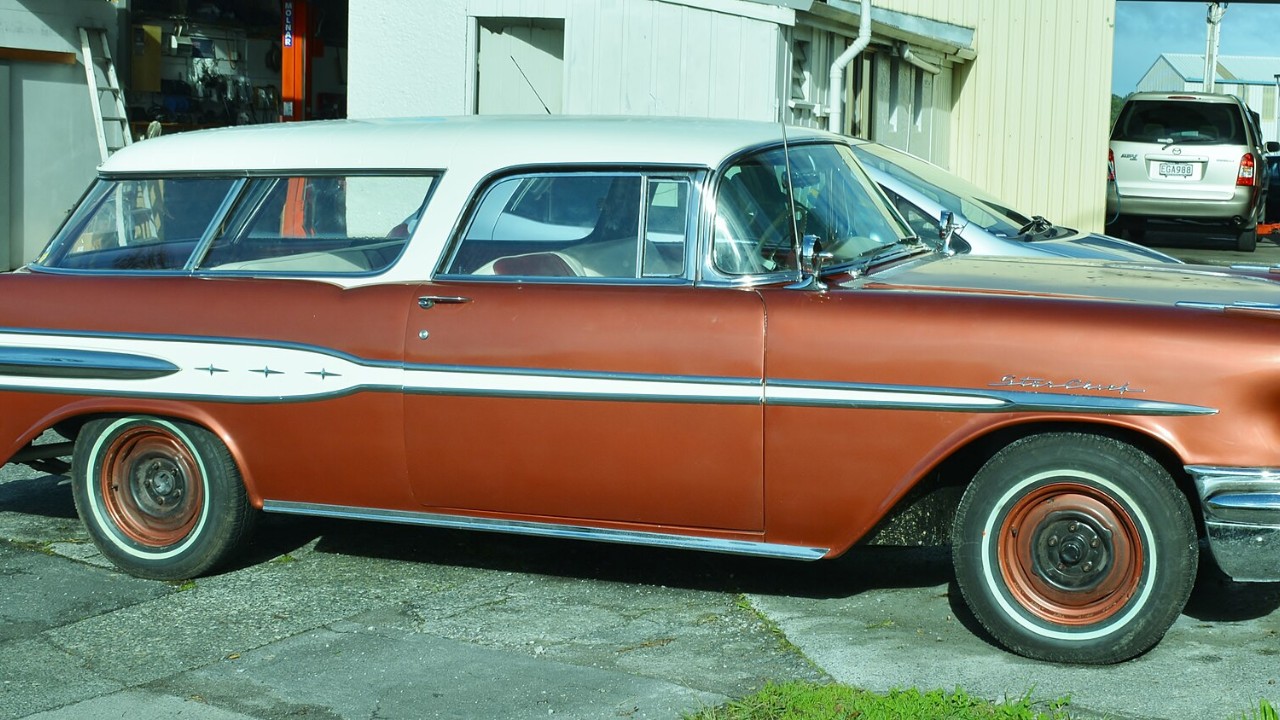
5. 1959 Goggomobil TS250 coupe
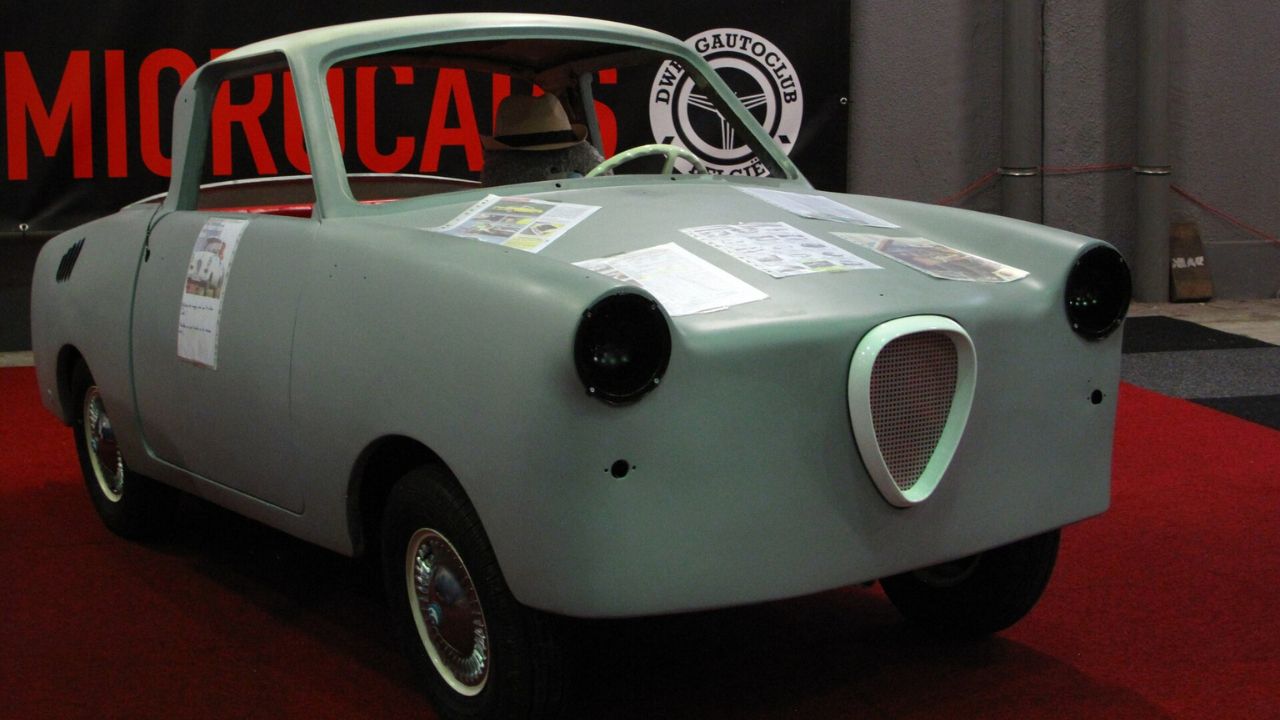
Hans Glas built Goggomobils in Dingolfing, Bavaria, from 1955 to 1969. The pretty TS coupe arrived at the 1957 IFMA show. It looked like a scaled-down grand tourer, and that was exactly the appeal.
In its 1958 specification, the TS250 used a 247cc engine with 13.6 horsepower at 5,000 rpm. Even so, top speed was about 47 mph. Larger 300 and 400 versions followed for buyers who wanted more pace. In fact, a TS300 tested by The Motor in 1957 reached 59.2 mph. Later, in 1964, the coupe swapped its rear-hinged doors for conventional front-hinged ones. That was the only major design change in its life.
Overall, Glas built 66,511 TS coupes. After that, BMW took over as the maker in 1966 and kept the line going until 1969. Our take: the TS250 is the microcar for someone who cares about style. It has proper proportions, a real trunk line and a sporty roof. As a result, it looks right parked next to much bigger classics. We would happily take one to any show, and we suspect it would draw a bigger crowd than the Ferrari next to it.
6. 1958 Vespa 400

Piaggio, the Italian scooter maker, designed the Vespa 400. Oddly, the car was built in France, by ACMA at Fourchambault, from 1957 to 1961. It made its public debut at a press presentation in Monaco on September 26, 1957.
As with the Fiat, the engine sat at the back. It was a 393cc air-cooled two-stroke twin, first rated at 13 horsepower and later at 14. Buyers got a three-speed manual gearbox, while a four-speed came only on the GT version for European markets. Overhead, a fabric roof rolled back from the windshield to the engine cover. There were two seats up front. Behind them, an optional cushion made room for two small children.
The 400 sold well for a while, with 12,130 built in 1958. On the road, a British Motor magazine test recorded a top speed of 51.8 mph. In our view, the Vespa 400 is the friendliest car on this list. It feels like a family scooter that grew a roof, and the open-top roof makes every short trip feel like a day out. Honestly, we can think of few better ways to fetch bread on a summer morning.
7. 1963 Peel P50 microcar

The Peel P50 is tiny even by microcar standards. Peel Engineering built it on the Isle of Man from 1962 to 1965. It measures 54 inches long, and an original car weighs about 130 pounds. The 2010 Guinness World Records listed it as the smallest production car ever made.
Power came from a 49cc DKW single with 4.2 horsepower. The three-speed gearbox had no reverse. Instead, a handle at the back lets you move the car by hand. Top speed was about 38 mph. Only 50 were built, and 27 are known to exist today. Peel Engineering Ltd. revived production in England in 2010, although the modern cars top out at about 28 mph. Back in 2007, Top Gear sent Jeremy Clarkson across London and into the BBC building in one.
That rarity shows up at auction. In March 2016, a P50 brought $176,000 at Sotheby’s, a record for the model. Our take: the P50 is the most honest car ever made. It promises one seat and one door, and it delivers exactly that. We admire it as a work of extreme minimalism.
8. 1958 Fiat Nuova 500

Fiat showed the Nuova 500 to the public on July 4, 1957. According to Stellantis Heritage, the brand’s own history archive, dozens of the new cars paraded through Turin from the Mirafiori factory. Dante Giacosa chose its air-cooled twin, mounted at the rear, after several experiments.
The first engine displaced 479cc, and the car weighed 470 kilograms dry. A canvas roof covered the whole cabin. Surprisingly, the launch was not an instant hit, partly because the larger Fiat 600 was already popular. So Fiat answered fast. A padded rear seat turned the two-seater into a four-seater, and the Normale debuted at the Turin show on October 30, 1957. Better still, Fiat kept the Normale at its launch price of 490,000 lire.
By mid-1958, a 499.5cc Sport had arrived with a top speed of 105 km/h. That May, 500 Sports took the first four places in their class at the Hockenheim 12 Hours. For more of its history, read why the 1957 Fiat 500 changed European mobility. In our view, the 1958 car is the sweet spot, with early charm and Fiat’s quick fixes in place.
9. 1958 Subaru 360

The Subaru 360 arrived in 1958, and Japanese drivers nicknamed it the ladybug. It packed a 356cc air-cooled two-stroke twin into the rear and used rear-hinged doors. Because the engine was a two-stroke, oil was premixed with the fuel, a detail worth remembering if you ever buy one. Despite its size, it seated four adults. Japan’s mechanical engineers later honored it, too. The Japan Society of Mechanical Engineers lists the 360 as Mechanical Engineering Heritage No. 78, with a top speed of 83 km/h.
America was a harder sell. Malcolm Bricklin imported the car, and about 10,000 reached the United States. The ads called it “Cheap and Ugly,” which was at least honest. Then Consumer Reports branded it “Not Acceptable” in April 1969, citing safety concerns and a lack of power.
Our take: judge the 360 by the market it was built for, not by a highway in Ohio. At home, it put families on wheels, and that is the reason we admire it. According to the engineering society, cumulative production of the 360 exceeded 390,000 units.
More from Fast Lane Only