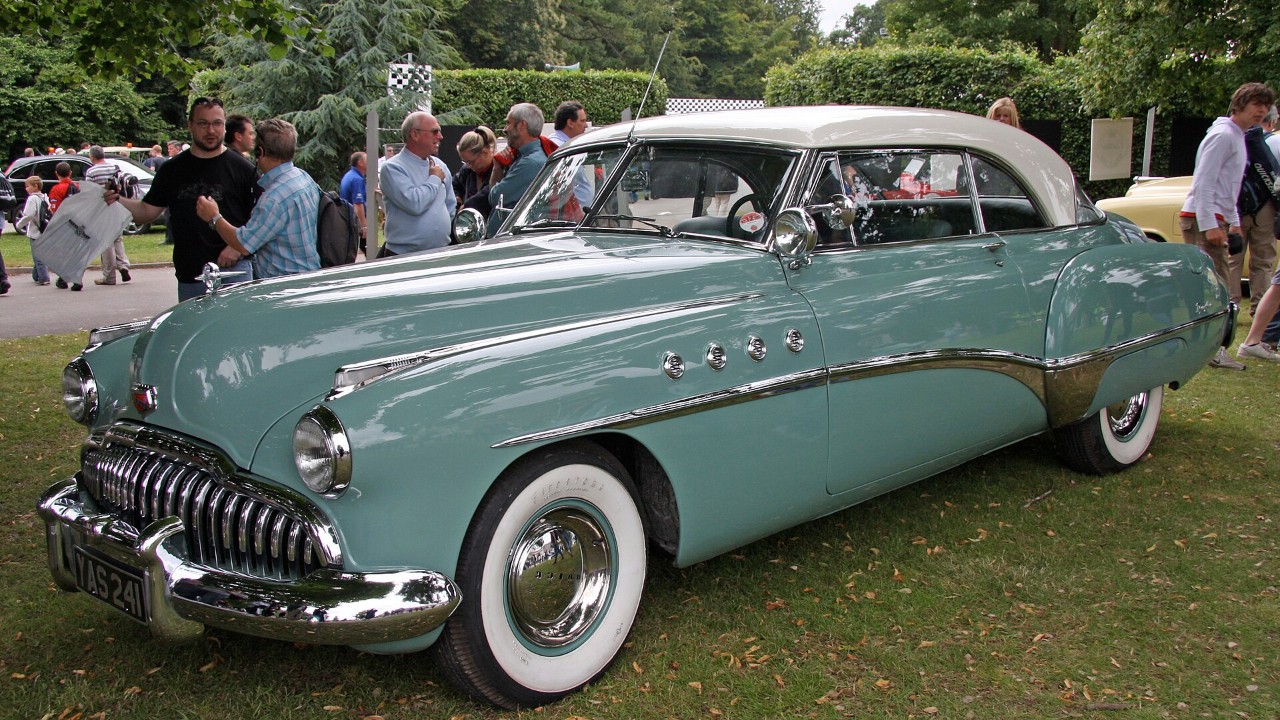
Buick’s famous portholes started as a personal touch on one man’s car. In 1948, stylist Ned Nickles fitted flashing lights to the hood of his own Roadmaster. A year later, Buick VentiPorts appeared on every 1949 Buick, minus the lights. Those round holes then became a Buick signature for decades.
Nickles was no outsider tinkering in his driveway. He was Buick’s styling chief, and his car was a 1948 Roadmaster, the top of the line. His idea came straight from aviation, which suited a brand that already wore a bombsight-style hood mascot.
The trick itself was simple. Nickles installed four amber lights on each side of the hood. Then he wired them to the distributor, so they flashed as each cylinder fired. The effect copied the exhaust flames of a fighter plane’s engine.
How Ned Nickles’ lights became Buick VentiPorts
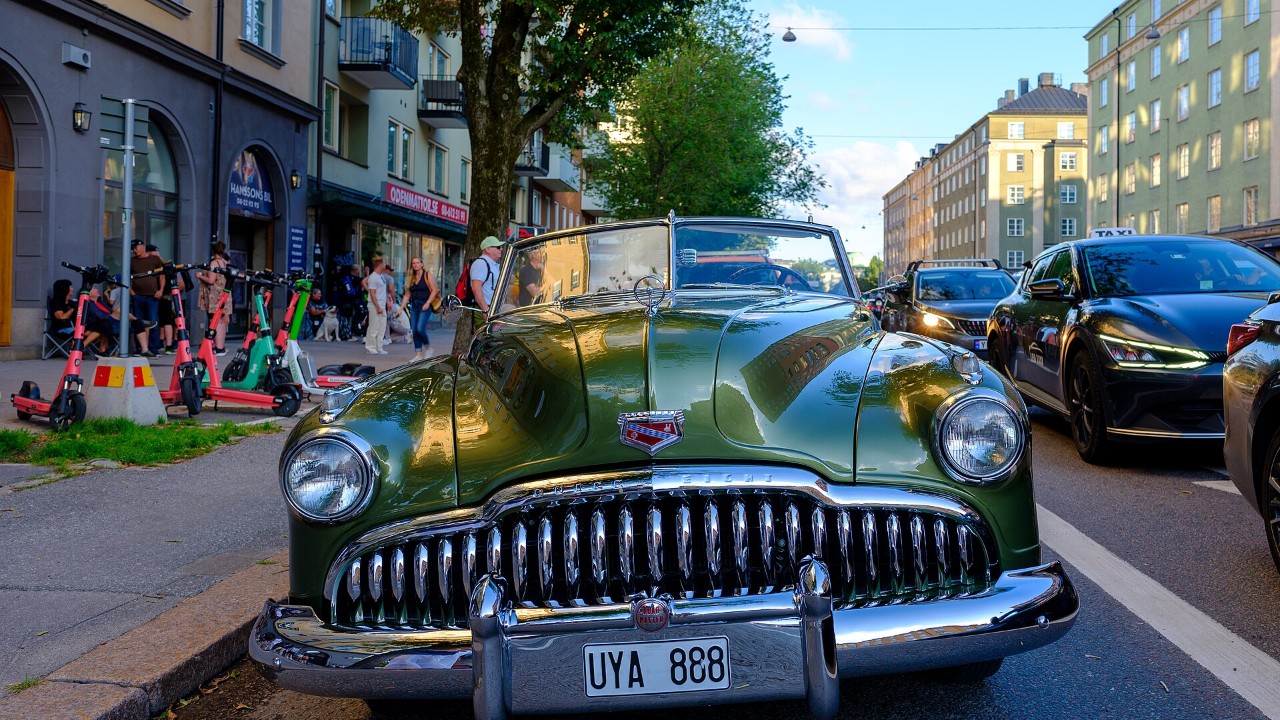
Jalopnik describes the lights as a way to make the driver feel like a fighter pilot. Combined with the bombsight mascot, the flashing ports turned a big Buick into an imaginary warplane. However, Mac’s Motor City Garage notes that some versions of the story point to gun muzzles instead of exhaust pipes.
Not everyone at Buick loved it. Mac’s says manufacturing boss Edward T. Ragsdale ridiculed the gimmick and said it ruined the car. General manager Harlow Curtice disagreed. In fact, he fell in love with the idea and ordered it into production for 1949, which Mac’s says was a scant seven months away.
Curtice drew the line at the bulbs, though. As a result, the 1949 cars got the holes without any lights inside. Buick’s official name for them was “Cruiser-Line Ventiports.”
Four for a Roadmaster, three for the rest
The count worked as a code. In 1949, the Roadmaster wore four VentiPorts per side, while the Super and Special wore three. Jalopnik ties that number to the relative displacement of each model’s straight-eight engine. So a glance at the fender told you which engine sat under the hood.
The Roadmaster’s eight was the big one. Conceptcarz lists the 1949 engine at 320.2 cubic inches and 150 horsepower at 3,600 rpm, paired with Dynaflow drive. The car rode on a 126-inch wheelbase, and the site notes its longer front fenders carried four ventiports per side.
The ports also had a job, at least on paper. American Car Historian quotes Buick describing them as “for identification and cooling purposes” in 1949. Likewise, Jalopnik says the sales brochure claimed they helped ventilate the engine compartment.
That role did not last long. After 1949, according to American Car Historian, the holes no longer served for cooling. Some accounts blame owners who complained that children pushed objects into them. But the site presents that as a story, not a confirmed fact. Either way, Buick VentiPorts turned into pure styling.
Not every historian buys the cooling story at all, though. SlashGear says the ports were never intended to provide extra ventilation. In its account, their real purpose was looks, plus a quick way to tell a Buick from every other car on the road.
Gone in 1958, back for 1960
Later, the four-and-three rule carried into the V8 era. Mac’s says the 1955 Special with its 264-cubic-inch V8 had three per side. Meanwhile, the Century, Super and Roadmaster with the 322-cubic-inch V8 had four. American Car Historian adds that only the Roadmaster wore four through 1954.
After 1957, SlashGear says, Buick dropped them altogether. VentiPorts were “temporarily banished” for 1958 and 1959, in Mac’s words. Then they returned in stylized form on the 1960 line. Through the 1960s, they often showed up as bright metal fender trim, with four on the 1961 Electra 225 convertible and three on the LeSabre and Invicta.
A styling cue that kept coming back
Later Buicks kept the idea alive long after the straight-eight was gone. For instance, Mac’s lists the 1987 GNX and the 2003 Park Avenue Ultra among the cars that brought the ports back. Both were a long way from Nickles’ flashing Roadmaster, yet both carried the idea on their fenders.
The count kept its meaning in later years too. SlashGear says three ports on the LaCrosse, Lucerne and Enclave signaled a V6, while four signaled a V8. The GNX, however, broke the rule and wore four ports despite its V6.
The lights themselves never reached a showroom. American Car Historian calls them a personal modification on Nickles’ own car, not a production feature. Still, the holes they inspired lasted. Mac’s notes that the 2017 LaCrosse carried the tradition forward, nearly seven decades after the first VentiPorts reached showrooms on the 1949 cars.
More from Fast Lane Only