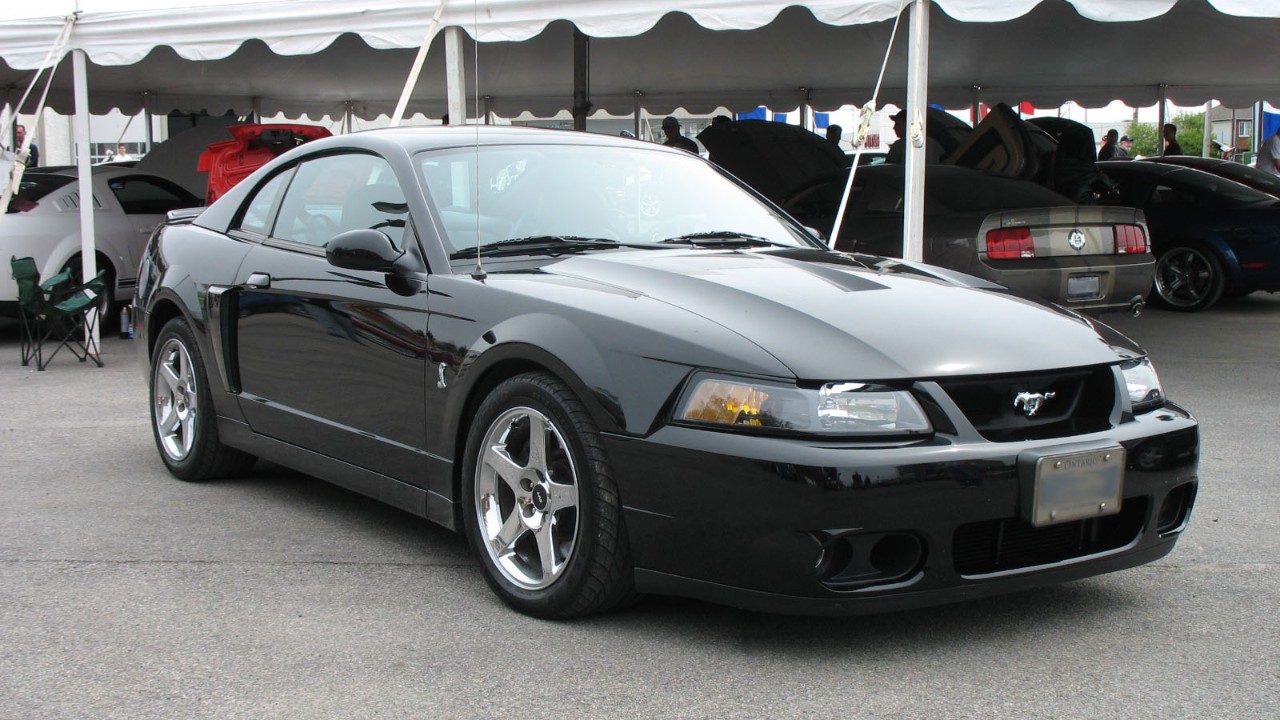
A factory horsepower rating is a promise, and a supercharged V8 makes that promise easy to test. Bolt a stock car to a chassis dyno, measure what reaches the rear tires and work backward. If the wheels show nearly as much power as the brochure claims at the crank, something doesn’t add up.
That’s because every drivetrain eats some power on the way to the road. Gears, shafts and the differential all take a cut, and testers often allow around 15% for that loss. So when a car loses far less than that on the rollers, you have a good hint that the engine makes more than its maker said.
These are our three picks for supercharged engines where a published dyno test points above the official number. Dyno results vary with weather, equipment and the car itself, so treat them as strong evidence rather than proof. The choice of cars is our opinion, while every figure comes from the test reports we read.
1. 2003–2004 Ford SVT Mustang Cobra 4.6-liter supercharged V8
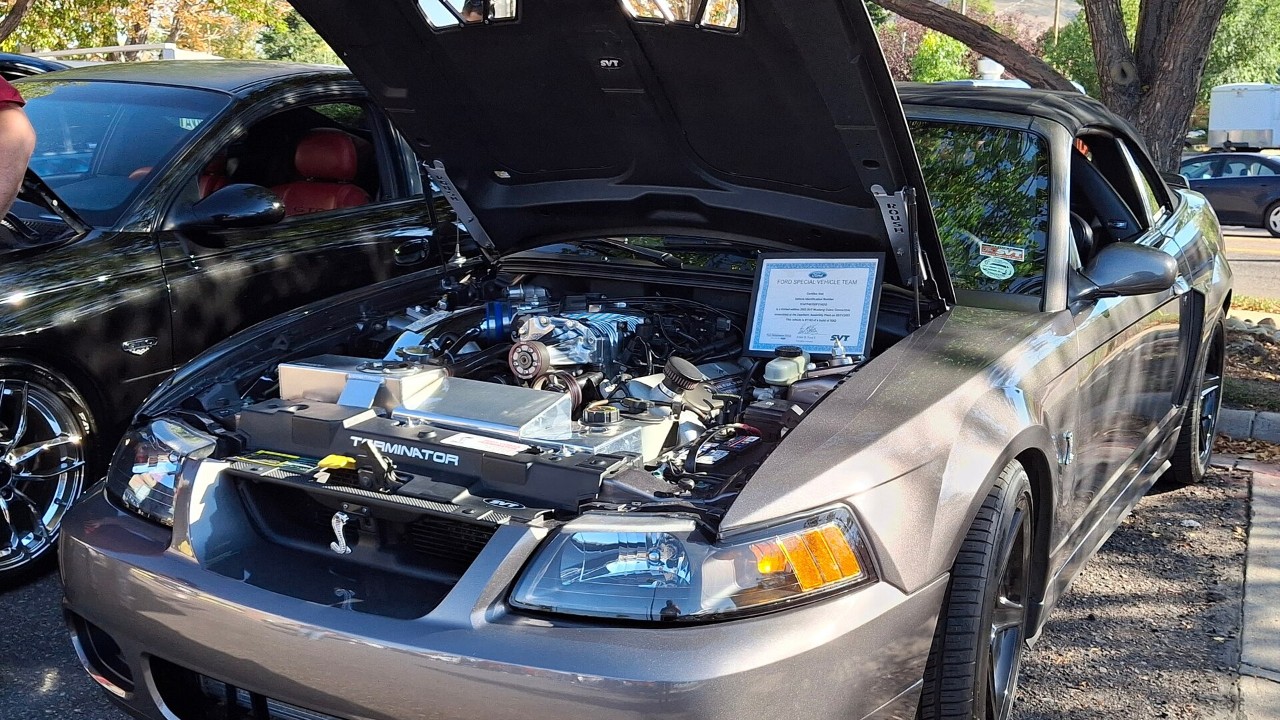
The 2003–2004 SVT Cobra, nicknamed the “Terminator,” carried a supercharged 4.6-liter V8. Ford rated it at 390 horsepower and 390 lb-ft of torque. Yet the Cobra has long had a reputation for making more than advertised, and stock cars on the dyno back that up.
In 2020, Motor1 reported on a stock 2003 Cobra 10th Anniversary Edition with just 2,476 miles. It made 370 hp at 6,300 rpm and 380 lb-ft at 4,200 rpm at the wheels. In other words, the test implied a drivetrain loss of about 5% for horsepower, far below the 15% usually assumed. Then, in 2023, Motor1 covered a Competition Orange 2004 Cobra with 23,000 miles that made a pair of 394-hp dyno runs.
Why would Ford sandbag? Motor1 suggests the company played it safe after the 1999 Cobra fell short of its advertised output. In our view, the Terminator is the classic case of a car that was faster than its window sticker. For the earlier chapter of that story, read why the 1996 Mustang SVT Cobra stayed underrated.
2. 2015 Dodge Challenger SRT Hellcat 6.2-liter supercharged Hemi
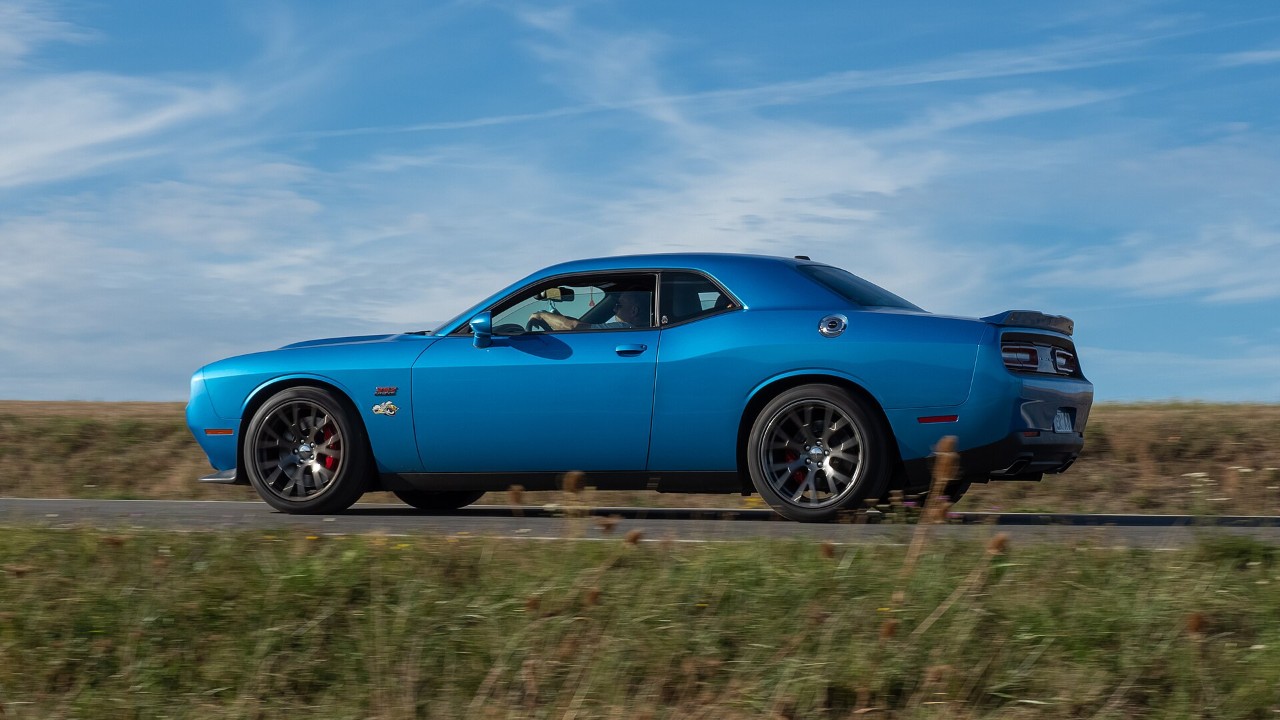
Dodge announced the Hellcat’s rating in July 2014: 707 horsepower and 650 lb-ft from a 6.2-liter supercharged Hemi V8. According to EngineLabs, it used an Eaton-based twin-screw blower limited to 11.6 psi of boost. It was also Dodge’s first attempt at supercharging, and it drove through a new 8-speed automatic.
In a test reported that August, MotorTrend strapped an automatic Challenger SRT Hellcat to the dyno at K&N Engineering in Riverside, California. Motor Authority’s report on that test says the car made 635 hp and 591 lb-ft at the wheels. With a 12% drivetrain loss, that works out to about 722 hp and 672 lb-ft at the crank.
That’s 15 horsepower more than the official figure. Also, Motor Authority calls the 12% allowance conservative, even for an automatic. On the other hand, Motor Authority notes that a dyno can’t account for real-world drag. Our take: the Hellcat at least lives up to its rating, and it probably beats it. If you own one, our story on the Hellcat Challenger that laughs at your tire budget explains where the power goes.
3. 2020 Ford Shelby GT500 5.2-liter supercharged V8
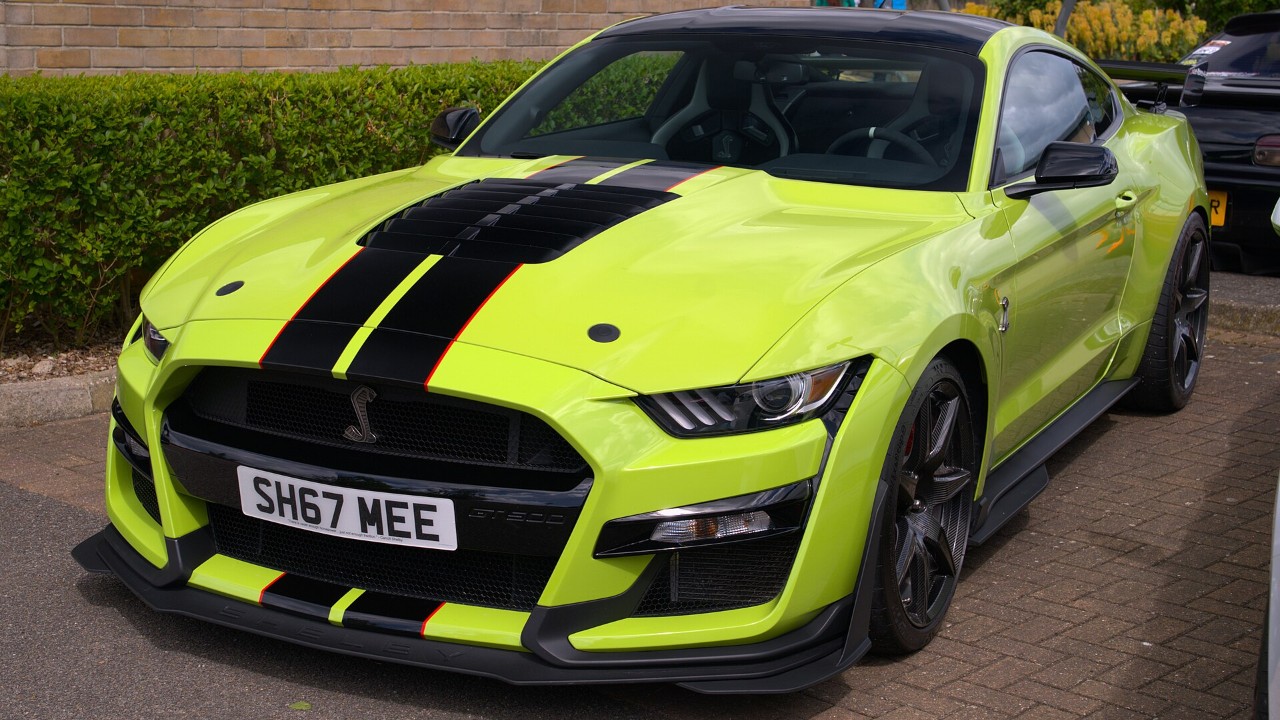
The 2020 Shelby GT500 arrived with a 5.2-liter supercharged V8 that Ford calls the Predator. Ford rated it at 760 horsepower and 625 lb-ft, and it said the figure was certified to SAE dynamometer standards. That makes the GT500 an interesting test, because the official number was already carefully measured.
Even so, the first private dyno pull on camera turned heads. Motor1 reported that a stock GT500 made 705 horsepower at the wheels on Speed Phenom’s dyno. With the usual 15% loss, that would mean about 825 hp at the crank. Motor1 doubts it was that high, because the dual-clutch gearbox wastes less power and dyno conditions vary. The car would need a loss of only about 8% to match the result.
So where does that leave the Predator V8? Motor1’s writer says an underrating of about 30 horsepower would be easy to believe, and we agree. For more engines with a bigger punch than their spec sheets, see our list of factory engines that were faster than anyone admitted. That stock GT500 put 705 horsepower through its rear tires, just 55 shy of Ford’s certified crank rating.
More from Fast Lane Only