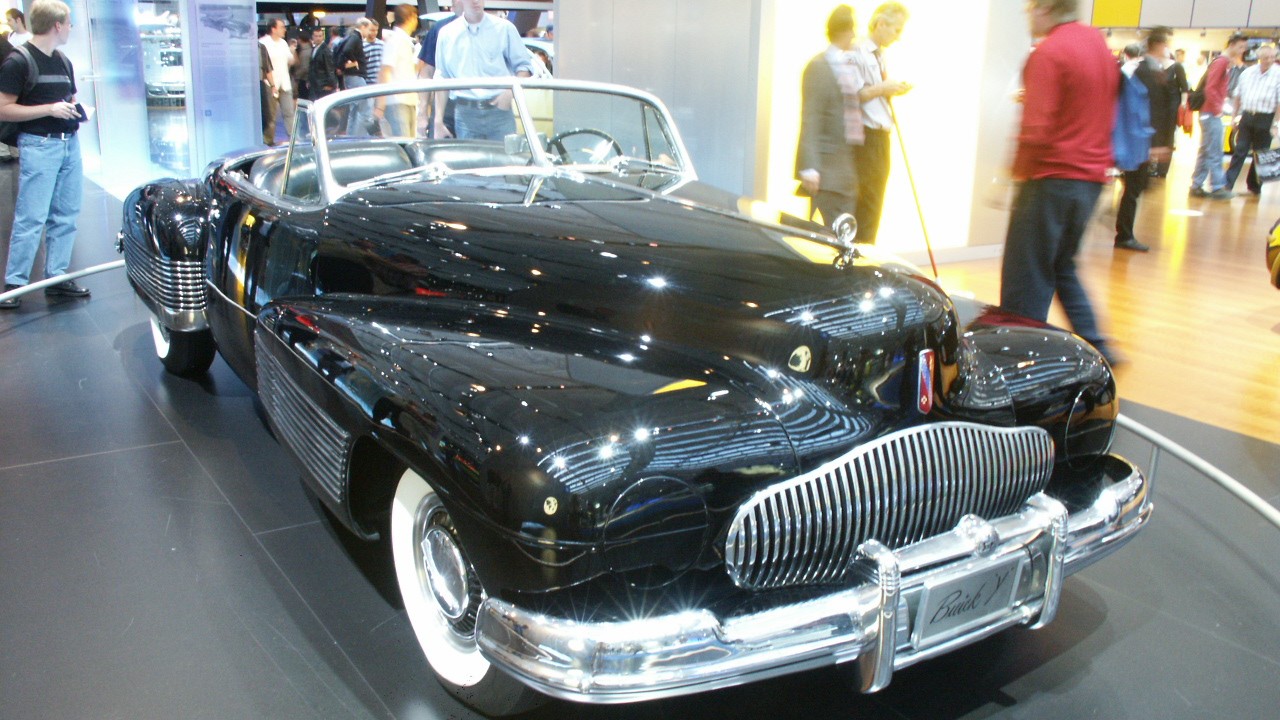
The Buick Y-Job was a long, low two-seat convertible that General Motors finished in late 1938. It was never meant for a showroom. Instead, it gave Harley Earl a rolling sketch of what Buicks could look like years ahead. Today, historians call it the car industry’s first concept car.
That alone would earn it a place in design history. However, the Y-Job did not live under a dust sheet in a studio. Earl took it home and used it as his own car through the 1940s. As a result, the most important prototype of its era piled up real miles on public roads.
Earl was the stylist who had shaped the 1931 Cadillac V16 before this project. With the Y-Job, he wanted a halo car for Buick. So he approached Buick’s chief, Harlow Curtice, with the idea of a personal car paid for by the division. Buick money, Buick designers and Buick engineers built it.
Why the Buick Y-Job counts as the first concept car
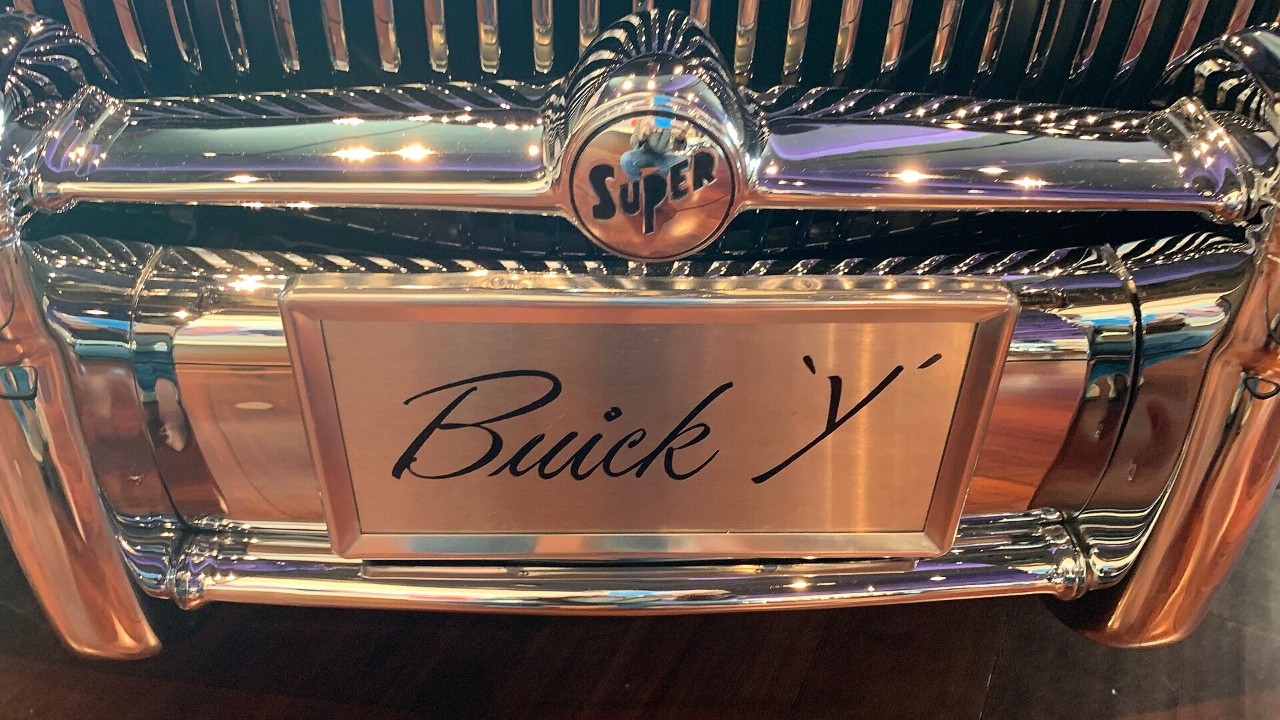
The Audrain Automobile Museum, which showed the car in its 2019 exhibit on GM design, describes the 1938 Buick Y-Job as “the industry’s first concept car.” Car Design News makes the same call. In other words, the Y-Job is where the idea of a show car that previews future production styling begins.
Even the name came from that experimental spirit. According to the Audrain, the “Y” borrowed the letter then used for experimental aircraft. So the badge sounded more like a test program than a product, and that suited a car built to try out ideas.
The car’s entry on the National Historic Vehicle Register puts it slightly more carefully. It says this “experimental Buick ushered in the modern ‘concept car.’” Either way, both sources credit the Y-Job with starting the practice of building a full, drivable car to preview future styling.
What made it look so far ahead
The Y-Job was huge and very low for 1938. The Audrain lists it at 208 inches long and 74 inches wide, with a roofline only 58 inches off the ground. It also rode on 13-inch wheels. Car Design News points out that wheels that small looked tiny even at the time, so the body appeared to hug the road.
The details mattered even more than the size. First, the headlights hid behind covers that opened sideways, so they seemed to blink. Car Design News calls those hidden lamps a GM first. Second, the door handles sat flush with the body. Running boards, a fixture of 1930s cars, were gone. The fenders also swept back into the doors, according to the register entry.
The grille was short and horizontal. Car Design News says the Mercedes Silver Arrow racing cars heavily influenced it. Meanwhile, the cockpit seated two, and the folding fabric roof disappeared under a metal deck at the rear. The Audrain adds that the car had electrically operated windows. It also carried a Bendix power steering unit, which the museum says allowed smooth steering at all speeds.
Harley Earl’s daily driver
Most concept cars today get a few auto-show turns and then a museum spot. By contrast, the Y-Job became transport. The National Historic Vehicle Register entry says it was Earl’s “daily driver throughout the ’40s.” Car Design News adds that Earl loved to show it off on the road.
That daily use also made the car a public preview. In 1948, the Audrain notes, one reporter saw the car and thought it was a brand-new 1949 Buick. That mistake says a lot. By then the production cars had started to catch up with a design Earl had parked in his own driveway a decade earlier.
The miles show on the car itself. Its speedometer was later replaced, and the replacement unit reads 25,850, according to the register entry. So the gauge does not tell the full story of how far Earl drove it. Still, the car clearly earned its keep as a working automobile.
What the Buick Y-Job left behind
Several of the car’s ideas reached showrooms. The Audrain says hidden headlights, flush door handles, a top concealed under a metal deck and power windows all “found their way into production cars.” In addition, the museum says the car foreshadowed the cars to come in the late 1940s.
Earl did not stop with one car either. His next showpiece, the 1951 Le Sabre concept, finally surpassed it. Car Design News calls that later car “even more flamboyant.” Even so, the Le Sabre followed the path the Y-Job had opened more than a decade earlier.
The Y-Job’s own road was less direct. Car Design News reports that the car ended up, ironically, at the Henry Ford Museum. General Motors then bought it back in 1993. GM added it to its heritage collection and restored it to running order.
Where to see it now
The car is still in the care of GM, according to its National Historic Vehicle Register entry. That listing also notes the later speedometer and the engine’s twin Carter carburetors, which came from a 1941–42 Buick intake. For a deeper look at the styling story, Car Design News has a full design history.
The car has also traveled as a guest. For instance, the Audrain showed it in its 2019 exhibition, “Styling the Future: A History of GM Design & Concept Cars.” The Buick Y-Job is entered on the National Historic Vehicle Register as NHVR No. 14.
More from Fast Lane Only