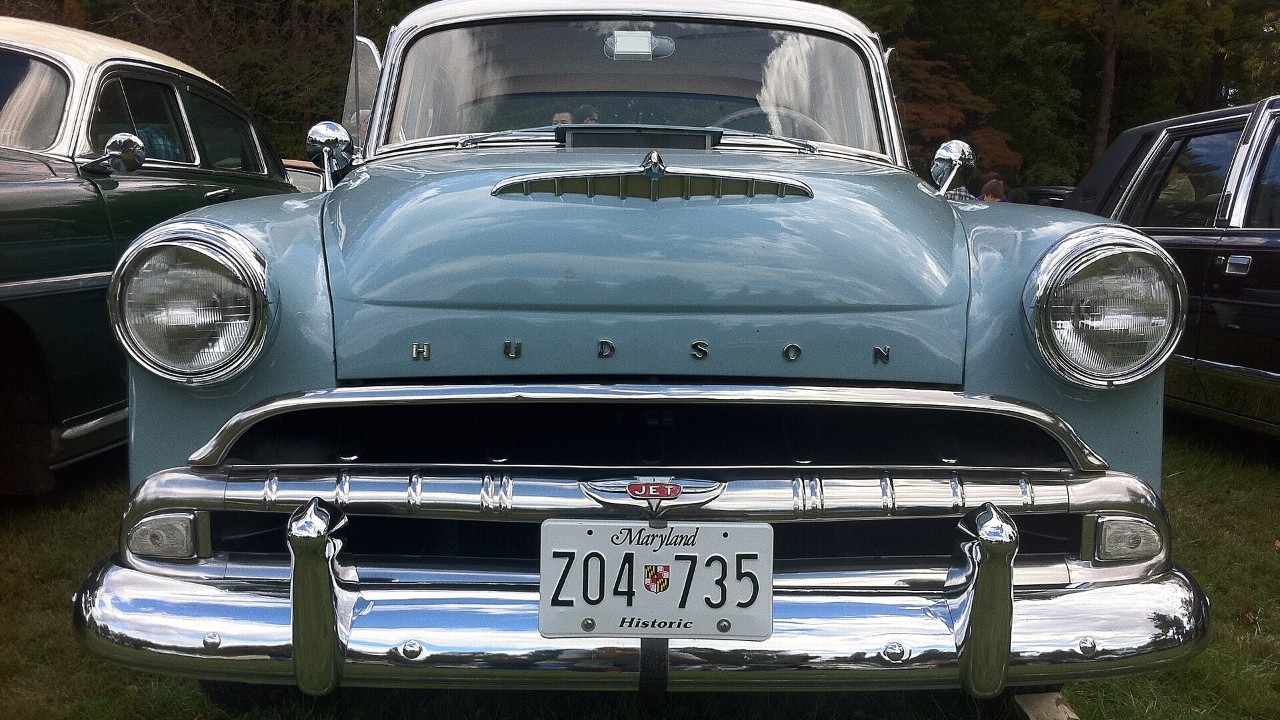
Hudson hoped the Hudson Jet-Liner would save the company, but instead it helped end Hudson as an independent maker. That is the chrome era in one story. Between the early 1950s and the end of the decade, Detroit and the independents threw chrome, fins and big ideas at buyers every single year.
Plenty of those ideas sold by the hundreds of thousands. Others arrived at the wrong moment, cost too much or wore a badge that buyers were about to forget. Today you mostly find them at regional shows, parked a few rows away from the Bel Airs and Thunderbirds.
These are our picks, eight forgotten vehicles from the chrome era that we think deserved a better reception than they got. We pulled the years, engines and production numbers from our sources. The verdicts are our opinion, and so is the soft spot we have for every one of them.
1. 1954 Hudson Jet-Liner
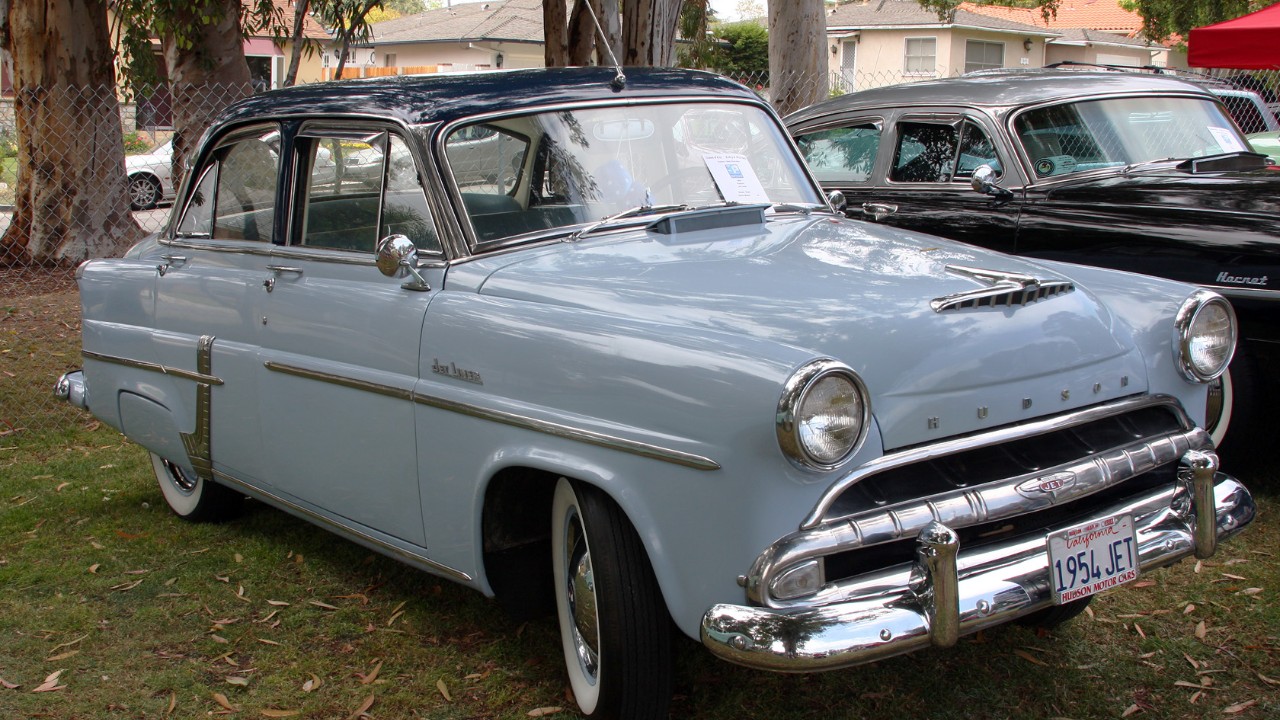
Hudson built the Jet as its compact, and the Hudson Jet-Liner arrived for 1954 as the dressiest version. That trim added chrome window and body-side moldings, gravel shields and color-keyed vinyl interiors with foam rubber seat cushions. Under the hood sat a 202-cubic-inch flathead six making 104 horsepower. If you ticked the Twin-H option, you got two carburetors, an aluminum head and 114 horsepower.
The trouble was money. Development and tooling cost an estimated $10 million to $16 million, and the Jet still cost more than a full-size Chevrolet, Ford or Plymouth. As a result, only 14,224 Jets found U.S. buyers in 1954, down from 21,143 the year before. By then, Hudson had merged with Nash to form American Motors, so AMC actually built the 1954 cars.
In our view, the Hudson Jet-Liner deserved better because the basic package was honest and well made. Its smaller size also made it a sensible car for city buyers. Sadly, it landed in a price gap that nobody wanted to fill. If you find a clean Hudson Jet-Liner today, you get an uncommon Hudson that is easy to drive and easy to park.
2. 1954 Nash Ambassador Super
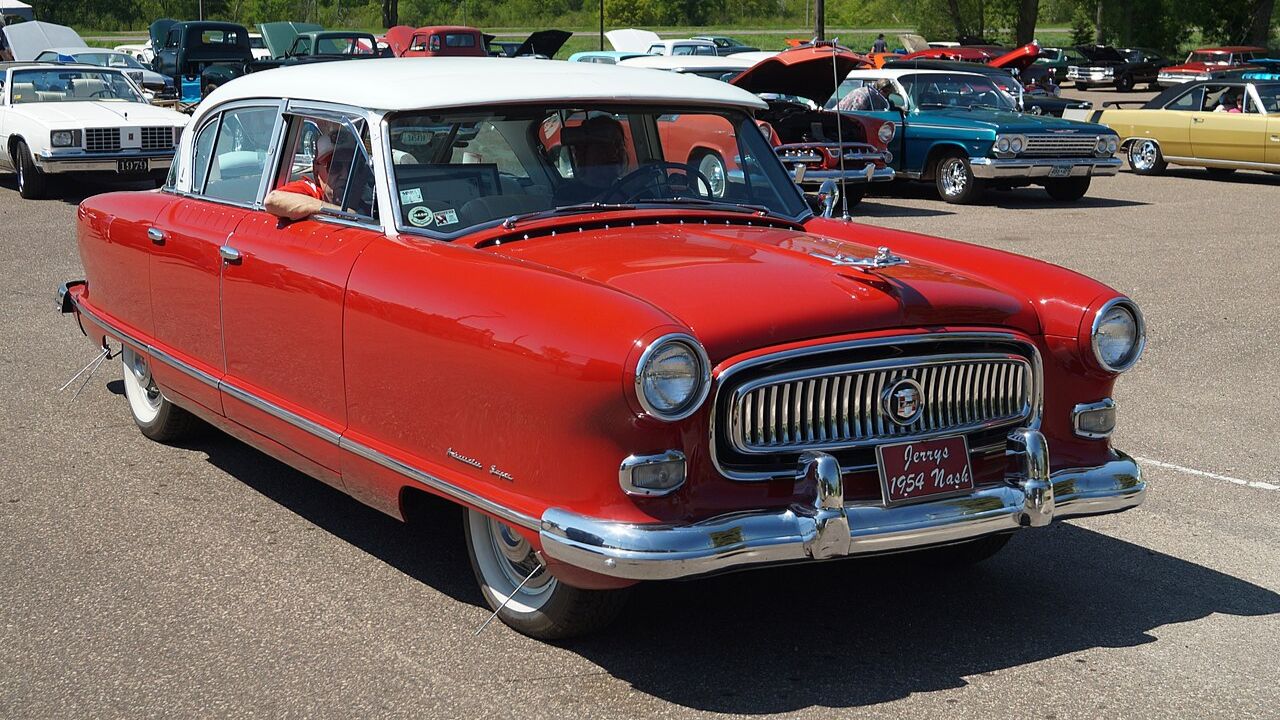
Nash sold the 1952 to 1954 Ambassador as a Pinin Farina design, although Nash’s own lead designer, Edmund E. Anderson, shaped much of it too. The result had an enveloping body, a reverse-slanted rear roof pillar and a unit body with no separate frame. For 1954, the standard 252.6-cubic-inch six made 130 horsepower.
The clever part was the climate system. Nash built heating, ventilation and air conditioning into one front-end package under the hood, with a single thermostat control. Meanwhile, the company itself was changing. Nash merged with Hudson on January 14, 1954, and that year it built 21,428 Ambassadors.
We think the Ambassador Super is one of the smartest cars of its decade. It had a stiff unit body, a smooth six and serious comfort engineering, yet most people now remember Nash for the tiny Metropolitan instead. For you, that means an Ambassador usually costs far less than a comparable Packard or Chrysler. It also means you will rarely park next to another one at a show. For a family cruiser with real engineering inside, that is a pleasant surprise.
3. 1956 Packard Clipper Custom
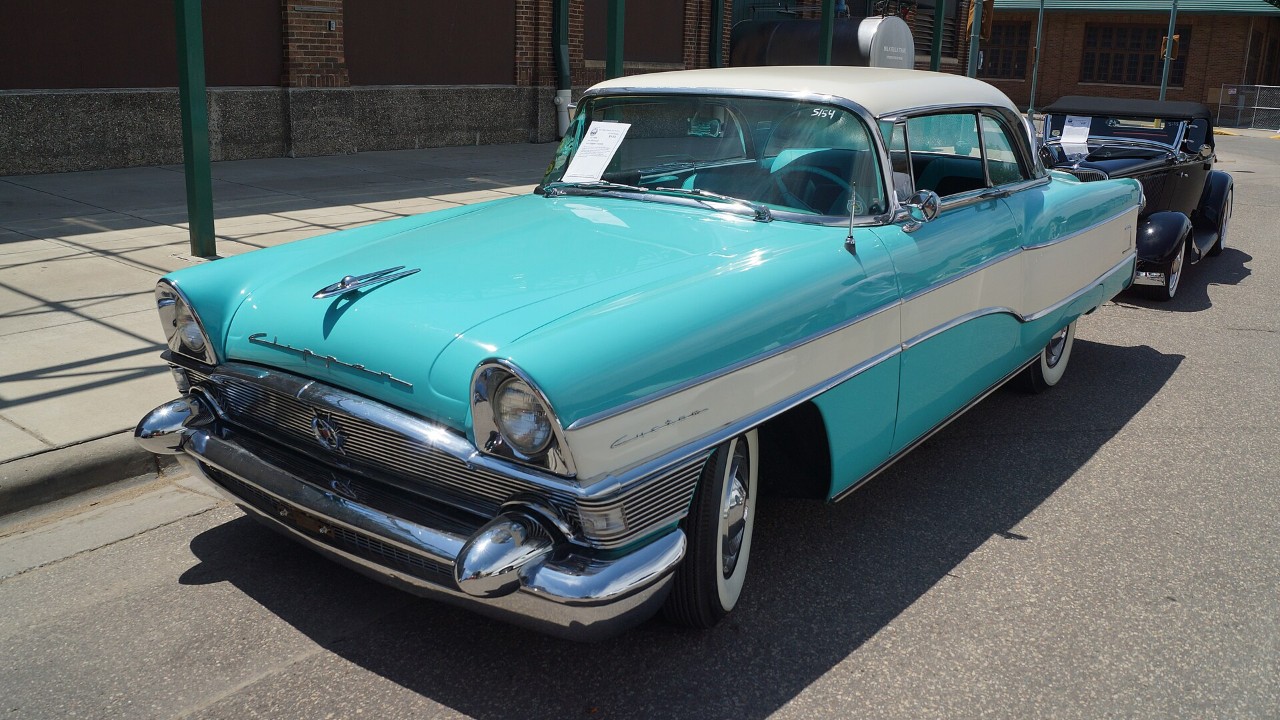
For 1956, Studebaker-Packard turned the Clipper into its own make, with its own division and a ship’s wheel logo. The idea was to keep the Packard name for the senior cars and let the Clipper stand on its own. The Clipper Custom also got a bigger V8, since Packard enlarged the engine from 320 to 352 cubic inches that year.
Buyers stayed away, however. Clipper built 18,572 cars of all types for 1956, not counting exports. The Custom series accounted for 2,219 four-door sedans and 1,466 Constellation hardtops. Those are tiny numbers for a car meant to rescue a whole company.
Our take is simple. The 1956 Clipper Custom was a genuinely modern car from a company that had run out of time. Its separate-make experiment confused buyers, but the engineering underneath deserved a longer life. Today, a Custom is a good entry into the Packard world, because it costs less than a senior Packard. On top of that, it gives you the same big 352 V8 to enjoy. Few cars from a failing company were this well engineered.
4. 1956 Mercury Montclair hardtop coupe
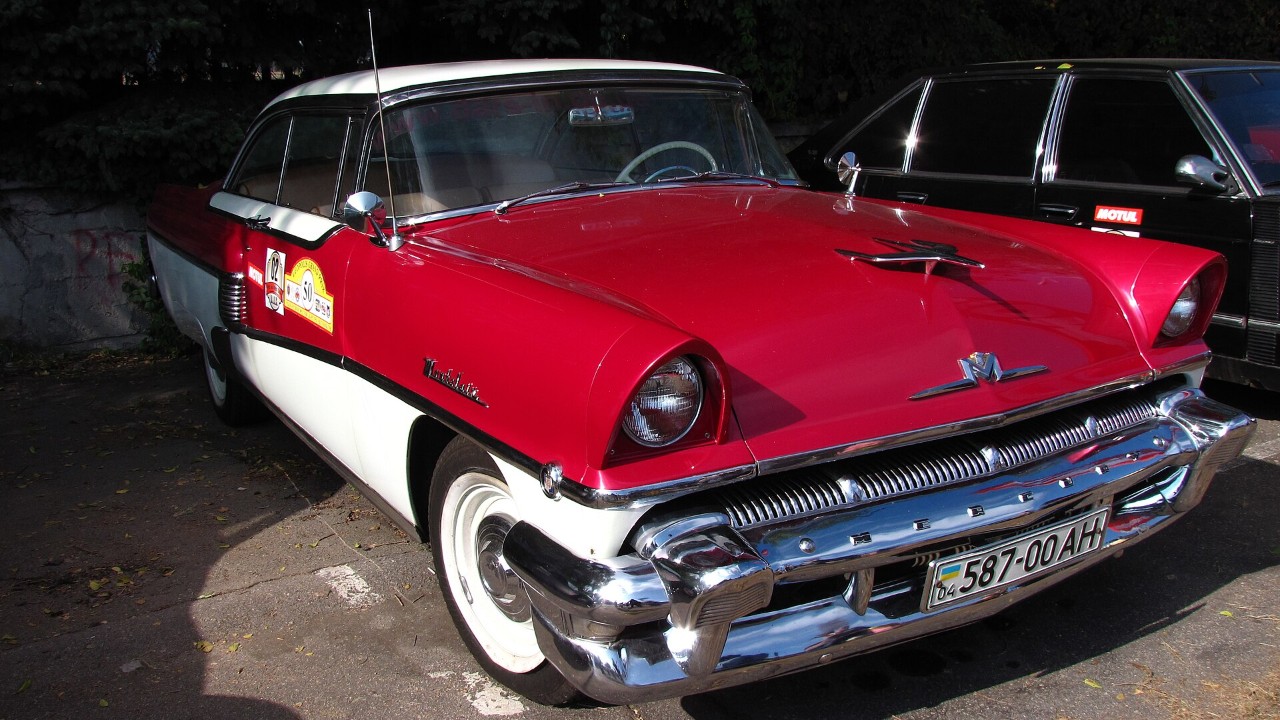
The Montclair wore the flashiest Mercury trim for 1956, including special paint below the side windows matched to the roof. Mercury enlarged its V8 from 292 to 312 cubic inches that year, good for 225 horsepower. Buyers who wanted more could order a dual four-barrel version with 260 horsepower.
Mercury also moved to a 12-volt electrical system for 1956, which made room for heavier accessories such as air conditioning. In addition, a deep-dish steering wheel, safety door locks and a breakaway mirror came standard. Seat belts and a padded dash cost extra. Paint was a big deal too, because Mercury offered 31 two-tone combinations and 28 more Flo-tone schemes.
We would argue that people overlook the Montclair hardtop because it sits between the Ford Fairlane and the Lincoln in people’s minds. That is a shame. It has more character than the Ford and costs far less to restore than a Lincoln. If you shop for one, look for the original paint code, since the two-tone schemes are a big part of its charm. A correct color combination makes this Mercury pop on any show field.
5. 1957 DeSoto Adventurer two-door Sportsman
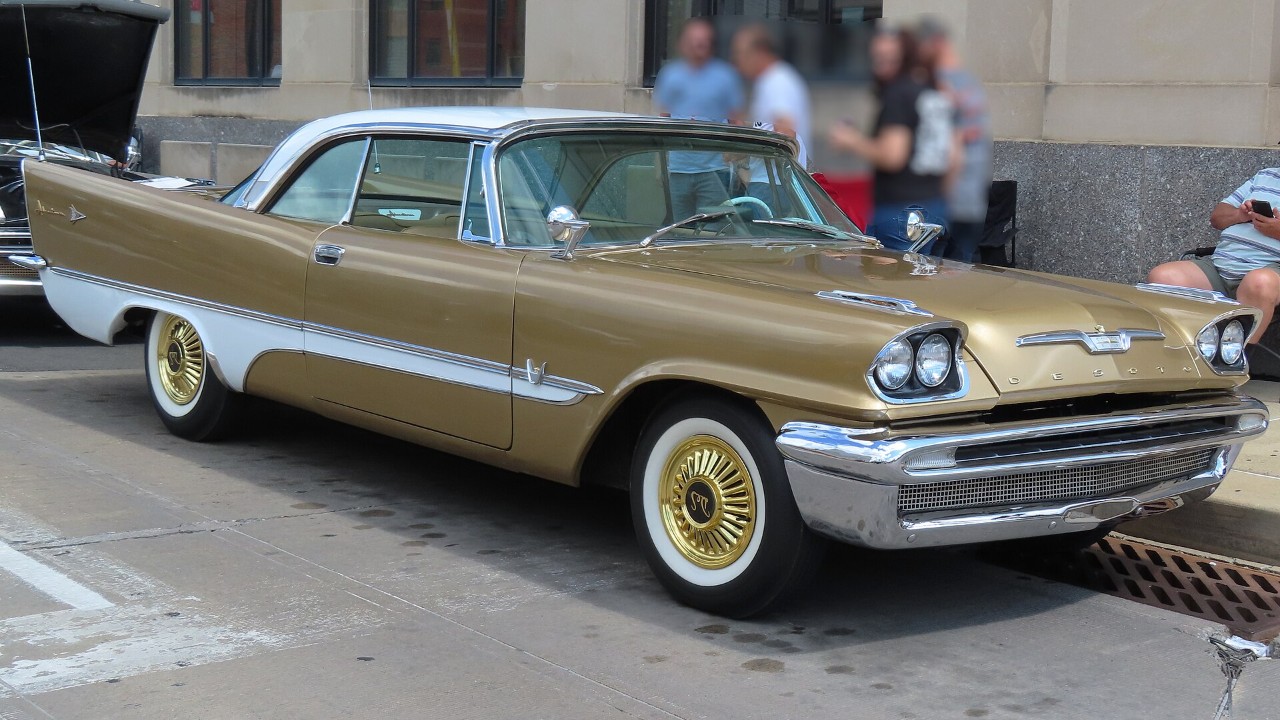
DeSoto built the Adventurer as its limited-production performance model, and 1957 was a strong year for it. The V8 grew four cubic inches over the 1956 engine and wore two four-barrel carburetors. DeSoto rated it at 345 horsepower, which gave the car one horsepower per cubic inch.
The Adventurer was never common. DeSoto built 1,950 for 1957, and only 300 of those were convertibles, so most were two-door Sportsman hardtops. The color choice was narrow as well. Buyers got a black, white and gold scheme, with gold trim that set it apart from lesser DeSotos. It also wore Chrysler’s new Forward Look styling, shared across the corporation that year.
In our opinion, the Adventurer deserved far more fame than it has. Chrysler’s 300 letter cars get most of the attention, yet this DeSoto offered similar ideas in a slightly softer suit. The tiny production run explains why so few people remember it. For collectors, that makes a correct 1957 Adventurer hardtop a sharp, uncommon find. If you see one advertised, check that the gold trim and dual-quad setup are all there.
6. 1957 Mercury Turnpike Cruiser Indy 500 pace car
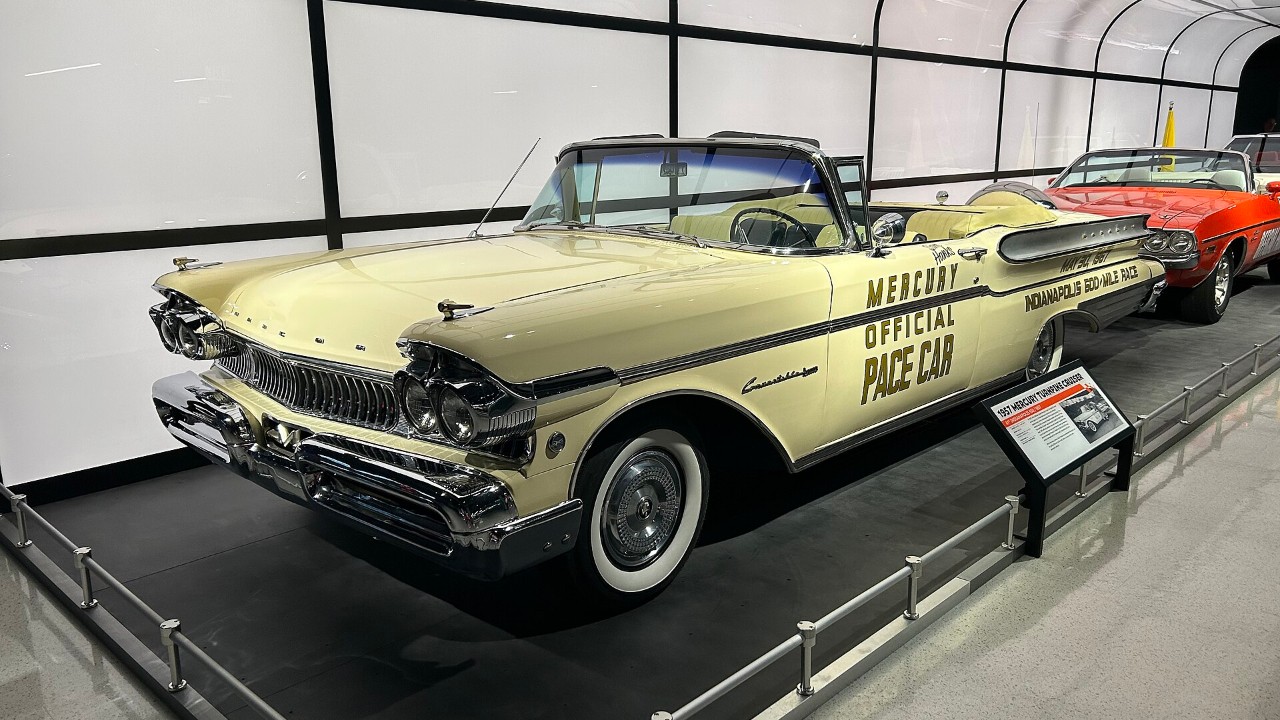
The Turnpike Cruiser started life as a show car. Mercury introduced the XM-Turnpike Cruiser concept in 1956 with styling by the Italian coachbuilder Ghia, and the production version kept much of its look. Its 368-cubic-inch V8 made 290 horsepower, and a push-button “Keyboard Control” panel worked the Merc-O-Matic automatic.
Mercury piled on the gadgets. The Breezeway rear window dropped down at the touch of a switch. In addition, the Seat-O-Matic memory seat moved back when you switched off the ignition. Then the Convertible Cruiser paced the 1957 Indianapolis 500, and Mercury sold replicas in Sun Glitter yellow. Only 1,265 convertibles left the line, out of 16,861 Turnpike Cruisers built that year.
We think the Turnpike Cruiser deserved better because it tried so hard to bring the future to the showroom. It was a dream car you could actually buy, priced at $4,103 for the convertible. Values have stayed within reach, too. At Hershey in 2025, RM Sotheby’s sold a black 1957 Turnpike Cruiser coupe for $29,700. If you want the pace-car look, check the paperwork carefully before you pay a premium.
7. 1958 Dodge Royal Lancer hardtop
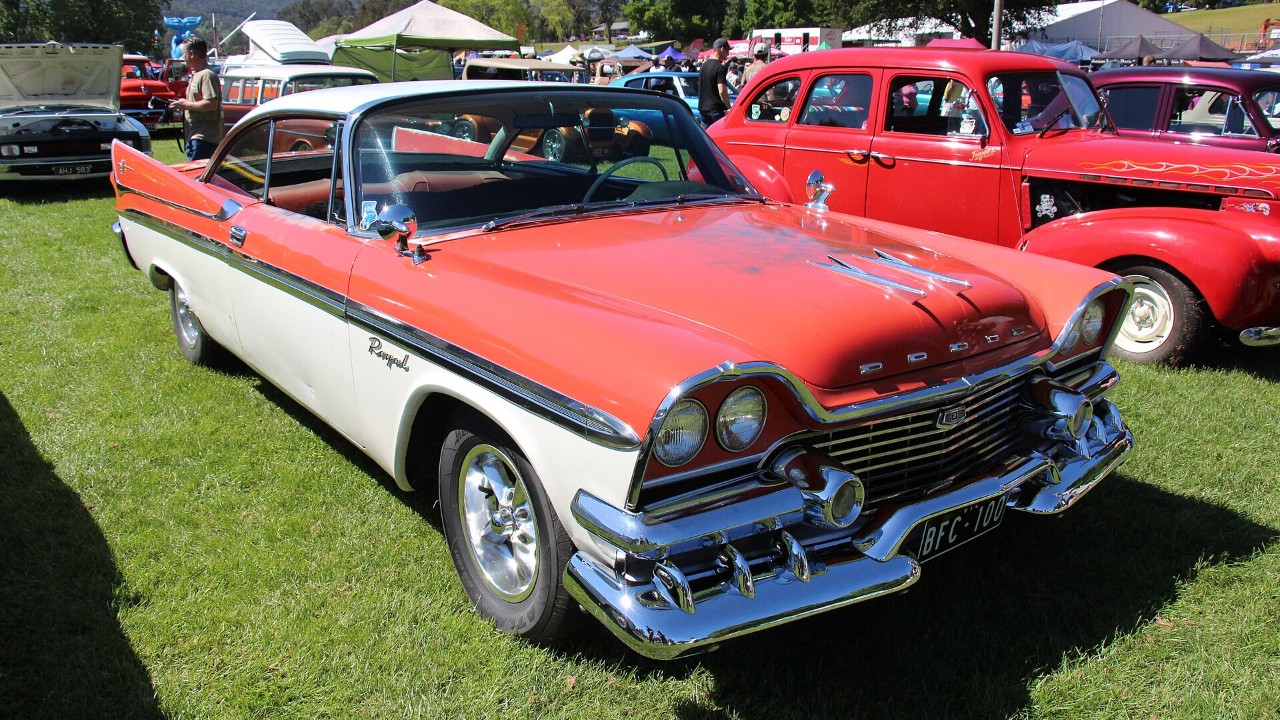
The Royal sat in the middle of Dodge’s 1958 lineup, above the Coronet and below the Custom Royal. The two-door hardtop wore the Royal Lancer name. Its base price was $2,814, and a 325-cubic-inch V8 made 245 horsepower with a two-barrel carburetor. Buyers who wanted more could choose the D-500 package, a 361-cubic-inch V8 rated at 285 or 310 horsepower.
Dodge also offered a push-button automatic on the dash, plus air conditioning, power windows and even a Highway Hi-Fi record player. According to Old Cars Weekly’s profile of the 1958 Royal Lancer, 96.4 percent of 1958 Dodges left the factory with an automatic. However, the Royal series sold only about 15,500 cars that year across its body styles.
We understand why buyers skipped it in 1958, since the Custom Royal looked flashier on the showroom floor. Today, though, the Royal Lancer hardtop is one of the better-value ways into the Swept-Wing era. Dodge dropped the Royal name after 1959, and that short run is part of its appeal. Our advice is to check the floors closely, because rust is the main enemy of these cars.
8. 1958 Edsel Citation
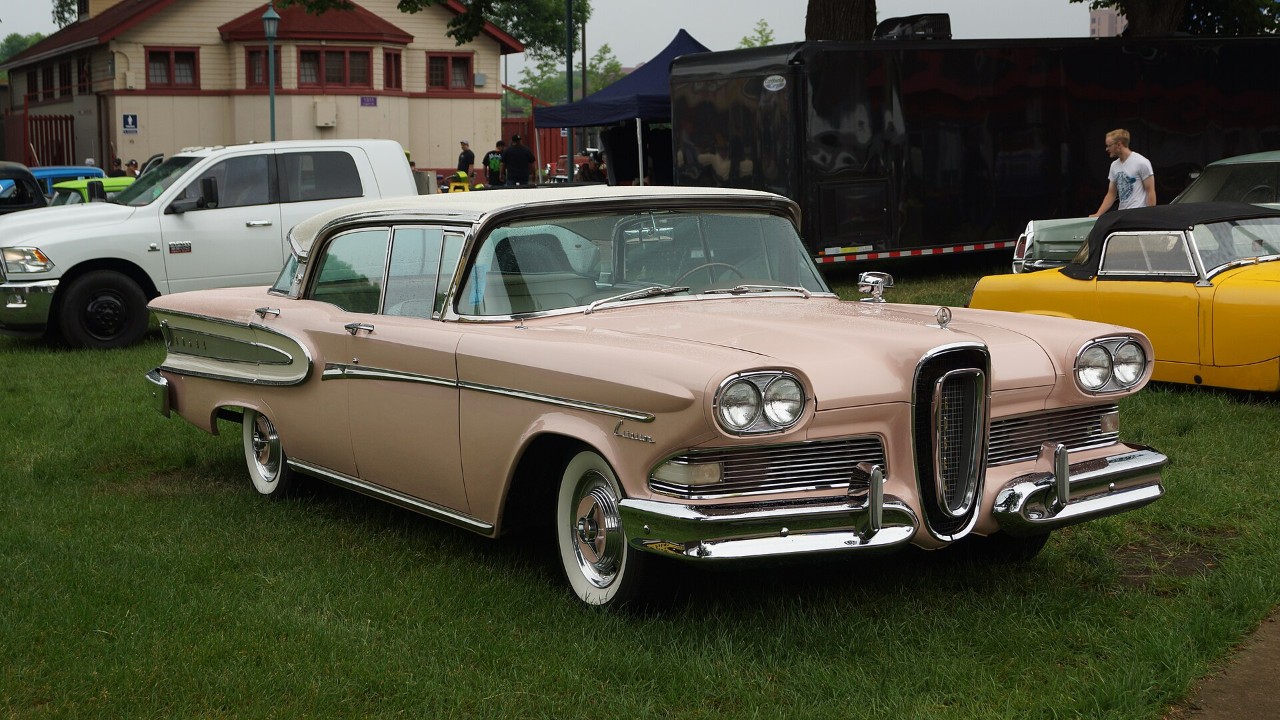
The Citation was the top Edsel for 1958, and it came on the larger 124-inch wheelbase. Its 410-cubic-inch V8 carried the E-475 name, which matched its 475 lb-ft of torque. Edsel rated it at 345 horsepower, and it drove through a three-speed automatic.
The party trick was Teletouch, which moved the transmission controls to the hub of the steering wheel. It came standard on the Citation and the Corsair. Few other cars of the era put the shifter in such a strange place. Edsel offered the Citation as a two-door hardtop, a four-door hardtop and a convertible. Even so, the Citation lasted only the 1958 model year.
In our view, the Citation deserved better than its place as a punchline. It was powerful, well equipped and genuinely different, and its failure had more to do with timing and marketing than the car itself. In fact, the numbers show how few you will ever see. That scarcity is the main reason a Citation draws a crowd today. Ford built just 8,574 Citations in 1958, with 5,112 four-door hardtops, 2,532 two-door hardtops and 930 convertibles.
More from Fast Lane Only