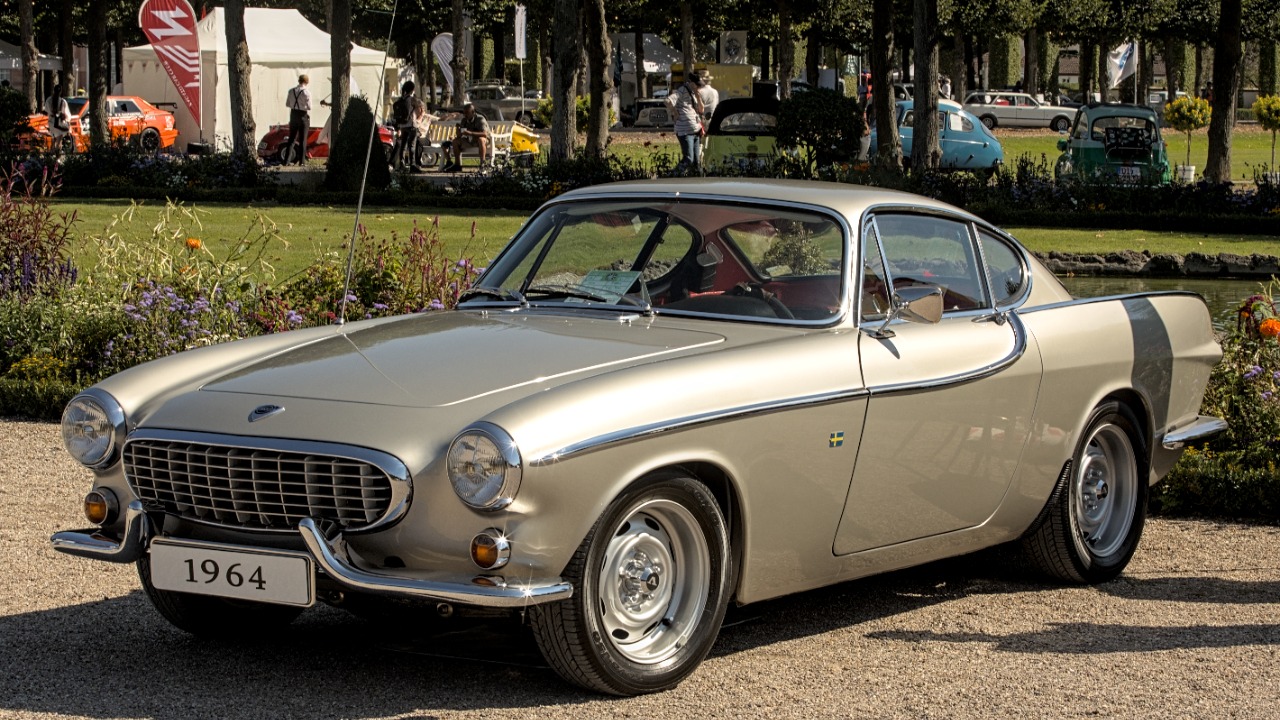
The Saint Volvo P1800 got its television career because Jaguar said no. When the producers of the 1960s series went looking for a car for Roger Moore’s Simon Templar, they first asked for a white E-type. Jaguar declined, so a white Swedish coupe wearing the plate “ST1” took the role instead.
That refusal turned into one of the best bits of free publicity a carmaker ever received. The Saint ran from 1962 to 1969, and Volvo’s own heritage department says the P1800 is often called “The Saint’s car” to this day.
The details come from Volvo, from the British Volvo club that has traced the individual cars, and from the motoring press. They agree on the big picture, and they differ on a few small points we flag below.
Why Jaguar turned down the E-type request
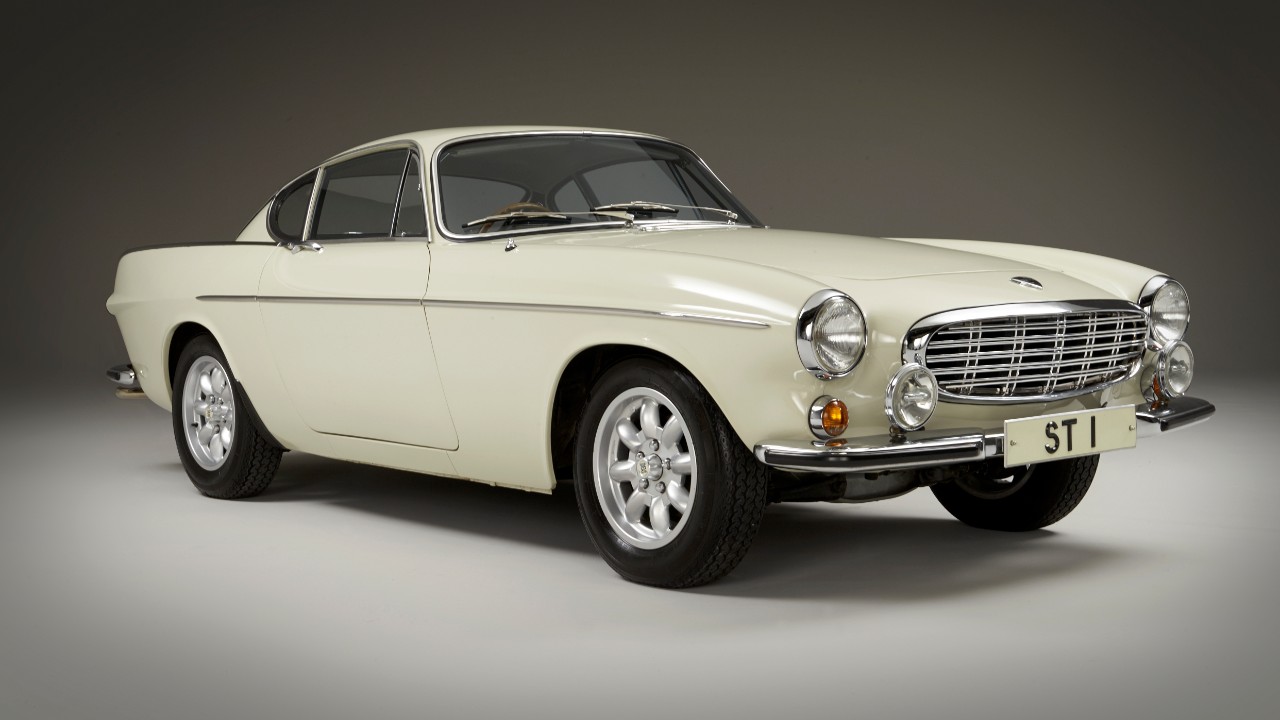
CAR magazine’s account of the Saint’s P1800 puts it plainly: the producers wanted an E-type, but Jaguar was inundated with offers and declined. As a result, the production turned to Volvo. The Volvo Owners Club history of the Saint cars adds that Jaguar believed the E-type needed no extra publicity. A London Volvo agent then supplied a bright white P1800, and the club says the studio reportedly paid full list price.
Volvo tells the same story. A 2011 press release from Volvo Cars Heritage, marking the P1800’s 50th birthday, says the production company first approached Jaguar and only then asked Volvo. Volvo calls the result a strong public-relations move. Not every retelling names the same Jaguar, though. SlashGear, citing Practical Classics, says Moore had wanted an XK150. Still, CAR, the Volvo club and Auto123 all name the E-type.
The Saint’s own fan club says Volvo delivered the first car within a week of the request. By comparison, Jaguar’s later choice shows the lesson landed. When The Return of the Saint arrived in 1978, Jaguar supplied an XJ-S for Ian Ogilvy straight away, and the club says the company did not want a repeat of the Volvo episode.
The cars behind the Saint Volvo P1800
The first car was a British-registered P1800, number 71 DXC. According to the Volvo Owners Club, the “ST1” plate was a fake, often hooked over the real registration for filming. Then, in late 1963, a Swedish-built P1800S registered 77 GYL joined the show. The club says it also served as Moore’s personal car for a few years.
Two new cars followed in 1967, registered NUV 647E and NUV 648E. One had a red interior for Moore’s private use, and the other had black trim for filming. Counts differ by source: the Saint fan club says Volvo supplied five P1800s, while the Volvo club names four registered cars plus an interior mock-up. Either way, the fan club says the first car was cut up to give the cameras better access inside.
The white paint has its own twist. The original car was bright white. However, once production moved to Sweden, the nearest factory option was a creamier Pearl White. Black-and-white filming hid the difference, the club notes, but it became obvious once the series switched to color. Overall, the club counts 71 black-and-white programs and 43 in color, plus two feature-length stories.
Roger Moore’s own 1800 S
Moore liked the car enough to own one. Volvo’s March 2018 press release describes a Pearl White 1967 Volvo 1800 S built at the Torslanda plant in November 1966. Volvo says Moore is the documented first registered owner, and he signed the registration papers in early February 1967.
That car debuted wearing the ST 1 plates in the episode “A Double in Diamonds,” filmed in February 1967. After that, it carried Simon Templar until the series ended in 1969. Volvo says Moore later sold it to the actor Martin Benson. In 2018, Volvo Cars Heritage showed the car at Techno-Classica in Essen, Germany, from March 21 to 25. Volvo’s release also gives the show’s full run as 118 episodes, from October 1962 to February 1969.
What the P1800 was before it became a star
The Saint Volvo P1800 had an unusual start for a Swedish car. Volvo’s 2011 heritage release says production began in 1961 with two British firms: Pressed Steel made the bodies, and Jensen Motors painted and assembled the cars. After 6,000 Jensen-built cars, Volvo moved production to its Lundby factory in spring 1963.
The model stayed in production for about 12 years, and the 1800 ES estate-style version arrived in 1971. Auto123 reports that by the time Volvo retired the P1800 in 1973, total sales were running just shy of 50,000 units. For a car that almost never reached production, that’s a long and well-documented career.
Where the Saint cars ended up is a mixed record. The Volvo club says NUV 648E sold for almost £50,000 after the series and went on display at the Cars of the Stars Motor Museum in Keswick. In contrast, the club has no record of where 71 DXC or NUV 647E went.
More from Fast Lane Only