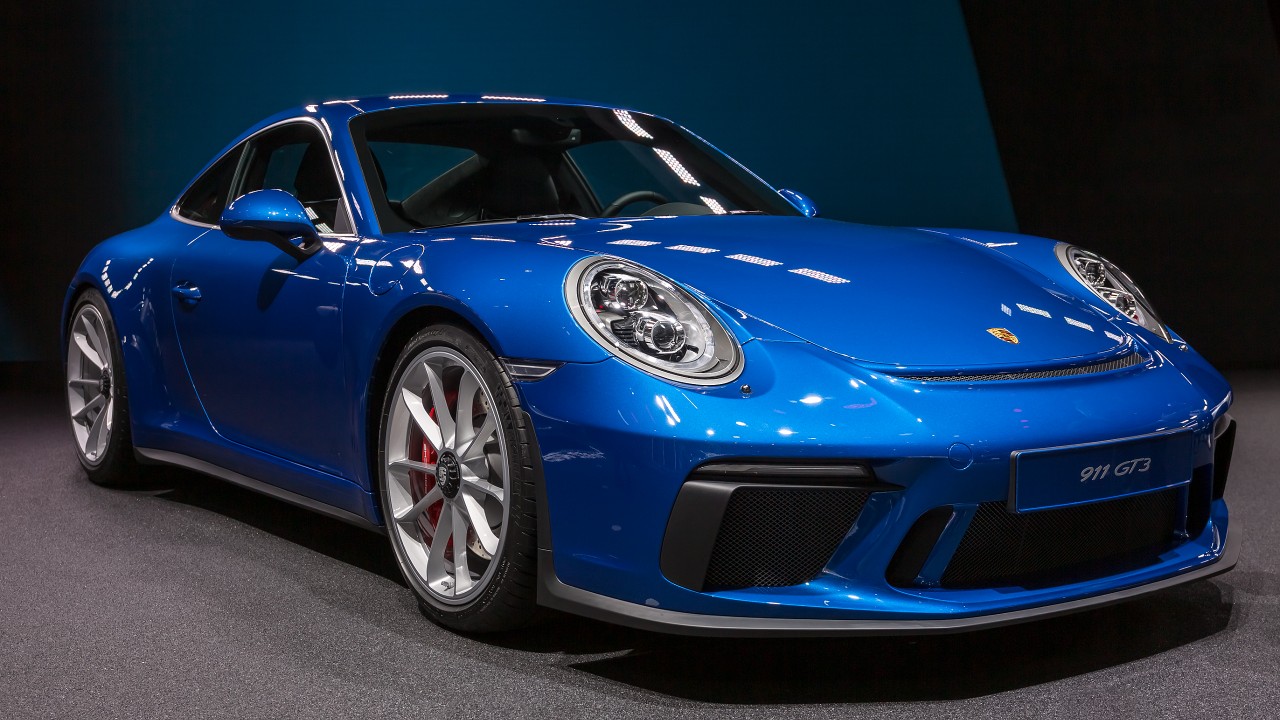
Porsche’s long boom in China is ending in a way that will be felt most sharply by its remaining customers. After years of rapid expansion, the brand is preparing to shut a large share of its dealerships, tighten allocation and refocus on profitability, even as demand is already weakening. For buyers, that combination means fewer showrooms, longer waits and less bargaining power, just as the country’s luxury car market becomes more crowded and more price sensitive.
The shift marks a decisive break from the era when a Porsche in China was both a status symbol and a relatively accessible premium purchase. With sales sliding and local rivals on the offensive, Porsche is restructuring its entire China strategy, turning what used to be a straightforward aspirational buy into a more complicated and constrained proposition.
The end of easy access
The most immediate shock for Chinese customers is physical access. Porsche China has confirmed plans to close about 30 percent of its dealers in the country, a sweeping retrenchment that will remove dozens of showrooms from what was once its most important growth market. The company is cutting these outlets to reduce fixed costs and free up money for research and development, particularly in electrification, but the practical effect is that many cities will lose their nearest Porsche point of sale and service.
Dealer consolidation might make sense on a balance sheet, yet it will reshape the buying experience. Prospective owners who once had multiple dealers competing for their business will increasingly face a single regional outlet, or a long drive to the next city. That shift is already visible in reports that Porsche is dropping dozens of dealers after China sales collapsed by more than 50, a collapse that has left some existing outlets unprofitable and unable to sustain the old network footprint.
Sales collapse and a shrinking customer base
The retrenchment is rooted in a dramatic reversal in demand. Porsche China Sales Fall figures show a 26 percent drop in 2025 alone, with CEO Pollich Says Decline Expected as part of a broader reset after years of overexpansion. Over a longer stretch, Porsche Refines China Strategy reporting indicates that Porsche AG has seen its sales in China halve, marking the fourth straight year of decline and turning what was once a growth engine into a drag on global performance.
The slump is not confined to one region or model. Globally, Porsche deliveries fell 6 percent to 212,500 units, and the company’s Operating profit has come under pressure as China, its largest single market, weakens. Separate data on Porsche Deliveries Drop 10% as China Slump and EV Weakness Bite underline how the brand’s global volumes are now hostage to Chinese demand, which has been eroded by both macroeconomic caution among affluent buyers and a wave of compelling local alternatives.
A premium badge in a hyper-competitive market
Part of the problem is that Porsche is no longer the unchallenged aspirational choice it once was. In China’s Shifting Auto Market, Local manufacturers including BYD, BYDDF, Xiaomi, XIACY and Huawei have moved aggressively upmarket, targeting wealthy buyers with high-tech interiors, long-range electric drivetrains and rapid over-the-air software updates. These brands are not only cheaper than imported German models in many cases, they are also perceived as more attuned to local digital habits and design tastes.
That competitive squeeze has eroded Porsche’s pricing power. Reporting that Porsche is no longer seen as a straightforward “premium” sports car in China notes that The German, American and the Japanese, Korean Western manufacturers collectively underestimated how quickly domestic brands would close the gap in quality and desirability. As a result, a Porsche badge no longer guarantees clear superiority in performance or technology, especially in electric models, which makes it harder to justify traditional price premiums in a market where buyers can cross-shop a Taycan against a top-spec BYD or a flagship Xiaomi sedan.
From volume growth to “value first”
Faced with this reality, Porsche China is pivoting from chasing volume to defending margins. CEO Pollich Says Decline Expected has framed the 26 percent drop in 2025 as a necessary correction, arguing for a “value first” strategy that prioritizes profitability per car over raw delivery numbers. That approach aligns with comments from Achieving lasting improvement will take time, where Chief Financial Officer Jochen Breckner signaled that 2025 would be a low point as the company rebalances its portfolio and investment priorities.
In practice, this means fewer discounts, tighter control of inventory and a willingness to let some price-sensitive customers walk away. Porsche Refines China Strategy accounts describe how Porsche AG is trimming less profitable configurations and focusing on higher-margin variants, even as it acknowledges that Sales Halve in China. For buyers, the shift from volume growth to value means that the days of aggressive dealer incentives and easy negotiation are fading, replaced by a more rigid pricing stance that will make ownership more expensive relative to local competitors.
Dealer cuts, service strain and the buyer’s new reality
The dealer closures will not only affect where customers can sign a contract, they will also reshape aftersales support. Porsche will close 30% of its dealers in China to cut costs, a move that Porsche China has justified as necessary to fund future products and technology. Yet fewer authorized workshops could translate into longer waits for maintenance appointments, more crowded service bays and higher pressure on the remaining outlets to prioritize high-value clients, especially in major coastal cities.
Reports that Porsche and Volkswagen dealerships halt operations in parts of China as Porsche deliveries fall 26 percent in 2025 already hint at the operational fragility of the network. When Globally, Porsche deliveries fell 6 percent to 212,500 units, some dealers were left with idle capacity and financial stress, prompting temporary shutdowns and restructuring. As the network is formally downsized, those ad hoc disruptions are likely to be replaced by a leaner but more stretched system, where customers in smaller cities may have to travel significant distances for warranty work or specialist repairs.
More from Fast Lane Only