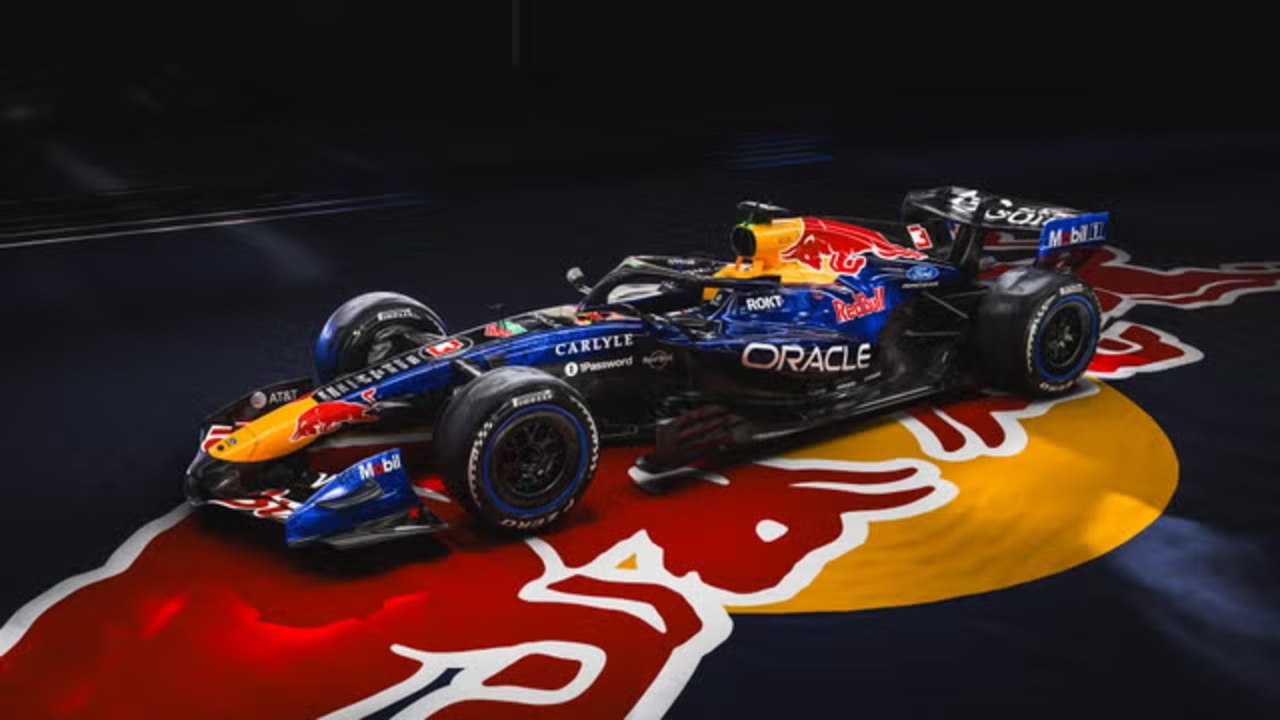
The latest flashpoint in Formula One is not a lap time or a wind tunnel breakthrough but a war of words between two American giants. Cadillac has dismissed Ford’s return to the grid as little more than a branding exercise, while Ford executives have countered that General Motors has simply bought its way into the sport. Behind the barbs sits a serious question about what it means to be a “real” Formula program in the new 2026 era.
How Cadillac turned Andretti’s rejection into a factory F1 project
Cadillac’s presence on the 2026 grid is the product of persistence and reinvention rather than a simple sponsorship deal. The new team grew out of Andretti, which had pushed repeatedly for a place in Formula 1 and was turned away before General Motors stepped in and reshaped the bid around a full factory effort under the Cadillac name. That reworked proposal ultimately secured approval from the FIA and Formula 1 for a 2026 entry, with Cadillac positioned as a constructor backed directly by General Motors and planning to operate out of a dedicated headquarters in Silverstone, England, supported by additional facilities in the United States, according to reporting on the approved Cadillac entry and the broader Formula One program.
That structure has become central to Cadillac’s argument that it is building something more substantial than a logo on an existing car. The company has framed its project as a ground up operation, with General Motors as the American manufacturer of record and Cadillac as the brand on the chassis, in contrast to Ford’s decision to align with an established front running team. The Cadillac camp has leaned on this distinction in public comments, presenting its Silverstone base, its integration into General Motors’ engineering network, and its roots in the Andretti effort as proof that it is committing to the full burden of being a constructor rather than renting space on someone else’s grid slot, a narrative reflected in coverage of the Cadillac team formation.
Cadillac’s jab: Ford’s Red Bull pact as “just a marketing deal”
That sense of earned legitimacy is what fueled Cadillac’s decision to mock Ford’s Formula 1 return as little more than a gag. Dan Towriss, the CEO of the Cadillac F1 Team, has been quoted describing Ford’s partnership with Red Bull as a “marketing deal” and implying that the rival American brand is essentially paying to place its name on a car that is engineered and operated by others. In this telling, Ford’s high profile alliance with Red Bull Powertrains is framed as a shortcut that buys exposure without the same level of technical or organizational responsibility that Cadillac claims for itself, a point underscored in reporting on Towriss’s comments about Ford’s partnership.
Cadillac’s rhetoric has gone further than a dry comparison of business models. In recent coverage of the escalating rivalry, the Cadillac side has been portrayed as treating Ford’s Formula 1 arrangement as something of a joke, suggesting that the Blue Oval is more interested in stickers and hospitality suites than in the grind of building a team. That framing, echoed in pieces that describe how Cadillac Calls Ford a punchline in the context of its Formula 1 Deal and Joke, is designed to paint Ford as a latecomer buying relevance while Cadillac and General Motors shoulder the cost and risk of a full constructor program. By casting its own project as the serious, long term commitment and Ford’s as a clever branding play, Cadillac is trying to seize the moral high ground among fans who value engineering authenticity.
Ford’s counterpunch: “patently absurd” and “just bought stickers”
Ford has not taken those jabs quietly. Executives at the company have described Cadillac’s characterization of the Red Bull alliance as “patently absurd,” arguing that the partnership involves deep technical collaboration rather than a simple badge swap. In their view, working with an established championship winning organization is a rational way to return to Formula 1 under the 2026 regulations, and does not make Ford any less serious than a newcomer building a team from scratch. That pushback is detailed in reporting on how Ford slams the Cadillac narrative and rejects the idea that its role is purely cosmetic.
The sharpest line from Ford has turned Cadillac’s own insult back on General Motors. In response to claims that Ford is only buying decals, Ford figures have suggested that it is actually GM that “just bought stickers,” pointing to Cadillac’s acquisition of the Andretti operation and its reliance on existing infrastructure as evidence that the rival American brand is not as pure a start up as it claims. That counterpunch, captured in coverage of the early skirmishes where The Cadillac and Ford exchange barbs, reframes the debate as one of who is more transparent about the compromises required to enter modern Formula 1. By accusing GM of simply purchasing its way into the sport through an existing team, Ford is trying to neutralize Cadillac’s authenticity argument and suggest that both sides are leveraging partnerships, just in different ways.
What “real” involvement looks like in the 2026 Formula 1 era
Behind the rhetoric lies a more nuanced reality about how manufacturers participate in Formula 1 today. The sport’s cost cap, complex hybrid power units, and tightly controlled technical regulations have made it increasingly difficult for any company to arrive as a fully independent constructor in the traditional sense. Cadillac’s program, while presented as a ground up effort, still relies on the foundations of Andretti’s aborted entry and on General Motors’ broader engineering ecosystem, as outlined in descriptions of the Cadillac Formula One structure. Ford’s approach, by contrast, embeds its engineers and technology inside an existing competitive powerhouse, which allows it to contribute specific expertise, such as advanced manufacturing techniques, without owning every aspect of the operation.
Ford executives have been keen to highlight those technical contributions to rebut the idea that they are simply paying for branding. They have pointed to work on 3D printed components for the power unit that reduce production times and are expected to become more important under the next generation of regulations, a detail noted in reporting on how Ford is integrating its technology into the Formula 1 project. From that perspective, the question is less about who owns the factory and more about who is meaningfully shaping the car that appears on the grid. Cadillac, for its part, argues that its own in house development and the decision to base operations in Silverstone demonstrate a willingness to take on the full spectrum of responsibilities, from design and manufacturing to race operations, as reflected in the approved FIA Formula entry.
Rivalry, marketing, and the battle for American F1 fans
Both companies understand that this argument is playing out as much in the court of public opinion as in the paddock. The exchange of insults, from Cadillac’s suggestion that Ford’s deal is a joke to Ford CEO Jim Farley’s description of the supposed rivalry as “laughable,” is calibrated to resonate with fans who are still forming loyalties ahead of the 2026 season. Farley has publicly dismissed the idea that Cadillac and Ford are locked in a direct fight, insisting that Ford’s focus is on its own program and that General Motors is simply an equity participant in a new team, a stance reported in coverage of how Ford CEO Jim Farley views the situation. Yet the very need to downplay the rivalry suggests that both brands see value in shaping the narrative before a single wheel has turned.
More from Fast Lane Only