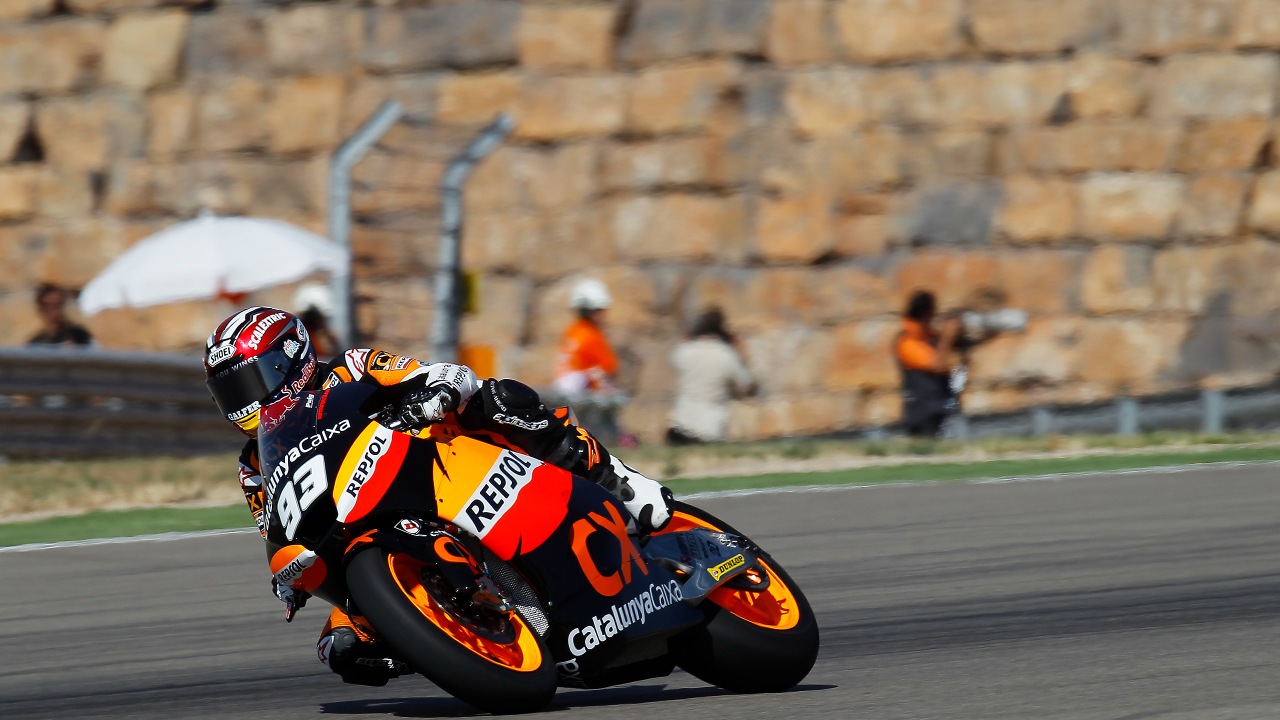
Marc Marquez has secured his long-term MotoGP future with Ducati, finalising a fresh two-year contract that will keep him in red beyond his already agreed stint through 2026. The new commitment confirms that the six-time MotoGP world champion will remain a central pillar of Ducati’s factory project for an additional two seasons, extending his partnership into the 2027 and 2028 campaigns.
The agreement closes the latest chapter in a closely watched contract saga and signals Ducati’s determination to keep one of the sport’s defining riders at the heart of its plans. It also gives Marquez the stability he has often sought when he feels competitive and comfortable inside a team environment.
From short-term gamble to long-term cornerstone
When Marc Marquez first committed to Ducati on a two-year arrangement, it was framed as a bold but time-limited experiment for both sides. The six-time MotoGP world champion agreed to join the Ducati factory structure on a deal that initially ran until the end of 2026, a move that paired his proven talent with the grid’s benchmark machinery and placed him alongside reigning champion Francesco Bagnaia in the Ducati Lenovo Team. Ducati Corse described the choice as a bet on an “unquestionable talent” who had adapted “perfectly” to the Desmosedici in only a handful of races, underlining how quickly Marquez had justified the risk of reshaping an already dominant line-up.
That original commitment, confirmed by Ducati Corse and MotoGP officials, already locked Marquez in through 2026 and was itself the product of intense paddock intrigue. The factory hierarchy made clear that the decision to bring him into the Ducati Lenovo Team was driven by performance data and his rapid integration into the brand’s working culture, with the official announcement stressing how his hunger for improvement “pushes him to grow continuously” alongside the team. In parallel, coverage of the move highlighted that Marquez, who had spent his premier-class career on rival machinery, was willing to embrace a new technical philosophy in pursuit of more titles, a shift that set the stage for the deeper partnership that has now been confirmed for the following two years.
The fresh two-year extension and what it really changes
The latest agreement does not simply roll the existing contract forward, it adds two more seasons on top of the deal that was already in place. Reporting on the situation describes Marquez’s new Ducati contract as a completed extension, with the terms finalised and an announcement timed around pre-season testing at Sepang. Crucially, that extension is characterised as a further two-year commitment, which, when added to the prior arrangement that already covered 2025 and 2026, carries his stay into 2027 and 2028 rather than merely reaffirming the original end date.
Marquez himself has offered a clear rationale for choosing continuity once the option to extend became real. He has explained that, if one looks at his career, whenever he has been in a team where he feels “comfortable and fast,” he tries not to move. That sentiment, shared while the new agreement with Ducati was being reached, aligns neatly with the structure of the fresh two-year deal, which removes any near-term uncertainty about his future and allows both rider and manufacturer to plan across a four-season horizon instead of treating 2026 as a natural break point.
Why Ducati doubled down on Marquez
Ducati’s decision to secure Marquez for two additional years reflects a strategic calculation that his presence remains central to its competitive edge. When the factory first confirmed him for the Ducati Lenovo Team, senior figures emphasised that the choice ultimately “fell on an unquestionable talent” after weighing multiple options for the seat alongside Francesco Bagnaia. They pointed to how quickly he had adapted to the Desmosedici, noting that in just a few races he had shown the capacity to extract the best from the package and to integrate with the engineering group at a level that justified a long-term bet.
That early assessment has now been translated into a deeper contractual commitment. Ducati Corse has already publicly expressed satisfaction with the way Marquez’s mentality and work ethic mesh with its culture, describing how his constant drive to improve mirrors the company’s own pursuit of marginal gains. By locking him in for 2027 and 2028, Ducati protects itself against the volatility of the rider market and ensures that, even as younger talents emerge, it retains a proven race winner who understands the bike, the data processes and the internal dynamics of the factory squad.
Rider market shockwaves and the Pedro Acosta question
The confirmation of Marquez’s extended future with Ducati lands in the middle of a particularly charged rider market cycle, with Marc Marquez and Pedro Acosta identified as the two names at the centre of the 2026 and 2027 discussions. Reports have detailed how Ducati has been weighing its options for 2027, including the possibility of signing Pedro Acosta, a rising star whose trajectory has made him a target for several manufacturers. Comments attributed to Massimo Rivola about Ducati potentially moving for Acosta prompted a public response from Marquez, underscoring how intertwined their futures have become in the paddock’s collective imagination.
By committing to Marquez for two more years beyond 2026, Ducati has effectively taken one of the biggest variables off the board while leaving other pieces, including the identity of his future teammate, more fluid. Coverage of the situation has already raised the question of who will share the garage with him in 2027, reflecting the fact that while Marquez’s place is now secure, the same cannot yet be said for those around him. The extension therefore reshapes the market: any move for Pedro Acosta would now have to be built around, rather than instead of, a long-term Marquez presence in the Ducati camp.
Stability, legacy and the next phase of the Ducati project
For Marquez, the new two-year extension is as much about legacy as it is about immediate performance. His own comments about staying where he feels “comfortable and fast” suggest that he views the Ducati environment as the right platform to chase further championships and to redefine the latter part of his career. The fact that he was willing to commit through 2028 indicates confidence not only in the current Desmosedici but also in Ducati’s ability to navigate future technical regulations and maintain a competitive package over multiple development cycles.
For Ducati, the agreement provides a stable anchor around which to build its medium-term sporting project. The factory can now approach upcoming seasons knowing that Marc Marquez will remain a fixture in its line-up beyond 2026, which simplifies decisions on testing priorities, development direction and the integration of younger riders into satellite or factory roles. With the original contract already running until 2026 and the fresh two-year extension now stretching that horizon to 2028, both sides have turned what began as a high-profile experiment into a long-range partnership that will shape the competitive landscape of MotoGP for years to come.
More from Fast Lane Only