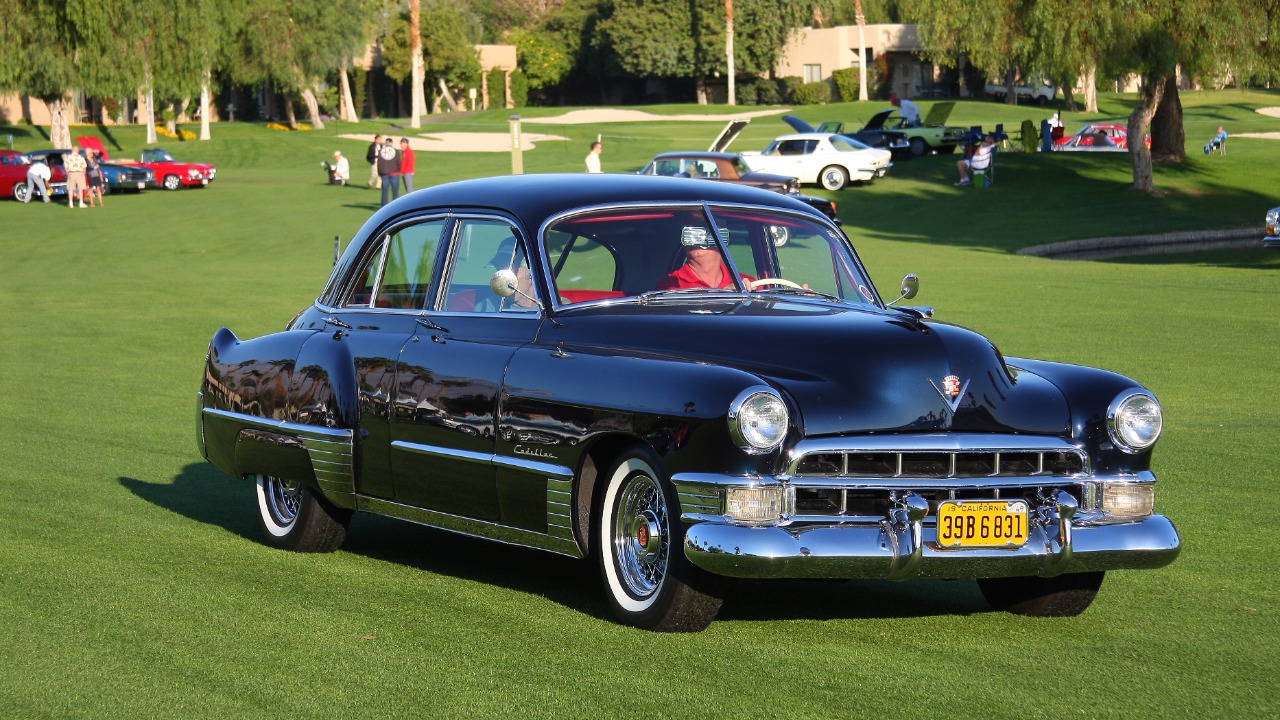
Cadillac built 92,554 cars in 1949, and 55,643 of them were the Cadillac Series 62. That one line tells you how much of the brand rested on a single, sturdy model. It also explains why so many Cadillacs from the decades that followed are around to be admired today.
Of course, not every Cadillac aged well. Some carried engines or gadgets that never lived up to the brochure. However, a long list of others felt built to keep going, with big, unstressed V8s, heavy frames and cabins designed for years of daily use.
These nine are our picks for Cadillacs that never seemed to quit. Engines, production totals and prices come from period records, auction results and reference histories. The verdicts, on the other hand, are ours, and each one reflects how we think these cars were engineered to last.
1. 1949 Cadillac Series 62 sedan
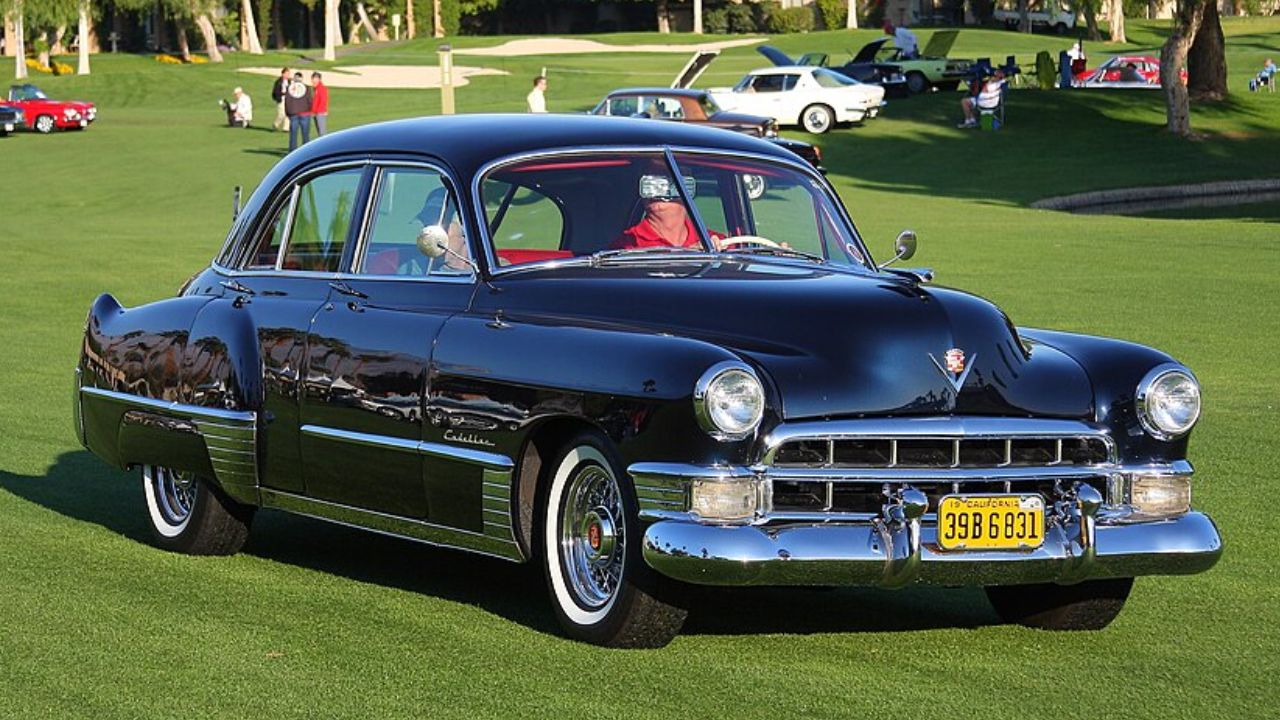
The 1949 car marks the start of the modern Cadillac engine story. That year, the Series 62 got a new overhead-valve V8 of 331 cubic inches, rated at 160 horsepower. In our view, it set the pattern for big American V8s for years to come.
The sedan was the everyday face of that change, rather than a show car for the auto salon. In fact, the Series 62 line made up well over half of Cadillac’s 1949 output, which put the new engine into tens of thousands of driveways in a single season. Today, that volume works in a buyer’s favor. A big production run generally means more surviving cars, so you can afford to be picky about condition.
Our earlier piece on how the 1949 Series 62 launched Detroit into a new era covers the bigger picture. Here, the point is simpler. A modern overhead-valve V8 in a sensible four-door body made a car that could pile up miles without fuss. In our view, that combination is why the 1949 Cadillac Series 62 sedan belongs at the top of this list.
2. 1957 Cadillac Series 62 Coupe de Ville
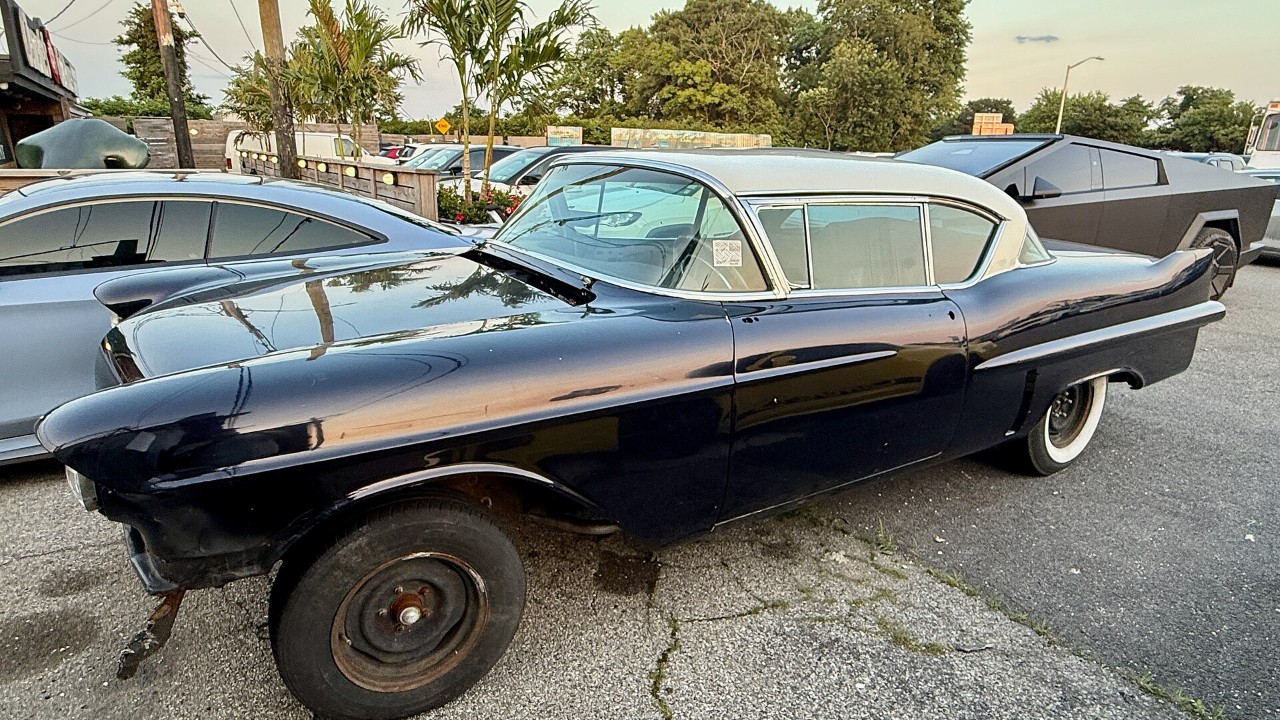
The Coupe de Ville name first appeared late in the 1949 model year. It was among the first pillarless hardtop coupes, and the prototype has its own odd history. GM president Charles E. Wilson used that early car until 1957, when he gave it to his secretary.
By 1957, the Coupe de Ville sat on a new kind of chassis. Cadillac adopted a tubular X-frame with no side rails at all. The company claimed it allowed a lower body without losing space, and that it added torsional strength. Critics, however, called the design unsafe. So if you shop for one, check that X-frame carefully, since everything else rests on it.
Styling details make the 1957 easy to spot. Dual round lamps sit low in the front bumper, and seven horizontal slits trim the panel ahead of each rear wheel. De Ville script on the front fenders finishes the look. Our take: the X-frame debate aside, this is a stout, simple 1950s Cadillac that we think was built to cover big distances. In the end, a solid frame matters far more than shiny trim on a car this size.
3. 1959 Cadillac Sedan de Ville
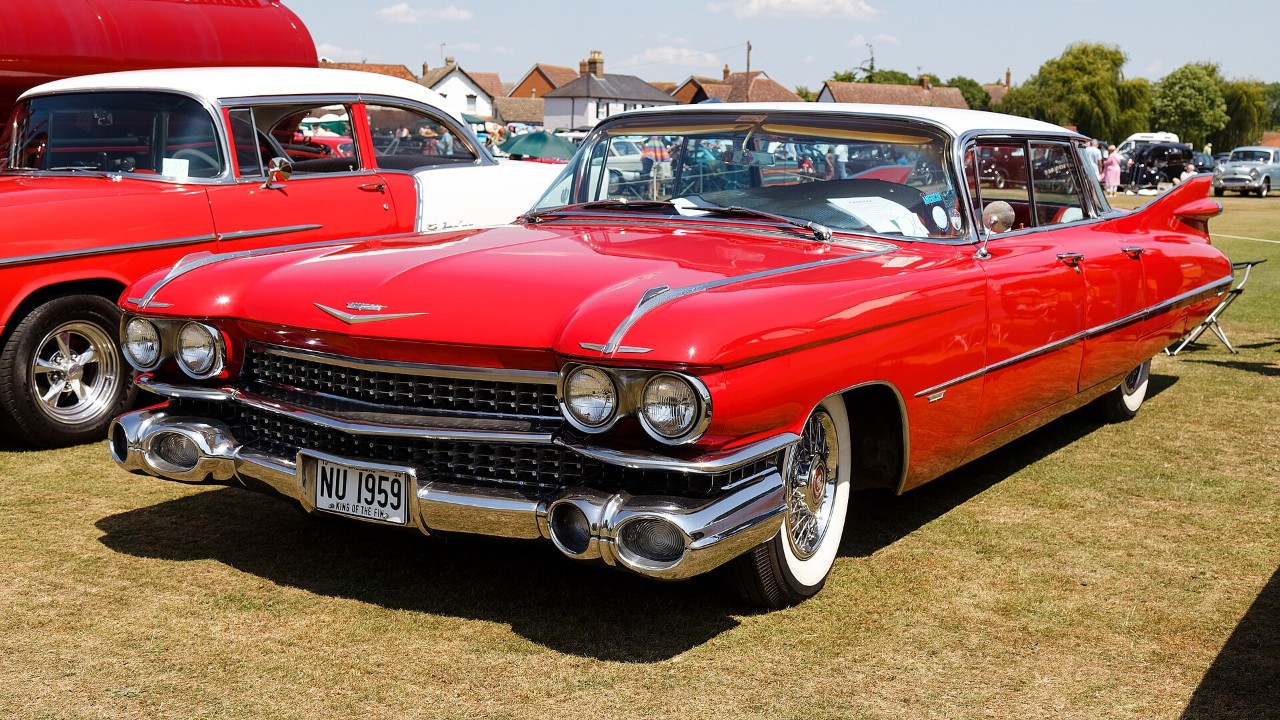
Everyone remembers the 1959 Cadillac for its fins. They tower over the rear deck, and each one carries twin bullet tail lamps. Yet the engineering under that sheet metal was conservative in the best sense. In fact, the fins draw so much attention that many people never notice the practical four-door body beneath them.
For 1959, the V8 grew to 390 cubic inches and 325 horsepower. That gave a heavy hardtop sedan plenty of reserve without asking the engine to work hard. Cadillac offered its four-door hardtops in two forms, a four-window and a six-window design, so buyers could pick a sleek roof or a more upright one.
The paperwork also changed that year. Cadillac renamed the Series 62 as the 6200, and the De Ville models moved into a series of their own, numbered 63. As a result, the 1959 Sedan de Ville was no longer a dressed-up Series 62 but part of a line of its own, and Cadillac sold more than 53,000 De Villes in that first year as a separate series. In our view, the 1959 Sedan de Ville is the rare show-stopper that was also designed for daily duty, and that is why it earns a place here.
4. 1968 Cadillac DeVille convertible
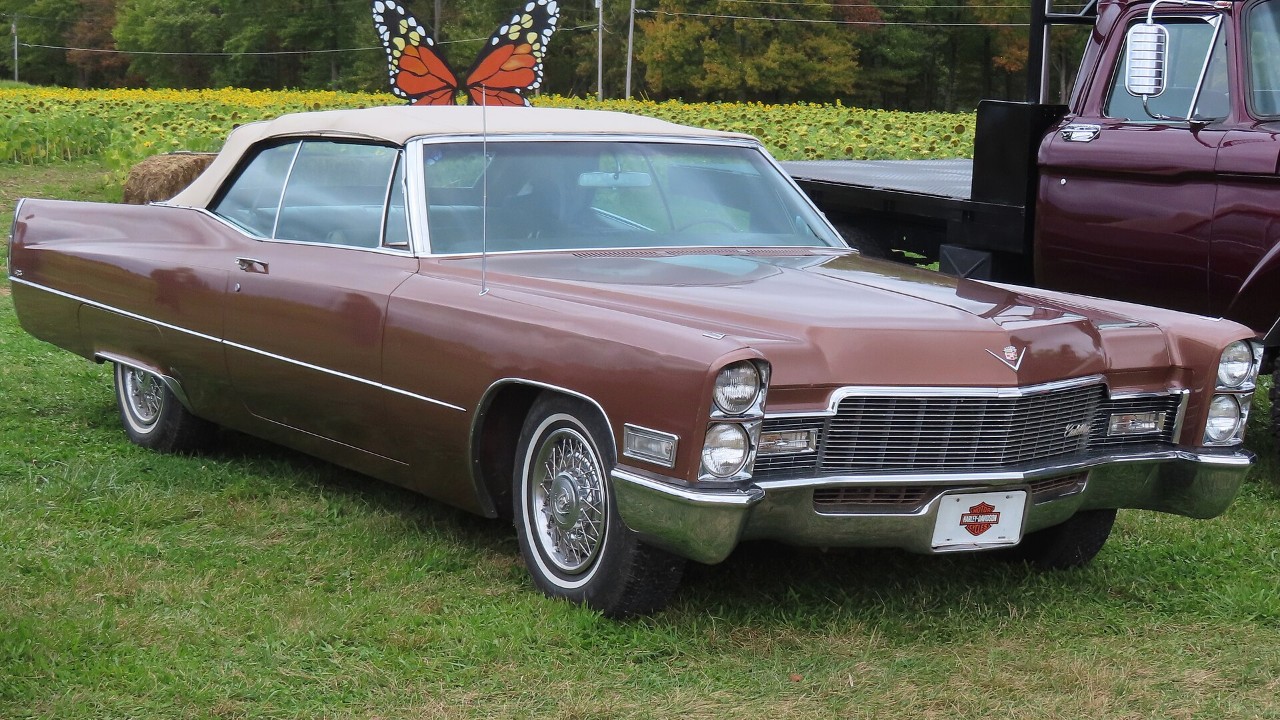
The DeVille convertible arrived in 1964 and lasted until 1970. In that window, 1968 brought the biggest engine change. Cadillac introduced a new 472-cubic-inch V8 rated at 375 horsepower on the SAE gross scale.
The 1968 car also got a hood 8.5 inches longer, so the wipers and washers could sit recessed below it. Front disc brakes became available, and side marker lights appeared. Meanwhile, this was the last year for stacked dual headlights and for vent windows, which makes the 1968 a one-year look in several ways. Also, a power top and power windows add moving parts, so check them closely on any car you consider. Even so, the basics are simple: a big V8, rear-wheel drive and plenty of room.
We have written about the 1968 DeVille’s comfort and its thirst for fuel before. For this list, the takeaway is the engine. A 472 lightly loaded in a big convertible rarely had to strain. Our take: if you want an open Cadillac for long summer drives, this is the year we would shop first. Then budget for a careful look at the top mechanism.
5. 1976 Cadillac Fleetwood Talisman
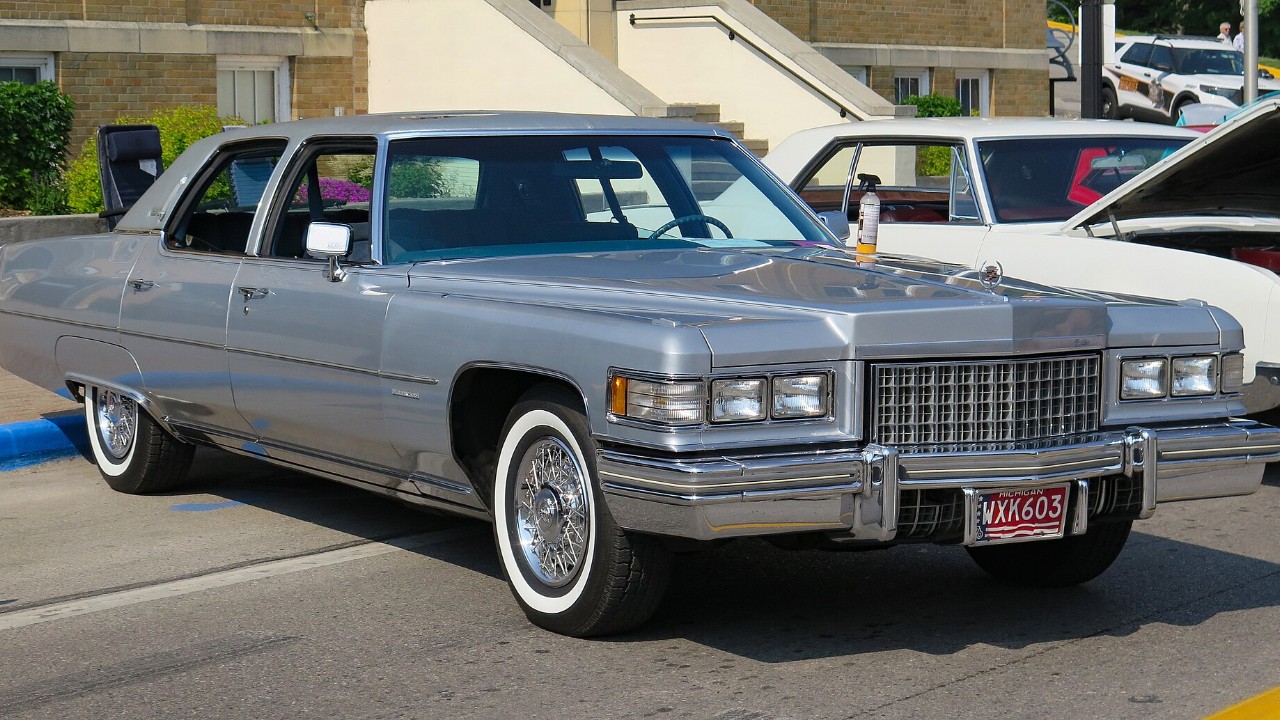
The Talisman was the most lavish owner-driven Cadillac of its time. According to Hagerty’s look at the Fleetwood Talisman, the package debuted in 1974 at about $17,000. By comparison, a Chevrolet Nova cost roughly $3,300. That gap shows how far up the market Cadillac aimed it.
Early cars seated four on individual seats, with full consoles in both rows. For 1975 and 1976, Cadillac dropped the rear console so three could ride in back. Crushed “Medici” velour covered the seats, most door panels and the sail panels. Every power assist then available came along too. However, on a survivor we would inspect that velour and every power gadget first, because the interior is what made a Talisman special.
Power came from Cadillac’s 500-cubic-inch V8, pulling a car that weighed about two and a half tons. Hagerty notes that heavy insulation left the engine barely audible from inside. In our view, a big, slow-revving engine in a car that heavy was built for long service rather than speed. That is exactly why we think the Talisman fits a list about Cadillacs that kept going.
6. 1978 Cadillac Seville Elegante
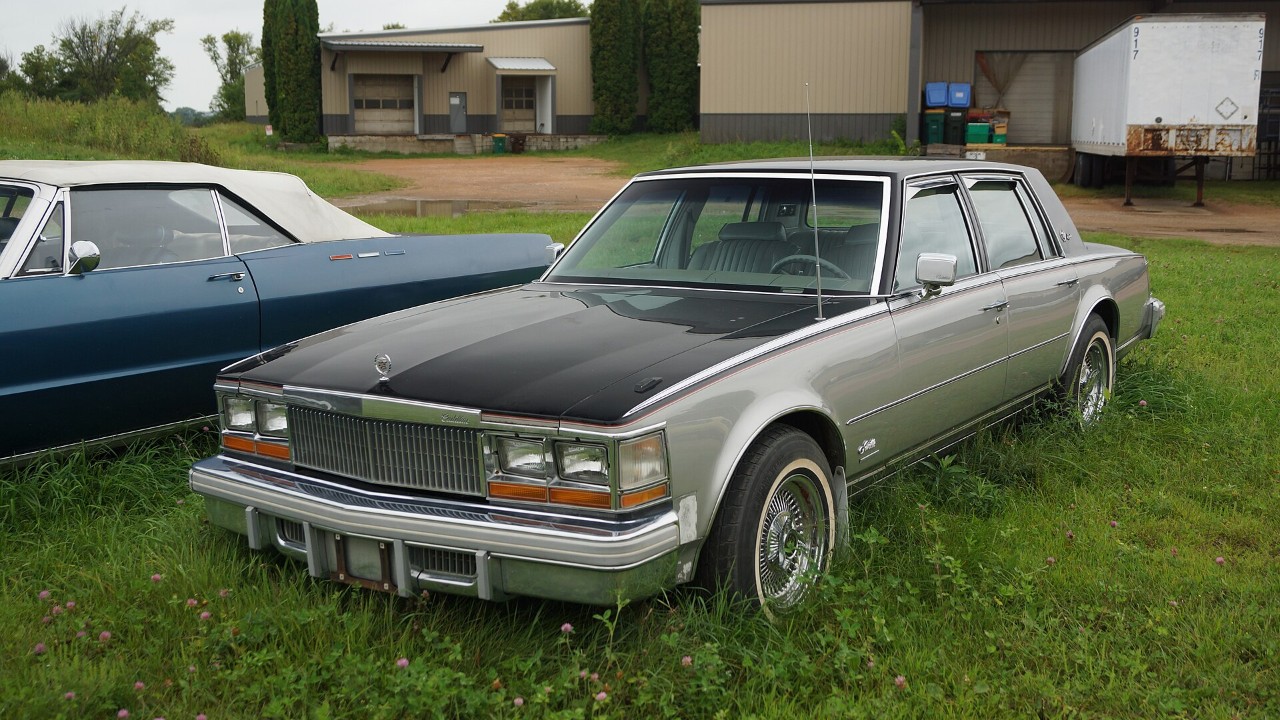
The Seville went on sale in May 1975 as an early 1976 model. It was smaller than other Cadillacs, but at $12,479 it cost more than any Cadillac except the Series 75 limousines. Clearly, it was meant as a premium car from day one. Under the hood sat a 350-cubic-inch V8 from Oldsmobile with Bendix electronic fuel injection, rated at 180 horsepower.
The Elegante package arrived for 1978. It added black-and-silver two-tone paint, perforated light gray leather and standard wire wheels. Because that two-tone paint makes the package easy to copy, verify the Elegante trim before you pay extra for one. That same year, Cadillac also offered a 350 diesel V8 rated at 105 horsepower, a choice we would skip in favor of the gasoline engine.
Our story on how the Seville changed luxury car design in America explains its styling impact. Here, the Elegante stands out for a different reason. It pairs a proven small-block V8 with a rear-drive chassis whose rear suspension came from GM’s 1968 to 1974 X-body. In our view, that recipe gave the Seville a simpler, tougher core than its price suggested.
7. 1979 Cadillac Fleetwood Brougham d’Elegance
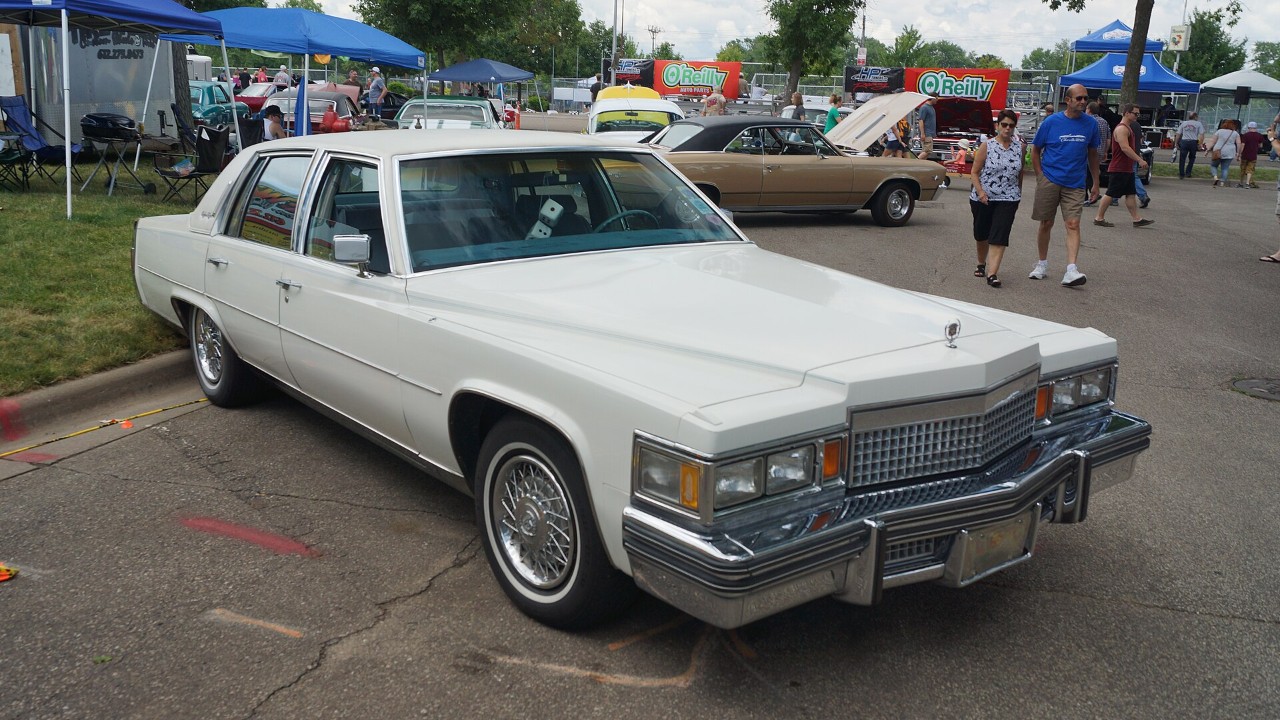
Cadillac downsized its big cars for 1977, and the Fleetwood Brougham shrank hard. Its wheelbase came in 11.5 inches shorter than the 1976 Sixty Special Brougham. It also weighed nearly 900 pounds less, which eased the load on every part of the drivetrain. We think the downsized body also made the car easier to live with than the 1976 model it replaced, while it kept the formal roofline Brougham buyers expected.
The engine was a 425-cubic-inch V8, offered at 180 or 195 horsepower. The d’Elegance package had history behind it. For 1976, Hagerty notes it added $885 to a Fleetwood Brougham, with pillowed seats, deep pile carpet and opera lamps.
Auction records show what one of the later cars brings. At Auburn Fall 2020, RM Sotheby’s sold a 1979 Fleetwood Brougham d’Elegance for $14,850. That is a modest price for so much car. The car had the 180-horsepower 425, leather, climate control and power seats on both sides. Our take: a lighter body with the same big-car comfort made the 1977 to 1979 Brougham one of the most durable-feeling Cadillacs of the decade.
8. 1994 Cadillac Fleetwood
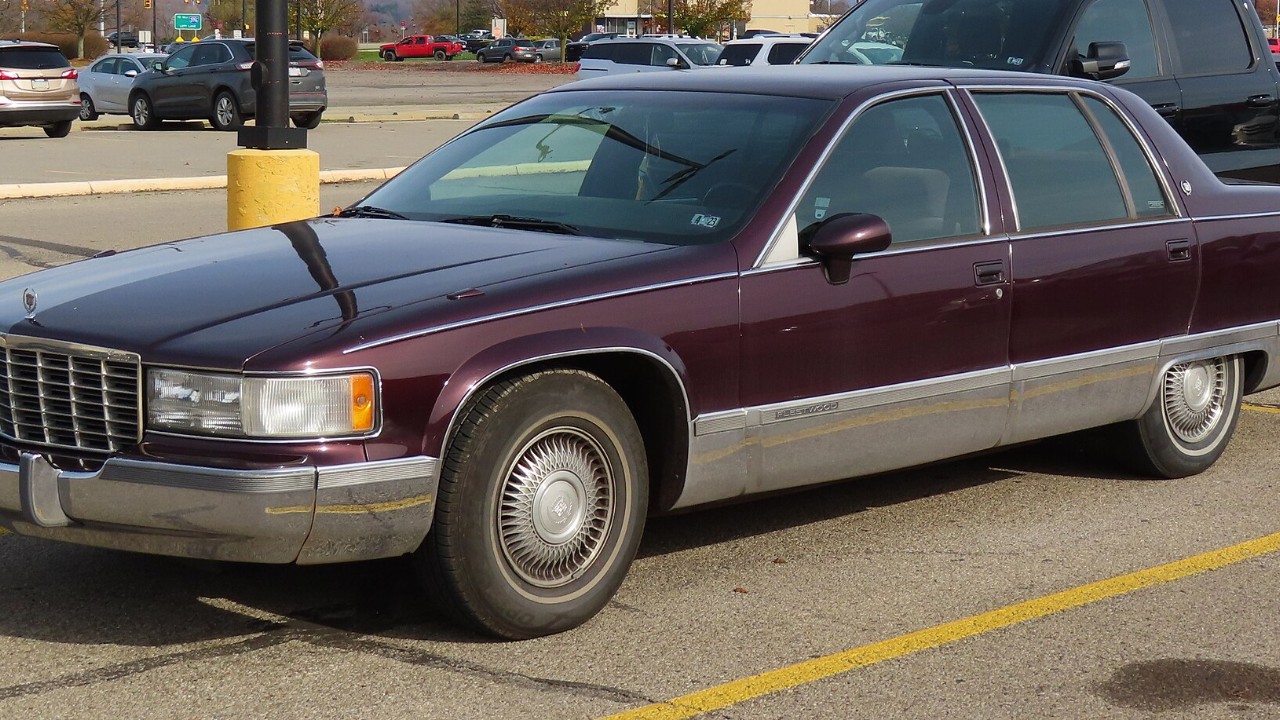
The 1993 to 1996 Fleetwood was a throwback by design. It rode on a body-on-frame, rear-wheel-drive platform when most luxury sedans had gone front-drive. As a result, it was the last full-frame Cadillac sedan. That closed a very long chapter for the brand.
The 1994 car used the 5.7-liter LT1 V8. It made 260 horsepower and 330 pound-feet of torque, detuned from the Corvette version and fitted with cast-iron heads. A 4L60E four-speed automatic handled the shifting. Cadillac built 27,473 Fleetwoods that year. If you find one, look for records of regular fluid changes, since an automatic of this era rewards owners who look after it. Beyond that, the layout is about as simple as a 1990s luxury sedan could be.
That pairing is why we rate the car so highly here. The LT1 and the 4L60E were proven GM parts, and the separate frame shrugged off weight and towing. In our view, an LT1 Fleetwood like this 1994 is the version to buy. GM ended its full-frame rear-drive sedans after 1996, and Fleetwood production for 1993 to 1996 totaled 90,535 cars.
9. 2002 Cadillac Escalade EXT
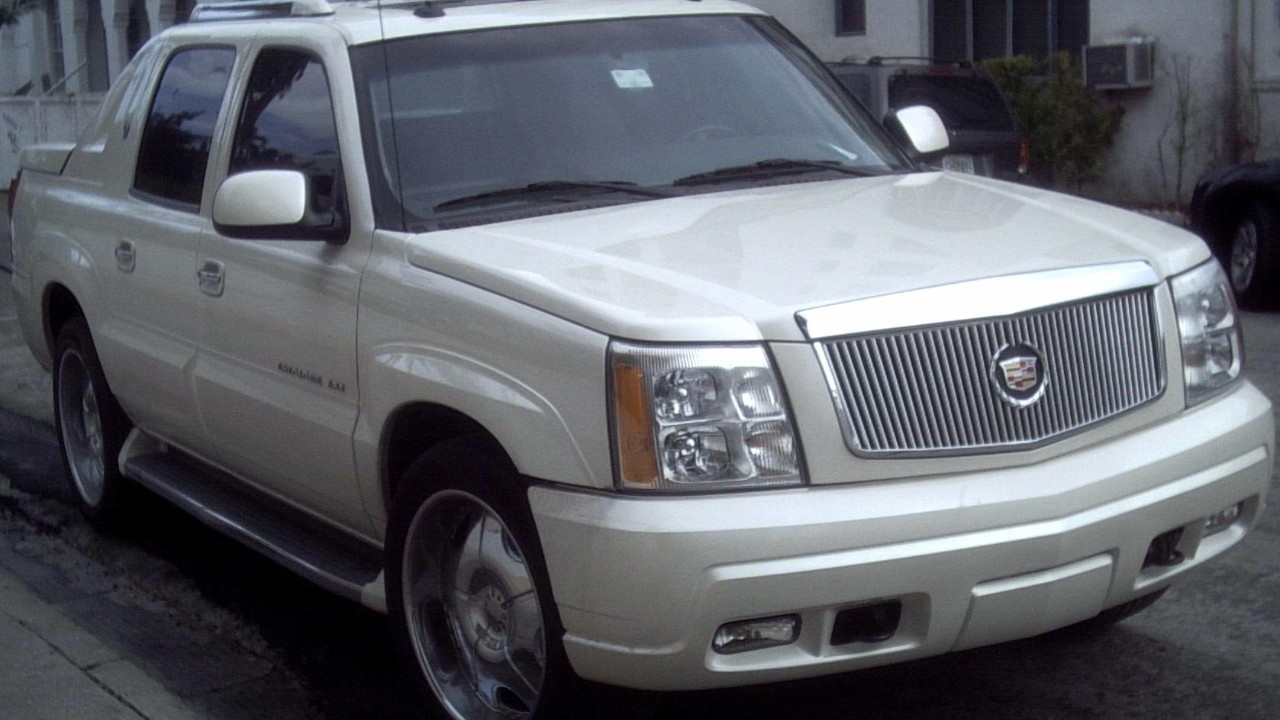
Cadillac introduced the Escalade EXT in 2001 as a 2002 model. It arrived alongside its twin, the Chevrolet Avalanche, and it put a pickup bed in Cadillac showrooms.
The clever part was the Convert-a-Cab system. A composite bed could stretch into the cab through a bottom-hinged door, so long loads fit inside. In other words, it was a Cadillac you could actually put to work. As a result, one truck could haul lumber one day and carry passengers the next. Meanwhile, all-wheel drive came standard. That meant every EXT used the 6.0-liter LQ9 high-output Vortec V8, rated at 345 horsepower.
A luxury pickup can easily try too hard at both jobs. In our view, the EXT got the balance right, because its running gear came from GM’s full-size truck line rather than from a luxury car. That makes it the youngest Cadillac on our list and, we think, one of the hardest-working. If you’re shopping, look for a healthy all-wheel-drive system and an uncracked bed, because that composite bed is what sets an EXT apart. Production of the first-generation EXT ran from September 2001 through 2006.
More from Fast Lane Only