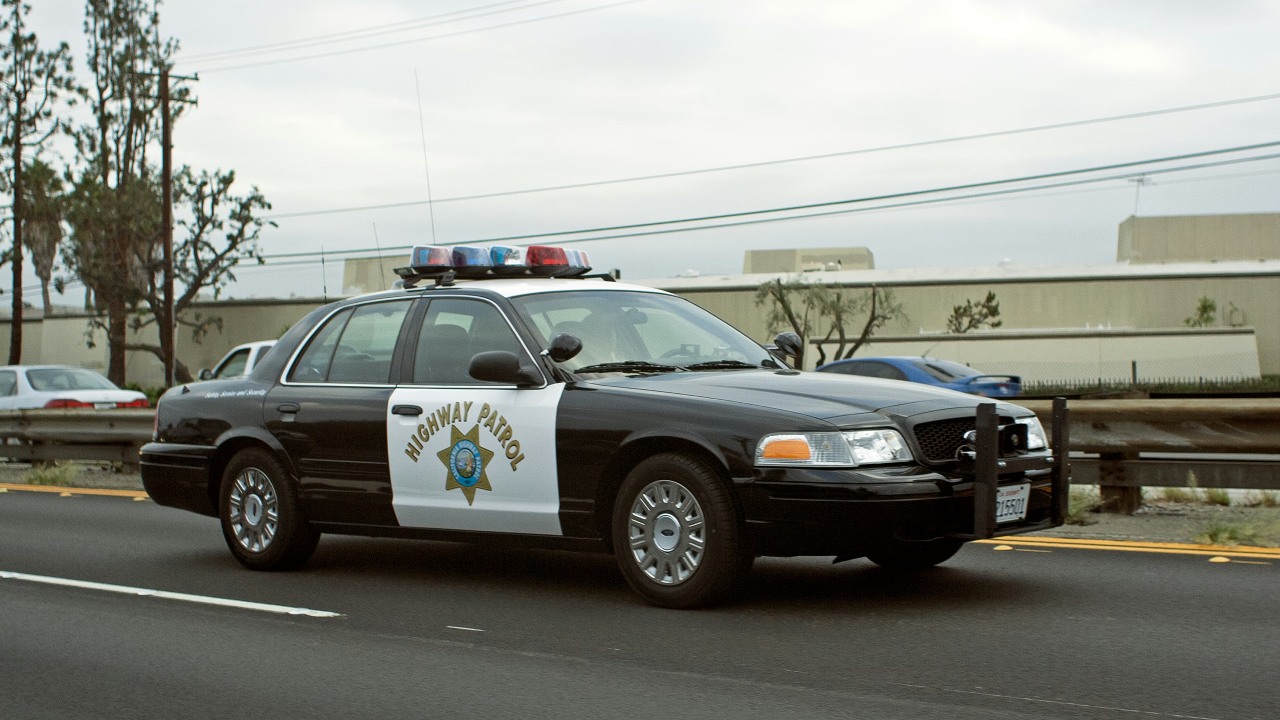
A late-night pursuit on Interstate 580 in the East Bay turned surreal when a Chevrolet Camaro rocketed past a California Highway Patrol cruiser at more than 100 miles per hour, then appeared to make its rear license plate vanish. The California Highway Patrol is now asking for the public’s help to identify the driver, who used what investigators describe as a “black out” or “turn off” plate trick to escape. The case has quickly become a test of how well traditional traffic enforcement can keep up with increasingly sophisticated attempts to evade identification.
The 100+ mph chase that went sideways
According to the California Highway Patrol, a Black Chevrolet Camaro drew attention when it blasted along 580 at more than 100 M, triggering a pursuit by officers from the Dublin office. The driver reportedly weaved through traffic at 100-MPH, putting other motorists at risk as the patrol tried to close the gap and initiate a stop. At those speeds, even a routine lane change can become catastrophic, and the decision to chase is always weighed against the danger to everyone else on the road, a calculation that became even more complicated once the plate disappeared.
Investigators say the Camaro initially displayed a standard rear plate, described as black with yellow or white writing, before the characters suddenly went dark during the pursuit. CHP personnel have said the driver was able to “black out” or “turn off” the plate, making it unreadable just as officers were trying to confirm the registration and call in the vehicle’s details. That maneuver, captured in part on a patrol vehicle’s camera and later shared in a public appeal, is at the heart of the current search for the Camaro and its driver, who sped away in the East Bay after the plate-kill trick left officers without a clear identifier for the car.
How a disappearing plate complicates the hunt
From an enforcement standpoint, the most striking detail is not the speed but the technology that appears to have helped the driver slip away. The California Highway Patrol has described the incident as involving a Chevrolet Camaro with a “Black Out” License Plate, language that suggests some form of device or cover capable of obscuring the characters on command. During the pursuit, officers reported that the plate went from visible to effectively blank, a shift that undermined one of the most basic tools of traffic policing: the ability to run a tag in real time and match it to a registered owner.
Without a readable plate, the investigation now leans heavily on video, eyewitness accounts, and the distinct look of the Black Chevrolet Cam captured in images shared by Authorities. CHP has circulated photos of the car, emphasizing the dark paint, the style of the wheels, and the unique appearance of the rear plate before it went dark, and has urged anyone who recognizes the vehicle to contact the Dublin office. In public statements, Authorities in the East Bay have framed the disappearing plate not as a clever stunt but as a deliberate attempt to obstruct identification, a tactic that, if left unchecked, could encourage other high-speed drivers to try similar tricks.
CHP’s Dublin office and a corridor with a deadly history
The pursuit unfolded in the jurisdiction of CHP’s Dublin office, a unit that already deals with some of the most heavily traveled and hazardous stretches of freeway in the region. Earlier this year, that same office investigated a fatal head-on collision along Highway 84, a crash that underscored how quickly things can turn deadly when drivers make reckless decisions at high speed. The circumstances of that collision remain under investigation by CHP (California Highway Patrol) Dublin, but the case has been cited by local officials as a reminder that aggressive driving on East Bay corridors is not a victimless choice.
Against that backdrop, the Camaro’s 100+ mph run on 580 is not just a story about a flashy escape but part of a broader pattern of risk on regional highways. Authorities in DUBLIN and across the East Bay have repeatedly asked for public cooperation in identifying dangerous drivers, from the Black Chevrolet Cam in the latest pursuit to other vehicles involved in serious crashes. When CHP now warns that a Chevrolet Camaro with a “Black Out” License Plate is still out there, it is doing so in a community that has already seen how quickly a single reckless driver can turn a routine commute into a tragedy.
What the “black out” trick reveals about plate-tampering tech
For investigators, the Camaro case is a vivid example of how plate-tampering technology is moving from online novelty to real-world enforcement problem. Reports on the incident describe a driver who could “black out” or “turn off” the plate during the chase, suggesting some kind of remotely manipulated cover or electronically controlled frame that can switch from transparent to opaque. In the public appeal, the California Highway Patrol Searching for Speeding Chevrolet Camaro With a “Black Out” License Plate, officers explicitly warned that the plate was black with yellow or white writing before it went dark, a detail that hints at either a specialized plate-style accessory or a custom device designed to mimic one.
While the exact hardware on this Camaro remains unverified based on available sources, the behavior described by CHP aligns with a growing category of gadgets marketed to drivers who want to evade toll cameras, red-light systems, or patrol units. Some devices use hinged flaps that can drop over a plate, others rely on reflective coatings that blow out camera images, and more advanced versions use electronically controlled films that can be switched on and off. In this case, the “Black Out” description and the timing of the plate’s disappearance during the pursuit have led Law enforcement to treat the Camaro as a priority target, not only because of the speed involved but because the driver demonstrated a willingness to actively defeat identification in the middle of a high-risk chase.
Public appeals, open questions, and what comes next
In the days since the pursuit, Authorities have turned to the public for help, a familiar step in high-profile traffic cases but one that carries added urgency when a driver has already shown the ability to defeat standard identification methods. CHP has asked anyone who recognizes the Black Chevrolet Camaro, or who may have dashcam footage from 580 in the East Bay around the time of the chase, to contact the Dublin office directly. In one appeal, Authorities emphasized that even small details, such as a partial plate recall, a distinctive exhaust note, or a recognizable aftermarket body kit, could help narrow the search for the Chevrolet Camaro that “blacked out” its plates and escaped from CHP in the East Bay.
There are still significant gaps in the public record. The identity of the driver is unverified based on available sources, and investigators have not publicly detailed whether they believe the Camaro’s plate device was commercially purchased or custom built. What is clear is that the case has already prompted a wider conversation inside traffic enforcement circles about how to respond when a driver can effectively erase the most basic piece of information on a vehicle in the middle of a pursuit. As the California Highway Patrol and other agencies in the East Bay continue to hunt for the Camaro driver who used a plate-kill trick at more than 100-MPH, they are also confronting a larger challenge: how to adapt long-standing policing tools to a road environment where even a license plate can be switched off at the push of a button.
More from Fast Lane Only: