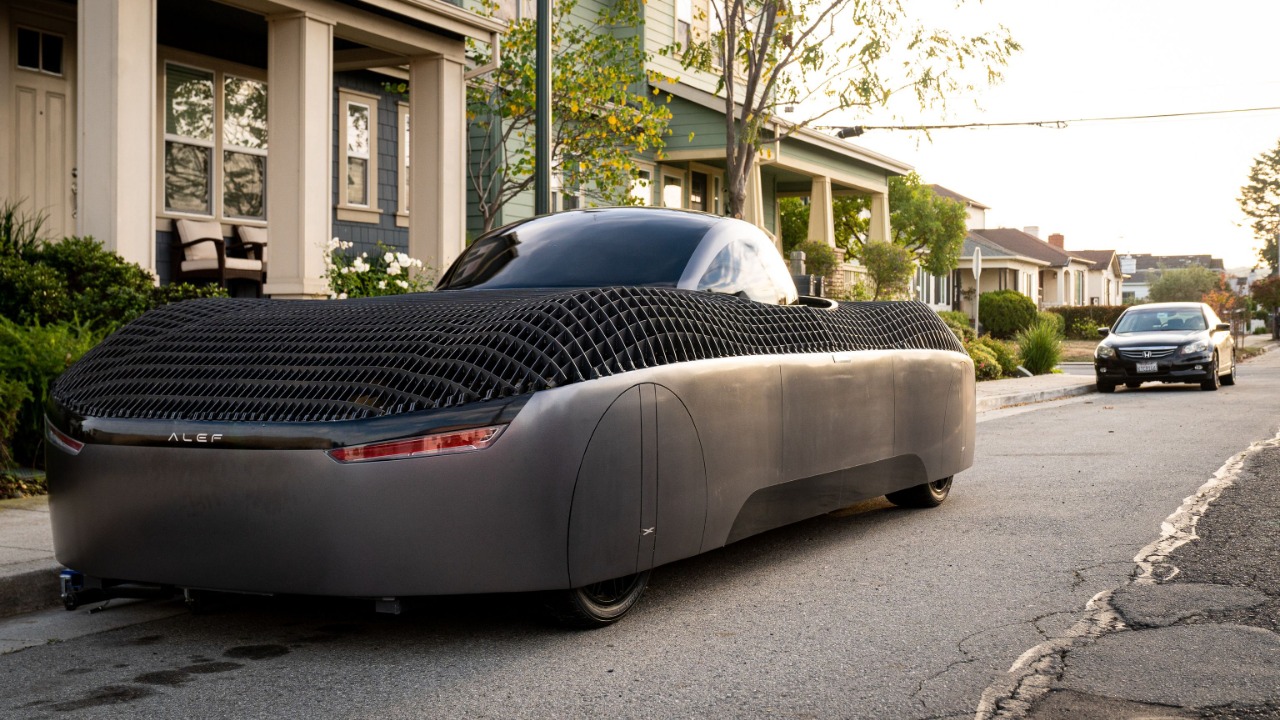
In a low-slung workshop south of San Francisco, technicians are hand-assembling a vehicle that aims to turn a century of science fiction into a street-legal product. The electric Alef Model A is pitched as a car that can drive through traffic, then lift off vertically and fly over it, a concept its creators now say is moving from renderings to real hardware.
The California startup behind it, Alef Aeronautics, is beginning limited production while navigating the same regulatory and infrastructure hurdles facing the broader electric aviation sector. The result is a rare moment when a “flying car” is not just a design study or air taxi, but a machine that early buyers can already reserve for personal use.
The California workshop where a flying car is taking shape
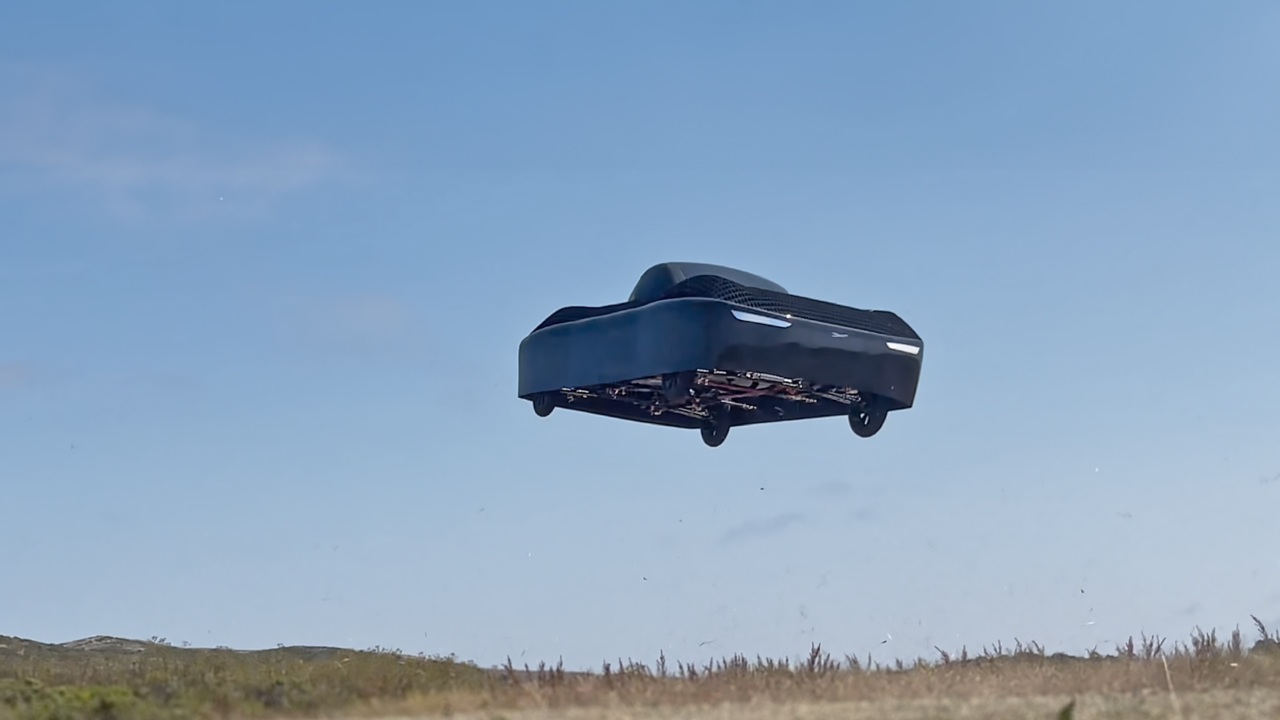
The most striking detail about Alef’s progress is how traditional the setting looks for such a futuristic machine. In San Mateo, Calif, the company is building its first units by hand, with technicians fitting lightweight body panels and electric propulsion components onto a compact chassis rather than running them down a high-speed line. Company materials describe the Model A as an electric vehicle that can handle normal road driving before transitioning to vertical takeoff, with a cabin designed to stay level while the outer structure provides lift in flight. Reporting on the early build phase notes that CEO Jim Dukhovny has been personally introducing the Model A as an electric flying car that can both drive and vertically take off, underscoring that the first examples are emerging from a workshop environment rather than a distant factory campus.
Alef’s own preorder page frames this as a deliberate ramp, inviting customers to reserve a place in line while the company refines its hand-built process and prepares for higher volume. The preorder site describes how buyers can secure a future Model A, while separate coverage of the company’s manufacturing launch states that Production began on schedule for the 1st flying car, with the company positioning these early units as the foundation for a broader rollout. A detailed look at the California operation notes that the “world’s first flying car” is now being hand-made in the state, with Dec updates highlighting how the workshop phase is meant to validate the design and manufacturing steps before Alef scales up.
What makes the Alef Model A different from other eVTOLs
Plenty of electric vertical takeoff and landing aircraft are in development, but Alef is targeting a different use case from the urban air taxis that dominate the sector. The Model A is pitched as a street-legal car first, with the ability to drive on public roads, park in a standard space, and then lift off vertically when needed. Technical descriptions of The Alef Model A, described as a Revolutionary Flying Car, specify a Driving Range of 200 miles and a Flying Range of 110 miles, figures that place it closer to a compact electric car in ground mode and a short-hop aircraft in the air. The same analysis points to Battery Capacity sized for those dual roles, with the vehicle expected to handle daily commutes on wheels while reserving flight for congestion or terrain that would otherwise slow a trip.
Unlike larger eVTOL designs that rely on multiple exposed rotors and dedicated vertiports, Alef’s concept wraps its lift system into a sleeker, more car-like body. A Bay Area feature on the company highlights its Sleek design, noting that Alef said its flying car uses ultra-light, ultra-strong components with a sleek design for stability, a choice that helps it blend into traffic rather than stand out as a small helicopter. Another report on airports in California preparing to test an electric road-to-air vehicle explains that Alef designed the Model A to operate as a road-legal car that can also use vertical takeoff, and that it has already secured an Airworthiness Certification for limited testing. That certification, described in more detail in a separate analysis of the world’s first “certified” electric flying car, comes from the FAA and carries restrictions on where and for what purposes the aircraft can be flown, but it still marks a significant milestone for a vehicle that is meant to drive itself to the takeoff point.
Preorders, price tags, and who is lining up to buy
For all the engineering ambition, Alef’s most concrete signal of demand is financial: thousands of people have already put money down. A detailed report on early interest notes that Thousands Pre, Order World, First Commercially Available Flying Car, with San Mateo, Calif based Alef Aeronautics attracting reservations from buyers who want to be among the first to own the Model A. Another analysis of the company’s order book states that the startup has already received more than 3,300 pre-orders for its Alef Aeronautics fully electric flying car, describing this as Beaconing a new future for personal air mobility. Those figures are unusually specific for a young aerospace company and suggest that the idea of a drivable flying car has resonated with a niche but global audience.
The financial commitment required is substantial. Coverage of Alef’s certification progress notes that Alef is already taking pre-orders for the $300,000 Model A on its website, with plans to begin deliveries in 2025, pending approval. A separate report on early consumer access explains that the first Alef flying car is available for pre-sale to consumers now for $300K U.S., with $150 regular queue or $1,500 priority queue deposit, on the company’s site, while another summary of the same program cites the price as $300,000 M and reiterates the $300,000 figure. Alef’s own preorder page reinforces that structure, inviting prospective buyers to place a smaller deposit to join the regular line or pay more to move into a priority queue. For a product that does not yet have full operational clearance, that level of upfront interest is a bet that the company can convert its limited testing approvals into a usable personal aircraft.
Regulators, runways, and the limits of “first”
Even as Alef markets the Model A as the world’s first flying car, the fine print of its approvals shows how conditional that claim remains. The FAA’s involvement is central. An in-depth look at Alef’s certification notes that the agency granted a special airworthiness nod for the Model A, but that this particular certification lays down restrictions on the locations and purposes for which the aircraft is permitted to fly. In other words, the Model A can be flown only in specific test areas and scenarios, not yet as a fully free-roaming personal aircraft. A broader discussion of the eVTOL sector underscores why this matters, pointing out that Regulatory approvals are crucial, and that delays in securing FAA Type Certification could postpone commercial launches and hurt operators’ economics. That same analysis explains that each FAA Type Certification is unique to the specific aircraft, a point echoed in a Form S-1 filing that notes a certification basis has blazed a trail for others to follow, but that each certification basis is unique to the specific aircraft.
Within that context, Alef’s progress looks both impressive and constrained. A report on airports in California preparing to test an electric road-to-air vehicle describes how Airports in California are expected to host trials of the Model A, using its Airworthiness Certification for limited testing to gather data on operations in and around Silicon Valley. Another feature on the world’s first flying car built by a US firm to start operations at Silicon Valley airports states that the vehicle has been in the making for a decade and is set to begin operations at those locations, tying Alef’s ambitions directly to World and Silicon Valley aviation ecosystems. Yet the same regulatory landscape that governs larger air taxis will also shape how and where Alef’s customers can actually fly, meaning that the “first” in its marketing refers more to the combination of road legality and electric vertical flight than to unrestricted aerial freedom.
From hand-built novelty to potential new category
The leap from a hand-built curiosity in a California workshop to a new category of personal transport will depend on whether Alef can scale production and maintain safety while regulators catch up. A recent corporate update framed the current phase as the start of a longer journey, stating that Alef begins manufacturing of world’s 1st flying car and that Production began on schedule for the 1st flying car, signaling that the company sees these early units as the vanguard of a larger fleet. A separate deep dive into the hand-building process notes that less than a year after introducing its first model, Alef is now physically assembling vehicles in California, with CEO Jim Dukhovny positioning the Model A as a bridge between everyday driving and vertical takeoff. That narrative aligns with the company’s mission statements, which emphasize making personal flight as routine as driving, even if the initial output is measured in dozens of units rather than thousands.
At the same time, Alef is not alone in trying to sell personal electric aircraft directly to individuals. A pre-order sales agreement for skysurfer aircraft describes how You may pre-order skysurfer aircraft, a commercially available personal electric aerial vehicle that you can own and fly, with the document defining the Offer as a way for early adopters to secure a future product. That parallel effort shows that Alef’s Model A is part of a broader push to move electric aviation from air taxi services into private ownership. The difference is Alef’s insistence on road legality and its focus on a car-like form factor, supported by its Sleek design and the dual-mode performance metrics of 200 miles driving and 110 miles flying. If the company can turn its San Mateo, Calif workshop into a reliable production line while satisfying FAA requirements, the hand-built machines now taking shape could mark the start of a small but significant shift in how people think about both cars and aircraft.