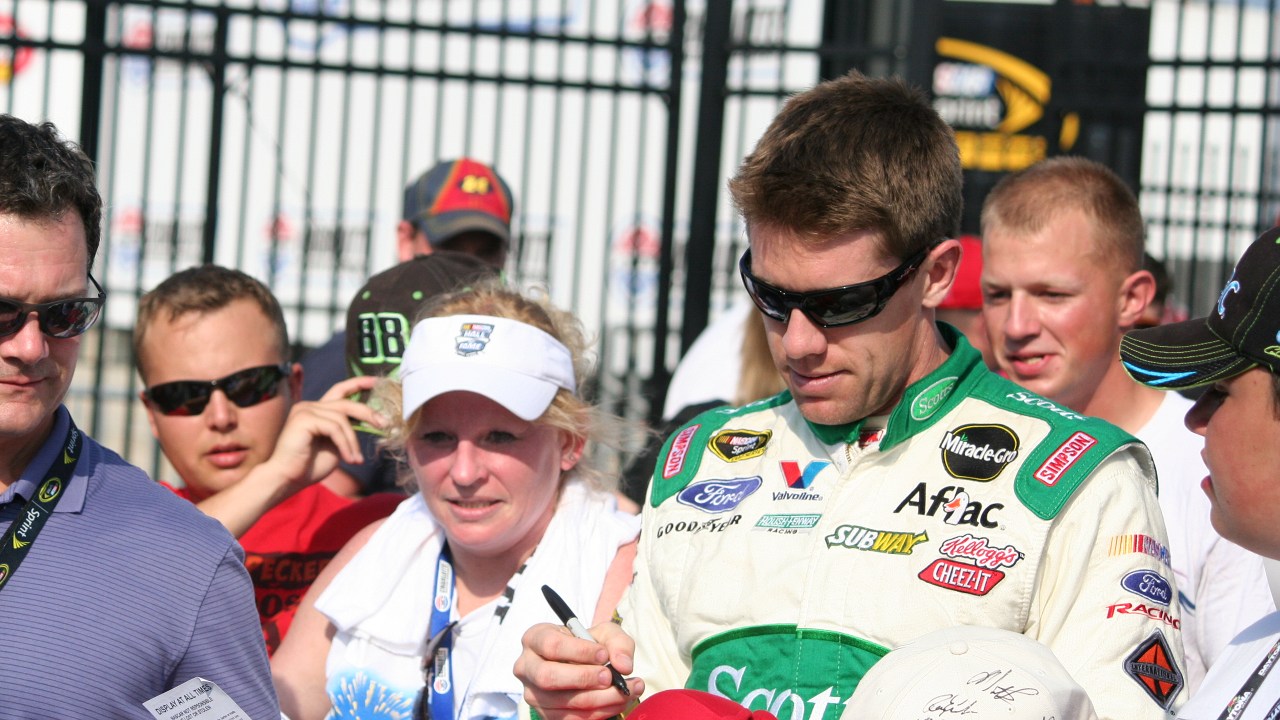
Carl Edwards did not drift out of the spotlight, he walked away at full speed while still near the peak of his powers, and the abruptness of that decision is why his name still sparks arguments in the grandstands and online. His exit from the NASCAR Cup Series, coming on the heels of a near miss at a championship, left a vacuum that fans have been trying to fill ever since, debating whether he left as an unfinished great or as a driver who understood his own limits better than the sport did.
The shock of a contender walking away
From a competitive standpoint, Edwards’ retirement was as jarring as any in modern stock car racing, because he stepped aside while still capable of winning a title. He had just taken a shot at the championship at Homestead, only to see it unravel in a late caution and the chaos that followed, and he was still in a top-tier seat with Joe Gibbs Racin when he chose to stop. That context is why his announcement felt less like a slow fade and more like a hard cut, the kind of decision that left even fellow drivers and insiders admitting they did not fully understand why he would leave when he still had speed and stature, a confusion reflected in early attempts to explain why he walked away.
In the immediate aftermath, the official framing emphasized that Edwards was healthy and wanted to stay that way, a point he underscored by stressing that he was leaving with his body and mind intact rather than being forced out by injury. He spoke of stepping away on his own terms, with no looming medical crisis, and of valuing the chance to enjoy life beyond the cockpit while he still could, a message that was reinforced when he described himself as leaving healthy and without regrets. That combination of competitive relevance and personal clarity is rare in a sport where many careers end only after performance declines or injuries intervene, and it set the stage for the enduring fascination with his choice.
Homestead heartbreak and the “entertainment” problem
Over time, Edwards has peeled back more layers about what pushed him toward that decision, and the picture that emerges is less about a single bad night and more about a fundamental discomfort with how races were being decided. He has pointed directly to the heartbreak at Homestead as a turning point, describing how he left the track, started the long drive back to Missouri, and felt a growing unease that he could not shake. That feeling eventually sent him back to speak with Coach Joe Gibbs, and he has since tied that moment to a broader concern about what he saw as “entertainment” style cautions and officiating choices that, in his view, distorted the competitive integrity of the championship run, concerns he later grouped under his issues with Homestead heartbreak.
In more recent reflections, Edwards has gone further, explicitly citing NASCAR officiating and the playoff format as central reasons he no longer wanted to compete for titles under those conditions. He has described how the combination of late-race cautions, the pressure-cooker structure of the postseason, and the sense that outcomes could hinge on decisions made for spectacle rather than sport eroded his trust in the system. That critique has been echoed in later reporting that notes he cited officiating and the playoff format among his motivations for stepping away, and in detailed accounts of how the caution at Homestead, which came while he was in position to win, felt to him like something that “is not supposed to happen” in a fair fight for a championship, a sentiment revisited in analysis of that decisive caution.
Fear, safety, and a driver who knew when to stop
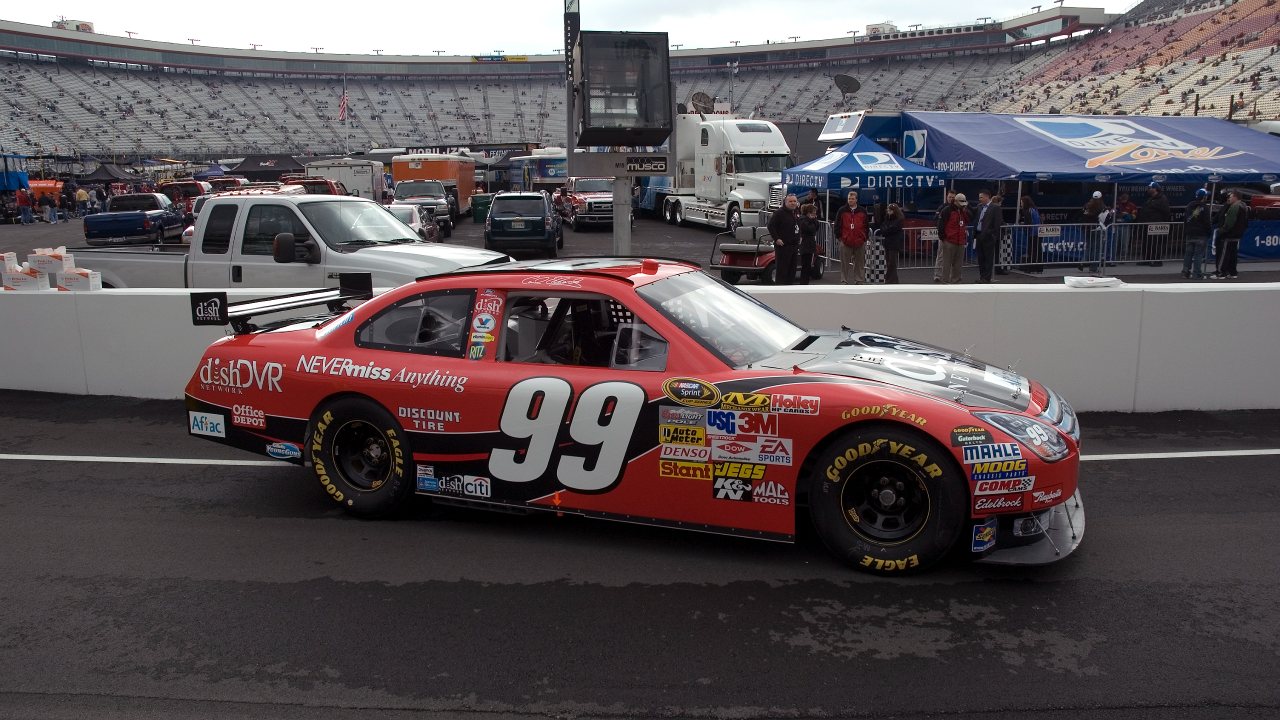
Alongside his frustration with officiating, Edwards has been candid about the role that fear and safety played in his thinking, and I see that as central to understanding his legacy. He has talked about the mental toll of strapping into a car at high speed week after week, knowing that one wrong angle could change his life, and how that awareness grew sharper as he got older and watched others suffer serious injuries. In later interviews he has framed his retirement as a choice to step away before that risk caught up with him, describing how concerns about “entertainment” cautions intersected with a deeper fear of being hurt in a crash triggered by decisions he did not control, a theme that runs through his explanation that fear of injury helped lead him to retirement.
When Edwards revisited his decision earlier this year, he emphasized that his reasons were not a mystery or a midlife whim but a deliberate weighing of health, family, and the evolving nature of the sport. He has spoken of wanting to be present for life beyond the track, and of feeling that the balance between risk and reward had shifted in a way that no longer made sense for him personally. In explaining the “real reasons” he left NASCAR in 2016, he has pointed to a convergence of factors, from the playoff format to his own internal alarm bells, and has been clear that he did not want to wait until an accident or a decline in performance forced the issue, a stance he reiterated when he set the record straight about his real reasons for leaving NASCAR.
A résumé that still measures up
For all the focus on why he left, the debate over Edwards’ legacy ultimately comes down to what he did on track, and that record is stronger than some of his detractors admit. He was a versatile winner who could contend on short tracks, intermediates, and superspeedways, and he carved out a place in history by becoming one of the few drivers to win Busch and Nextel Cup Series races in the same weekend while adding his name to the list of those who have taken victories across multiple NASCAR divisions. That breadth of success, including landmark wins such as taking the checkered flag at the Pocono 500, is documented in career summaries that highlight his dual triumphs in the Busch and Nextel Cup Series.
Institutional recognition has followed, which is why I view the “unfinished” label some fans attach to him as only half the story. Edwards has been selected as a Class of 2025 NASCAR Hall of Fame Inductee, an honor that reflects not only his wins but also the way he carried himself as a competitor, from his trademark backflip celebrations to his reputation as a hard but generally fair racer. Official biographies note how he once juggled Working as a substitute teacher while chasing his racing career, and how he later came within a tiebreaker of a championship, details that underscore both his work ethic and his near misses at the sport’s ultimate prize, as captured in the Hall’s own Vitals.
Why fans still argue about what might have been
The intensity of the fan debate around Edwards is not just about statistics, it is about the emotional whiplash of seeing a beloved driver step away without the usual decline or farewell tour. Longtime supporters describe him as “my guy” for more than a decade and point to his kindness and off-track generosity as a big part of why his absence still stings, recalling stories of how Carl went out of his way to help others and how His legacy of helping people beyond racing remains vivid years after his final start, sentiments that surface in fan recollections where Carl was their guy. Others, even while wishing him well, admit they believe he could not stomach another title loss after the blows of 2008, 2011, and 2016, arguing that the psychological toll of coming so close so often made his exit feel almost inevitable, a theory voiced in fan discussions that begin with “Good for” him but quickly pivot to the idea that Good for Carl does not erase the sense of unfinished business.
Inside the industry, his decision has become a kind of Rorschach test, with some analysts and former drivers framing it as a rational response to a system they also question. Kenny Wallace, for instance, has revisited his own reaction to Edwards’ retirement and insisted he was “100%” right in how he read the situation, using that figure to underline his belief that the combination of title controversy and format fatigue made the move understandable, a stance he has amplified while revisiting his judgment of Carl Edwards. Others still frame the retirement as a surprise that fit a pattern of Edwards doing things his own way, noting that If Edwards had been contemplating stepping away even before Homestead, then the timing only reinforced his reputation as a driver who could shock the garage with a single decision, a perspective captured in early commentary that marveled at how If Edwards was contemplating retirement all along, he still managed to surprise everyone.
Even now, as Edwards himself has returned occasionally to the NASCAR orbit to clarify his thinking and reconnect with the community, the arguments about his place in history have not really cooled. Some fans and commentators lean on the heartbreak at Homestead, the drive back to Missouri, and the conversation with Coach as proof that the sport’s playoff era pushed one of its best away, a view reinforced by his own description of that strange, unsettling feeling that would not let him continue. Others focus on his Hall of Fame induction, his cross-series success, and his insistence that he left with health and no regrets, and they see a driver who managed to exit on his own terms in a way most athletes never do, a narrative supported by accounts that begin After the 2016 season ended in heartbreak and end with Edwards, or Carl Edwards, choosing a different life. That tension between what he achieved and what he might have done if he had stayed is precisely why his surprise exit still fuels debates about his legacy, and why those conversations are unlikely to fade even as new champions rise.
More from Fast Lane Only: