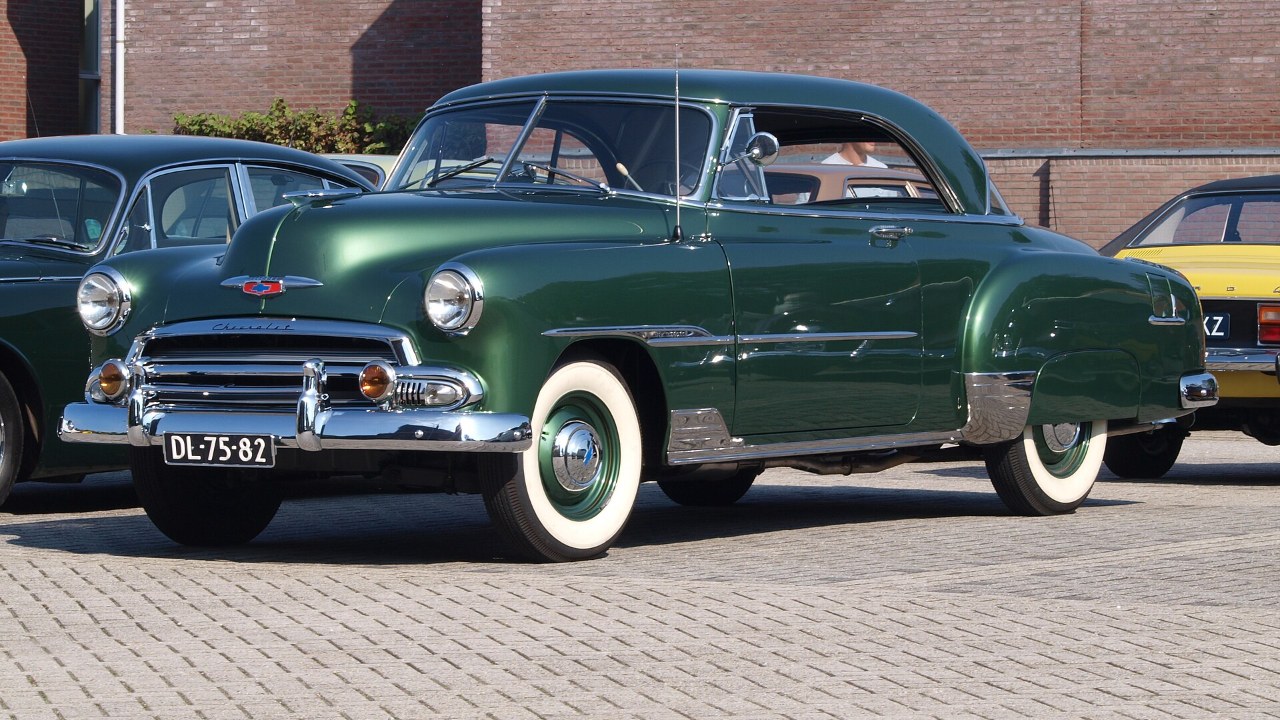
Chevrolet put the Powerglide on sale for the 1950 model year. It was a two-speed automatic for buyers who wanted to stop working a clutch in traffic. More than five decades after the last one left a GM plant, however, the Chevrolet Powerglide is a regular sight at drag strips. The reason is simple arithmetic. With only two gears, a Powerglide asks the driver for one shift per pass, and it wastes very little power doing it.
That is an odd career for a transmission that period testers often found sluggish on the highway. So how did a family-car gearbox turn into a race part? First, look at what Chevrolet built. Then look at what it changed in 1962, and what drag racers figured out once the factory moved on.
Here is the short version. The qualities that made the Powerglide feel dull in a 1950s sedan also make it predictable at the strip. It has few parts, a low first gear, and a direct 1:1 top gear with nothing in between.
What Chevrolet built in 1950: the first Chevrolet Powerglide
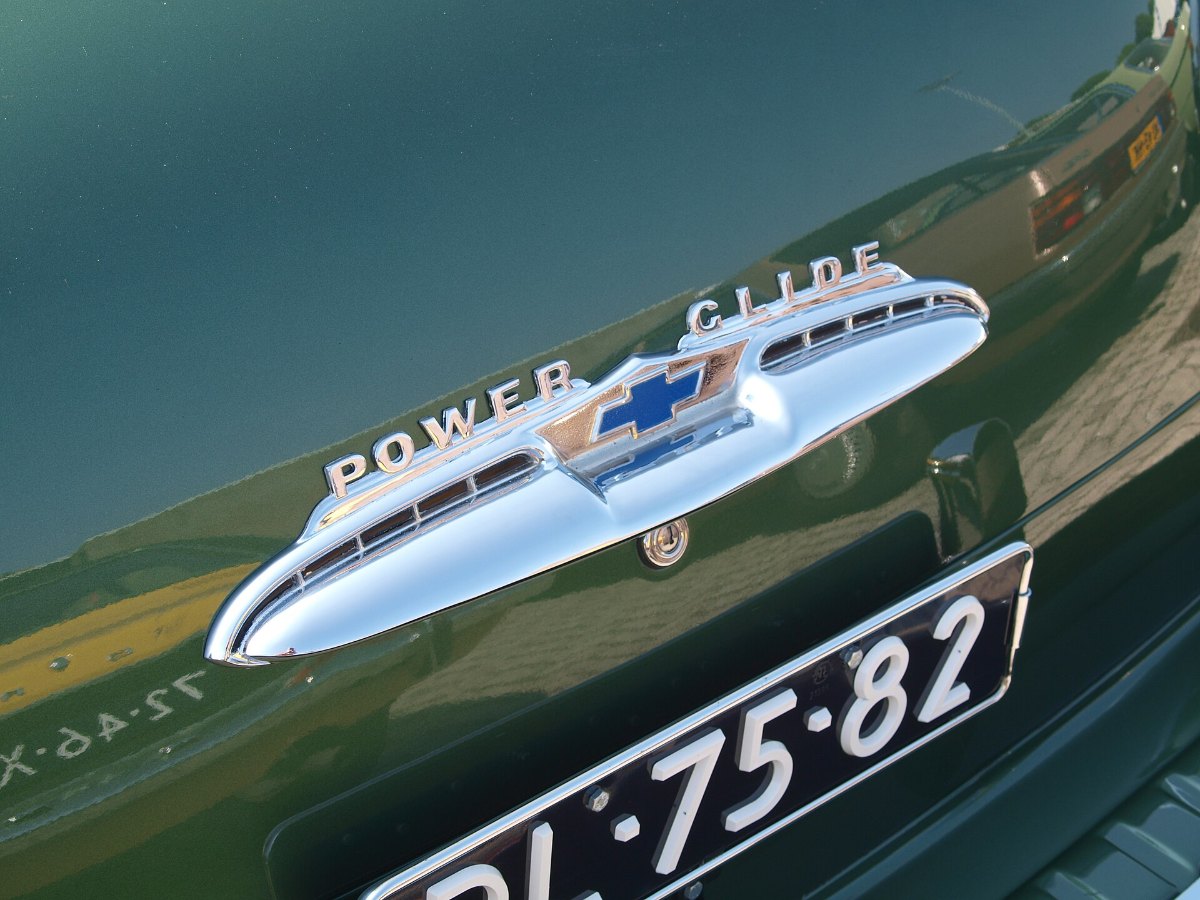
According to Curbside Classic’s history of the transmission, the first Powerglide arrived for the 1950 model year. Chevrolet paired it with a 235-cubic-inch six and gave that engine hydraulic valve lifters for the occasion. Still, the early units did not shift on their own the way drivers expect today. Instead, normal driving happened in the high range, and the torque converter multiplied torque from a stop. For steep grades or a quicker getaway, the driver selected Low by hand. Curbside Classic dates the change to a true automatic upshift from first to top gear to 1953.
Gears Magazine, the transmission-rebuilding trade title, describes the layout as a torque converter feeding a two-speed planetary unit. It also notes one trait that frustrated road testers. The Powerglide would not kick down to the lower gear for a burst of passing power. In addition, Gears cites a September 1950 Motor Trend test of the automatic car. That test found it more economical at 45 mph than a manual Chevrolet, but thirstier at 60 mph, because of its different axle ratio.
The 1962 redesign that racers would later prize
The original Powerglide used a cast-iron case. For 1962, however, Chevrolet switched to an aluminum-case design. Jalopnik reports that it came in about 100 pounds lighter than the first generation. Chevy Hardcore puts the cast-iron unit at roughly 240 pounds. As a result, the aluminum case trimmed more than 40 percent of the transmission’s weight.
The gearing stayed familiar. Jalopnik lists first gear at 1.82:1 behind six-cylinder engines and 1.76:1 behind V8s, with second gear at a straight 1:1. That gap between ratios matters later in this story. Brian Swayne’s racing transmission shop builds Powerglides for competition. It gives the same 1.82 and 1.76 ratios in its own history page. The shop also notes that from 1961 to 1963, GM’s Pontiac division ran a modified version called TempesTorque in the Tempest and LeMans. Meanwhile, the shop adds, the rear-engined Corvair got its own Powerglide variant.
Production did not last long after that. Curbside Classic says 1971 was the final year for the Powerglide in full-size Chevrolets. After that, the last units went into the Vega and Nova through 1973. Jalopnik identifies the Turbo-Hydramatic as the transmission that took its place.
Why one shift wins races
A drag race is a straight line measured in tenths and hundredths of a second. Every gear change is a chance to lose time or upset the chassis. Chevy Hardcore’s breakdown of the Powerglide’s racing appeal boils it down to a short list. First, the driver shifts once on the way down the track, which leaves less room for a mistake. Second, the internals amount to one band, one planetary gearset and one clutch pack, so there is less rotating mass to spin up. Fewer gears also mean less of the internal drag that eats horsepower before it reaches the tires.
On paper, the two-speed spread can look like a handicap. But racers solve it with rear-end gearing. Chevy Hardcore’s example pairs a Powerglide with a 4.56:1 axle for an overall first-gear ratio of 8.03:1 at the tires. That is enough to launch a light, powerful car hard without a third or fourth gear. In a car making big power, the engine has plenty of torque to pull a tall top gear. At the same time, the simple shift pattern keeps runs consistent from one pass to the next, and bracket racers earn their money on consistency.
Cost plays a part too. The same Chevy Hardcore feature points out that fewer internal parts mean a smaller bill when it comes time to rebuild one. That argument carries weight with weekend racers who pay their own way.
From junkyard part to purpose-built race unit
A stock Powerglide has limits. Chevy Hardcore names the factory clutch hub as a known weak point. It also notes that Chevrolet chose low line pressure for smooth street shifts, and that pressure does not suit a race car. By its estimate, a stock case can live with roughly 1,000 horsepower. By comparison, purpose-built aftermarket cases can support 3,500 horsepower or more.
That aftermarket now carries the design on its own. Chevy Hardcore lists FTI Performance and ATI Performance Products among the companies building complete race units. Reid and JW Performance also make parts.
Where the Powerglide stands now
By 1973, the factory story had ended. Chevy Hardcore observes that the design has been out of GM production for more than five decades. Even so, the racing story has not slowed. Swayne Racing Transmission, one of the shops that builds them, calls the Powerglide a staple of drag racing and of high-horsepower street cars. Thanks to aftermarket cases rated for thousands of horsepower, shops build the two-speed Chevrolet Powerglide layout from 1950 new for racers today.
More from Fast Lane Only
- Unboxing the WWII Jeep in a Crate
- 15 rare Chevys collectors are quietly buying
- 10 underrated V8s still worth hunting down
- Police notice this before you even roll window down
This article was created with the help of AI and was reviewed and edited by Fast Lane Only editors before publication.