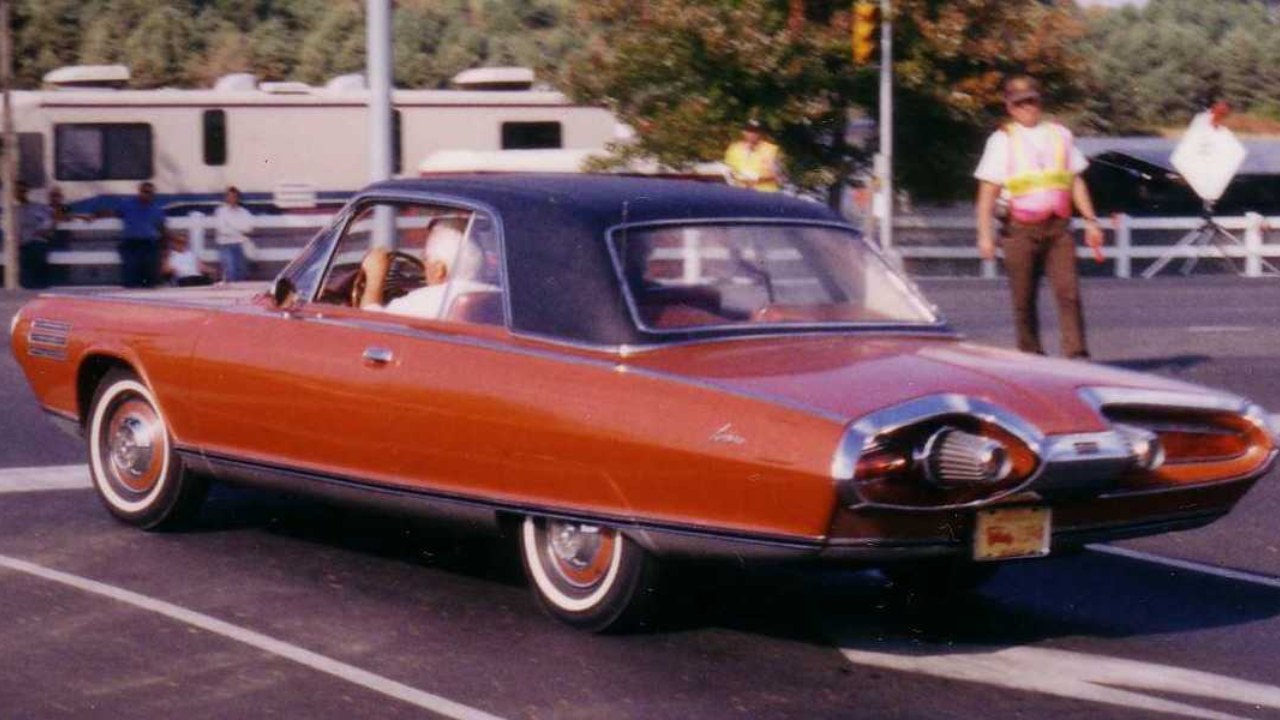
Between October 1963 and October 1964, Chrysler built 50 identical bronze coupes with a gas turbine instead of a piston engine. Then it handed them to ordinary families to drive. Each Chrysler Turbine Car could burn diesel, kerosene, jet fuel and even vegetable oil, and the reason lies in how a turbine makes power. There was one notable exception at the pump, however, and it came down to what that fuel left behind inside the engine.
Most people remember the Chrysler Turbine Car for its looks and its whine. But the fuel story is the more practical one. It shows what the engineers gained by throwing out pistons, valves and a spark-timed explosion, and also what they gave up in return.
Here is how the engine worked, what it would run on, the fuel it could not take, and what became of the cars.
A turbine burns fuel differently from a piston engine
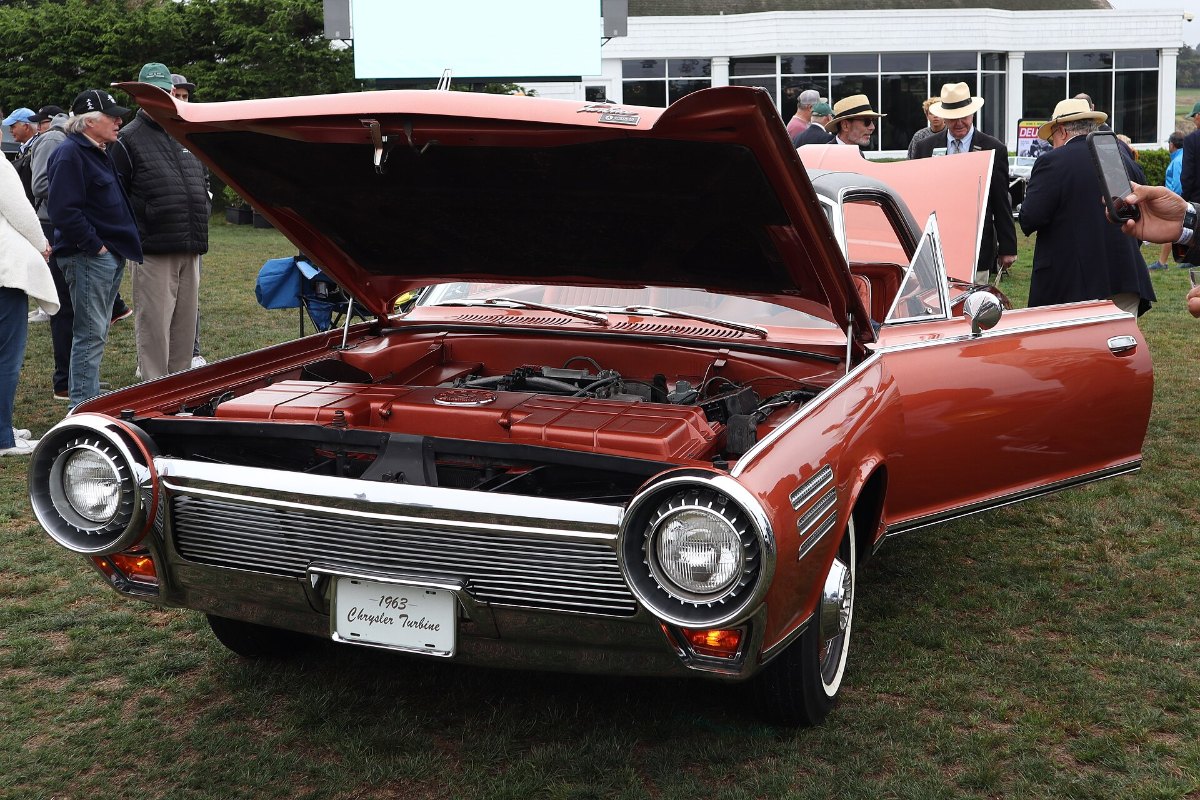
A piston engine depends on fuel that ignites at a precise moment inside a sealed cylinder. Gasoline has to resist knocking, while diesel has to light under compression. As a result, an engine tuned for one will not run properly on the other. A gas turbine avoids that problem. First, a compressor squeezes the air. Next, the burner sprays in fuel, which burns in a continuous flame. Finally, the hot gas spins a turbine wheel that drives the car. Because nothing has to match a piston stroke, the engine cares far less about fuel chemistry. Any liquid works, as long as it burns steadily.
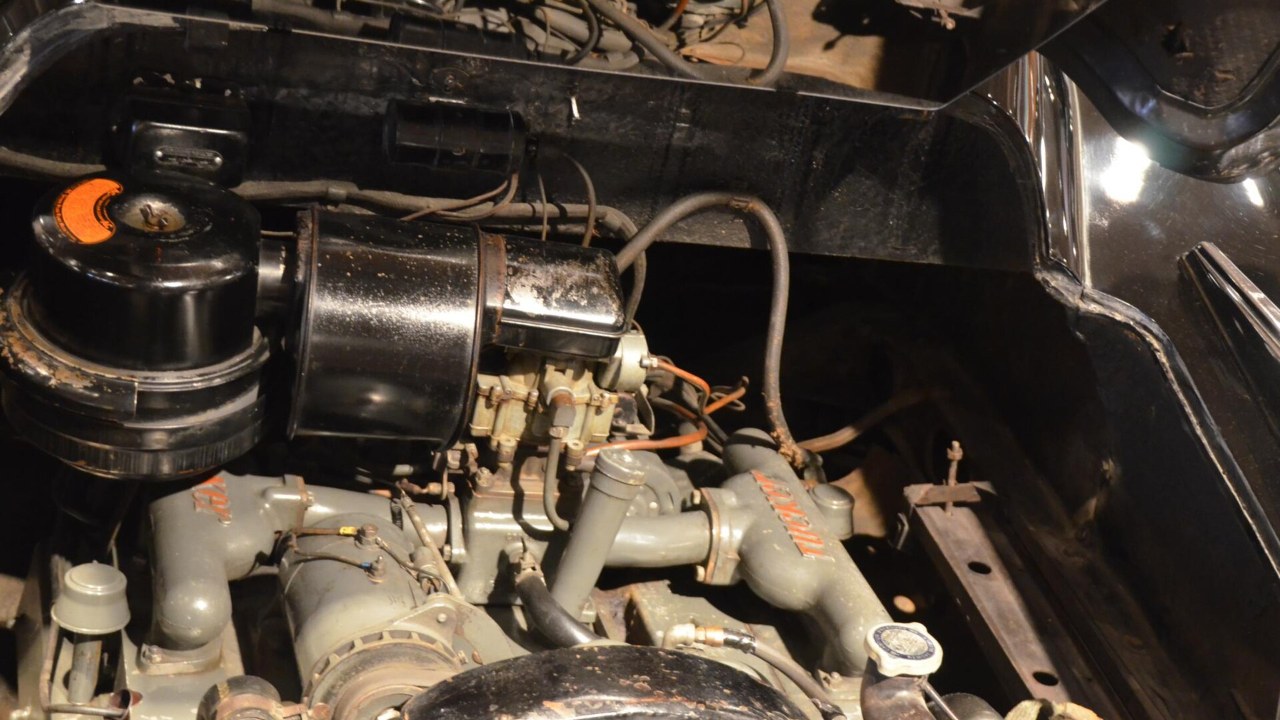
Chrysler’s version added a heat-recovery step. The Henry Ford museum explains that its regenerative design used the exhaust gas twice. First it drove the car, and then it preheated fresh air coming into the engine. The museum credits the turbine with 130 horsepower and with 80 percent fewer moving parts than a piston engine. However, it also records the weak spot: fuel economy of around 11.5 mpg.
Old Cars Weekly identifies the engine as the A-831, Chrysler’s fourth-generation turbine. It made 130 horsepower at 36,000 rpm and 425 lb-ft of torque at stall. According to the same feature, it idled between 18,000 and 22,000 rpm, used twin regenerators, and weighed 410 pounds.
What went in the Chrysler Turbine Car’s tank
The list of fuels is the part people remember. Old Cars Weekly names diesel fuel, unleaded gasoline, kerosene, JP-4 jet fuel, furnace oil, peanut oil and soybean oil. It also adds perfume to the list. A Chrysler Turbine Car trade catalog in The Henry Ford’s digital collections makes the same point in period language. It says the engine could run on anything from kerosene to perfume. Meanwhile, the museum’s engine article puts the range as gasoline to peanut oil.
The most repeated anecdote involves tequila. Old Cars Weekly reports that Chrysler engineers confirmed one detail: Mexican President Adolfo López Mateos ran one of the cars on tequila. Hagerty also lists tequila among the liquids the turbine would burn. It makes a good story, but the practical point is simpler. The burner did not need a fuel blended for one specific engine.
The one fuel it could not use
Leaded gasoline was the exception. Hagerty’s history of the turbine program says the engine would take basically any combustible liquid but not leaded fuel. That is because the lead left mineral deposits on the engine’s components. Old Cars Weekly states it more bluntly: leaded gasoline would damage the engine.
The problem was build-up, not combustion. A turbine depends on hot gas flowing cleanly through finely made passages and the regenerators, and deposits work against that. So the engine that would accept peanut oil had to stay away from a fuel additive that piston engines of the day handled routinely.
The public trial and the cars that survived
According to the Tennessee Museum of Transportation, Chrysler built 55 Turbine Cars in total. That count includes five prototypes in 1962 and then 50 identical cars between October 1963 and October 1964. The museum notes that the Italian design house Ghia handmade the bodies. In addition, every car was a two-door hardtop in a color Chrysler called Turbine Bronze.
Hagerty reports that between 1963 and 1966, 203 people drove the cars. Each family kept one for a three-month evaluation. When the program ended, Chrysler destroyed most of the fleet. Hagerty quotes the reasoning: the company did not want prototypes on the road, or someone pulling the turbine and dropping in a conventional V8.
Nine survive, according to Hagerty. Chrysler kept two, and six went to museums with their engines crated. Those museums include the Detroit Historical Museum, the Smithsonian Institution, The Henry Ford and the Petersen Automotive Museum. Two are in private hands. One of them belongs to Jay Leno, who bought his after the Walter P. Chrysler Museum closed. Finally, Old Cars Weekly counts at least three of the nine as runners.
More from Fast Lane Only
- Unboxing the WWII Jeep in a Crate
- 15 rare Chevys collectors are quietly buying
- 10 underrated V8s still worth hunting down
- Police notice this before you even roll window down
This article was created with the help of AI and was reviewed and edited by Fast Lane Only editors before publication.