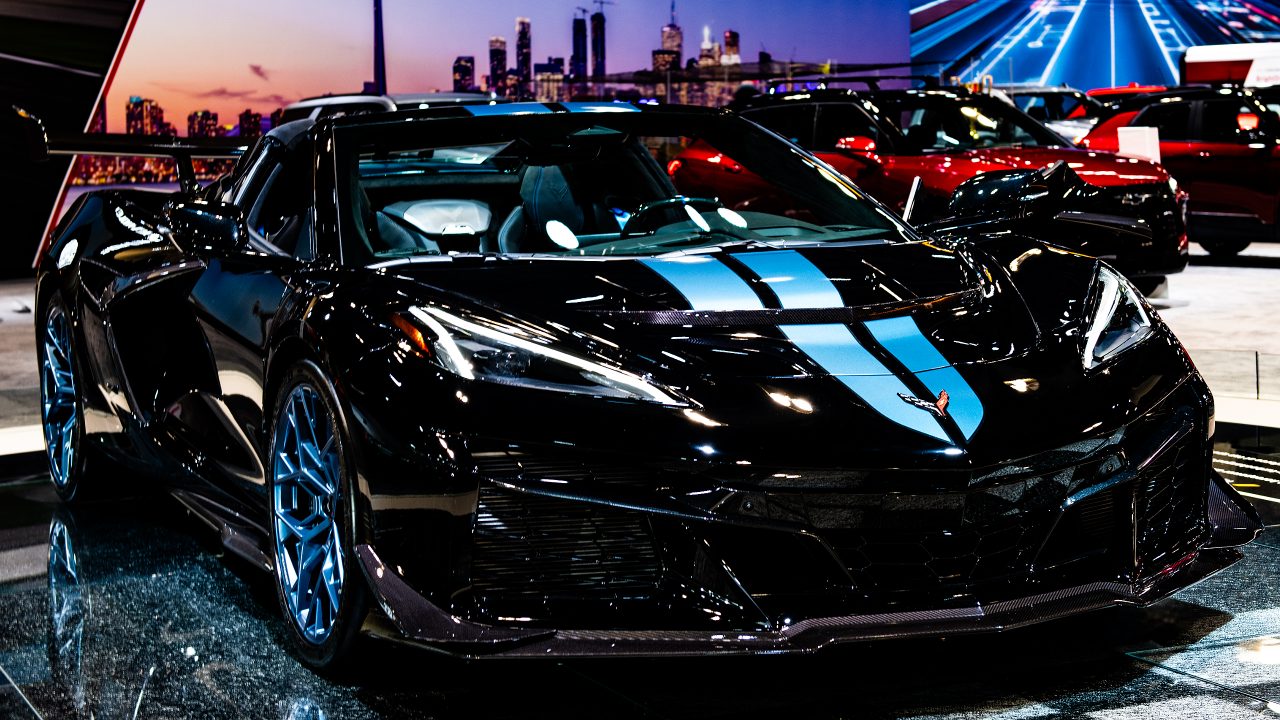
The 2025 Chevrolet Corvette ZR1 arrives with a headline figure that would have sounded like fantasy a decade ago: a factory claim of 1,064 horsepower. That number alone would cement its status as a modern “King of the Hill,” yet early dynamometer runs suggest the story does not stop at the spec sheet. If anything, the dyno pulls indicate Chevy may have been conservative, and the gap between the brochure and the rollers is where the real intrigue begins.
At the center of the debate is a simple tension. On one side sits Chevrolet’s official rating for the ZR1’s twin-turbo V8, on the other are independent tests showing four-figure output at the rear wheels with a completely stock car. I see that discrepancy not as a minor rounding error but as a window into how far this Corvette has pushed the boundaries of street-legal performance.
Chevy’s official story: 1,064 horsepower and a new “King of the Hill”
Chevrolet positions the latest ZR1 as the most extreme Corvette it has ever built, and the hardware backs up that claim. The car uses a 5.5-liter, twin-turbocharged DOHC flat-plane crank V8, internally dubbed LT7, that is described as the most powerful V8 the brand has ever produced. In official materials, Chevy credits this LT7 with 1,064 horsepower, a figure that already places the ZR1 in rare company among road-legal supercars and makes it the performance flagship of the Corvette range.
Dealer information reinforces that message, presenting the 2025 Chevrolet Corvette ZR1 as a 1,064 horsepower monster without any mention of optional power packs or special fuels. One Miami retailer highlights the “2025 Corvette ZR1 Performance” with that same 1,064 figure, treating it as a defining trait rather than a marketing flourish. When I look at the broader Corvette lineup, from the standard Stingray to the Z06 and the hybrid E-Ray, the ZR1’s spec sheet reads like a deliberate escalation, a car built to sit at the top of the hierarchy and justify its “King of the Hill” nickname in raw numbers as well as track capability.
The LT7 twin-turbo V8 and why drivetrain loss matters
To understand why the dyno results are raising eyebrows, it helps to look more closely at the LT7 itself. This 5.5-liter engine builds on the flat-plane crank architecture introduced in the Z06, then layers in twin turbochargers and DOHC sophistication to chase both high revs and massive boost. Chevy’s European briefing on the Corvette ZR1 emphasizes that the LT7 is not a lightly tweaked carryover but a dedicated package designed to push the platform’s limits, pairing that 5.5-liter displacement with forced induction to reach its claimed 1,064 horsepower. On paper, it is already the most potent V8 the company has ever signed off for production.
What the dyno measures, however, is not that crankshaft figure but the power that actually reaches the rear wheels after passing through the transmission, differential, and half-shafts. Every driveline introduces some loss, which is why wheel horsepower is always lower than the engine’s rated output. For a high performance rear-drive car, it is common to see 10 to 15 percent of the power absorbed before it hits the pavement. That context is crucial when I compare Chevy’s 1,064 horsepower claim to independent dyno sheets, because if the wheels are already seeing a four-digit number, the implied crank output climbs well beyond the official rating.
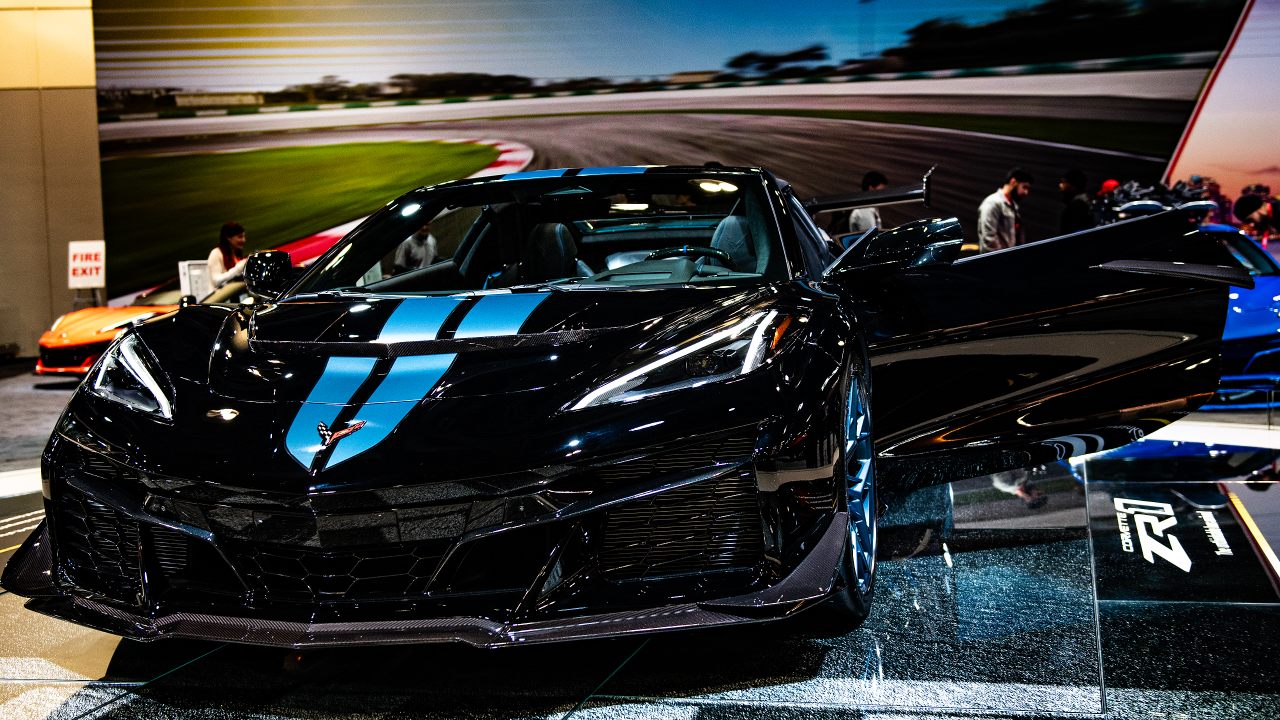
Dyno pulls that show four figures at the wheels
The first wave of dyno testing on stock ZR1s has been anything but subtle. One live streamed run of a 2025 Corvette ZR1 recorded 1,028 horsepower and 840 lb-ft of torque at the rear wheels, with the car described as completely stock. That test, conducted on a chassis dynamometer and shared publicly, did not involve race fuel or aftermarket tuning. It was presented as a straight baseline pull for a brand new C8 ZR1, yet the numbers it produced would be extraordinary even for a heavily modified build.
Another early video, framed around the idea that “we finally have Corvette ZR1 dyno numbers,” leans into the suggestion that General Motors and the Corvette team may have underrated the car. The host points to the wheel output as evidence that the factory 1,064 horsepower figure is conservative, not optimistic. When I put those results next to the official spec, the math becomes hard to ignore. If a stock ZR1 is making 1,028 horsepower at the wheels, and if I assume a typical driveline loss, the implied crank output climbs well above the published 1,064 rating, hinting that Chevy’s engineers left a significant buffer between what the engine actually delivers and what the brochure admits.
Hennessey and others suggest Chevy is playing it safe
The most detailed look at this gap comes from Hennessey Performance, which has built its reputation on extracting big power from American performance cars. In a dyno testing video centered on the Corvette ZR1, Hennessey Performance reports wheel figures that again suggest the LT7 is delivering far more than the official 1,064 horsepower once drivetrain loss is factored in. Coverage of those runs notes that the output “immediately raises eyebrows,” not because the car failed to meet expectations but because it appears to exceed them by a wide margin.
Analysis of Hennessey’s data frames the situation bluntly: Chevy’s flagship Corvette may be packing far more power than advertised. One report on the dyno session states that the test indicates Chevy is underrating the ZR1, with the wheel horsepower and torque implying a significantly higher crank figure than the company acknowledges. When I compare that conclusion with the earlier 1,028 horsepower and 840 lb-ft wheel result from another stock car, a pattern emerges. Independent testers, using different dynos and different ZR1s, are converging on the same basic story, that the LT7’s real-world output is higher than the number printed in Chevy’s marketing materials.
Why an underrated ZR1 matters for buyers and the supercar arms race
If these dyno results hold up across more cars and more test benches, the implications reach beyond bragging rights. For buyers, a conservatively rated engine can be a sign that the manufacturer has built in a healthy margin for reliability, especially under track use. The idea that a stock Corvette ZR1 could be making something like 1,028 horsepower at the rear wheels suggests the LT7 is operating comfortably within its mechanical limits even while delivering performance that rivals or surpasses far more expensive exotics. One analysis of the live streamed dyno test even speculates that if the official rating of 1,064 horsepower is conservative, the car’s true top speed could stretch to around 234 mph, a figure that would place it deep into hypercar territory.
There is also a strategic angle. In an era when supercar makers chase ever higher numbers, an automaker that quietly underrates its halo model can gain a different kind of credibility. Instead of fighting over the biggest brochure figure, Chevy can let the Corvette community and tuners like Hennessey Performance reveal the car’s true potential on the dyno and at the track. That approach fits with the way the ZR1 is being framed, not just as a spec sheet champion but as a platform for serious performance work, with shops already acquiring multiple cars and planning extensive testing and development. For enthusiasts, the message is clear: the official 1,064 horsepower claim is only the starting point, and the dyno is telling a bigger story about what this Corvette can really do.
More from Fast Lane Only: