Chevrolet has quietly pulled off a milestone that once seemed unlikely in a cooling electric vehicle market. With the 2027 Bolt now arriving at dealerships at a base price under thirty thousand dollars, it has slipped beneath the Nissan Leaf to claim the title of America’s least expensive new EV while also offering more range and more modern hardware than its rival. I see that shift as more than a pricing footnote, because it resets expectations for what an entry level electric car in the United States should deliver.
Rather than treating affordability as an excuse for compromise, the latest Bolt pairs its low sticker price with usable highway range, faster charging, and even the ability to power a home in an outage. That combination, backed by concrete pricing data and early dealership listings, suggests the budget end of the EV market is finally maturing into something that feels less like a science project and more like a rational purchase for mainstream drivers.
How the Bolt grabbed the price crown from the Leaf
The most important fact in this story is simple: the 2027 Chevy Bolt now undercuts the Nissan Leaf on price while delivering more range. According to detailed pricing comparisons, the 2027 Chevy Bolt starts at $28,995, while the 2025 Nissan Leaf is listed at $29,635 and the 2026 Nissan Leaf rises to $31,485. Those figures confirm that the Bolt has edged below the Leaf to become the lowest priced new EV on sale in the United States, a reversal of the position the Leaf held until this latest Bolt returned to showrooms.
What makes that shift more striking in my view is that Chevrolet did not win this race by stripping the car bare. The Bolt’s base configuration is paired with a GM estimated range of 255 Miles, a figure that puts clear distance between it and the shorter range Leaf variants that previously defined the budget EV segment. Earlier comparisons of the Chevy Bolt and Nissan Leaf framed their rivalry as a Battle of America’s Cheapest EVs, but the latest pricing and range data show that contest has tilted decisively toward the Bolt, especially for buyers who care about how far they can drive between charges as much as how little they pay up front.
What buyers actually get for $28,995
Price alone does not sell a car, so I look closely at what Chevrolet is offering at that $28,995 Starting MSRP. Dealer materials describe the 2027 Bolt as one of the most compelling EV values available, with Quick Facts at a Glance that highlight its GM Estimated Range of 255 Miles and its upgraded fast charging capability. Earlier versions of the Bolt were hampered by a 50 kW cap on DC fast charging, a limitation that made long distance travel tedious, but the refreshed model improves on that weakness so that highway stops feel more in line with current EV expectations rather than a throwback to the first generation of electric cars.
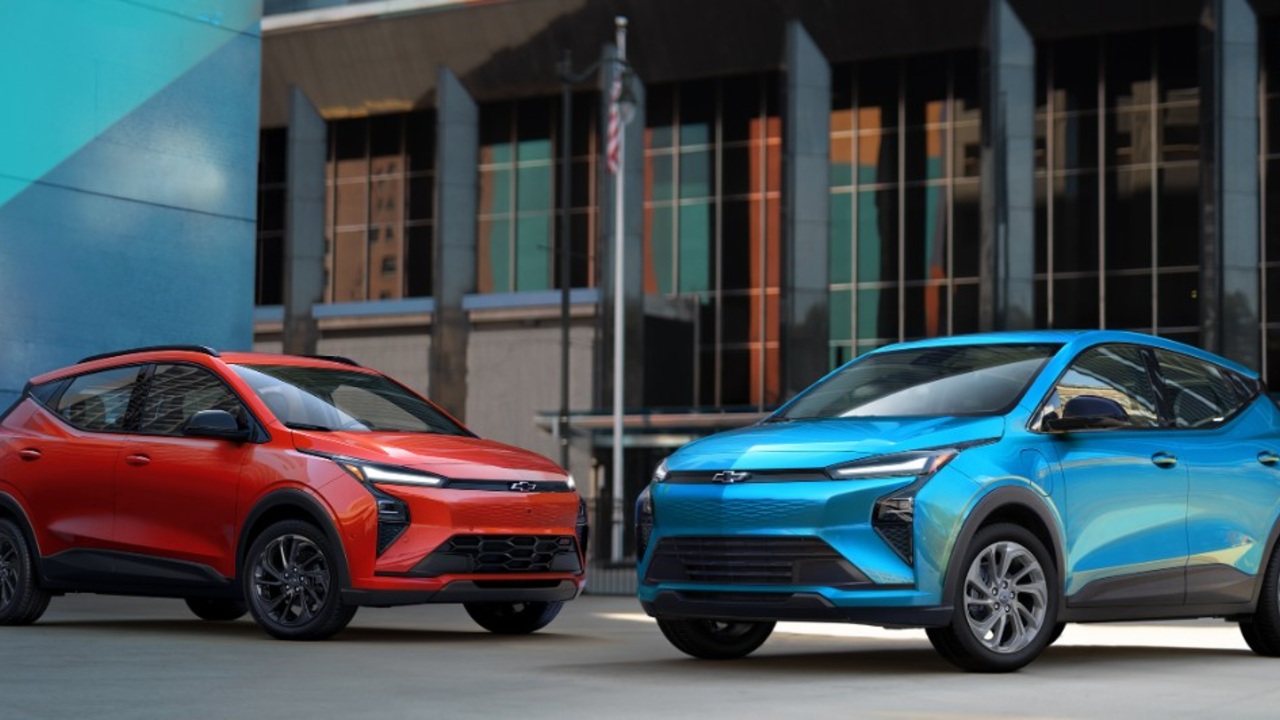
Beyond the powertrain, the trim walk shows that Chevrolet has tried to keep the Bolt from feeling like a penalty box. The LT trim, which is expected to anchor that Later LT Trim Est price point, is joined by a sportier Bolt RS variant that adds a Unique front grille, Gloss Black roof rails, RS badging, and 17 inch wheels. Those touches do not change the fundamentals of the car, but they do signal that Chevrolet wants even its cheapest EV to project some personality, rather than reading as a bare bones compliance vehicle built only to hit a price target.
Charging, home power, and the end of “cheap means compromised”
From a technology standpoint, I see the new Bolt as a quiet repudiation of the idea that budget EVs must lag badly on charging and energy features. Reporting on the refreshed model notes that the one major issue with the old Bolt was its 50 kW fast charging ceiling, which made it an awkward choice for drivers who needed to cover long distances. The 2027 Bolt addresses that shortcoming with significantly improved DC charging performance, allowing it to take better advantage of modern public fast chargers and making it more realistic as a primary family car rather than a city runabout.
The Bolt also steps into territory that, until recently, was reserved for more expensive electric models. When connected to GM’s dedicated home hardware, the new Bolt can discharge at up to 9.6 kW, effectively turning the car into a mobile battery that can power a home during an outage or help manage household energy use. That kind of bidirectional capability, often described as vehicle to home, has been a selling point for higher priced EVs, so its arrival in a car positioned as America’s Cheapest New EV signals that the baseline for features in this segment is rising quickly.
How the Leaf responds, and where it still competes
For its part, Nissan has not abandoned the value pitch that made the Leaf an early standard bearer for affordable electrification. The company has promoted the 2026 Nissan LEAF as the most affordable EV with prices starting under thirty thousand dollars, and the official 2026 Nissan LEAF press kit confirms that the all new LEAF, referred to explicitly as Nissan LEAF, will reach Nissan dealerships this fall. That timing keeps the Leaf in the conversation for shoppers who walk into a showroom looking for the lowest possible entry price to electric driving, even if the Bolt now technically undercuts it.
However, when I weigh the two cars against each other using the available figures, the Bolt’s combination of a $28,995 base price and 255 Miles of estimated range gives it a clear edge for buyers who plan to drive beyond city limits. Earlier comparisons of Chevy Bolt and Nissan Leaf models framed their rivalry as a Battle of America’s Cheapest EVs, but the latest pricing tables that list the 2027 Chevy Bolt at $28,995, the 2025 Nissan Leaf at $29,635, and the 2026 Nissan Leaf at $31,485 show that Nissan is now relying more on equipment and redesign talking points than on a pure price advantage. The Leaf still offers a familiar nameplate and a long track record, yet the Bolt’s updated hardware and lower sticker price make it harder for Nissan to claim unchallenged ownership of the budget EV space.
A cheap EV that scales up, not just down
One detail I find revealing is that the Bolt lineup now stretches from that sub thirty thousand dollar entry point to configurations that cost more than some Teslas. Reporting on the most expensive 2027 Chevrolet Bolt notes that Chevy’s Affordable EV Reenters the Market with higher trim levels and option packages that can push the price above rival models, even as the base car remains aggressively priced. That spread suggests Chevrolet is treating the Bolt not only as a price leader but also as a flexible platform that can carry more equipment and comfort features for buyers who want an EV that still feels relatively compact and efficient but do not want to step up to a larger Equinox EV.
At the same time, coverage of the Bolt’s return has emphasized that it arrives at dealerships just as the market is adjusting to the loss of earlier low cost options and grappling with questions about demand. Analysts have described the Equinox EV’s smaller sibling as well timed in an EV market reeling after the disappearance of some entry level choices, and they have framed the 2027 Chevrolet Bolt as a model that returns as America’s Cheapest New EV while also offering more range for less money than the Leaf had until now. In that context, I see the Bolt’s pricing and feature mix as a deliberate attempt by Chevrolet to anchor the lower end of the EV market with a car that can scale up in price and equipment, rather than a bare minimum product that exists only to satisfy corporate emissions targets.
More from Fast Lane Only: