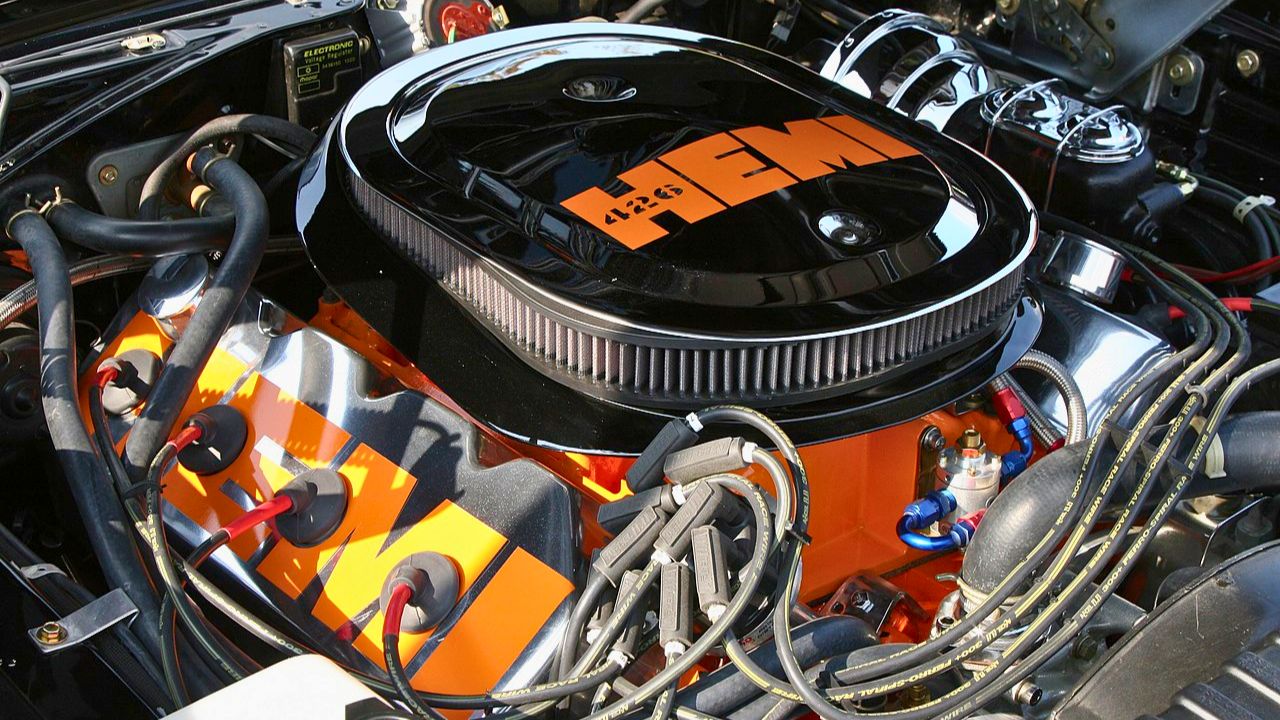
You’ve probably had this debate at some point—Chevy’s legendary 427 or Mopar’s fire-breathing 426 Hemi. Both engines earned their stripes in the golden age of muscle, and both carry reputations that still echo through drag strips and car shows today. But which one really comes out on top?
This isn’t just about numbers on a spec sheet. It’s about how these engines behaved on the street, what they delivered at the track, and what it took to own one. Let’s break it down and see which powerplant truly deserves the crown.
The 427 Chevy Was a High-RPM Screamer
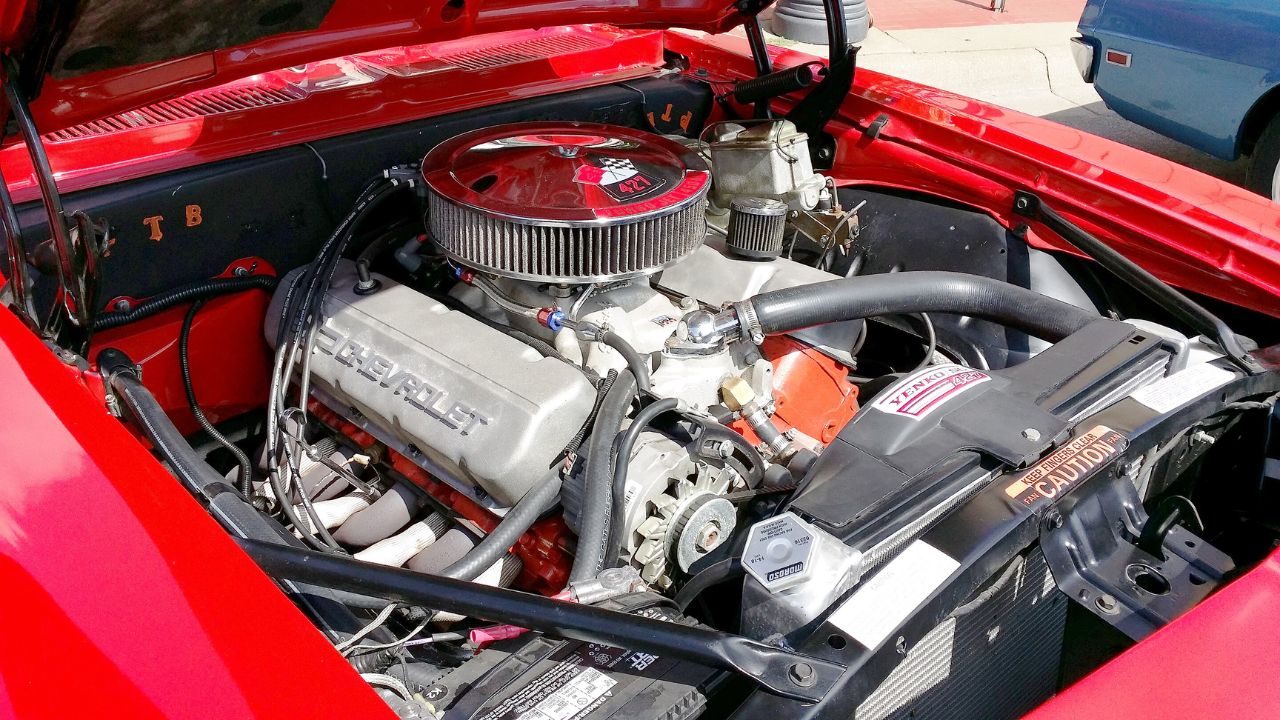
Chevy’s 427 was the small-block’s bigger, nastier cousin. First introduced in 1966, this big-block V8 had a bore and stroke of 4.25 x 3.76 inches and came in multiple flavors—from the L72 to the all-out L88. The L88, rated at a laughably conservative 430 hp, could actually produce over 500 horsepower when dialed in.
Unlike the Hemi, which made its power down low, the 427 thrived up top. It loved revs, especially in solid-lifter trims. The aluminum-head L88 paired well with lighter cars like the Corvette, making it more agile compared to Mopar’s heavier setups.
Hemi Dominated in NHRA and NASCAR

The 426 Hemi didn’t just show up—it took over. Chrysler built it specifically for NASCAR in 1964, and it won the Daytona 500 right out of the gate. NASCAR eventually banned it in 1965 for being too good, forcing Mopar to create a detuned street version just to get back in the game.
In NHRA circles, the Hemi ruled the Super Stock and Pro Stock classes. Cars like the Barracuda and the Dart with Hemi power ran consistent low 10s on slicks. While the 427 was competitive, it never reached the dominance or legacy the Hemi left in racing.
The 427 Was More Versatile on the Street

Where the Hemi felt like a race engine that snuck onto the street, the 427 had a wider range of street manners. The L88 was barely streetable, but others like the L36 and L72 were easier to live with day-to-day. They didn’t require as much tuning or premium fuel voodoo to keep them happy.
You could drop a 427 into a Corvette, a Chevelle, or even a full-size Impala, and still cruise it to work or rip it at the strip. The Hemi required deep pockets and constant attention. The 427 gave you options without as much babysitting.
Mopar’s Hemi Cars Were Tanks

There’s no denying it—Hemi-powered cars were heavy. A 1970 Dodge Charger with a 426 Hemi tipped the scales at around 4,100 pounds. The extra weight came from the oversized block, beefed-up suspension, and drivetrain needed to handle the torque.
By comparison, a 427 Corvette weighed nearly 1,000 pounds less. That kind of weight difference made a big impact on handling and acceleration. Chevy could pair its big-blocks with lighter bodies and stiffer suspension setups, giving them better balance and less body roll, even if they couldn’t match the Hemi’s raw grunt off the line.
The Hemi Cost More—And Still Does

Back in the day, checking the Hemi box on your order form added over $1,000 to the price of a Mopar muscle car—nearly a quarter of the car’s total price. That was serious money in the late ’60s. As a result, Hemi production numbers were relatively low.
That rarity drove up collector value, and today, original Hemi cars easily pull six or seven figures at auction. The 427, especially the L88, also commands a premium, but you’ll find more of them around, and they were spread across more platforms. That makes the Hemi more exclusive, but also harder to justify for most muscle car fans.
Chevy Offered Aluminum-Block Options

One of the slickest things about the 427 was the ZL1 variant. It featured an all-aluminum block and heads, which shaved over 100 pounds off the front end of the car. Originally developed for Can-Am racing, the ZL1 made its way into just 69 factory Camaros in 1969.
These ZL1 Camaros weren’t just rare—they were brutally fast. Some reports claim up to 550 horsepower straight from the crate. The Hemi never came with an aluminum block from the factory, making the 427 ZL1 one of the most advanced—and expensive—street-legal builds of its time.
The Hemi’s Cylinder Head Design Was Next-Level

What really made the 426 Hemi special wasn’t just displacement—it was the hemispherical combustion chambers. This design allowed for larger valves and more efficient airflow, which translated to serious power gains.
The heads on the 426 were basically miniature race units, with huge ports and spark plugs located near the center for better combustion. Chevy’s 427 used more traditional wedge heads, which were simpler and cheaper to build. They worked well, especially at high RPMs, but the Hemi’s head design was simply better when it came to making horsepower per cubic inch.
Both Engines Were Factory-Understated

Neither of these monsters was fully honest on paper. The Hemi was rated at 425 horsepower, and so was the 427 L72—but both were sandbagging for insurance purposes. Real-world dyno tests showed the Hemi closer to 470-500 hp in street trim and more with tuning. The 427 L88 and ZL1 could break 500 hp easily, depending on carburetion and setup.
This made it tough for insurance companies to price premiums accurately and gave buyers a surprise at the track. Today, this understated power is part of what makes both engines so revered—and why people still argue over which one was really stronger.
The 427 Was Easier to Work On

When it came to wrenching, Chevy’s 427 was more approachable. It shared design traits with other Mark IV big-blocks, meaning parts were easier to find and the layout made sense for regular maintenance or performance upgrades.
The Hemi, on the other hand, had massive heads and a top-heavy design. Swapping plugs was a chore, and tuning one properly often required specialized knowledge. It was a masterpiece of engineering—but one that could frustrate even experienced mechanics. If you liked turning your own wrenches, the 427 gave you fewer headaches.
Both Engines Defined an Era, But in Different Ways

The 427 was the heart of Chevy’s factory performance program—fast, flexible, and backed by a huge network of parts and performance shops. Whether in a Vette or a Chevelle, it represented the high-water mark of GM muscle before emissions cracked down.
The 426 Hemi, meanwhile, became a symbol of no-compromise horsepower. It was built to win races, and it did. While it wasn’t as common on the street, its reputation was so big it didn’t matter. In the end, you could argue the Hemi was the more legendary engine, but the 427 was the one more people actually got to enjoy.
*This article was hand crafted with AI-powered tools and has been car-fully, I mean carefully, reviewed by our editors.